Sefako Makgatho Health Sciences University (SMU) recently welcomed a pivotal earmarked grants oversight visit led by the Department of Higher Education and Training (DHET). This visit signified a key assessment of the progress SMU has achieved with the Clinical Training Grant (CTG) and the Sibusiso Bengu Development Programme (SB-DP), two major initiatives supporting SMU’s mission to develop skilled healthcare professionals and build capacity as a historically disadvantaged institution (HDI).
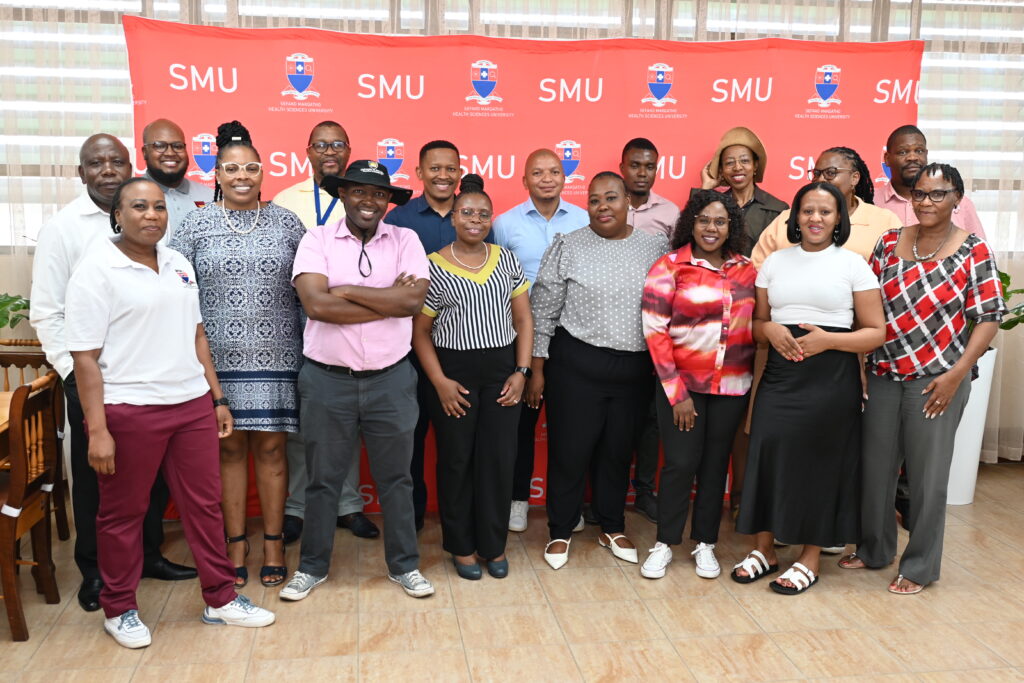 Dr Marcia Socikwa, Deputy Director-General of DHET, spearheaded the delegation, accompanied by SMU’s Vice-Chancellor, Professor Peter Mbati, and senior officials. Their aim was to evaluate the tangible impacts of these targeted grants on SMU’s health sciences education. Socikwa remarked: “The DHET is dedicated to addressing historical inequalities in the higher education sector. By investing in targeted programmes like the CTG and SB-DP, we are empowering institutions such as SMU to enhance their capabilities and produce world-class healthcare professionals.”
Theo Bhengu from the Grants Office presented the achievements and challenges of the CTG and SB-DP. Supported by Professor Mapaseka Seheri, SMU’s Director of Research and Innovation, Bhengu highlighted how the funding has fortified critical training facilities, facilitated the recruitment of clinical staff, and modernised infrastructure. “These grants have been a lifeline for our institution,” Bhengu stated, noting: “While we celebrate our achievements, we acknowledge the hurdles we face, particularly with infrastructure development.”
A highlight of the visit included extensive site inspections, granting DHET officials a first-hand view of the outcomes of CTG and SB-DP funding. The delegation toured several state-of-the-art facilities, including:
- Midwifery Unit: Equipped with advanced mannequins, this facility allows students to gain invaluable experience in maternal and neonatal care.
- Centre for Interprofessional Education and Collaborative Practice (IPECP): Promoting teamwork across various health disciplines, this centre underscores the importance of collaborative patient care.
- 2,000-Bed Student Residence: Addressing the needs of a growing student body, this new residence fosters an environment conducive to academic success and community engagement.
- Centre for Entrepreneurship Rapid Incubator (CfERI): This initiative nurtures student entrepreneurship, aiding them in developing sustainable, innovative projects that benefit SMU and its surrounding communities.
- Pharmaceutical Chemistry Laboratory: Here, students engage in advanced drug research and development, equipping them with the skills necessary for the healthcare industry.
Reflecting on the site tours, Socikwa affirmed: “Our goal is to empower institutions like SMU to provide world-class training to health professionals, achievable through sustained partnerships and strategic investments.”
Following the inspections, DHET and SMU engaged in discussions on fiscal responsibility and resource allocation. Socikwa emphasised the need for financial accountability amid ongoing budgetary constraints. “There is no room for complacency,” she cautioned. “Institutions must demonstrate a commitment to service delivery and effective expenditure, as the funds we allocate are essentially borrowed money.”
Mbati echoed this sentiment, reinforcing SMU’s commitment to transparent financial practices. “At SMU, accountability is paramount,” he asserted. “Every rand we spend must reflect our commitment to integrity and excellence, ensuring our institution’s long-term success and reputation.”
The oversight visit also celebrated SMU’s recent accomplishments, particularly its entry into global academic rankings—a significant milestone for the university. Socikwa praised SMU’s growing presence in the global academic arena, stating: “The strides made here are commendable. However, maintaining this excellence requires an ongoing commitment to research performance and global standing.”
Both DHET and SMU highlighted the necessity of continued collaboration and strategic investment to build on SMU’s successes and address emerging challenges. Mbati concluded: “This oversight visit has illuminated our progress and the challenges ahead in transforming SMU into a leader in health sciences education. Our path forward demands teamwork, transparency, and an unwavering focus on quality. Together, we can position SMU as a benchmark for healthcare training and a pillar of South Africa’s health future.”
The oversight visit reaffirmed DHET and SMU’s shared dedication to cultivating well-trained healthcare professionals and establishing a resilient health sciences education system. Through strategic investment and unwavering accountability, SMU stands poised to continue shaping the future of healthcare education in South Africa.