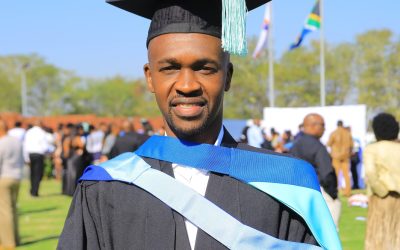
In a landmark achievement that exemplifies academic excellence and innovation, a team of final-year students from the Physiotherapy Department at Sefako Makgatho Health Sciences University (SMU) has earned the esteemed Best Undergraduate Research Project Award. The accolade was presented during the department’s internal research presentations, an event dedicated to recognising groundbreaking ideas and scholarly rigour among graduating students.
 The triumphant team—Phala Tiisetso, Molefe Boitshoko, Ralehlaka Kelebogile, Zander Collins, Chane Seipker, and Vilankulu Simphiwe—addressed a critical issue impacting their peers: stress and its profound effects on physiotherapy students. Guided by Dr Makwena Sibuyi, the Fourth-Year Coordinator and Head of the Paediatric Module, their research, titled Self-Reported Stress Levels Among Final-Year Physiotherapy Students, combined scientific precision with empathy, uncovering valuable insights into mental health challenges in healthcare education.
Motivated by their own experiences and observations, the team sought to explore the unique stressors affecting physiotherapy students during their demanding training. “We have all felt the pressure of clinical rotations, demanding coursework, and the uncertainty of what lies ahead after graduation. This research allowed us to delve deeper into those challenges and contribute meaningful insights to our field,” explains Zander Collins.
The study utilised a descriptive cross-sectional design, surveying 42 final-year physiotherapy students with the Student Stress Inventory (SSI). The findings revealed that stress levels ranged from low (57.14%) to moderate (42.85%). Female students were more prone to stress, often linked to greater emotional reactivity and societal expectations. Additionally, academic and environmental factors emerged as the leading stressors, with coursework, clinical responsibilities, and external pressures being the most prominent triggers. “Our findings show that stress levels among physiotherapy students are slightly lower than reported in similar studies, but this does not diminish the need for proactive mental health interventions,” remarks Phala.
The research not only illuminates the challenges faced by healthcare students but also underscores the urgency of developing targeted support systems. Sibuyi, the team’s mentor, praised their commitment, stating: “This study highlights the importance of addressing mental health issues in higher education, particularly in healthcare disciplines. Their findings pave the way for developing effective strategies to support student well-being.”
To improve student well-being, the team identified several actionable steps. Early identification of stress indicators is crucial, involving the monitoring of academic, physical, and interpersonal stressors to prevent burnout. Building emotional self-efficacy is another essential measure, with universities encouraged to offer stress management workshops and mentorship programmes, particularly for female students. Additionally, support from educators and peers plays a significant role in fostering a supportive environment; lecturers and clinical supervisors can help create a positive learning atmosphere, while peer mentorship strengthens community bonds and reduces isolation.
The team envisions their research as a stepping stone for future investigations. “We recommend extending this research to other health sciences disciplines to understand the broader implications of stress in healthcare education,” suggests Ralehlaka.
The journey was not without its hurdles. From balancing academic demands to navigating administrative approvals, the team displayed remarkable perseverance. Vilankulu reflects: “The process taught us resilience and the importance of collaboration.”
This study serves as a clarion call for stakeholders in education and healthcare to invest in student well-being. “Proactive measures are needed to address student stress and enhance academic performance,” urges Molefe.
The recognition of their work is a testament to the team’s dedication, intellectual curiosity, and resilience. Their success not only celebrates their academic journey but also inspires future cohorts to push boundaries and redefine possibilities in research.
Their award-winning project stands as a shining example of how student-led initiatives can significantly contribute to advancing knowledge and improving the educational experience for healthcare professionals of tomorrow.
By Tumelo Moila