
From the dusty footpaths of a rural Limpopo village to the lecture halls of Sefako Makgatho Health Sciences University (SMU), Dr Mashudu Nemakanga’s story is one of grit, sacrifice, and triumph. Born to a gardener and a domestic worker, he grew up with little material wealth but an abundance of determination. “My upbringing taught me resilience in overcoming challenges associated with poverty,” he reflects.
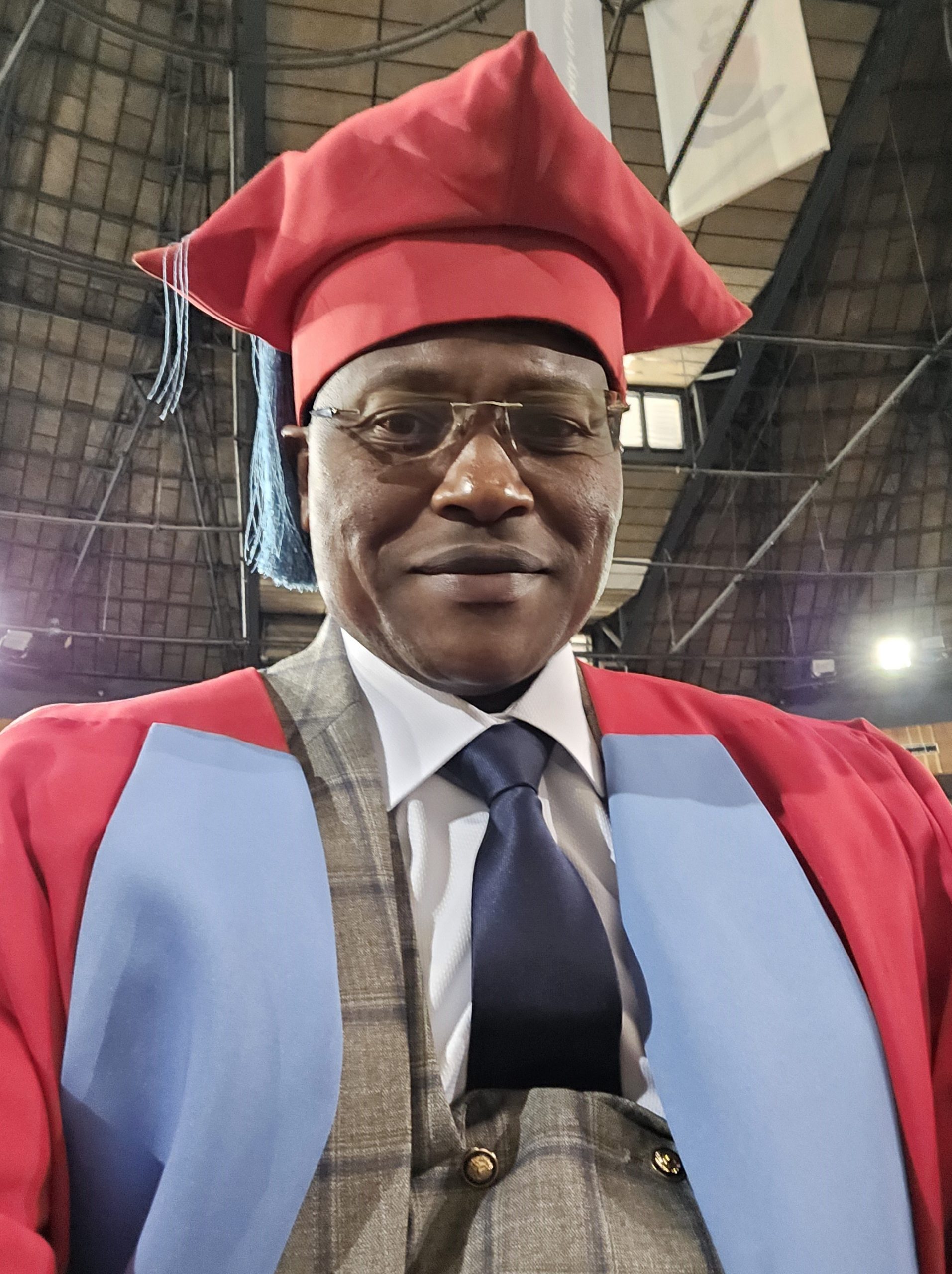 That resilience became the foundation of a doctoral journey marked by setbacks and breakthroughs. Dr Nemakanga’s PhD was far from smooth. He changed supervisors three times, struggled with inconsistent guidance, and balanced the competing demands of family, a private practice, and research deadlines. The emotional and physical toll was heavy. “Changing supervisors posed several challenges that impacted my progress and emotional well-being,” he admits.
Yet through the turbulence, he discovered independence and discipline. “Pursuing a PhD was a transformative experience, marked by personal and intellectual growth. It was a journey of curiosity and discovery.”
Despite the obstacles, support systems emerged. SMU fully funded his doctoral studies, while his line manager offered flexible working hours to help him concentrate on research. Most importantly, mentors played a decisive role. “The outstanding person who supported me was my supervisor, Professor Mavis Mulaudzi. She gave me hope, courage, and resilience,” he says. He also credits Dr Enos Ramano for detailed feedback, Dr Mable Kekana for her guidance, and Professor Tivani Mashamba-Thompson for ensuring successful completion.
 The Occupational Therapy Department at SMU also stood firmly behind him. “They offered unwavering support and understanding through Ubuntu practice,” he recalls. Alongside personal growth, Nemakanga sharpened valuable research skills, from facilitating appreciative inquiry workshops to conducting scoping reviews. But the greatest achievement is the practical impact of his doctoral work.
His programme helps older persons maintain independence and quality of life through daily activities. “These activities are vital for sustaining independence. Occupational therapy programmes can reduce disability and improve geriatric health,” he explains. The programme is now available for clinicians to implement.
Looking back, Nemakanga treasures not only his academic success but also the personal lessons gained. “The PhD journey was transformative, fostering not only my academic skills but also my personal growth. It taught me patience, perseverance, self-discipline, and the importance of passion.” For SMU students aspiring to follow the same path, his advice is direct: “Know your motivation. Be clear about why you want a PhD. Choose wisely. Find a supervisor.”
From humble beginnings to the pinnacle of academia, Nemakanga proves that poverty is not destiny. His journey demonstrates that resilience and determination can turn obstacles into stepping stones. “PhD requires careful preparation,” he advises, “but it can transform you into more than a scholar—it shapes you into a leader ready to change society.”
Nemakanga, a lecturer at SMU and coordinator of undergraduate research and fundamentals of occupational therapy, has completed his PhD despite the challenges it presented. Reflecting on his journey, he said, “I have considered abandoning my PhD, but by the grace of the Lord, the guidance of Prof Mavis Mulaudzi and Dr Enos Ramano rejuvenated my strength to continue. They reminded me that my studies were already at an advanced stage and abandoning them would have been an act of invertebrate.”
His doctoral research focused on developing an occupational therapy programme for elderly people living with HIV/AIDS to support their engagement in activities of daily living. “In my thesis, I created a programme guided by the Occupational Therapy Practice Framework to address the specific needs of elderly patients, encompassing occupation, context, performance patterns, skills, and client factors,” he explained.
The programme, reviewed by experts through three rounds of the Delphi technique, aims to serve as both a proactive prevention strategy and an intervention to reduce disability and promote health and well-being among the elderly living with HIV. Nemakanga also serves as chairperson of the Undergraduate Research Committee within SMU’s School of Healthcare Sciences, continuing to shape the next generation of occupational therapists.
By Dimakatso Modise