Sefako Makgatho Health Sciences University (SMU) marked World Anatomy Day with a powerful reminder of why practical anatomy remains the cornerstone of medical education. The event, themed “With Anatomy through Our eyes”, brought together students, staff, and creative minds to celebrate the discipline that bridges science, art, and humanity.
 Professor Risenga Chauke, Dean of the School of Medicine, opened the event with an engaging analogy: “View the human body like a building,” he told the audience. “Anatomy is the structure—the walls and beams—while physiology is how it works—the lights and the Wi-Fi.” Drawing from his experience as a cardiothoracic surgeon, Prof Chauke stressed that no simulation can replace the real human body in training. “Theatre and simulation are not the same,” he said. “In surgery, even a small error can have life-threatening consequences. Only through real dissection can we truly understand the body.”
Chauke commended the Department of Anatomy for providing students with hands-on experience and reminded them that working with human bodies is both a privilege and a responsibility. “We study the dead to save the living,” he said—a sentiment that would echo throughout the day’s presentations and creative works.
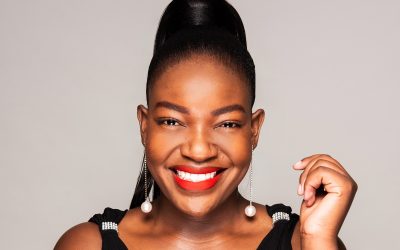
 Second-year MBChB student Khanya Chirwa expanded on the Dean’s message by sharing her personal journey through the MIBS module—covering anatomy, physiology, microbiology, and pharmacology. Initially “intimidated” by the subject, she soon discovered that anatomy formed the “foundation for clinical practice and diagnosis.” Chirwa illustrated this by explaining how understanding lymph node locations is vital for identifying swelling during physical examinations. “Anatomy is not just about memorising parts,” she said. “It teaches us where to touch, what to feel, and what lies beneath.”
For Chirwa, dissecting a real body was the turning point: “Moving from the textbook to the dissection hall revealed the true meaning of anatomy. Without this knowledge, even interpreting an X-ray or administering an injection becomes risky.”
The day also celebrated anatomy as an art form. Students expressed their reflections through poetry and visual art, blending science with creativity.
 Adelade Mathebula’s poem “I am a Living Soul” explored the human body as a masterpiece of interconnected systems— “beautiful in my complexity,” she wrote. Meanwhile, Tshifhiwa John Khabana’s “We Study the Dead to Save the Living” captured the solemn courage of anatomy students facing the dissection hall. His words— “Anatomy is a beautiful art that demands strong will, dedication, and patience”—resonated deeply with the audience.
An accompanying art exhibition transformed anatomy into visual poetry. Works ranged from Miya Jade Robson’s Memento Ossium (pencil) to Shantele Mafatle’s clay sculpture Art of a Kidney. The top prize went to Laurika Prinsloo for The Creator’s Hand, with Mafatle also earning the “People’s Choice” award.
In a session dedicated to academic success, students, including Chirwa, Charlize Degenaar, Sandy Hadebe, and Lehlogonolo Mathete, shared study tips on planning, visualisation, and using digital tools. Degenaar took first place for her practical strategies, highlighting that effective learning in anatomy is as much about mindset as method.
Closing the event, Professor Robert Ndou presented awards across all categories, commending the students’ passion and artistry. From scalpel to sculpture, every contribution affirmed the day’s unifying message: anatomy is not merely studied—it is lived, felt, and honoured.
By Tumelo Moila