Professor Hyla Kluyts is spearheading one of the most ambitious health equity initiatives in South Africa. As Head of the Department of Anaesthesiology and Critical Care at Sefako Makgatho Health Sciences University (SMU) and Dr George Mukhari Academic Hospital, she recently launched the Bophelo Unit for Equity, Intelligence and Learning—a pioneering platform focused on embedding data into decision-making to improve perioperative care across under-resourced settings. Bophelo, meaning “life” or “health”, captures the unit’s mission to turn clinical data into system-level intelligence that can drive equitable outcomes.
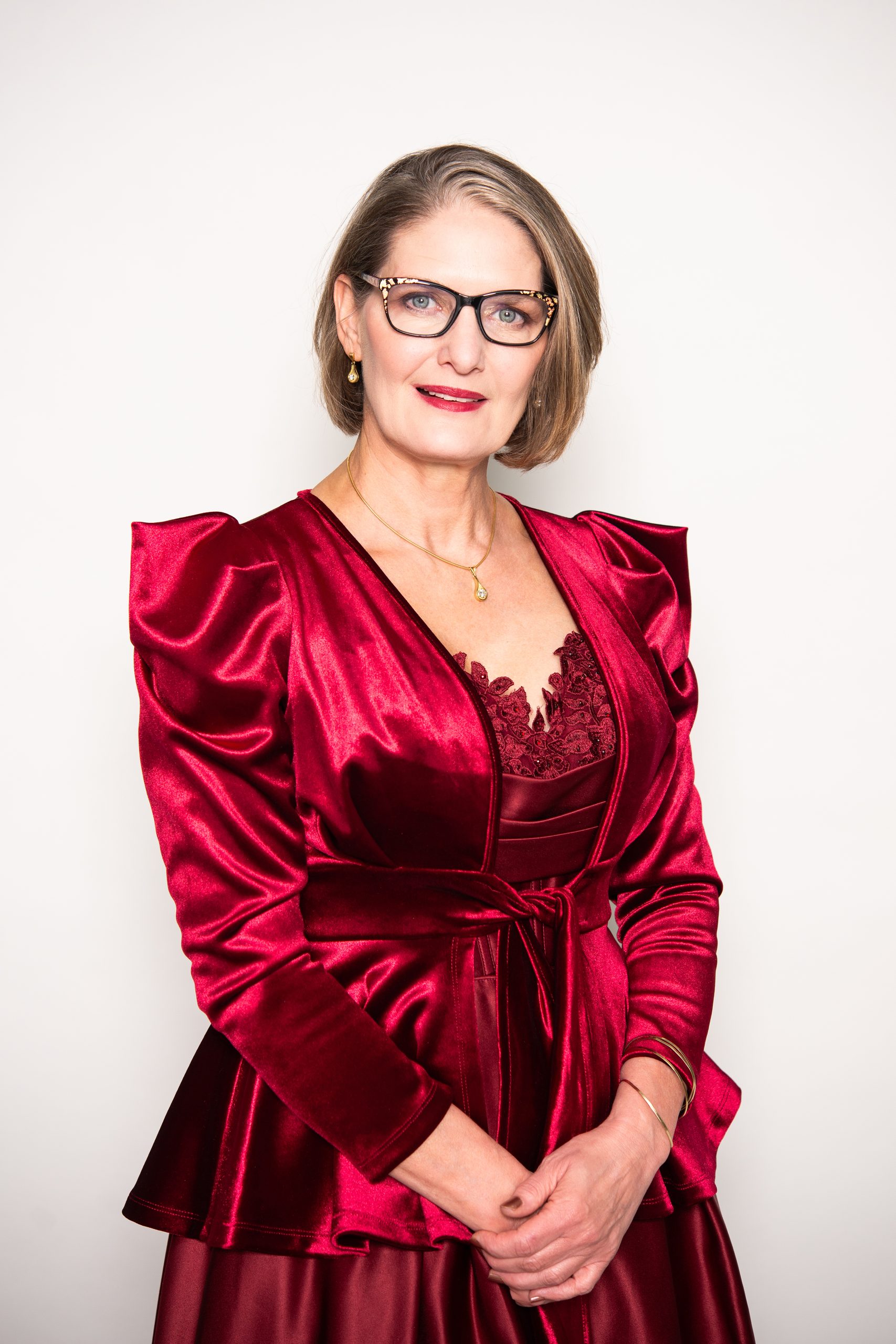 In her leadership role at SMU, Kluyts embodies the university’s mission to cultivate healthcare professionals who lead national conversations and innovations in health equity and systems transformation.
She is widely recognised for her leadership in anaesthesiology and for reshaping how surgical care is understood, delivered, and measured on the African continent. She is also the founder and Executive Director of Safe Surgery South Africa (SSSA), a non-profit company and public benefit organisation advancing the use of perioperative health data. In collaboration with the African Perioperative Research Group (APORG), she is creating a new research ecosystem that centres African voices and local evidence.
“Health equity cannot exist without data equity,” says Kluyts. “I’ve seen too many preventable deaths simply because no one was tracking outcomes.”
Appointed as South Africa’s first full Professor in Anaesthesiology—and the first woman to reach this milestone—Kluyts’s career has consistently broken new ground. Yet, she describes the achievement as “a lonely journey”, one that came after years of unrecognised effort. “If my experience helps clear the path for others, then it has been worthwhile. I hope to help build a culture where we celebrate each other’s success sincerely and loudly.”
Her early clinical career included leading the development of the intensive care unit at Kalafong Hospital, deepening her commitment to patient-centred systems. Her move into academia followed a deeply personal loss—she returned to the field with renewed clarity after losing twins to HELLP syndrome at the age of 38. “That grief brought me back with a sharper sense of purpose,” she says. Today, she balances her professional commitments with her role as a mother to two daughters, candidly noting, “Some days, patience as a parent is harder than perseverance as a professional.”
Kluyts’s leadership philosophy is grounded in presence, empathy and accountability. In high-pressure environments with limited resources, she believes that showing up—and truly listening—matters. “Trainees must learn, but they must also be protected. The system may be flawed, but people should never feel alone in it.”
Her doctoral research focused on clinical risk prediction in surgical patients, reinforcing her belief that data-driven systems can improve both care and outcomes. She is a consultant to the Clinical Services Unit of CareConnectHIE, South Africa’s first non-profit Health Information Exchange, and serves on the World Federation of Societies of Anaesthesiologists’ Safety and Quality of Practice Committee.
For young women, particularly from underrepresented backgrounds, Kluyts offers a firm message: “You belong in every room. Don’t wait for permission. Step in—and stay.” Her vision for South Africa’s healthcare future is clear: “A system that is just, intelligent and humane—where excellence and equity are not mutually exclusive but deeply intertwined.”
By Dimakatso Modise