
Mukhethwa Managa never set out to be anyone’s role model. Yet, by choosing to live boldly and unapologetically, she has become just that—a quiet symbol of courage in spaces where difference is often met with silence.
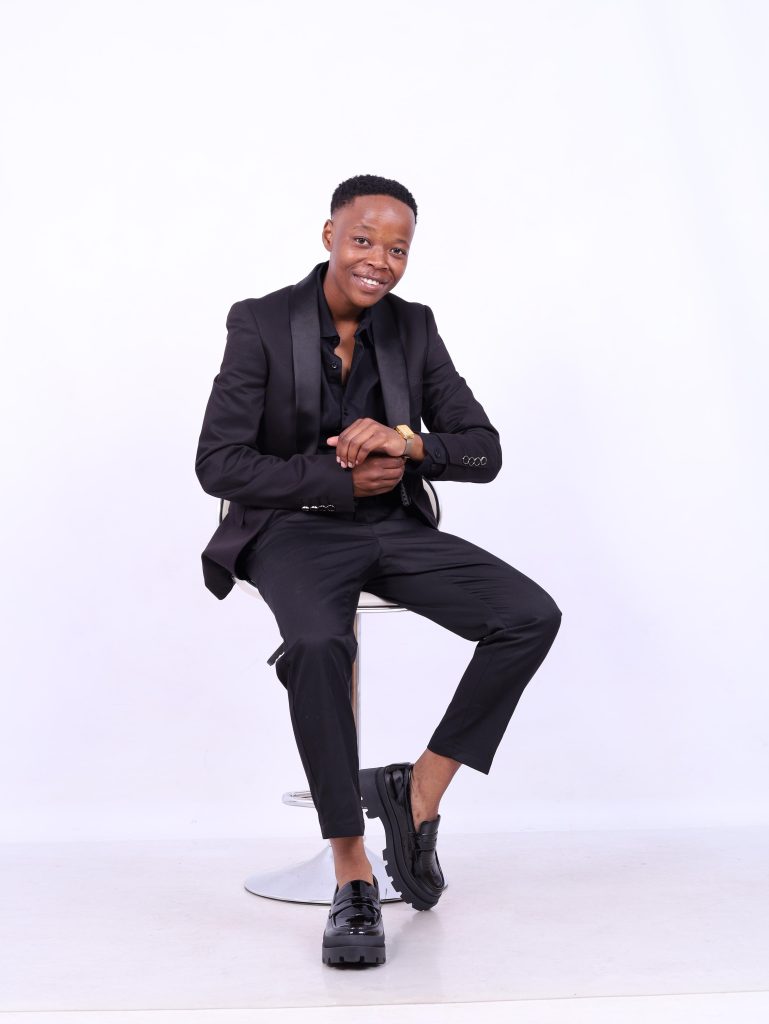 A double-degree graduate from Sefako Makgatho Health Sciences University (SMU), Managa’s story is not about fitting in. It’s about belonging on her own terms. “Coming out was painful, but necessary,” she recalls. “I wasn’t trying to prove anything. I just wanted to be free.”
Known to many by her stage name Alpha Art, the 27-year-old from Tshidzini village in Venda grew up navigating a world that offered few reflections of herself. As a proud member of the LGBTIQ+ community, she knew early that her identity would challenge expectations. University, however, was where her fight for authenticity took shape.
At SMU, she earned not just academic degrees—a Bachelor of Science in Biochemistry and Physiology, and a professional qualification in Speech-Language Pathology and Audiology, but something far more important: her voice. “At SMU, I found spaces that accepted me and spaces that didn’t,” she says. “But the LGBTQIA+ student organisation changed everything. It showed me that being myself wasn’t something to apologise for.”
Support from peers and mentors gave her the courage to be visible in a community where invisibility often felt safer. From lecture halls to football fields, Managa began to live out loud. Her leadership shows itself in many forms. As a rapper, sketch artist, and soccer player, she pushes past the limits others place on womanhood.
“I’ve learned that womanhood looks different for everyone,” she explains. “Some women are feminine, others masculine. All of us deserve to belong.” For Managa, belonging is not just about visibility, it’s about using visibility as a platform for others.“When people see me walking boldly across campus or on stage as Alpha Art, I want them to know they can be themselves, too. That’s leadership.”
She hopes that SMU and institutions like it will continue expanding spaces where diverse identities of womanhood are celebrated, not merely tolerated. “Institutions need to stop thinking of inclusion as optional. It’s essential to developing real leaders.”
Managa’s journey isn’t framed by awards or titles. Her legacy is quieter but no less powerful: showing others that strength lies in living truthfully. Her advice to those navigating identity in spaces that weren’t built for them? “Live out loud. You don’t need permission to be yourself.”
Today, as a qualified healthcare professional, an artist, and a woman rewriting her own definition of strength, Managa is proof that leadership begins with authenticity. And at SMU, her story and her voice found room to grow.
By Tumelo Moila


