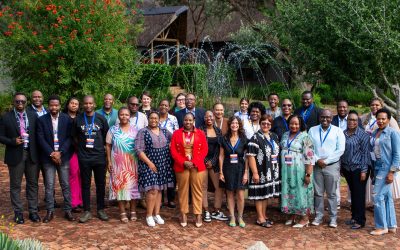
At Sefako Makgatho Health Sciences University (SMU), innovation is not a buzzword — it is a lived reality. From 20 to 22 June 2025, this spirit of ingenuity took centre stage as SMU hosted its Digital Health Hackathon at the Innovation Hub in Pretoria. Designed to spark technological solutions to pressing healthcare challenges, the event marked another milestone in SMU’s evolution as a dynamic hub of innovation, entrepreneurship, and community impact.
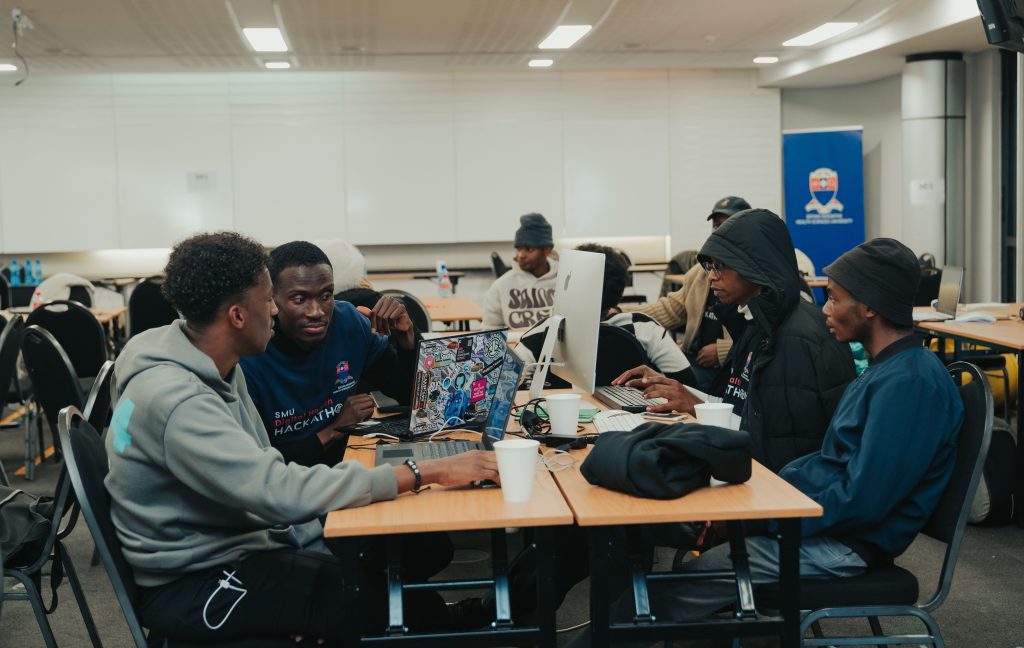 Organised in partnership with ICRD Group Holdings, the City of Tshwane, and other stakeholders, the hackathon brought together students, developers, health professionals, and creatives to collaborate, build, and pitch practical digital health innovations. Significantly, the event took place during youth month, commemorating the 49th anniversary of the 1976 Soweto Uprising — a poignant reminder of the transformative power of young people.
“This event is not just about ideas; it’s about agency,” said Professor Dini Mawela, Acting Deputy Vice-Chancellor: Academic and Research at SMU. “We are empowering students to drive change in healthcare through innovation.”
Structured over three dynamic days, the hackathon provided a comprehensive platform for learning and creation. Day 1 focused on team formation and defining health-related problem statements. Day 2 featured keynote addresses, technical workshops, and hands-on mentoring. Day 3 culminated in final pitches to a panel of expert judges drawn from health, technology, and business sectors.
The event began with a virtual induction on 20 June. Keynote speaker Isaac Kahwema, Executive Director of DOORS Health, joined remotely from the United States to explore Africa’s digital health challenges and opportunities. A standout fireside chat on AI and data protection in healthcare was led by software engineer Bongekile Mabindisa, while ICRD’s Wamozo Cosmas and Geekulcha’s Tiyani Nghonyama equipped participants with practical strategies for innovation under pressure.
 Dignitaries on Day 2 included Councillor Tshegofatso Mashabela, MMC for Health in the City of Tshwane, and Dr Fhatuwani Godfrey Mbara, CEO of Dr George Mukhari Academic Hospital, who delivered an address on behalf of the Gauteng MEC for Health, Nomantu Nkomo-Ralehoko. Both emphasised the urgent need for locally developed tech-enabled healthcare solutions.
The hackathon saw an impressive range of projects — from mobile apps supporting diabetic care to maternal health trackers for rural clinics. Teams also tackled mental health, AI-assisted diagnostics, and low-bandwidth telehealth tools. All solutions were designed with accessibility, scalability, and social impact in mind.
The judging panel evaluated projects on innovation, usability, feasibility, and community impact. With additional support from Buhle Waste, which contributed R5,000 to the prize pool, two teams tied for third place:
- Team Nexus – digitalising paperwork to reduce admin overload in clinics
- MediCoders – improving appointment scheduling at primary healthcare clinics
Second place (R10 000) went to HealthSync Three, a virtual team that developed a smart appointment platform. The R15 000 first prize was awarded to Techmed Connect, formed by SMU students Rosemary Erawemen and Khanyisa Mokgolobotho, who designed a youth-friendly health service model for township communities.
Beyond prizes, the hackathon created real-world opportunities. Two participants were hired immediately by Santam, thanks to software engineer and mentor Molato Sekgobela, highlighting SMU’s potential to drive both innovation and employability.
Participants also built lasting networks. Many teams expressed a commitment to developing their prototypes further, and the top 10 teams will now enter a nine-month venture-building programme, spearheaded by Siliconic HealthTech Ventures and SMU’s Centre for Entrepreneurship Rapid Incubator (CfERI).
“What we saw was the true spirit of SMU,” concluded Professor Mawela. “A university that doesn’t just produce graduates, but nurtures innovators, entrepreneurs, and problem-solvers.”
As SMU deepens its commitment to innovation and entrepreneurship, events like the Digital Health Hackathon prove that the university is more than an academic institution — it is a launchpad for real-world impact. By empowering students to co-create solutions, collaborate with industry, and turn ideas into ventures, SMU is shaping a future where innovation drives inclusive growth and addresses society’s most urgent challenges.
By Dimakatso Modise