
In a decisive move to tackle the escalating global threat of antimicrobial resistance (AMR), Sefako Makgatho Health Sciences University (SMU) and Dr George Mukhari Academic Hospital (DGMAH) hosted a high-impact Antimicrobial Stewardship (AMS) Symposium on Monday, 17 November 2025. The event forms part of global, World Antimicrobial Resistance Awareness Week (WAAW), observed annually from 18–24 November under the theme: “Act Now: Protect Our Present, Secure Our Future.”
 AMR occurs when bacteria, viruses, fungi, and parasites no longer respond to standard treatments, rendering common infections increasingly difficult to manage. The consequences extend far beyond clinical settings, threatening food systems, animal health, and the environment. WAAW seeks to raise awareness, strengthen best practice, and mobilise urgent One Health collaboration to curb the spread of drug-resistant pathogens.
The symposium brought together pharmacists, medical practitioners, microbiologists, nurses, and other professionals committed to improving antimicrobial use across the healthcare system. Speakers delivered focused presentations on key stewardship challenges and emerging solutions. Highlights included:
- Global Point Prevalence Survey findings in Outpatient departments, presented by SMU/DGMAH clinical pharmacists Lindiwe Mnukwa, Ama Annor, Tsholofelo Makgale, Pinky Ntuli, and Nombuyiselo Shokane.
- Microbiology susceptibility trends for 2025, presented by Dr Grace Ntlemo, Pathologist / Microbiologist,
- Infection Prevention and Control (IPC) – AMS contributions by Matron Millicent Boshoga, IPC – Assistant Manager Nursing, DGMAH.
- Evidence-based guidance on Ceftazidime–Avibactam provided from Pfizer Pharmaceuticals by Silindokuhle Davidson (Medical Science Liaison Hospital Business Unit).
- Targeted treatment strategies for Clostridoides difficile, presented by Clinical Pharmacist, Tsholofelo Makgale, SMU/DGMAH.
- Resistance patterns in adult intensive care units by Dr Khunou, ICU Medical doctor/ Consultant, DGMAH.
- Infectious disease case studies led by Dr Thandekile Manzini, Infectious Disease Specialist (SMU/DGMAH) & Dr Ntsizi, Internal Medicine medical doctor (SMU/DGMAH) and Fumani Baloyi, Medical student (SMU)
- Updates on Gauteng’s Provincial antimicrobial guidelines delivered by Professor Andries Gous, Clinical Pharmacy Department/AMS Chairperson, SMU/
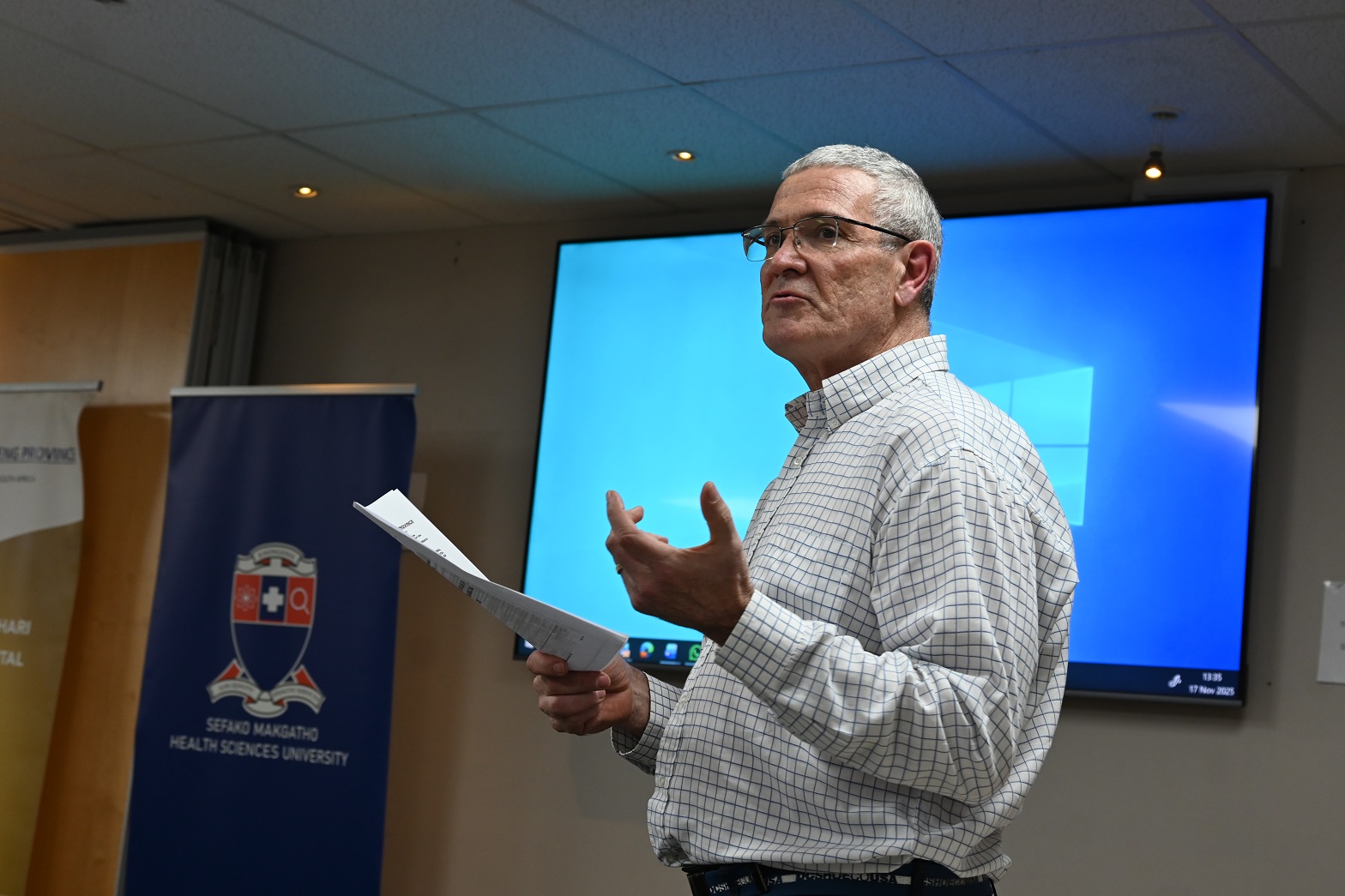 The event was organised by Professor Andries Gous, Chairperson of the DGMAH AMS Committee, in collaboration with the hospital’s Clinical Pharmacy team, SMU’s Department of Clinical Pharmacy, and Pfizer Pharmaceuticals. Attendees were also provided with campaign materials and patient information leaflets to extend stewardship advocacy beyond the symposium.
Its timing could not have been more relevant. “On clinical rounds, I see how challenging some infections have become to treat. The session on hand hygiene was a real eye-opener—sanitisers are our first line of defence against dangerous pathogens. This symposium has been incredibly informative, and I’m eager to put these lessons into practice every day,” said Emmanuella Owusu, a Master of Pharmacy in Clinical Pharmacy student at SMU.
Professor Gous underscored the urgency: “AMR is not a distant challenge—it is happening now. Every stakeholder, from healthcare providers to environmental managers, has a role to play. Immediate, coordinated action is essential to protect our present and secure our future.”
Alongside the symposium, the Gauteng Department of Health has issued two significant circulars guiding antimicrobial governance. The first, concerning Ceftazidime-Avibactam, formally notifies stakeholders of updates related to the medicine.
The second circular provides detailed directions on the Provincial Antimicrobial Therapeutic Guideline. It instructs pharmacy departments to select antimicrobial options aligned with stock availability, emphasising that the guideline supports—rather than replaces—clinical judgement. Healthcare workers are encouraged to consult infectious disease specialists, microbiologists, or clinical pathologists before making recommendations. Approved in November 2024 and June 2025, the guideline was implemented by institutional committees, supported by provincial stewardship structures.
Together, the symposium and newly issued circulars demonstrate a clear provincial commitment to strengthening antimicrobial stewardship. Gauteng’s health sector is intensifying surveillance, expanding education, and driving coordinated action to safeguard life-saving medicines and protect future generations.
By Tumelo Moila