by Kegorapetse | Mar 20, 2018 | SMU Media
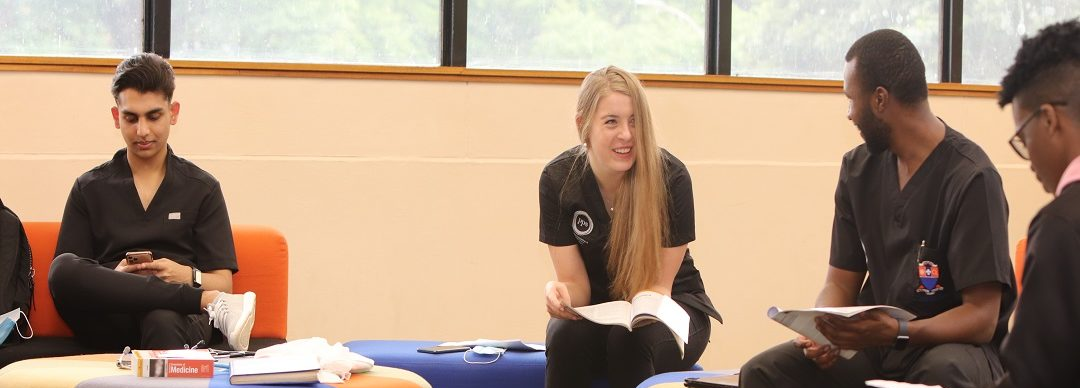
SMU-MEDUNSA Alumni Association (SMAA) launched the Limpopo Alumni Chapter on 17 March 2018 at the picturesque Meropa Casino. The event brought together young and old graduates spanning the various epochs the university went through, as MEDUNSA, a campus of the University of Limpopo (UL) it was merged with, and as a stand-alone comprehensive health sciences, it is currently.
Though different in terms of generations, they belong to SMU as alumni and all pay allegiance to the SMU flag. They attended the launch to be apprised of developments at their alma mater. Dr Solly Motlanthe, Chairperson of the SMU-Medunsa Alumni Association (an umbrella body to which all provincial alumni chapter affiliate) gave an overview of alumni highlights for 2017.
Dr Motlanthe told them about the benchmark visit to a university that boasts a more vibrant alumni sector that contributes millions to its coffers. He said the take home message from this visit was that alumni need to have passion in the university that gave them the opportunities to study and to acquire a qualification that enables them to make a living.
He outlined fundraising plans that SMAA will be embarking upon in 2018. First on the agenda will be to reach out to neighbouring industry of Rosslyn, pharmaceutical industry and cell phone networks to forge relationships first, before attempting to raise funds from them.
Prof Chris de Beer, the Vice-Chancellor of SMU delivered his speech. He thanked the alumni for their commitment to SMU by attending the alumni launch and congratulated them for being the first province to successfully launch SMU Alumni Chapter.
Whilst SMU is a fledgling university, it is a national asset that contributes rare skills to the health care sector of South Africa and beyond. SMU cannot continue depending on government grants. It needs to maximise third stream income in the form of corporate social responsibility urgently.
Though the SA government has thankfully committed R1.85 billion for infrastructure development over five years, the university however has a deficit of R150 Million. So, third stream income is vital. He lauded SMU alumni who are occupying influential positions in public and private sectors and called upon them to use those strategic positions to open doors for SMU to forge relationships with those companies. These relationships will be used to explore funding opportunities from the corporate social responsibility budgets of these companies. .
SMU has grand plans not only to be a benchmark health sciences university providing holistic health sciences education to meet the health needs of the individual, the family, community and the population. But also to seize the opportunities opening up in the country and in the knowledge economy the university is operating in. Alumni need to embrace the 2017-2022 strategic plan, which will be made available in due course, to turnaround the fortunes of the SMU. Knowing the university strategy will go a long way to ensure alumni and the university work towards a common goal.
The university is changing its business model. A lot of institutional adjustments need to be made by students, staff and stakeholders to ensure the university responds operationally to achieve maximum level of performance. He added that the future for SMU is exciting and called upon alumni to join hands with the university to build SMU into a formidable university.
Alumni also had the opportunity to connect with Dr Phophi Ramathuba, alumna and Member of the Executive Committee (MEC) for Limpopo Health, giving updates on health status in Limpopo. In her typical enthusiastic fashion, Dr Ramathuba, explained that Limpopo’s department of health did a remarkable job in uniting the former Lebowa, Gazankulu, Venda and Whites only health departments into a unitary health department to cater for all in Limpopo. The department rolls out Antiretroviral Viral Treatment to (ARV) to 322 369 patients of all ages. 23 098 300 male condoms were distributed while 61 135 male circumcisions were performed in the third quarter of 2017/18. Mother to Child Transmission has reduced from 2.1 % in 2015/16 to 0.96% in Q3 of 2017/2018. A very important indicator toward towards AIDS free generation.
The TB treatment success rate of 82.1 % was achieved in the third quarter of 2017/18.This was as a result of strengthened tracing of patient with the involvement of partners and community care givers. Multi Drug Resistance Tuberculosis (MDR TB) services are being decentralised to accredited hospitals in the province.
The Antenatal 1st visit before 20 weeks rate was 62.8%, An improved Maternal Mortality rate of 142.7/100 000 live births against a target of 164/100 000 live births was realised. Child under 5 years mortality has been reduced with diarrhoea case fatality rate at 2.8% against the 4.5% target. Pneumonia case fatality rate was 2.9% against a target of 4.3%.
Severe acute malnutrition was 6.4% against a target of 14% in 2016/17 (Annual indicator). Human Papillomavirus (HPV) vaccine coverage continues within schools targeting young girls. This process will assist patients and relatives in terms of accessibility of services. The benefits of access to all for Limpopo residents are beginning to show as life expectancy increases to 70 years.
Ramathuba also lamented the inadequacy of the budgets. Given the scale of health needs, services such as anti- Malaria fumigation are being sacrificed to make ends meet and this has the unintended consequence of Malaria outbreaks. Low staff moral and poor sense of urgency remain the bane of the department.
After all was said and done, alumni voted for the Limpopo Alumni Chapter Working Committee. The committee will serve for a period of two years. The committee composition represents a generational mix of young and old alumni. The following were elected unopposed:
- Dr Seshoka Muila, Chairperson, Bachelor of Medicine and Bachelor of Surgery (MBChB) Graduate
- Ms Innocentia Selepe, Deputy Chairperson, BSc Honours Graduate
- Dr Lincoln Moloto, Treasurer, MBChB Graduate
- Dr Putswana Johannes Senwamadi, Resource Mobiliser, an MBChB Graduate
- Ms Maserole Luzzette Montjane, Secretary, graduated with a BSc in Speech language, Audiology Pathology (BSLPA).
by Kegorapetse | Mar 20, 2018 | SMU Media
On 16 March 2018, USAf announced that there is a growing concern across the university sector that companies and individual donors who traditionally offered students and universities funding for bursaries are no longer doing so. It is believed that this change has come into being on the basis of the rollout of what is commonly spoken about as free higher education. This is deeply worrying and may potentially wound the futures of many students who have found their way into one of our 26 public universities and who do not qualify for the new student funding system.
Download: USAf-appeals-to-corporates-and-private-donors-to-continue-to-support-students-through-bursaries-and-scholarships
by Kegorapetse | Mar 12, 2018 | SMU Media
From the humble beginnings in the busy streets of Atteridgeville to an astounding medical professional, has indeed propelled Dr Freddy Kgongwana to conquer all odds stacked against him and continues to do so. During the apartheid regime, he was amongst the people who were forced to relocate from Lady Selbourne (Pretoria) and they found Atteridgeville township as their new residential settlement.
The forced removal didn’t deter his spirit, as today he holds the reigns as the Chief Executive Officer (CEO) of the second largest hospital in South Africa, Dr George Mukhari Academic Hospital (DGMAH). DGMAH has 1652 beds and only 639 medics, 86 of them being interns. “It becomes an extremely difficult challenge when the population grows rapidly. In 2011 the hospital was serving a population of 900 000 people, now as we speak we are serving a population of 1, 7 million,” says Dr Kgongwana. Together with his astounding team of 2027 nurses, 1808 support staff (both administrators and general workers) and 306 allied health staff, they treat an average of 40 000 patients on a monthly basis.
His road to becoming the CEO was by far not the easiest as he encountered a lot of stumbling blocks during his earlier working days, “Being the first graduate in my family was never easy, the pressure and the expectations were always things I had to deal with. There was an extreme need to sacrifice a lot in order to make sure everyone is well taken care of”, he says proudly.
Given the current state of health, he is one of the very few health professionals that have hope that the health sector still has a chance to deliver the best services, provided health judicial (medico-legal litigation) issues are administrated appropriately. He says that because there are no laws to protect health organisations, it is easy for one individual to derail the goals set out by simply suing an organisation millions of rands, which ultimately hinders the employment and production of prospective health professionals; including the procurement of goods and services for healthcare.
Kgongwana emphasised how excited he was when he learnt that the DGMAH and Sefako Makgatho Health Sciences University (SMU) have the same goal of producing at least 10 000 health professionals annually and will work together in achieving that goal. He said “let’s co-create to secure a better future for our children, I cannot do it alone even if I wanted to”. He referred to the two institutions as the siamese twins (conjoined twins) and that it will be almost impossible to separate them.
He constantly remarks that he attributes his success to nurses, he says “nurses have always played a crucial role in my life, it is after all a midwife that delivers babies and become the first point of nurture to them”.
Kgongwana alluded that the main reason he looked at the opportunity of becoming a CEO is to plough back to the community where his whole professional career began. He has done numerous projects such as the DBSA Gauteng Health Feasibility study for DGMAH, the DGMAH SANOFI Oncology clinic from May 2011 to December 2011, Mandela Day Charity Drive (iKhaya Lethemba in Block NN, Soshanguve) in July 2012.
He has also served as the Deputy Director: Health Care Services in the Department of Correctional Services (DCS) from 2008 to 2010. He then progressed to DGMAH as a medical officer under the Internal Medicine Department in which he served for a full year and subsequently became the senior clinical executive from 2011 to 2013 then served as a deputy chief executive officer for 6 months from 2013 to 2015.
Kgongwana who completed his matric in 1982 at the WF Nkomo High School, enrolled with SMU, previously known as the Medical University of Southern Africa (MEDUNSA) where he obtained his Bachelor of Medicine and Bachelor of Surgery (MBchB) in 1991. His sound educational background proves just how much he values education because even as a doctor, he still feel the urge to study further by attending more than a handful of courses relating to the current health hazards, one of them being the MDR-TB (Multi-Drug-Resistant tuberculosis, an infection caused by bacteria that are resistant to treatment) training programme.
Reminiscing about his early years after joining the profession, he started off with an obligatory internship programme on the 1st of December 1991 focusing on the paediatrics at the DGMAH for a year, he then joined family medicine as a registrar for one year. He subsequently worked as a General Practitioner in Soshanguve (North of Pretoria) from 1994 to 2003.
His journey continued in the North West province working as a general practitioner at the Christiana Hospital and the Bloemhof Hospital simultaneously from 2003 to 2005. During that time he was the only doctor around that area, “Another person would have seen travelling 50km daily between these Hospitals as a strenuous activity but I saw it as a blessing because I became the clinical manager by default (as there was no other doctor) and that is how I was introduced to a managerial environment” he says gratefully. From 2005 to 2008 he continued as a senior clinical manager at the Witbank Hospital in Mpumalanga province.
He concludes by appealing to prospective health professionals to surround themselves with positive people, express empathy towards patients and always remember their ethics in order to uplift the health sector.
by Kegorapetse | Feb 5, 2018 | SMU Media
The Department of Nuclear Medicine at Dr George Mukhari Academic Hospital (DGMAH) and Sefako Makgatho Health Sciences University (SMU) had the official opening ceremony of the Positron Emission Tomography – Computed Tomography (PET-CT) Centre. The PET-CT scan is used mainly in Oncology (cancer) patients and allows for more accurate diagnosis, staging and monitoring of response to therapy. It can also be used in Neurology, Cardiology and Infection/Inflammation.
“There was a need for a stand-alone PET-CT Centre, and we cannot undermine all sponsors and stakeholders that made this event possible”, said Prof Trevor Mdaka, Head of Department of Nuclear Medicine at SMU. As a program director and officiator of the event, he also mentioned how this centre will inspire hope for further development in the hospital and that the scanner is a first of its kind in the African Continent, with a high resolution and shorter imaging time aspect of the 64-slice CT Component.
“R36 million has been invested from the National Treasury services grant and I am very excited about this project. Patients from Northern part of Gauteng, North West and Limpopo provinces used to go to Steve Biko Academic Hospital for diagnosis and staging of cancer before treatment. Now they can have the services right here”, said the Gauteng MEC for Health, Dr. Gwen Ramokgopa, who cut the ribbon and unveiling of the the plaque. She continued to say that it is important to strengthen this facility, because SMU has highly trained experts and professors who need this kind of modern technology to treat, diagnose and monitor response for cancer treatment.
The PET-CT camera is a sophisticated piece of equipment that has two components – a PET and a CT scanner that are housed in a single unit. Patients undergo a whole body scan and the acquired images are then displayed on a specialized computer workstation for interpretation by a Nuclear Medicine Physician. “The combination of the two scanners allows for the ‘Best of Both Worlds’ – the high sensitivity from the PET component (which provides physiological/functional imaging); and the high resolution of the CT component (which provides anatomical localization and tissue characterization),” said Dr Aadil Gutta, Principal Specialist and Head of Unit of Molecular Imaging in Nuclear Medicine.
Being the second biggest hospital in the country after Chris Hani Baragwanath Hospital, DGMAH serves up to 1.7 million patients. “It took us nine years to run this project, and this will assist the poorest of the poor to be able access the latest technology in our hospital,” said Dr. Freddy Kgongwana, CEO of Dr. George Mukhari Academic Hospital, who is also very happy about the training of next generation of specialists in Nuclear Medicine.
by Kegorapetse | Jan 24, 2018 | SMU Media
Compliments of the new season, Colleagues, and a warm welcome to you at the beginning of the new academic year.
SMU’s rise to prominence in the fourth year of its existence was the result of many factors: the contribution of dedicated staff, the enthusiasm and inventiveness of graduate and undergraduate students, and the active support and engagement of our government and partners from all walks of life. Just as importantly, the Management and the Council, as well as the academic and administrative staff, have all played a huge role in ensuring that the Sefako Makgatho Health Sciences University remains the fountain of knowledge it is today. Here at SMU, we want to inspire both our students and staff to reach their full potential, to advance knowledge, and to make a positive contribution to the world. I am confident that, together, we will achieve our vision.
In line with SMU’s approved student enrolment plan, I am pleased to say that the registration process is underway and that the University will do its best to accommodate all qualifying students. The registration of returning students commenced on 4 January 2018 and the process was completed successfully. First-time entering students started arriving on 22 January 2018 and colleagues from the Schools and various Support Departments are working hard to ensure that those who qualified are successfully registered.
We are all aware of the announcement by the government regarding free higher education, and the Department of Higher Education and Training (DHET), NSFAS and USAf have been supportive in guiding and providing information to institutions on how to assist qualifying students. All information and circulars in the above regard have been distributed to relevant University officials and the SMU community at large. Kindly familiarize yourself with the content and the concomitant protocols. However, government still needs to engage with various stakeholders to facilitate the impact and full implementation of free higher education for qualifying students.
SMU does not exist in a vacuum – it exists within a particular social, economic, cultural, political and historical context, and it forms an integral part of the community in which it is located. In this regard, SMU’s third core purpose is to discharge its critical social responsibility through community engagement. Let us hold hands and work together to empower our communities.
Thank you for everything you do to make Sefako Makgatho Health Sciences University such a thriving institution.
My very best wishes to all of you for a healthy and productive 2018.