by Kegorapetse | Jan 9, 2018 | SMU Media
The National Student Financial Aid Scheme (NSFAS) welcomes the President of the Republic of South Africa’s pronouncement on free Higher Education and Training for deserving poor and working-class students. A full statement can be accessed by following this link: NSFAS-Press-Statement-on-Free-Education-Pronouncement-Final-1
by Kegorapetse | Jan 9, 2018 | SMU Media
To: ALL MEDIA
DATE: 8 January 2018
For immediate release
Deputy Minister of Higher Education and Training, Mr Buti Manamela, together with senior officials from the Department of Higher Education and Training (DHET) today met with a delegation from the Economic Freedom Fighters Student Command (EFFSC). The meeting was part of the Departments ongoing engagement with stakeholders within the higher education and training sector. Deputy Minister Manamela and Department officials clarified several issues with the EFFSC.
Deputy Minister Manamela reiterated that online applications remain the primary method for applications, however certain institutions have set up mechanisms for late applications. The DHET also recommended that prospective students should still use the Central Applications Clearing House (CACH) for late applications.
The DHET also clarified that there would be no registration fees to be paid upfront for students at TVET colleges and Universities who qualify for NSFAS funding. Students who do not qualify for NSFAS funding will have to pay the registration fees upfront.
The DHET also clarified that all private higher education institutions and colleges have to be registered with the department and a publicly available register of accredited institutions is on the DHET website. The DHET will work with the EFFSC and other student formations to root out these “fake and fly by night institutions” and more public education is needed on this matter.
Deputy Minister will continue meeting with student formations this week to clarify matters related to the implementation of fee-free education so that poor and working class students can continue to benefit from our post school education and training system.
Ends
For more information:
Matshepo Seedat
Media Liaison Officer
Telephone: 012 312 5067
Mobile: 082 679 9473
Email: Seedat.M@dhet.gov.za
Spokesperson
Madikwe Mabotha
Chief Director: Communication
Telephone: 012 312 5024
Mobile: 081 710 3321
Email: Mabotha.M@dhet.gov.za
Issued by the Ministry of Higher Education and Training
by Kegorapetse | Jan 4, 2018 | SMU Media
Details on how the 2018 registration arrangements will be implemented at SMU can be accessed by following this link: 2018-Registration-Arrangements
by Kegorapetse | Dec 5, 2017 | SMU Media
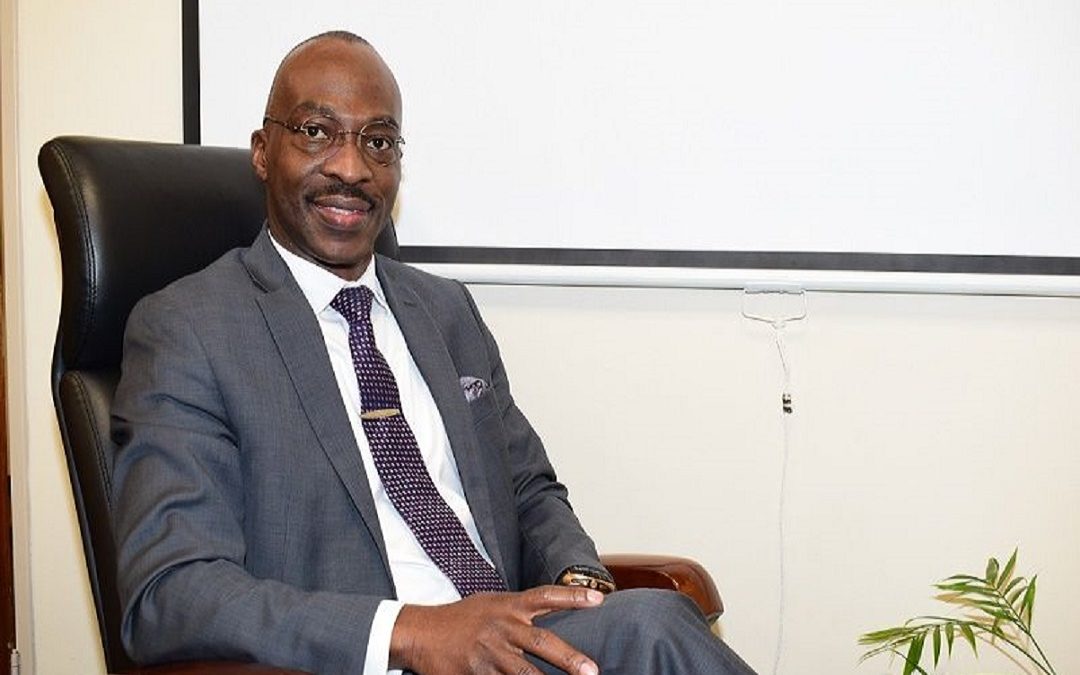
Prof Ayo-Yusuf’s recent ranking as a National Research Foundation’s (NRF) B3 rated scientist is a treasured milestone in his career as a researcher. But, he is quick to point out the ranking comes with huge responsibilities and expectations for him to usher in a turnaround in so far as research at SMU is concerned. Top on his priority list is to create an enabling environment for more researchers to flourish and aspire to become NRF-rated researchers, in their own right.
As the Deputy Vice-Chancellor (DVC) for Research, Postgraduate Studies and Innovation, these huge responsibilities demand of him to make sacrifices which involves burning the midnight oil, a commitment only a handful of researchers commit to.
NRF research ranking system seeks to bring about a globally competitive science system in South Africa (SA). It is a valuable tool for benchmarking the quality of SA’s researchers against the best researchers in the world. These researchers are rated in accordance with their recent research outputs and how its impact is viewed by international peers. Ratings spur on the researchers to publish high quality outputs in high impact journals/outlets. Rated researchers are expected to act as supervisors for upcoming researchers and transfer cutting edge research skills to them. Research outputs over an 8-year period is sent out to a number of world leading researchers in the same field to evaluate their quality and impact.
The categories of the rating system is as follows:
A: Denotes a leading international scholar
B: Internationally recognised researcher
C: Established Researcher
P: Promising young researcher (under 35 years) with leadership potential based on doctoral outputs
Y: Young Researcher (40 years or younger) with potential to become established researcher or leader
Currently, the SMU has six NRF-rated Scientists, namely Professors Ayo-Yusuf (B3), Anna Oelette (C2), Rose Burnett (C3), Mapaseka Seheri (C3), Liuvu Feller (C3) and most recently Dr Setumo Motloung (Y2). Delighted that this figure represents progress, Prof Ayo-Yusuf’s vison is to quantum leap SMU’s research output and its impact. The strategy to achieve that is to focus, for the next five years, on the quality and impact of our research. This will entail a gradual move away from only focusing on quantity of our output to providing financial incentives for quality research and innovation.
This strategy is based on three central pillars, namely developing research capacity of the postgraduate students and academic staff, conducting innovative quality research with integrity and, lastly, encouraging researchers to conduct research that not only positively impact on the lives of people and communities, but also goes a long way to contribute towards the knowledge economy, in line with the National Development Plan (NDP).
by Kegorapetse | Nov 16, 2017 | SMU Media
A pair of male twins from Limpopo were born conjoined and a multi-disciplinary team of health professionals at Sefako Makgatho Health Sciences University (SMU) performed a successful separation surgery. Multiple departments in the School of Medicine came together to plan and execute this complex operation. The surgery was the first of its kind at SMU since the establishment of the institution three years ago.
The pair were joined at the abdominal area and were sharing a liver. It took four months of planning before to the surgery was finally performed. This time was used for further investigations, planning, multiple drills and most importantly to offer the mother and her family the necessary psychosocial support. The surgical time was 180 minutes (3 hours) and there was minimal blood loss. The pair had to return to the theatre to complete the skin closure process. The twins have made excellent progress postoperatively and they are currently recovering at the Dr George Mukhari Academic Hospital. The expertise of the team was crucial during the surgery procedure, due to the complex technique of dividing the liver that the infants shared. Their livers will probably fully develop before the age of one again.
The multidisciplinary team consisted of Specialists from the Departments of Anaesthesiology, Paediatrics, Paediatric Surgery, Plastic Surgery, Radiology, Clinical Psychology and Social Work. There was a huge amount of support from the hospital management, supply chain management and Nursing staff from DGMAH. The separation was said to be a highly critical procedure as the twins were joined in a difficult area. “The dangers we were mostly worried about were bleeding and damaging the intestines but we were very lucky that everything went well” said Dr Nyaweleni Tshifularo, a paediatric surgeon who was part of the separation team.
Conjoined twins are identical twins that are joined and fused together in their mother’s womb. This complication is normally missed during pregnancies and is found when the babies are born. However, this condition cannot be prevented in anyway, as it happens during the process of egg fertilisation; an abnormality extremely rare but seen slightly higher in other parts of Africa and Asia.
The parents of the boys are thrilled and have been appreciative of the wonderful care that they are receiving together with their children at the DGMAH.