by Kegorapetse | Mar 24, 2019 | All News, Opinions
Gender-based violence (GBV) is a global phenomenon deeply rooted in gender inequality, and continues to be one of the most notable human rights violations prevalent in every society and worldwide. GBV is violence directed against a person because of their gender, both women and men experience gender-based violence but the majority of victims are women and girls.
South Africa is rated among the highest in the world in terms of inequality and sexual violence for women. Cultural and societal norms greatly influence human behaviour, and as such, can also influence violent behaviour. Violence against women is regarded as a normal attitude or remains hidden or tacitly condoned, therefore men demonstrate their masculine dominant role and supremacy over their women with especially the rural women facing all types of violation in their life. It is evident that men use their power to intimidate women, and believe that they have the right to abuse women and children
Recently, there has been a marked increase in the rate of GBV including femicide country wide; and Institutions of Higher Learning are no exception. The latest is the attack of the University of Cape Town student Uyinene Mrwetyana, who was tortured, raped and murdered by the post office worker outside University grounds and this incident shook the South African society. Her body was burnt and buried in the township; and this confirmed that GBV and femicide are a broader national problem in South Africa. This has led to many people and civil society organizations protesting country wide calling for an end to the violence.
The modern xenophobic attacks towards our brothers and sisters are also not acceptable. It is through this violence that innocent lives have been lost, an end has been put to a bright future.
Rape, targeting young adolescents and women is a serious problem; which also has a significant negative impact to the South African economy. Not only is this a barricade to economic growth, but those who are subjected to this kind of violence are destroyed as a people and are haunted by these horrific experiences. Some are not able to rise above the incidents and are therefore destroyed for life.
South Africa is a signatory to a number of international treaties on GBV, and strong legislative framework, for example the Sexual Offences Act (2007) and the Domestic Violence Act (DVA) (1998). To add on that, South Africa has the most progressive Constitution in the world regarding gender equality, yet the country is the epicentre of some of the most gruesome and brutal cases of violence against women and children. It is the obligation of the state to protect and promote all human rights of all citizens, therefore, due diligence must be exercised to prevent violence against women and children, to investigate its occurrence and to punish the perpetrators. Doing so will provide protection to women and children, who are the main victims, and will ensure that they enjoy their human rights and freedom.
For us to address GBV, a multi-faceted approach and commitment is to be followed. We need long term coordinated efforts from all the stakeholders; and this includes law enforcement agencies, civil society, the government, private individuals, non-governmental organisations, justice system, departments of health and of education. In addition, men and boys should be actively engaged in campaigns and the planning of programmes aimed at changing the negative attitudes and behaviours that perpetuate violence, and the platform should be utilised to bring about sustained social and cultural change.
GBV is everybody’s business, we therefore need to do our best to engage everyone to promote a violence free society whereby all the mentioned structures in our society aim to promote equality, stability and peace.
By Dr Moreoagae Randa
Dr Moreoagae Randa is a Lecturer in the SMU Nursing Science Department
She writes in her personal capacity
by Kegorapetse | Jan 8, 2019 | All News, SMU Media
The University’s has only received the final DBE NSC results for all the prospective students who have applied to study at SMU in 2019 on Saturday, 5 January 2019.
During the course of the week commencing on Monday, 7 January 2019 to Friday 11 January 2019, the Selection Committees of the various School will sit to evaluate all the applications received, and will communicate the outcomes of their decisions to students via sms from Tuesday, 8 January 2019 until 11 January 2019. With the exception of the BPHARM programme first entering admitted students who will register on Thursday, 17 January 2019, ALL OTHER admitted first entering students for other programmes are scheduled to register at the University from Monday, 21 January 2019 to 25 January 2019.
Given the volume of applications received and being processed, no late applications will be received during the week of 7-11 January 2019.
Regards
OFFICE OF THE REGISTRAR

by Kegorapetse | Sep 16, 2018 | All News, Research
Publish or Perish…..
A University’s worth as a centre for generating knowledge is determined by the number and quality of publications produced, hence the popular phrase “publish or perish” that is used among academics. It is pertinent to note that research quality (which influences its impact) and not necessarily research productivity, also drives quality teaching and learning.
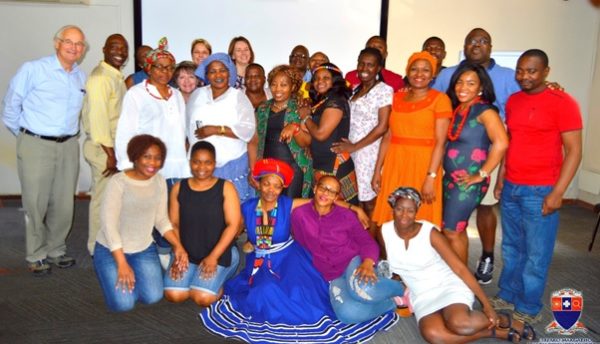 It is in this context that amongst others, SMU has, as its Research Strategic Objectives “Improve research impact and visibility” as well as to ‘Increase proportion of publications in high impact international journals”. To give effect to these strategic objectives, the Office of the DVC-Research, Postgraduate Studies and Innovation (RPSI) had this far, March – September 2018 planned and hosted four (4) capacity development workshops in the form of 4 days per session off campus “Writing Retreats”, targeting Emerging Researchers; PhD and Postdoctoral candidates, not to exclude Master’s students who are staff members within SMU.
The said workshops focused on, amongst others, “Publications Writing Retreat”; “Publications and PhD Thesis Writing Retreat”; “PhD and Grants Proposal Writing Retreat”; and recently “PhD and Thesis Writing Retreat” have proven to be very effective as captured by one of PhD candidate who attended the recent one, who is quoted as saying: “For me the retreat proved to be very useful as I managed to make a few strides and to immerse myself in my research study. The right momentum is building up. So I urge you colleagues not to give up on the seed that has already been planted. Let us nurture it so that we can reap the fruits at the end.”
These workshops were offered using a blend of local (SMU), national (Rhodes University; University of Pretoria) and international (Maastricht University, Netherlands) experts in the field of research, grants application and publications. To harness these and other such related activities aimed at providing continuous support to SMU research community, the office has recently launched an exclusive SMU Research Communique to communicate research related activities and opportunities. Watch the space

by Kegorapetse | Aug 21, 2018 | All News, Research
Media Alert
21 August 2018
For Immediate Release
The members of the media are hereby informed about the SMU’s Research days programme which commences on Tuesday 21 to 23 August 2018, at 8h15, in Clin Path Building (CP) Lecture Hall 3L001. The research event is a premier event of the university in which researchers present and subject their research papers to review by their peers, in various disciplines. Research is part of the core business of the university.
Among other highlights, there will be a keynote address by Prof Ayo-Yusuf, the Deputy Vice-Chancellor for Research, Post Graduate Studies and Innovation. Prof Ayo-Yusuf is also a National Research Foundation B rated (NRF-B rated) Scientist. Ayo-Yusuf’s title is “Predatory Journals and Questionable Editorial Practices”.
Dr Debra Goff, who is an Infectious Disease Specialist, a founding member of the Antimicrobial Stewardship Programme and Director of Clinical Research for the Department of Pharmacy, Ohio State University Wexner Medical Centre (OSUWMC), Columbus, Ohio, USA, will deliver a presentation entitled “The global value and impact of collaborative research”, on 21 August 2018, at 10h30.
Dr Sechene Stanley Gololo, a senior lecturer, Department of Biochemistry, SMU, will do a presentation on “Towards optimization of health benefits from medicinal plants without genetic modifications”, on 21 August 2018, at 10h30.
Dr Nicola Page, a senior scientist who is head of the Virology Division of the Centre for Enteric Diseases at the National Institute for Communicable Disease (NICD), will present on the title “Gastroenteritis in South Africa – an update”, on 21 August 2018, at 14h20.
A detailed programme of the event is hereto attached with a wide range of interesting titles to enable you to identify a title which will be of interest to you.
Released by the SMU Marketing & Communication
Contact Dr Eric Pule, the Director, Marketing & Communication
Phone 012 521 4563

by Kegorapetse | May 24, 2018 | All News, SMU Media
NOTICE TO ALL NSFAS FIRST ENTERING STUDENTS AND SENIOR STUDENTS THAT APPLIED TO NSFAS FOR THE FIRST TIME FOR 2018
PROCESS FOR SIGNING OF THE NEW BURSARY AGREEMENT (NBA)
- You will receive an e-mail notification to sign online
- The e-mail will contain a link where you can click to reach the online portal;
- You will be required to input your ID number to receive the One Time Pin (OTP). The OTP will be sent through an SMS (to your number registered with NSFAS;
- You must sign the NBA online; and
- Once you have signed, you will see a notification stating that the Terms and Conditions of the agreement have been submitted, which indicates that you have signed successfully.
Please note that NSFAS will only make payment to students who have signed successfully. The deadline for the signing of all NBA’S at SMU is FRIDAY, 6TH JULY 2018.
PLEASE NOTE : ALL STUDENTS WHO RECEIVED NSFAS IN 2017 MUST NOT SIGN THE NBA ONLINE.


by Kegorapetse | Apr 16, 2018 | All News, Research
DST-CSIR
2019 Postgraduate Bursary Opportunity Presentation!!!
The Council for Scientific and Industrial Research (CSIR) will be visiting Sefako Makgatho Health Sciences University SMU to address students about the CSIR Postgraduate Bursary opportunities.
All interested Science and Technology students who intend to register for Honours/Masters or PhD studies in 2019 are invited to attend.
The supported research focus areas for Masters/Doctoral study are restricted to:
- Aerospace
- Composites
- Modelling and digital sciences (data science, biometrics, cybersecurity, etc.)
- Microsystems Technology
- Titanium (manufacturing elements)
- Photonics (free space communication, fibre-optics, laser welding and optics, etc.)
- Biotechnology (Biopharming, bio- processing and bio – catalysis)
- Information and Communications Technology
Examples of relevant major courses for those applying for Honours bursary are as follows:
- Information Systems
- Information Technology
- Electronic Engineering
- Statistics
- Mathematical Statistics
- Epidemiology and Biostatistics
- Biotechnology
- Biochemistry
- etc.
- Computer Science
- Electrical & Computer Engineering
- Information Systems Management
- Data Science
- Applied Mathematics
- Biological Sciences
- Chemistry
- Physics
Please if interested, RSVP with your name via e-mail to Ms. Jadah Matentji at jadah.matentji@smu.ac.za by 25 May 2018.
Date : 28 May 2018
Venue: CP3L001
Time : 11:30 am