by Kegorapetse | Aug 18, 2019 | All News
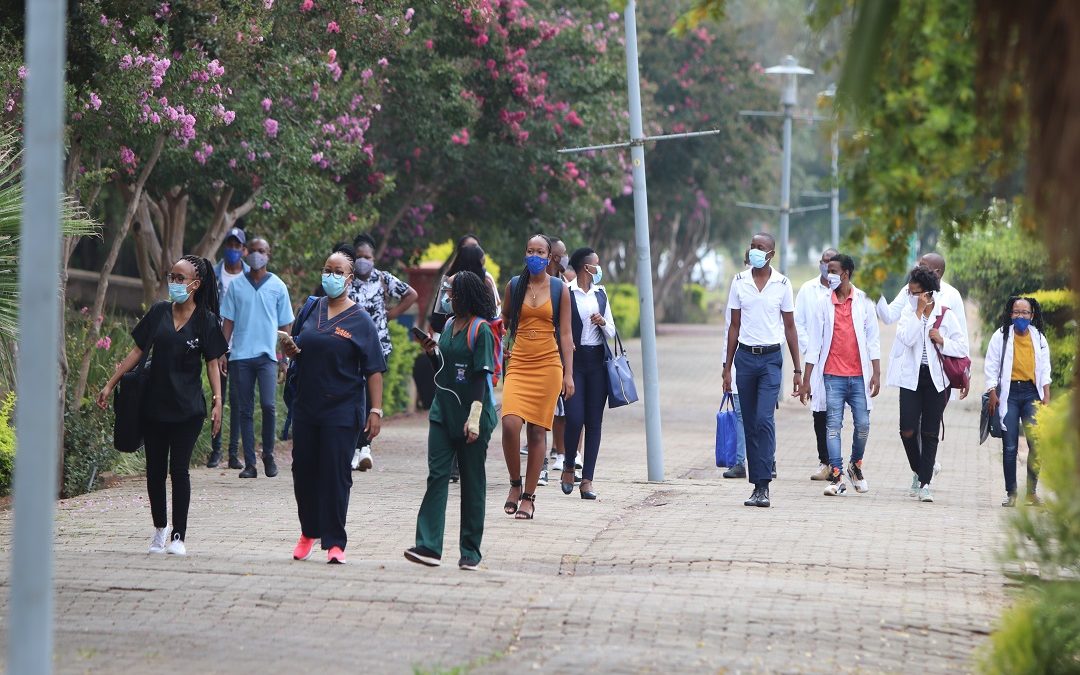
The last three weeks have been difficult for the University as no semblance of academic activities of the University could be undertaken, with major consequences for the students, staff, the University and the country at large. Operations of the University were resumed, although with intermittent disruptions, over the last few days. It is within this context the Council of the University met three times during the three-week period of protest action, with the sole objective of addressing the demands presented to it, and thereby creating conditions for the operational and academic activities of the University to resume without delay. More details can be accessed by following the download below: Re-opening-of-the-University-Statement_20190818
by Kegorapetse | Aug 1, 2019 | All News, SMU Media
At its extraordinary meeting held on 31 July 2019, the Senate deliberated on matters pertaining to the disruption of the academic activities on Campus and the attendant implications. Senate was briefed on the recent developments that have led to the protest action which started on Monday 29 July 2019 and set to continue for the rest of the week, and the subsequent suspension of operations and academic activities of the University, and the associated implications for the academic project of the University. More details can be accessed by following the download below:
Statement-of-Senate-on-the-Disruption-of-Academic-Activities-01August2019 (1)
by Kegorapetse | Jul 26, 2019 | All News, SMU Media
President Cyril Ramaphosa has signed the much anticipated Presidential Health Compact during a ceremony held at the Dr George Mukhari Academic Hospital on 25 July 2019. Joined by the Minister of Health Dr Zweli Mkhize and other key role players in the health sector, Ramaphosa lauded the signing of the health compact and said it heralds a new dawn for the people of South Africa as it will ensure one country, one health system.
“The signing of the Presidential Health Compact is the culmination of a long journey we have traveled together since we convened the Presidential Health Summit last year to find solutions to the crisis facing our health system”, emphasised the President.
The health summit aptly characterized the health situation in the country to be in a state of crisis.
“It is fitting that we are signing this historic accord here at the Dr George Mukhari Academic Hospital where a groundbreaking and difficult operation to separate conjoined twins was performed in 2017 in collaboration with staff from the Nelson Mandela Children’s hospital and a number of private sector doctors”, said President Ramaphosa.
He further stated that the successful completion of the operation cemented the good reputation of so many of the public hospitals that goes unrecognized.
The President further reminded those who attended that the hospital is also the teaching facility for the Sefako Makgatho Health Sciences University, the first health sciences University established in post- apartheid South Africa.
“The Sefako Makgatho University campus was once the campus of the Medical University of South Africa known as Medunsa.
More than half of all African medical doctors and dentists in Southern Africa were trained at Medunsa, and no doubt many of them are among us today”, he continued.
Additionally, President Ramaphosa paid tribute to those who walked through the doors of Medunsa(now SMU) for having been trail blazers and paving the way for the young professionals who now continue to make a difference in the lives of the citizens. The health compact has identified nine(9) pillars that require to be strengthed to improve the health system in the country. They are as follows :
1. Augment human resources
2. Ensure improved access to essential medicines, vaccines and medical products through better management
3. Execute the infrastructure plan to ensure adequate, appropriately distributed and well maintained health facilities
4. Engaging the private sector in improving the access, coverage and quality of health services
5. Improve the quality, safety and quantity of health services provided with a focus to primary health care.
6. Improve the efficiency of public sector financial management systems and processes.
7. Strengthen governance and leadership to improve oversight, accountability and systems performance at all levels.
8. Engage and empower the community to ensure adequate and appropriate community based care
9. Develop an information system that will guide the health system policies, strategies and investment.
By Phaladi Seakgwe

by Kegorapetse | Jun 16, 2019 | All News, Opinions
This year marks 43 years since the events of 16 June 1976. As the country observes this historic milestone since the youth of South Africa in particular students took to the streets to voice their displeasure and concerns with the introduction of Afrikaans as a single medium of instruction, a lot has certainly changed in the country’s education landscape.
 The heroic deeds of the students of 1976 have undoubtedly helped accelerate the tempo towards the realization of freedom, as thousands fled the country to join liberation movements in exile and many losing their lives in the process. It is important to note that these activities of 1976 were in the main coordinated by young people.
Fast forward to the post liberation and democratic period, the landscape in education has significantly changed in South Africa with students scoring some victories.
Some Universities have habitually been the preserve of a few in particular those who could afford the exorbitant fees charged by the various institutions. Nonetheless, the goal posts have indeed shifted as more and more young people currently find themselves in the higher education system, even those who are so poor or previously disadvantaged. This has been made possible of course by the intercession made by government to change the lives of the people through progressive policies that seek to redress the imbalances of the past.
In an effort to further increase access to these institutions, government has effectively over the years made money available through the NSFAS to help those whose families cannot afford to pay for their education.
One can argue that today, institutions of higher learning are indeed the epicenter of the struggle as more and more students call for access, quality free higher education, transformation, decolonization of the curriculum, better infrastructure, intersectionality matters, the demise of apartheid symbols, insourcing of workers etc.
The activities of the fallist movements as characterized by the Rhodes must fall and the recent #FeesMustFall have captured the imagination of the nation and altered the higher education landscape perhaps for the benefit of generations to come in a manner unprecedented and scoring victories in the process.
Today, Institutions of higher learning, government as well as students and other key stakeholders continue to grapple with ways and means of ensuring that access to higher education is fully realized.
The management of Universities across the board are now dealing with new and emerging challenges as a result of more numbers competing to gain access to these institutions while funding from government has been dwindling over the years. This means that while doors are opening, there is no adequate space and infrastructure to accommodate every student especially in public universities.
Additionally, there appear to be concerns about maintaining the quality of the research output, quality of teaching and learning across universities as well as holding on to experienced and eminent academics while at the same time ensuring that the numbers of student enrollments increase. It is indeed a tightrope to walk as many strive to strike a balance and ensuring that the standing of their universities is safeguarded as well as improving and maintaining the high quality of graduates produced.
Sefako Makgatho Health Sciences University is undoubtedly playing its part to ensure through its five schools that quality health sciences professionals are nurtured and produced for the benefit of the country.
SMU is arguably better positioned to provide solutions to the health challenges facing the country through its graduates and research efforts. Furthermore, through its community service programs, the University students are already making a meaningful contribution to the wellbeing of citizens working under strict supervision.
In remembering the generation of 1976, one can without any shadow of doubt proclaim that their relentless fight in pursuit of equal access to education, and their acts of valor were not at all in vain. Their heroic deeds paved the way for the current and future generations to complete what they started. However, there is still a lot to be done to adequately address emerging challenges and demands.
Phaladi Seakgwe is SMU Communication Manager. Writing in his personal capacity.

by Kegorapetse | Jun 10, 2019 | All News, Opinions
SMU is today hosting international visitors from the University of Nottingham – a UK based institution to crystallize the collaboration between the two Universities on Gender Based Violence issues.
 Deputy Minister in the Presidency responsible for Women, Youth and People with Disabilities Professor Hlengiwe Mkhize lauded both institutions for the initiative.
In her address to those present, Prof Mkhize emphasised the need for collaborations among institutions as they serve as critical agencies of change. She further said that as a country, South Africa has done a lot of work in ensuring that progressive legislations are in place to deal with the scourge of Gender Based Violence, however decried the continuous presence of cases of date rape affecting young women in particular students as well as corrective rape mainly experienced by members of the LGBTQI community.
She further denounced the rising numbers of femicide and called for action by law enforcement agencies and encouraged victims to report the cases. ” A number of parents have lost their daughters in the hands of their lovers. In most cases evidence based information is required to successfully deal with such instances and I want to encourage institutions to get this right through research initiatives and understanding the dynamics of social phenomena as this will greatly help society”, said the Deputy Minister.
Speaking on behalf of the University, the Deputy Vice Chancellor responsible for Research Prof Ayo-Yusuf thanked the University of Nottingham for choosing SMU. He said collaborations are mutually dependent and appealed to more international partners to walk with SMU to make an impact in society.
The international visitors are hosted by the University Nursing Department and will be with the University until 12 July 2019.
By Phaladi Seakgwe

by Kegorapetse | May 12, 2019 | All News, Alumni
Notice to inform members of the Convocation of the names of candidates nominated for various positions on the SMU Convocation Structure as per the Call for Nominations that closed on 14 June 2019
For more details, please follow this link.
