
by Lorato | May 7, 2025 | All News, SMU Media, Student Media
Sefako Makgatho Health Sciences University (SMU) has long been a cornerstone of social and economic development, fostering impactful relationships with communities to drive socio-economic progress. Through its commitment to community-based teaching, learning, and research, SMU ensures that students graduate as engaged citizens ready to address real-world challenges. The university’s reciprocal approach to community engagement benefits both students and the broader society, reinforcing its mission to integrate academic excellence with social impact.
 Demonstrating this commitment, SMU has recognised Emma Musekene with the prestigious Best Community Engagement Award at the 2024 Vice-Chancellor Excellence Awards. This accolade acknowledges her dedication to bridging the gap between dental education and underserved communities, particularly her work with pensioners at Korwe Multi-Purpose Centre in Ga-Rankuwa.
Under Musekene’s leadership, Bachelor of Dental Therapy and Bachelor of Oral Hygiene students refine their clinical skills while providing essential oral healthcare services. Approximately 200 pensioners benefit from free oral health screenings, personalised hygiene advice, and demonstrations on proper brushing and flossing techniques. The initiative promotes oral health equity and instils a lifelong commitment to community engagement among future dental professionals.
A seasoned oral hygiene Lecturer, Musekene holds multiple qualifications, including a Bachelor of Oral Hygiene, a Bachelor of Administration, an Honours in Developmental Studies, a Postgraduate Diploma in Public Health, and a Master’s in Public Health. She is currently pursuing a PhD. Her career shift from a Community Development Officer at the Assistant Director level to oral healthcare was driven by the realisation that oral health is a critical yet often neglected aspect of overall well-being.
“With this award, we celebrate the lives we have touched, the smiles we have restored, and the trust we have built with communities,” says Musekene. “It reaffirms our dedication to making oral healthcare accessible and reminds me why I chose this path—to serve, educate, and uplift those often overlooked.”
Beyond clinical work, Musekene leads multiple outreach initiatives, including mobile dental clinics and school programmes, ensuring vulnerable populations receive essential oral healthcare. “Many people suffer in silence, unaware their pain is preventable,” she says. “Our goal is to bring hope and dignity to those neglected by the healthcare system.”
A defining feature of these outreach efforts is their holistic approach to oral healthcare. “We don’t just conduct screenings; we ensure patients receive referrals within the School of Dentistry for continued care,” she explains. “Our work is not just about treatment—it’s about empowerment, education, and restoring confidence.”
The impact of these initiatives aligns with SMU’s broader mission of integrating education with social responsibility. “We measure success not just through statistics but through transformation—the trust we build and the lives we change,” Musekene emphasised.
One particularly moving experience reinforced the importance of her work. “An elderly woman told us she had never owned a toothbrush. The joy on her face when she received one was unforgettable. That moment underscored the immense gaps in oral healthcare and the power of small gestures.”
Musekene’s initiatives also provide students with invaluable hands-on learning experiences, immersing them in real-world challenges while fostering empathy and compassion. “Our students do not just learn—they experience. They witness firsthand the human impact of their future profession. Faculty members guide them, ensuring they refine their skills while developing a deep commitment to service.”
She strongly advocates for embedding community engagement within academic programmes, urging institutions to see it not just as an academic requirement but as a moral responsibility. “True education extends beyond the classroom. It is about using our knowledge to uplift others. Every institution should integrate community engagement to produce professionals who serve with both knowledge and heart.”
Receiving the Best Community Engagement Award marks a milestone, but for Musekene, it is just the beginning. “This award is for the communities we serve, my students, and the faculty members who guide them,” she reflects. “It reminds us that what we do matters and fuels my dream of a world where preventable oral health issues no longer go unnoticed.”
Her motto, “Your Smile, Our Concern,” encapsulates her unwavering commitment to transforming lives—one smile at a time. As SMU deepens its dedication to community engagement, its impact will resonate for generations, shaping a future where knowledge, compassion, and social responsibility drive meaningful change.
By Tumelo Moila

by Lorato | May 7, 2025 | All News, SMU Media, Student Media
From the quiet village of Mohlahlereng in Tzaneen to the roaring stadiums of international football, Dr Nthabiseng Maesela’s journey is a compelling testament to purpose, perseverance and passion. An alumna of Sefako Makgatho Health Sciences University (SMU) and the doctor for South Africa’s women’s national football team, Banyana Banyana, Maesela is not only a practising Sports Physician but also a trailblazer for young women entering the world of sports medicine.
 Born in Mohlahlereng and raised in Burgersfort before relocating to Lephalale and eventually Polokwane, Maesela’s path to medicine was inspired from an early age. “My journey into medicine was your typical ‘what do you want to be when you grow up?’ story – and the answer was always ‘a doctor’,” she says. Motivated by her father’s constant affirmation— “You’re going to be a doctor, akir?”—and the allure of saving lives as portrayed on television, she enrolled at the University of Limpopo’s Medunsa Campus in 2012, calling it “the beginning of everything”.
While medical school is notoriously demanding, Maesela credits her success to her deep faith and involvement in campus ministry. “I was strengthened by my faith and my participation in Believer’s Loveworld (BLW). It was more than just a ministry—it became a place of worship, mentorship, and lifelong friendships,” she reflects.
Initially unsure of her specialisation, it was during her internship that Maesela discovered sports medicine, far from the confines of hospital corridors. “I met a sports physician on the athletics field and began volunteering at local events. I eventually worked with organisations like the Limpopo Academy of Sports. I was captivated. I had found my calling in a space I never expected,” she shares.
Her career reached a defining moment in 2023 when she received a call-up to support Banyana Banyana in their preparations for the FIFA Women’s World Cup. “I was in absolute disbelief,” she admits. “That quickly turned into appreciation and a sense of responsibility. I knew I had to give my best—not just as a doctor, but as a contributing member of the team.”
Working with elite athletes brought new challenges. “High-performance athletes are generally healthy, but they are prone to injuries, and their care revolves around recovery, performance optimisation, and adherence to anti-doping rules,” she explains. “You can’t prescribe medication as you would with regular patients—timing and substance content are crucial.”
 From addressing knee and ankle sprains to tackling female-specific health concerns such as menstrual cycles, relative energy deficiencies, and ACL vulnerabilities, Maesela highlights the importance of holistic care. “Our team includes physiotherapists, biokineticists, sports scientists and psychologists. Everyone brings their expertise—it’s a collaborative effort to support the athlete’s performance and wellbeing,” she says.
She vividly recalls the emotional high of the 2023 FIFA Women’s World Cup: “When Banyana Banyana reached the Round of 16, making history as the first South African team—male or female—to get that far, it was overwhelming. To know I played even a small part in that success was incredibly humbling.”
Despite her achievements, Maesela remains focused on community impact. “I’m fortunate to have entered the field at a time when young black women are welcomed and encouraged. But there’s still a gap. We need more visibility, more representation. Seeing someone like you in the field makes all the difference.”
Looking to the future, her ambitions are grounded in her home province. “While I don’t plan to stay on as a full-time team doctor, I’m dedicated to my private practice and providing medical support at tournaments and events. I also hope to establish a high-performance centre in Limpopo for semi-professional and professional athletes.”
She concludes with heartfelt encouragement: “It’s not about where you start, but where you’re willing to go. SMU gave me the foundation I needed, and now I’m building from there. Let’s keep supporting our ladies—they’re not just hardworking, they’re history-makers.”
By Tumelo Moila
by Lorato | May 7, 2025 | All News, SMU Media, Student Media
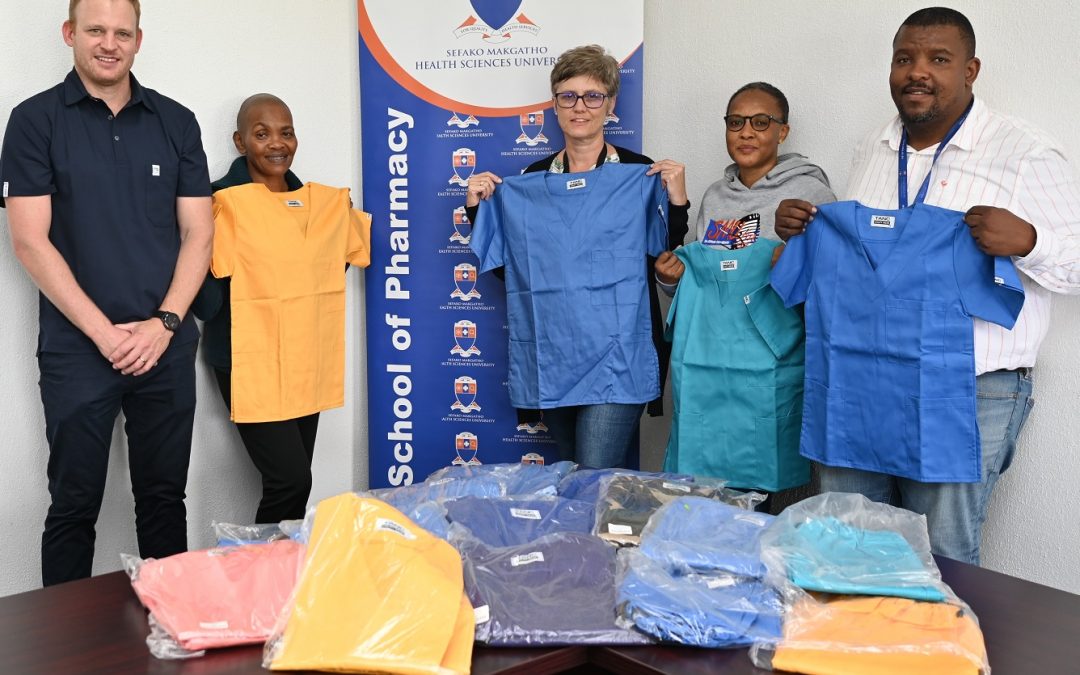
In a commendable act of corporate social responsibility, TANC Scrubs recently made a meaningful contribution to the advancement of healthcare education in South Africa. The company donated 120 sets of medical scrubs, valued at R30,000, to Sefako Makgatho Health Sciences University (SMU), demonstrating a strong commitment to supporting the future of the country’s healthcare professionals.
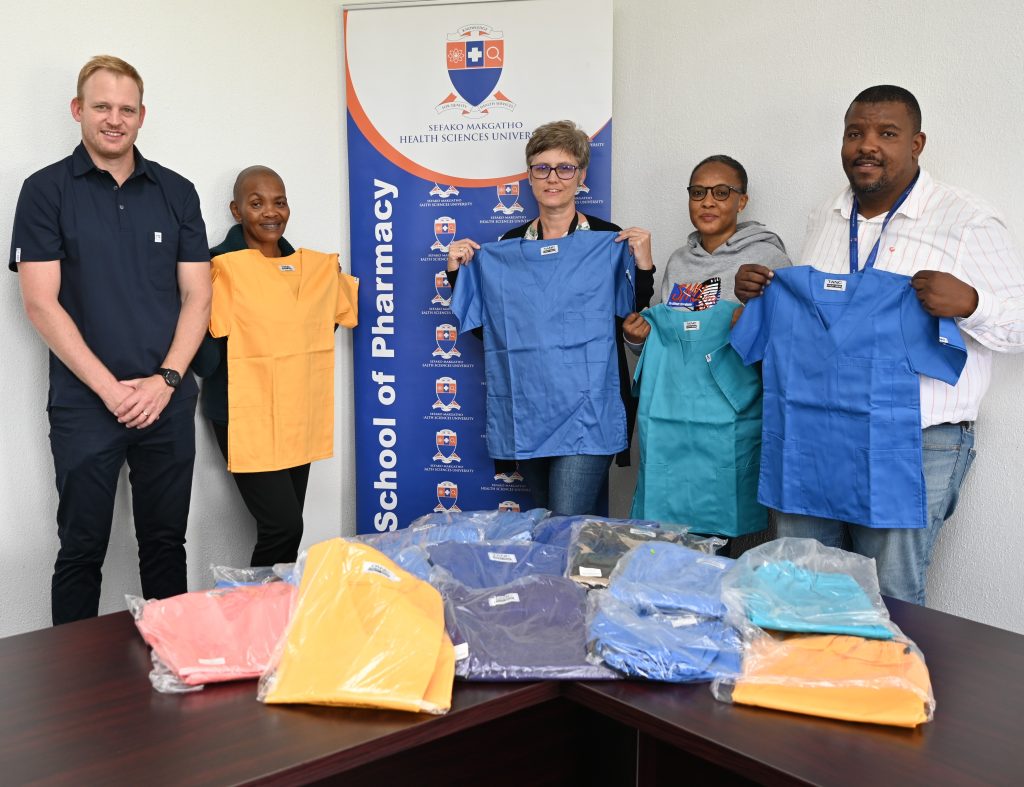 The donation is aimed at students in the School of Medicine, the School of Pharmacy, and the School of Oral Health who are in financial need. These essential uniforms are more than just attire, they represent a step towards educational equity and professional readiness. By easing financial constraints, this initiative enables students to fully concentrate on their clinical training and academic performance, laying a strong foundation for excellence in healthcare delivery.
Craige Dixon, Head of Group Marketing at TANC Scrubs, shares his thoughts on the collaboration: “It’s truly our pleasure to support the students at SMU, and we are proud to play a role in shaping the future of healthcare in South Africa. We are honoured by the university’s appreciation and excited about the possibilities of future collaboration.”
This generous contribution aligns with SMU’s vision of “Transforming health services through excellence in teaching, research and community engagement” and reflects its core values of excellence, integrity, respect, compassion, and accountability. Through this partnership, TANC Scrubs has not only supported individual students but has also contributed to narrowing the resource gap faced by many academic institutions.
The initiative will directly benefit 120 students, equipping them with the practical tools necessary for clinical learning. It is a tangible reinforcement of SMU’s mission to develop socially accountable and competent healthcare professionals who are responsive to the health needs of the nation.
Legodi Mashiane, from the Office of Institutional Advancement at SMU, expresses sincere appreciation for the donation: “The Office of Institutional Advancement at SMU would like to warmly thank the TANC group for their incredibly thoughtful donation of scrubs to students in the School of Medicine, School of Health Care Sciences, and School of Pharmacy.
For many of our students, the path to becoming a healthcare professional comes with financial hurdles, and this donation helps lift some of that weight. TANC’s generosity ensures that our students walk into their clinical environments with confidence, pride, and a strong sense of belonging.
This act of kindness reminds us that our journey is not one we walk alone. It’s support like this that builds hope, inspires excellence, and strengthens the SMU community.”
This donation by TANC Scrubs is a powerful example of how shared values and collaborative action can lead to meaningful change. As SMU continues to live its mission and uphold its values, partnerships like these will be instrumental in building a healthcare system that is inclusive, compassionate, and responsive to the needs of all South Africans.
By Dimakatso Modise
by Lorato | May 7, 2025 | All News, SMU Media, Student Media
The Sefako Makgatho Health Sciences University (SMU) has embarked on an ambitious initiative to enhance science education in under-resourced schools through its Mobile Science Outreach Project. Spearheaded by Florence Seseng, a Lecturer at SMU’s School of Science and Technology, the project aims to ignite a passion for science among learners and improve their academic performance through hands-on, activity-based learning.
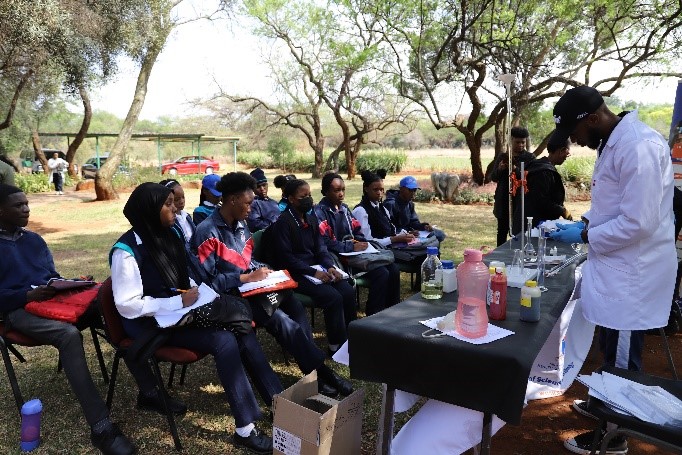 The Mobile Science Lab is designed to address critical gaps in science education by providing learners with practical exposure to scientific experiments. “Many schools, especially in underserved areas, struggle with inadequate infrastructure and a lack of essential laboratory equipment,” Seseng explained. “This makes it difficult for learners to grasp scientific concepts, conduct experiments, and develop analytical thinking skills.”
The lab, which travels to selected secondary schools in the greater Tshwane area, ensures that Grade 10–12 learners have access to hands-on learning experiences. Schools benefiting from the project include Diphetogo Secondary, Kgathoentle Secondary, and Wallmansthal Secondary, among others.
Using state-of-the-art equipment, learners engage in a range of experiments in biology, chemistry, and physics. “The objective is to make science more interactive and engaging,” Seseng noted. “We encourage students to perform experiments, formulate hypotheses, and analyse results, helping them develop a deeper understanding of scientific principles.”
Teachers also benefit from the initiative, gaining access to resources and professional development opportunities. “Workshops are organised to help educators explain scientific concepts effectively using real-world examples,” said Seseng. “By equipping teachers with knowledge and tools, we ensure that the impact of the project extends beyond our visits.”
Positive impact and measurable results
The project has already yielded significant improvements in learner engagement and performance. According to a report from Mapenane Maths, Science & ICT School of Specialisation in Zone 16, Ga-Rankuwa, matric distinctions in science subjects increased from 12% to 75% since the school partnered with the programme. “Our 2024 matric pass rate has reached 94%,” the school’s report highlighted. “The quality of results has improved, with more learners achieving Bachelor-level passes.”
Seseng attributes this success to the interactive nature of the programme. “Hands-on activities make science enjoyable and accessible. Students are more engaged, and their interest in science careers has grown substantially.”
Despite its success, the project faces challenges, including limited equipment and resources. “Conducting experiments in schools without proper facilities can be time-consuming and requires meticulous planning,” Seseng admitted. However, she remains optimistic about expanding the programme. “We aim to introduce an after-school science club in participating schools and encourage learners to take part in science fairs and Olympiads.”
To sustain and expand the initiative, SMU collaborates with government and private sector partners. “The project is primarily funded by the university, but we also work with organisations like the National Research Foundation’s South Africa Agency for Science and Technology Advancement (NRF-SAASTA) and the Pretoria Botanical Gardens,” Seseng said.
Looking ahead, Seseng hopes to inspire more students to pursue careers in science. “Dreams can come true when we work hard and strive for excellence,” she said. “We want to nurture the next generation of scientists who will contribute to solving real-world challenges.”
Schools interested in participating in the programme can request a visit via email and complete a school needs assessment form.
With the continued dedication of SMU and its partners, the Mobile Science Outreach Project is set to leave a lasting impact on science education, fostering curiosity and innovation among young learners.
By Tumelo Moila
by Lorato | May 7, 2025 | All News, SMU Media, Student Media
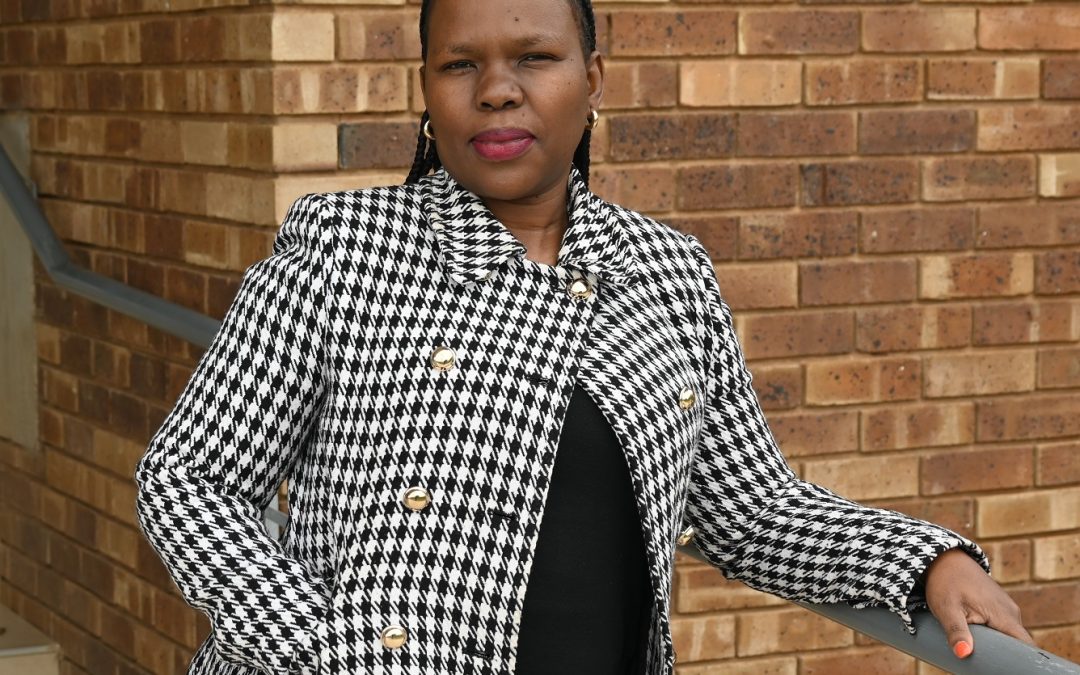
Sefako Makgatho Health Sciences University (SMU) recently welcomed Mapula Sekele to its Finance Division as the new Procurement Officer. With more than 16 years of dedicated public sector procurement experience, Sekele brings with her a strong foundation in supply chain management, honed during her tenure at the National Department of Mineral Resources and Energy. Her arrival marks a significant step in strengthening SMU’s procurement function and supporting the institution’s strategic and academic objectives.
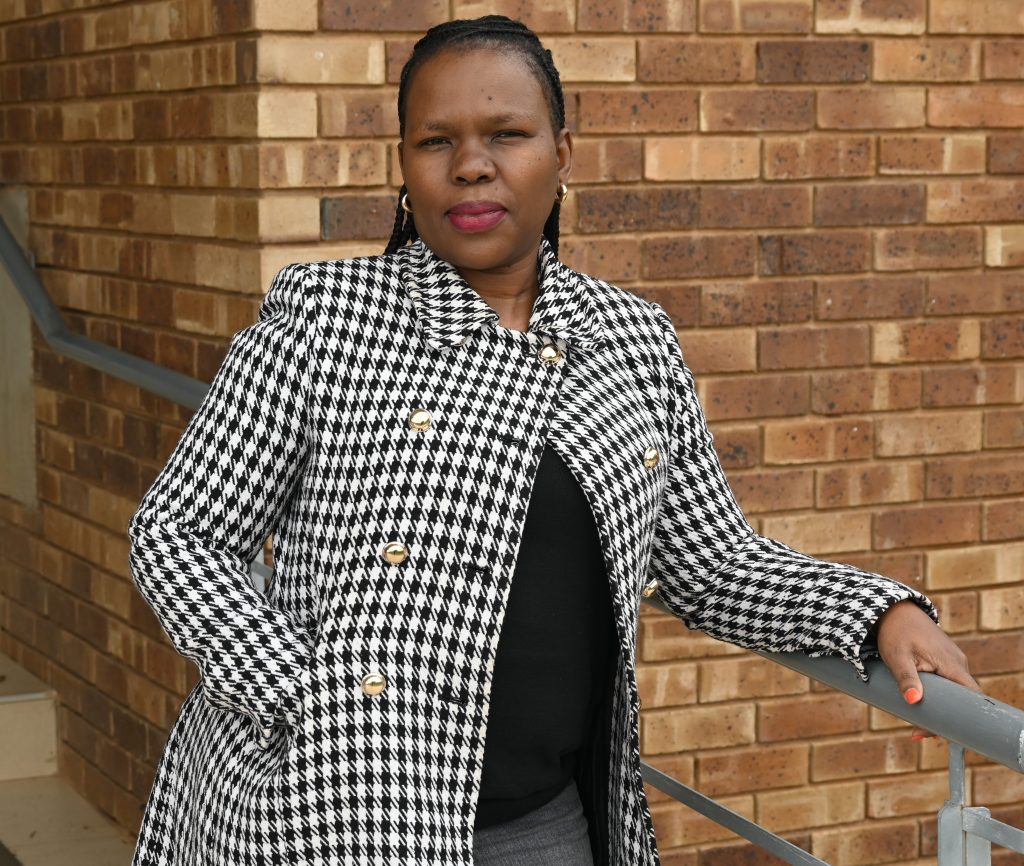 Sekele is a seasoned professional whose career has been built on sound governance, regulatory compliance, and an unwavering commitment to ethical procurement practices. Speaking on her new role, she shares: “I am excited to be part of an institution that is shaping the future of health sciences. I look forward to contributing to SMU’s mission through procurement systems that are efficient, transparent, and aligned with national legislation.”
Her qualifications are as impressive as her work ethic. She holds an Advanced Diploma in Supply Chain Management from Tshwane University of Technology (TUT) and a National Diploma in Logistics Management from the University of South Africa (UNISA). She is also a practising member of the Chartered Institute of Procurement and Supply (CIPS) and is currently advancing her qualifications with the institute. “For me, learning never stops,” she adds. “By day, I serve SMU. By night, I study. It’s all about growing so I can give my best to the institution.”
Walter Maleyana, Deputy Director: Finance at SMU, expresses his excitement at her appointment. “Sekele brings exactly the kind of energy, expertise, and professionalism we need in our team. Her appointment significantly strengthens our procurement capability, especially at a time when we’re focused on enhancing compliance, accountability, and value for money in our processes.”
He adds that her deep understanding of the public sector frameworks and practical, hands-on experience are a welcome addition. “She doesn’t just know the policies, she’s lived them, implemented them, and improved them. That level of experience is rare, and we’re lucky to have her.”
Throughout her career, Sekele has demonstrated a unique ability to turn policy into action. Her strengths lie in drafting watertight specifications, implementing airtight bidding processes, and designing procurement plans that stand up to both operational demands and audit scrutiny. At SMU, she is already making strides in aligning procurement practices with institutional goals and national compliance standards, such as the Public Finance Management Act and the Preferential Procurement Policy Framework Act.
Beyond her technical expertise, she is passionate about embedding a culture of good governance. “I believe procurement is more than a support function; it’s a strategic partner in delivering the university’s mandate,” she explains. “When done right, procurement supports teaching, research, and service delivery. That’s what I want to be part of here at SMU.”
Her vision aligns closely with the broader goals of the Finance Division, which is focused on operational excellence, risk mitigation, and ethical financial stewardship. Maleyana believes her arrival will accelerate progress in these areas, especially as SMU continues to expand its academic offerings and infrastructure. “She’s joining us at the right time,” he says. “With her leadership in procurement, we can ensure that every rand spent advances our core mission.”
Sekele’s story is one of passion, persistence, and professionalism. As she begins this new chapter at SMU, the university is proud to support her journey and to be the institution where she continues to shine.
By Dimakatso Modise
by Lorato | May 7, 2025 | All News, SMU Media, Student Media
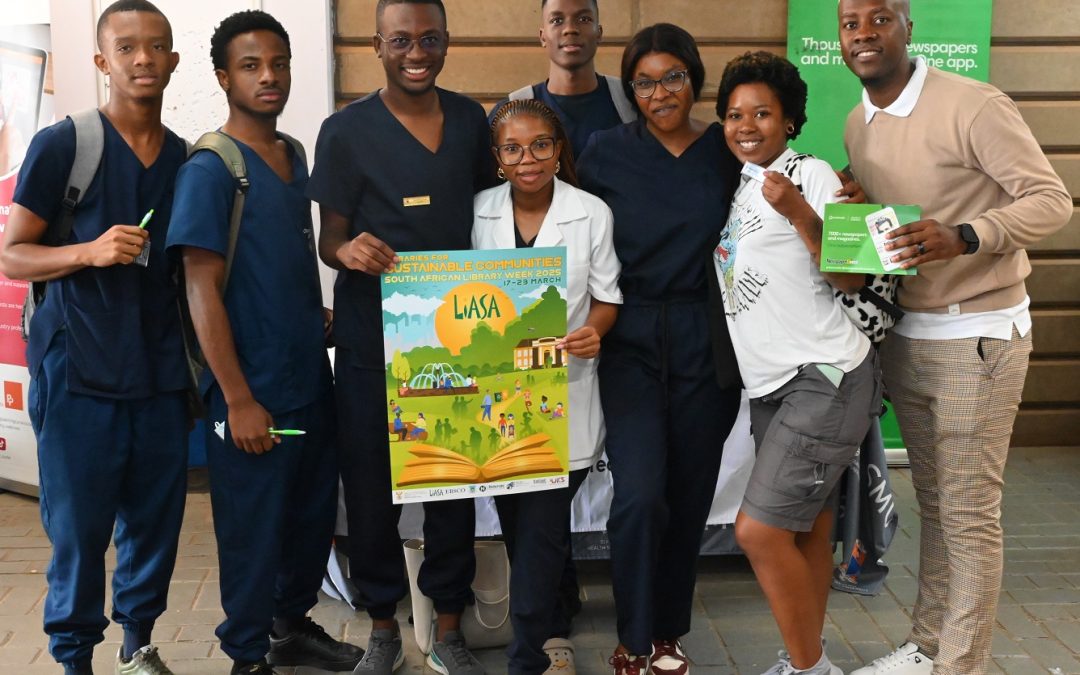
Sefako Makgatho Health Sciences University (SMU) joined institutions across the country in celebrating South African Library Week (SALW) 2025 under the national theme “Libraries for Sustainable Communities.” The event brought together students, staff, and industry stakeholders for a vibrant programme that showcased and promoted services offered by various information providers.
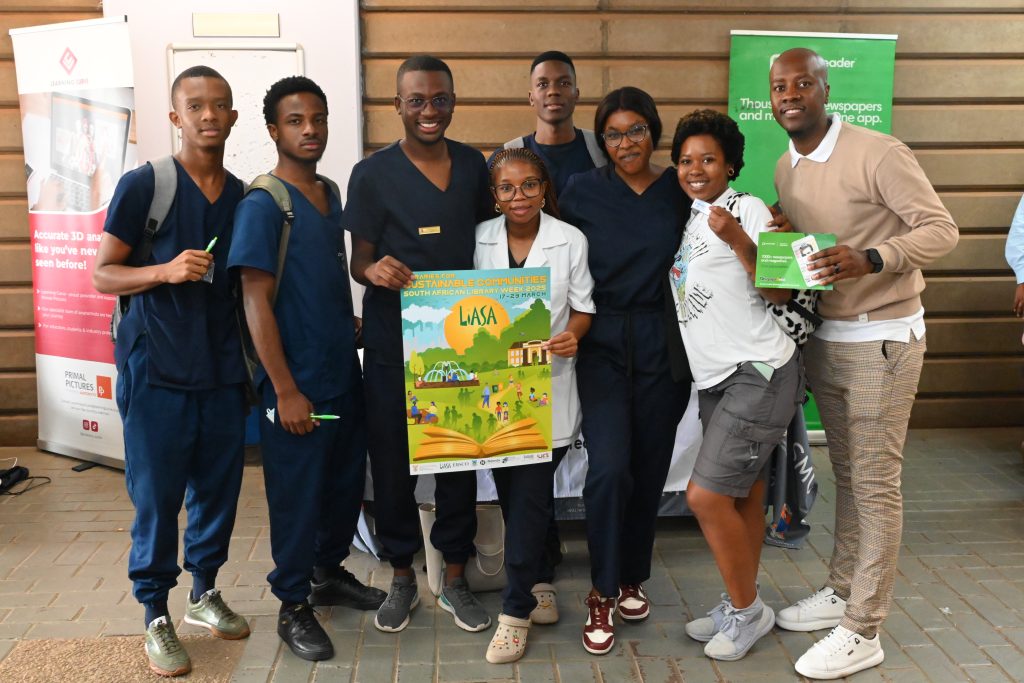 Spearheaded by the SMU Library and Information Services, the event featured exhibitions by leading information resource providers, including EBSCO, Primal Pictures/Anatomy TV, Learning Curve, and Elsevier. These service providers presented a rich array of reading materials, digital tools, and educational resources, reinforcing the notion that libraries are not simply book depositories but dynamic hubs for learning, inclusion, and development.
The 2025 theme aligns with South Africa’s commitment to the United Nations Sustainable Development Goals (SDGs), particularly SDG 11: Sustainable Cities and Communities, and SDG 4: Quality Education. Libraries play a significant role in advancing these goals by providing inclusive spaces, equitable access to knowledge, and promoting lifelong learning and environmental awareness, ultimately fostering resilient and informed communities.
SMU Library and Information Services continues to advance accessibility through a blend of physical and digital resources, as well as inclusive infrastructure. A key highlight of the event was the library’s role in promoting lifelong learning, recognising that education extends beyond traditional classrooms and that libraries support both students and staff throughout their academic and professional journeys.
In brief remarks, library staff underscored the critical role of the library in the daily lives of both staff and students. They emphasised the growing importance of digital inclusion in a post-pandemic world, noting that internet access, computer workstations, and digital literacy training are no longer luxuries but essential academic tools. With refurbishments to the library nearing completion, SMU Library remains committed to continually improving access to resources, services, and systems to meet the evolving needs of the university community.
The event also fostered community engagement by creating a collaborative space that brought together students, academic staff, and external partners, further reinforcing the library’s position as a cornerstone of social cohesion and academic support.
Evon Matime, a Master’s student in Pharmaceutical Sciences at SMU, shared her perspective on the library and the celebration: “The SMU Library provides an environment where futures are shaped. It offers a quiet space but also connects users to a world of knowledge and opportunities.” Students expressed excitement for the full completion of the library’s revamp, eager to benefit from the improved learning environment.
As SALW 2025 drew to a close, it reaffirmed the vital role libraries play in advancing education, supporting development, and promoting sustainability. SMU remains committed to offering inclusive, accessible, and transformative library services that empower individuals and contribute towards a more equitable future for all.
By Tumelo Moila