by Lorato | Aug 11, 2022 | All News, SMU Media
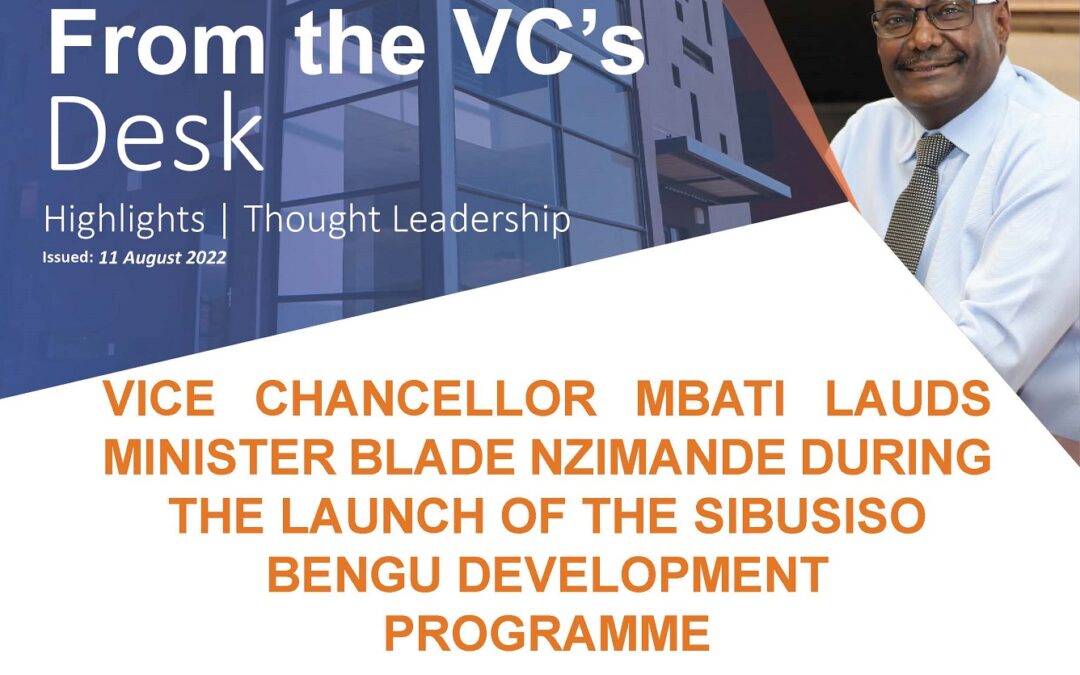
The honourable Minister of Higher Education, Science and Innovation, Dr Blade Nzimande formally launched the Sibusiso Bengu Development Programme (SBDevP) in Durban on 22 July 2022. This programme was previously called the historicallly disadvantaged institutions (HDI) grant, but has now been expanded with a much larger budget. The launch was attended by Vice Chancellors and other Senior Managers from the eight universities designated as historically disadvantaged, the DG, DDGs and other Senior officials from the Department of Higher Education and Training. The patron of the Programme, Professor Sibusiso Bengu (first Minister of Education in the democratic South Africa) was also present with members of his family.
The SMU Vice Chancellor Prof. Peter Mbati delivered an address representing HDIs while the key note address was delivered by the Minister Dr Nzimande. The SMU delegation consisted of Prof. Patrick Demana (Acting DVC Academic & Research), Mr. Theo Bhengu (Director Grants) and Dr. Senoelo Nkhase (Director Centre for University Teaching and Learning). The SBDevP continues to be an important intervention in our HDIs without which the current transformation witnessed in these institutions would not have been seen. This development grant has assisted universities by providing funding to resolve institution specific challenges, backlog of infrastructure neglect and decay, and serving as a catalyst for effective and efficient functioning in key academic and operational administrative functions. In his career as Vice-Chancellor, Mbati has been in the inimitable position of being at the helm of two HDIs, and this fund has critically changed the operating landscape of these institututions, including among others:
- Establishment of Centres for Higher Education Teaching and Learning/CUTL, with funding made available to appoint qualified academic practitioners with requisite skills and experience.
- Reviews and development of PQMs in line with our Ministers’ call for a differentiated higher education sector, with universities playing to their strengths and not attempting to be clones of existing institutions.
- Establishment of Grants Management offices, to ensure that the SBDevP is uncompromising in the manner the projects are managed, and that we can account fully for resources given to the University.
- Review of the Viability and Sustainability of program offerings, thereafter canning those that are not viable, and appropriately recurriculating others as the market may demand.
- Capacity in critical administrative and operations divisions to increase efficiency and productivity, including the development and embedding of systems to improve operational efficiencies and effectiveness at these institutions. For example with the dramatic increase in funding from Infrastructure Efficiency Grant, HDIs appointed skilled professionals with engineering, quantity surveying, project management, and other qualifications within the Built environment to provide the necessary oversight for mega projects funded through the Infrastructure Efficiency Grants. Etc,
As SMU was a new stand-alone university, there was a great need to review the governance systems, including the academic rules of the Schools and the reconfiguration of the academic governance committees. This programme funded the processes leading to the development of a new business model of the University to ensure it becomes financially sustainable in the long run. There were other strategic infrastructure projects that were made possible by the grant, including the Africa Bio-imaging Facility, Occupational Health and Safety Audits, and the Bulk Water System Contribution to the City of Tshwane.
Finally, SMU feels greatly honoured to have been chosen by DHET to be the home of programme management for the Sibusiso Bengu Development Programme and we have entered into a memorandum of agreement with DHET in this regard.
Despite the many challenges facing HDIs, the SBDevP enables these institutions to reimagine and renew ourselves, serving as a catalyst that enables their development plans to translate into quality and excellence.
Prof. Mbati took the opportunity to thank Minister Dr Blade Nzimande on behalf of HDIs for his steadfast belief and conviction in our higher education sector, and in particular, the requisite laser focused attention he has given to HDIs to transform into highly efficient well-resourced universities of choice.
Download Full Article here

by Lorato | Aug 10, 2022 | Accolades and Achievements, All News, SMU Media
Sefako Makgatho Health Sciences University (SMU) has taken a conscious decision to place the Academic Project (teaching and learning and research and innovation) at the centre of its operations. This involves the
establishment of national and international partnerships and collaborations to ensure that it has adequate capacity to support its strategic objectives.
It is against this background that SMU, led by the Vice-Chancellor, Prof. Peter Mbati, hosted the Chinese Embassy at SMU on the 27 July 2022. The Chinese delegation was led by the Chinese Minister Counsellor for Science and Technology, Mr Long SHEN and the second Secretary for Science and Technology, Mr. Wei XIE. The meeting follows on initial discussions with the Chinese Embassy as well as the prestigious Wenzhou Medical University located in Zhejiang, China.
In his opening remarks, Prof. Mbati said that “SMU has taken a de- liberate approach to establish partnerships to help address heath issues locally, continentally and globally through teaching and learning and research and innovation”. He further indicated that central to the discussion was the need to, broadly, deepen the relationships between SMU and Chinese higher education institutions.
In response, the Chinese Minister Counsellor emphasised his government’s commitment to advance health sciences and innovation, including the development of vaccines and research in smart agriculture. He further emphasised China’s commitment to fund research projects on the African continent. In this regard, the first project that will be initiated between SMU and the Chinese government is skills development and training in the field of ophthalmology, involving the Wenzhou Medical University.
The highly ranked Wenzhou Medical University (WMU) was identified as the partner of choice for collaboration with SMU. The initial engagements with WMU were aimed at the introduction of an Ophthalmology and Optometry Advanced training programme and the envisaged collaboration between SMU and WMU. This drew on ongoing SMUs efforts to strengthen and enhance strategic partnerships between academia and industry nationally and internationally.
As part of the meeting, SMU’s Director for Research and Innovation, Prof. Mapaseka Seheri made a presentation focusing on the establishment of the Centre of Pandemic Diseases. In her presentation, she indicated that as part of SMU’s strategic goals the university seeks to ensure that through the establishment of the Centre, it “contributes to ensuring an understanding of emerging pandemics and how best to treat them, and to strengthen health policies, equip policy and decision makers with evidence-based research interventions”. Furthermore, the Centre seeks to build collaborations with internationally recognized centers of excellence”, Prof. Seheri said. Possible collaborations with the Chinese government in this regard were considered.
To conclude what, in all respects, was a successful meeting, the Chinese visitors were taken through a campus tour where they visited the following laboratories: MECRU, Microbiology, Centre of Entrepreneurship and the EMU facility. What has become evident is the commitment between SMU and the Chinese Embassy to forge a partnership and to contribute to the training of health sciences practitioners and to address health challenges in South Africa, China and globally.

by Lorato | Jul 20, 2022 | Accolades and Achievements, All News, SMU Media
SMU Vice-Chancellor Professor Peter Mbati has pledged to donate R10 000 once off payment to the Harambee Annual Fund. Mbati made this announcement during the launch of the fund on 18 July 2022 and further committed to contribute R1000 every month and urged all staff members to complete the employee deduction forms to make their monthly contributions.
Mbati explained that Harambee – a Swahili word, means coming together of a community to assist each other to achieve a common purpose. The proceeds of this fund is to help academically deserving yet financially constrained students. “The target is to have all staff members to contribute a certain amount to the fund on a monthly basis. A number of the executive and senior management team have pledged to contribute R500 every month. This fund will ensure that vulnerable students can pursue their academic dreams with dignity and in a caring environment”, explained the Vice-Chancellor. He further emphasized that the SMU Annual Fund will be the University’s umbrella strategy to raise funds through various activities targeting own internal staff and students, Convocation and Alumni, business and foundations at both national and international levels.
“My dream is that ALL the staff members at SMU will find it within their hearts to become part of this unique SMU initiative by making monthly contributions towards the fund, thereby becoming guardians of our needy students. It takes a village to raise a child. Let the spirit of Harambee live in us” said the VC. I have a lot of faith that the spirit of Ubuntu that lives in all of us will be our guiding conscience, and that this initiative that we have launched today will be sustained year round, he said.
SRC President Philani Mdakane used the occasion to challenge everyone to make a minimal contribution of R67. Let us use the 67 minutes of Mandela day and turn it into R67 contribution for this important cause. He pledged to make a personal contribution of R670 in line with the theme for Nelson Mandela Day. Mdakane said the SRC cannot turn a blind eye when students go to sleep without a meal. He said the spirit of giving must first start with the SMU community before soliciting contributions externally. He said this year the SRC helped more than 300 students through the hands of compassion as compared to previous years.
Ms Karabo Raphokoane who is a lecturer and an Executive member of of the University Alumni, urged all alumni to make a contribution to the fund. She hinted that the University’s alumni is willing to make a contribution and is supportive of initiatives of this nature. She committed to rally them to support the initiative through various activities. Ms Raphokoane reminded everyone that the same Alumni came to the rescue of students when Covid-19 hit our shores by contributing R25 000 towards their transportation. She further called on alumni that are on Campus to heed the call.
Dr Tshifhiwa Mulaudzi, the Chairperson of Nehawu encouraged staff members and students to make their contribution to the fund. “It takes a village to raise a child, all of us seated here are products of people who believed in us. Somebody somewhere made sacrifices”, said Mulaudzi. He said by making contributions, this will encourage others elsewhere to do the same. He said it is difficult for students to function optimally when they are hungry and called on everyone including big corporates to make contributions to the Harambee Fund. Mulaudzi also said he will climb Mount Kilimanjaro as part of raising funds for students.
The APSA/SAPTU union Chairperson Mr Monedi Lekabe also pledged support to the initiative. “The Vice-Chancellor alone cannot resolve the magnitude of the social ills of the past. It is for this reason that we request the whole SMU community to make a meaningful contribution to this Harambee fund to achieve the goal of raising the 1 million rand”, said Lekabe.
Full article download can be accessed below:
SMU VC Prof Mbati launches the harambee fund
File size: 613.11 KB
Created: 20-07-2022
Updated: 20-07-2022
Hits: 359

by Lorato | Jul 18, 2022 | Accolades and Achievements, All News, SMU Media
The Sefako Makgatho Health Sciences University and the community of Ga-Rankuwa recently signed an engagement protocol. The protocol provides a framework for effective communication and engagement between the two parties. Speaking at the signing ceremony, SMU Vice-Chancellor Prof Peter Mbati said, a university’s relevance is steeped in its commitment in uplifting the community within which it is located.
“We are a national asset and therefore belong rightfully to the entire country. Nonetheless, we have to be alive to the immediate community in which we are located, the Ga-Rankuwa community. By signing this protocol today, we agree to give effect to this aspiration. The protocol will help us to outline the modalities on how this will be done and govern our relationship moving forward”, emphasized Prof Mbati.
Mbati further emphasized that SMU is a University first and foremost and operates in terms of the Higher Education Act with a specific mandate to produce a certain caliber of health professionals. “This means that the teaching and learning must be correct, the support we give to our students and staff must be correct and the environment and training platform must also be conducive for them”, he said.
The Vice-Chancellor also told the community representatives that SMU is at an advanced stage of finalizing the process of commercializing the University land wherein business and the community will be given an opportunity to work with the institution on a variety of projects. He cautioned that it is important to be prudent when utilizing the University funds and be accountable for every cent spent. Furthermore, Mbati stressed that the university will not compromise on quality and pricing and will continuously conduct market surveys to have an appreciation of costs of goods and services to ensure value for money.
He lauded the teams that worked hard for the improvement of the community engagement protocol and called for all stakeholders to have an appreciation of their different roles. Speaking for business and the community, Mr N Maselela said when the first protocol was signed in 2016, they felt that the University was not listening to the community and a decision was made that a document that will guide the relationship between the two parties be created.
“Today we have revised the old document. In order for us to achieve the benefits, the must be a continuous process of engagement and it must be a peaceful process and therefore, no one should be undermined”, said Maselela. He called upon all parties to play their role so that the material conditions of people can change for the better. Maselela further said going forward, they want to see a company from the community of Ga-Rankuwa being given a huge responsibility by the University as part of building capacity. He cautioned against any form of segregation in business.
The Chief Financial Officer of SMU Mr Eminos Manyawi explained that the process to finalize the community engagement protocol was not easy with a lot of concessions having to be made. He mentioned that Council requested that the protocol should be revised considering that a lot had changed since the 2016 version was put in place. The CFO said despite the difficulties endured along the way, the protocol was a reflection of the harmonious relationship between the University and the community of Ga-Rankuwa. Manyawi explained that through this protocol, the University will communicate to the Ga-Rankuwa community the employment, business and developmental opportunities associated with the implementation of the infrastructural and other supply projects of the University.
Full article download can be accessed below:
Newsflash - SMU and Ga-Rankuwa Community signs a protocol of engagement
File size: 629.31 KB
Created: 18-07-2022
Updated: 18-07-2022
Hits: 334
by Lorato | Jul 12, 2022 | All News, SMU Media
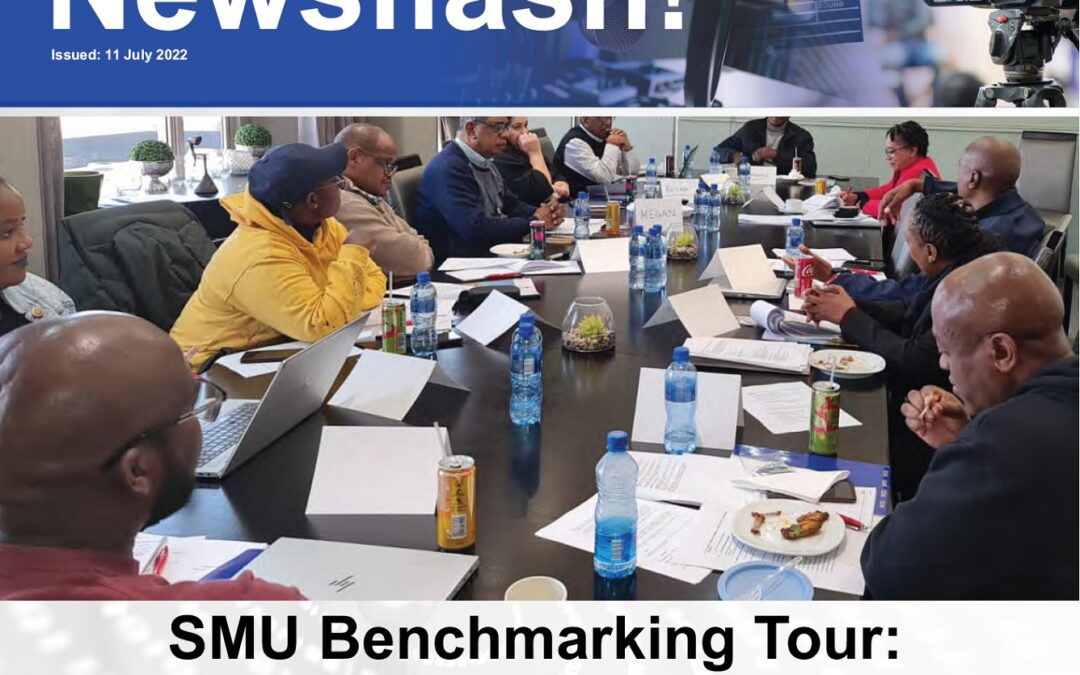
SMU Benchmarking Tour: Engagement with Wits University
Emanating from the salary negotiations, the parties (SMU Management and Organised Labour) agreed to undertake a benchmarking tour with a number of Universities to investigate/explore the following issues to better improve current practices:
a) Salary advances payable
b) Notch progression/ percentiles
c) Medical Aid subsidy
d) Study benefit subsidy on all accredited public and private colleges, universities and higher education institutions
e) Advance on 13th cheque
The following SMU delegation, comprising of HR and Organised Labour, met with the HR Team at Wits University on 07 July 2022:
• Odette Ramsingh (Human Resources)
• Pontsho Hlalethwa (Human Resources)
• Kwenze Khuzwayo (Human Resources)
• Tshifhiwa Mulaudzi (NEHAWU)
• Gladys Malema (NEHAWU)
• Jacob Lekabe (APSA/SAPTU Collaboration)
• Kabelo Mokoape (representing APSA/SAPTU Collaboration)
• Lizette Van der Merwe (representing APSA/SAPTU Collaboration)
The SMU delegation appreciated the willingness of Wits University to engage on the various issues that we as SMU are currently wrestling with as we seek solutions that are in the best interest of the employees and the University. Wits University openly shared their information and knowledge with SMU, and the delegation left the engagement with many insights and much ‘food for thought’.
There is no doubt that engagements of this nature will definitely enrich perspectives on policy, practices and approaches, and will impact on the quality of decisions that SMU will take on the matters mentioned. Within this context of learning and growing, it is therefore with excitement that the delegation will engage with the HR Team at the University of Mpumalanga on 28 July 2022.
Once all engagements are concluded, a position paper will be drafted for Executive Management Committee for the necessary direction and decision.
What the joint benchmarking process demonstrates is a commitment by the parties to meaningfully explore the issues, and in an open and transparent manner to seek solutions. What it will also serve to do according to Ms Odette Ramsingh, SD: Human Resources at SMU, ‘is consolidate a continued relationship of knowledge and information sharing between the respective universities that will bode well for embedding better practices in the sector’.
The strategic partnership between SMU Management and Organised Labour was commented upon when a representative from the host University indicated that ‘It was such a pleasure to have hosted a diverse audience; a first I must say where management and organised labour collaborate on such an important goal of benchmarking practices’.
SMU HR and Labor undertakes a tour of Wits University
File size: 966.84 KB
Created: 12-07-2022
Updated: 12-07-2022
Hits: 256
by Lorato | Jul 1, 2022 | All News, SMU Media
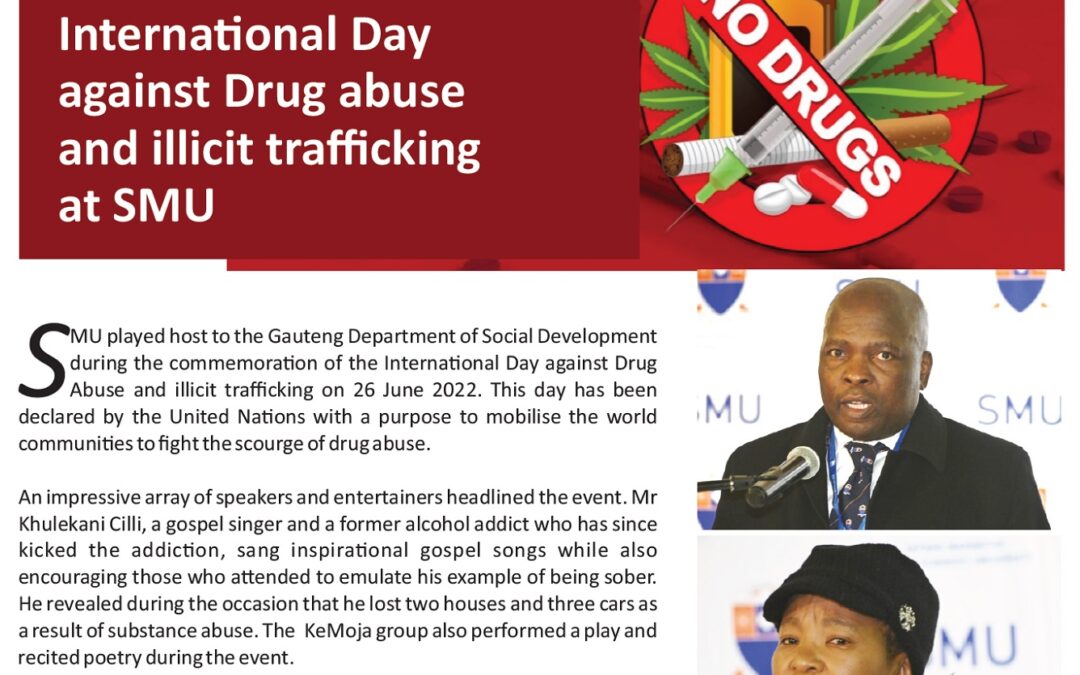
SMU played host to the Gauteng Department of Social Development during the commemoration of the International Day against Drug Abuse and illicit trafficking on 26 June 2022. This day has been declared by the United Nations with a purpose to mobilise the world communities to fight the scourge of drug abuse.
An impressive array of speakers and entertainers headlined the event. Mr Khulekani Cilli, a gospel singer and a former alcohol addict who has since kicked the addiction, sang inspirational gospel songs while also
encouraging those who attended to emulate his example of being sober. He revealed during the occasion that he lost two houses and three cars as a result of substance abuse. The KeMoja group also performed a play and recited poetry during the event.
Speaking in his capacity as the Councillor of Ward 31, where SMU is located, Councillor Tshepo Kgatle appealed to the community to change their attitude towards drug addicts and view them as people suffering from substance abuse disorder and not criminals.
Giving a welcoming address on behalf of the Vice-Chancellor, SMU Chief Operating Officer Mr Mfanfikile Sibanyoni told attendees that the University as an institution that primarily, specialises in health sciences education is confronted by the challenge of illicit drugs both, in its research activities and in practice. “We find ourselves having to deal with the trauma and many after effects of drugs- from people across the spectrum”, said Sibanyoni.
“Drug abuse is a major social problem with significant impacts on both the social and economic aspects of any country and the world. The flip side of the technological advancements that we witness today is that they also enable trading in illicit drugs. As an institution of higher learning, we have a responsibility to use our expertise and the technology, at our disposal, in the fight against this scourge. Given the magnitude of the problem, we acknowledge that we cannot do this alone. Equally, we acknowledge that government on its own cannot successfully deal with this problem. Collaborations such as demonstrated by this occasion provide a platform and the sharing of resources which will enable us to do more with less”, emphasised the COO.
Ms Desary Carlinsky, the Acting Director, Abuse Prevention Treatment and Rehabilitation said “the change we want to see, in the war against substance abuse, starts with ourselves, as a community”. She said she came to SMU to commemorate the International Day Against Drug Abuse and Illicit Trafficking and to form lasting partnerships and networks with all service delivery partners in addressing drug challenges.
Dr Moliehi Matlala, the Acting Dean, School of Pharmacy, said participating in the commemoration event is part of the School of Pharmacy’s community engagement programme. She added that illicit drugs are not the only problem, even medication such as Codeine and Tramadol in the hands of school kids, end up being used as drugs and in time become gateway drugs towards illicit drugs.
Ms Dereleen James, a Central Drug Authority member, shared with the audience her experiences of her son who overcame drug addiction and has been clean for six years. She called upon the community to close ranks and work together because substance abuse disorders do not discriminate as they happen to the best among the community.
Prof Kebogile Mokwena, the NRF Research Chair: Sub- stance Abuse and Population Health, said “as a society, we are responsible to look after those among us who are vulnerable. Nyaope addiction cannot be treated in the same old way as alcohol addiction has been treated, in the past. There is a need to embark on evidence based ways of treating this disorder”. She challenged Gauteng Social Development to open their doors for partnership to enable her and other researchers to access funding to conduct research which will benefit the society and address the scourge of drug abuse disorder.
Delivering a keynote address on behalf of the provincial government, Deputy Director General at the department of Social Development Mr Onkemetse Kabasia said there must never be a time to retreat and everyday should be declared to fight substance abuse. “When we are sleeping, drug lords and peddlers are hard at work”, he said. Kabasia also mentioned that a trend has emerged where criminals are targeting students from the primary school level up to tertiary institutions to avail drugs to them and in the process destroying the hopes and aspirations of the future of the country.
“We continue to make significant strides in fighting drug and substance abuse through programmes such as ‘Ke Moja’, I am fine with drugs. He encouraged those who are facing substance abuse challenges to check themselves in their nearest facility as government has availed resources to help those in need. He further said that on average, 40 000 people are treated yearly and the department is committed to reaching its target of treating 8 million people by 2024.
This day is supported by governments, organisations, communities and individuals all over the world, to promote the awareness of dangers associated with illicit drugs. This day enables different communities to create awareness’s of illicit drug trade, drug smuggling and illicit tobacco consumption, because the communities at local level, are in the battle against alcohol tobacco and other drugs.
The Gauteng City Region Anti-Substance Abuse Strategy 2020 – 2025 prioritises services to young people and especially Institutions of Hi her Learning. The implementation plan is geared to the:
Development and implementation of Prevention and awareness programme;
- Capacity building initiatives
- Development of extra-curricular programmes that cultivate and promote social cohesion.