by Lorato | Oct 2, 2025 | All News, SMU Media, Student Media
Clarity signals confidence. That principle could easily describe the career of Dr Khomotjo Comfort Mothata-Motswaledi, a trailblazer who has redefined the story of Clinical Pharmacology in South Africa. She is the first to complete both the Master of Medicine (MMed) and the Fellowship of Clinical Pharmacology of South Africa [FC Clin Pharm (SA)] at Sefako Makgatho Health Sciences University (SMU) and Dr George Mukhari Academic Hospital (DGMAH), as well as in Gauteng Province.
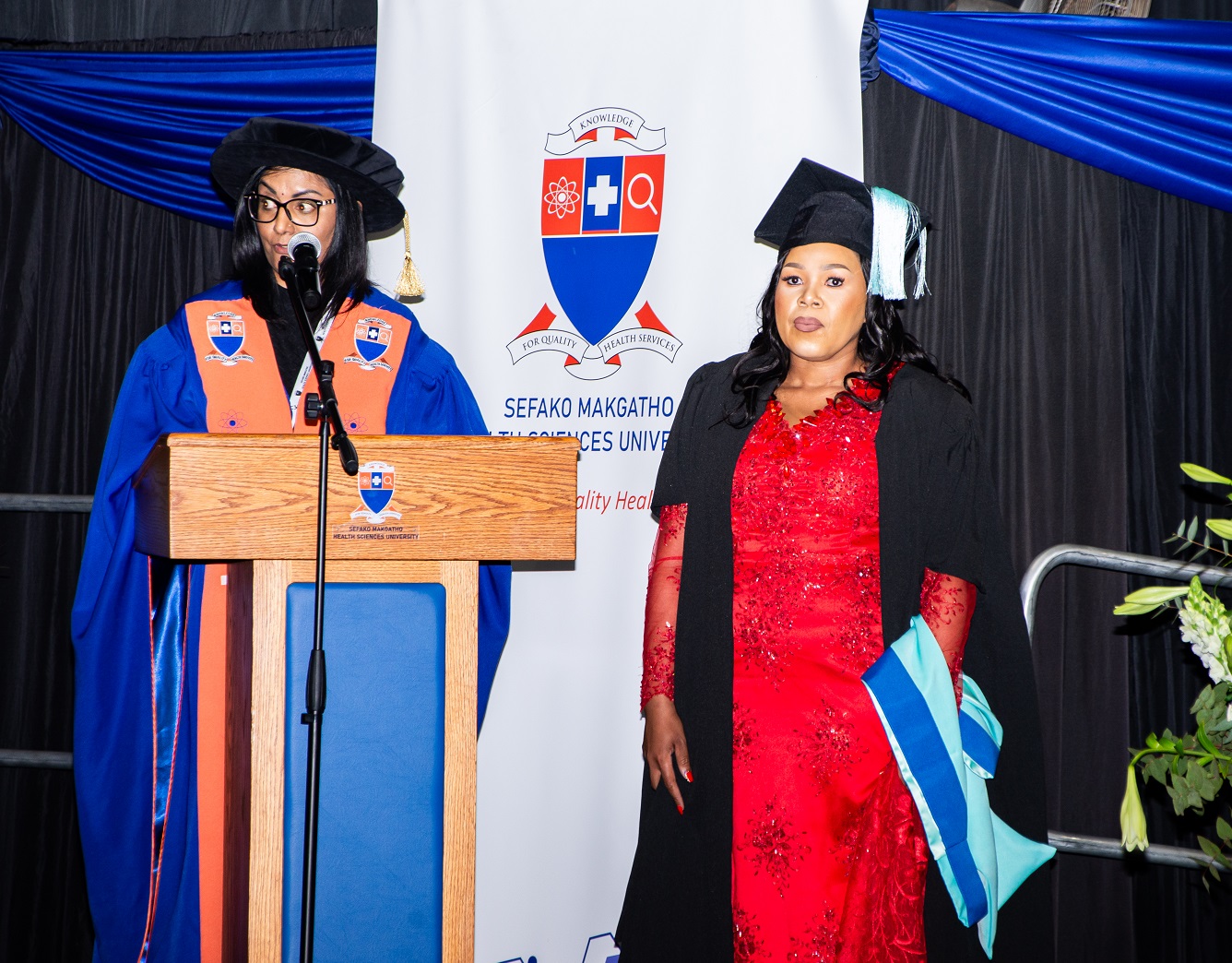 Her journey began far from the lecture halls of SMU. Growing up in Mmotong wa Perekisi (Limpopo), she faced the challenges of childhood obesity and the teasing that came with it. “I thought if I became a doctor, I’d find the miracle cure for obesity,” she recalls. While that cure never materialised, the determination to make a difference in health never left her. Books became her track, medicine her race.
It was while working in anaesthesia that she discovered her true calling. An article by the late Professor Andrew Walubo on the emergence of Clinical Pharmacology as a speciality struck her like lightning. “It was like God saying: Khomotjo, this is your lane. Please stay in it,” she says. From then on, the course was set.
Being the first student of a brand-new programme came with its fair share of turbulence and joyrides, she remembers. “It felt like boarding a brand-new aircraft as the only passenger. At times, I was tempted to reach for the emergency exit, but with my mentors (Dr Memela Makiwane and Prof Elżbieta Osuch) at the controls, the journey touched down smoothly.”
Her dissertation, conducted at a tertiary hospital in Gauteng, examined the knowledge, attitudes and perceptions of medical doctors and pharmacists towards pharmacogenetics. The study found that while attitudes and perceptions were positive, knowledge levels were inadequate, particularly among medical doctors. These results highlight the urgent need for structured education and supportive policy to advance pharmacogenetics in South Africa – a country where genetic diversity and disease burden make its integration into clinical practice especially valuable. For Dr Mothata-Motswaledi, the message is clear: pharmacogenetics holds the potential to transform healthcare, but only if healthcare professionals are adequately prepared and the health system is strengthened to support its implementation.
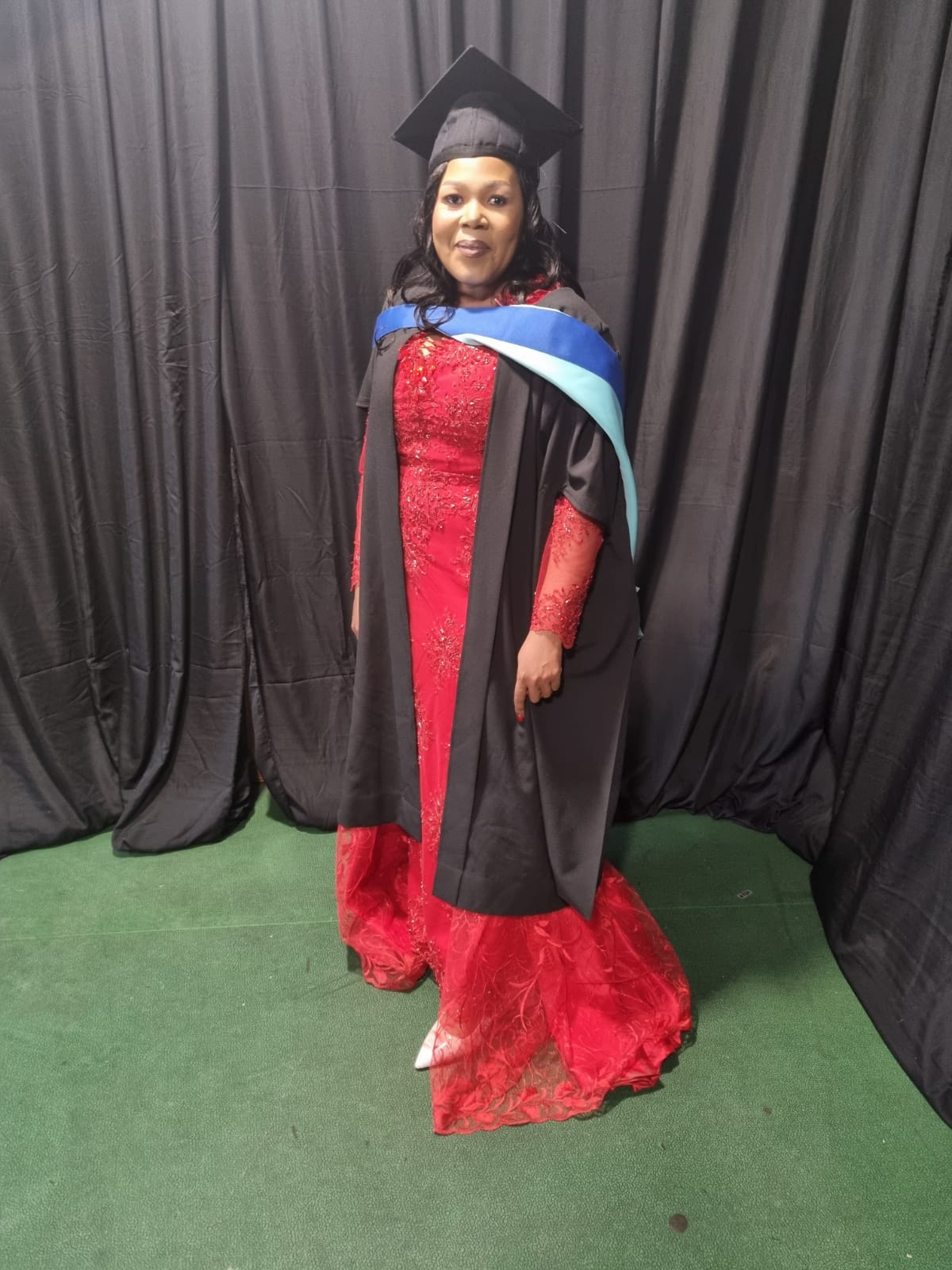 Her achievements, however, are not hers alone. She credits God, her mentors, colleagues, and most of all, her family. “My partner, Prof Hendrick Motswaledi, and our children endured the long nights, the sighs, and the endless question: ‘Mum, are you still reading pharmacology?’ Their love and patience made this journey possible.” She adds: “I also extend my gratitude to Professor Robert Summers and Dr Mabina Mogale for the strong foundation they instilled during my research/academic journey. I would not be where I am today without that grounding.”
Today, she lectures both undergraduate and postgraduate students, drives discussions at weekly academic meetings, and advocates for stronger pharmacogenetics education and pharmacovigilance. Her mission is both urgent and personal: safer prescribing, fewer adverse drug reactions, and confidence in personalised medicine.
Her advice to aspiring healthcare professionals is both practical and motivating: “Remain curious and committed to learning. Medicine evolves constantly, and engaging with research ensures you stay at the forefront of your field.”
From Limpopo’s dusty classrooms to the forefront of Clinical Pharmacology, Mothata-Motswaledi’s story proves one thing: clarity, persistence, and passion can change the course of medicine in South Africa.
By Tumelo Moila

by Lorato | Sep 23, 2025 | All News, SMU Media, Student Media
Dr Ntsieni Teresia Dzhugudzha is not only a lecturer and researcher—she is a barrier breaker. Her academic journey tells a story of resilience, purpose, and groundbreaking research in occupational therapy that is already shaping the future of inclusive education and employment in South Africa.
 In 2025, she completed her PhD at the University of Pretoria, producing a conceptual framework designed to help learners with mild intellectual disability (MID) transition from school into meaningful work. The framework, created for use by occupational therapists, teachers, and employers, promotes strength-based, individualised approaches to employability and advocates for equitable opportunities in the labour market.
Her doctoral journey, which began in 2019, was not without challenges. She faced delayed site access, employers reluctant to participate, and personal health setbacks that cost her nearly a year. Yet she persevered with determination. “I recognise that success for women in academia often comes with considerable obstacles,” she reflects. “But I learned patience, resilience, and problem-solving along the way.”
Her decision to pursue this research stemmed from concern about the limited employment opportunities available to learners with intellectual disabilities. In South Africa, many young people leave Learners with Special Educational Needs (LSEN) schools between the ages of 18 and 21, only to face unemployment at home. Determined to change this reality, she set out to design practical, inclusive solutions that could transform how society prepares these learners for the workplace.
Her academic promise showed early. Born in the rural village of Mashamba Mukondeni in Venda, she excelled in mathematics at Tshikhuthula Secondary School. After matriculating, she entered MEDUNSA (now SMU) with hopes of studying Medicine through the BSc (Special) programme. When she was not admitted into Medicine, she chose Occupational Therapy, a path that revealed itself as her true calling. Between 2003 and 2006, she completed her Bachelor of Occupational Therapy with merit awards and soon after entered clinical practice. For nearly a decade, she worked across health facilities, earning recognition such as the Best Allied Health Professional Award at Odi District Hospital in 2014.
Alongside her practice, she pursued further studies and, in 2015, completed a master’s in public health at SMU under the mentorship of Professor Simphiwe Madiba. This experience cemented her passion for research. Her transition into academia began naturally while working at Weskoppies Hospital, where she supervised occupational therapy students from both SMU and the University of Pretoria. Discovering her love for teaching, she joined SMU’s Department of Occupational Therapy in 2017 as a Lecturer. Since then, she has taught across undergraduate levels, supervised postgraduate research, contributed to committees on community engagement and research, and served as an external examiner for universities across the country.
Balancing her academic and personal life has been one of her proudest achievements. A wife and mother of three daughters, she completed her master’s degree while pregnant with twins and working full-time. Her ability to balance teaching, research, and family responsibilities speaks to her determination. In 2025, she published two journal articles from her PhD and presented her findings at national conferences, extending her influence into scholarly and policy spaces.
She credits SMU for providing crucial support during her doctoral journey, including funding, study leave, writing retreats, and research grants. “The institution created the environment I needed to thrive,” she says with gratitude. Looking ahead, she envisions her PhD as the foundation for greater societal impact. She aspires to influence policy, mentor future occupational therapists, and advocate tirelessly for inclusive employment practices.
Her message to aspiring SMU students is inspiring: “A PhD is achievable, but it requires discipline, patience, and resilience. Write consistently, even a paragraph a day. The journey is about growth and impact, not just the qualification.”
For Dzhugudzha, completing her PhD represents more than the culmination of years of effort. It marks the beginning of a broader mission: breaking barriers, transforming lives, and paving the way for inclusive opportunities in education and employment.
By Dimakatso Modise
by Lorato | Sep 10, 2025 | All News, SMU Media, Student Media
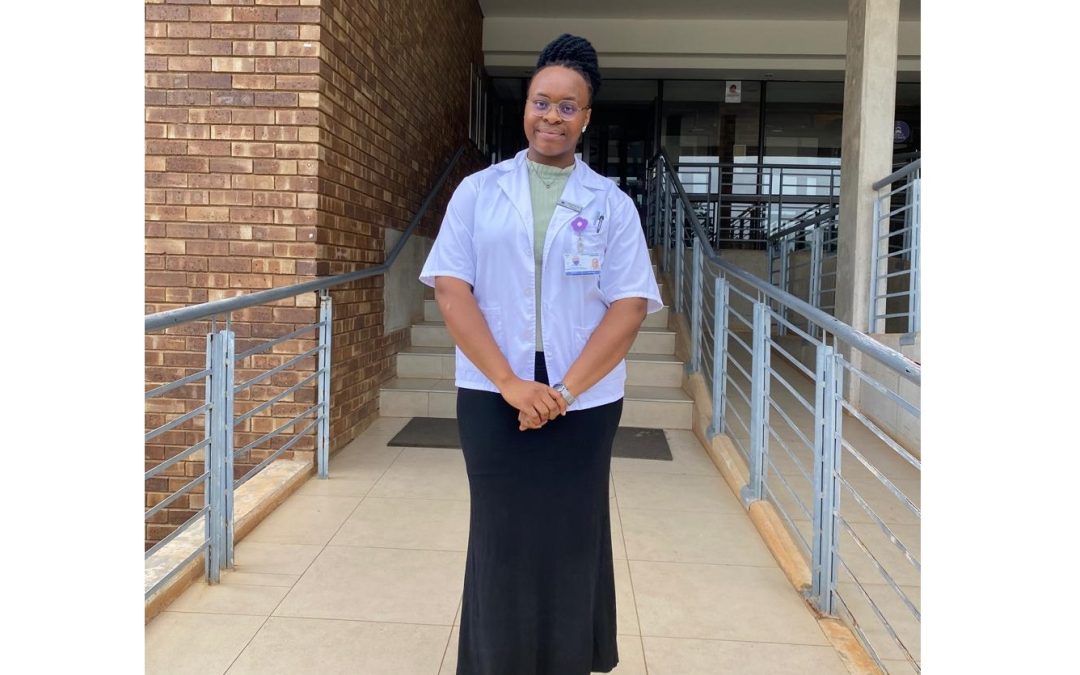
For Jennifer Chiamaka Emeh, a sixth-year medical student at Sefako Makgatho Health Sciences University (SMU), the journey to becoming a doctor has been defined by resilience, determination, and an unwavering commitment to her dream. Born in Nigeria and raised in Johannesburg, Emeh grew up with her mother and four siblings, carrying from an early age the vision of making a difference in healthcare.
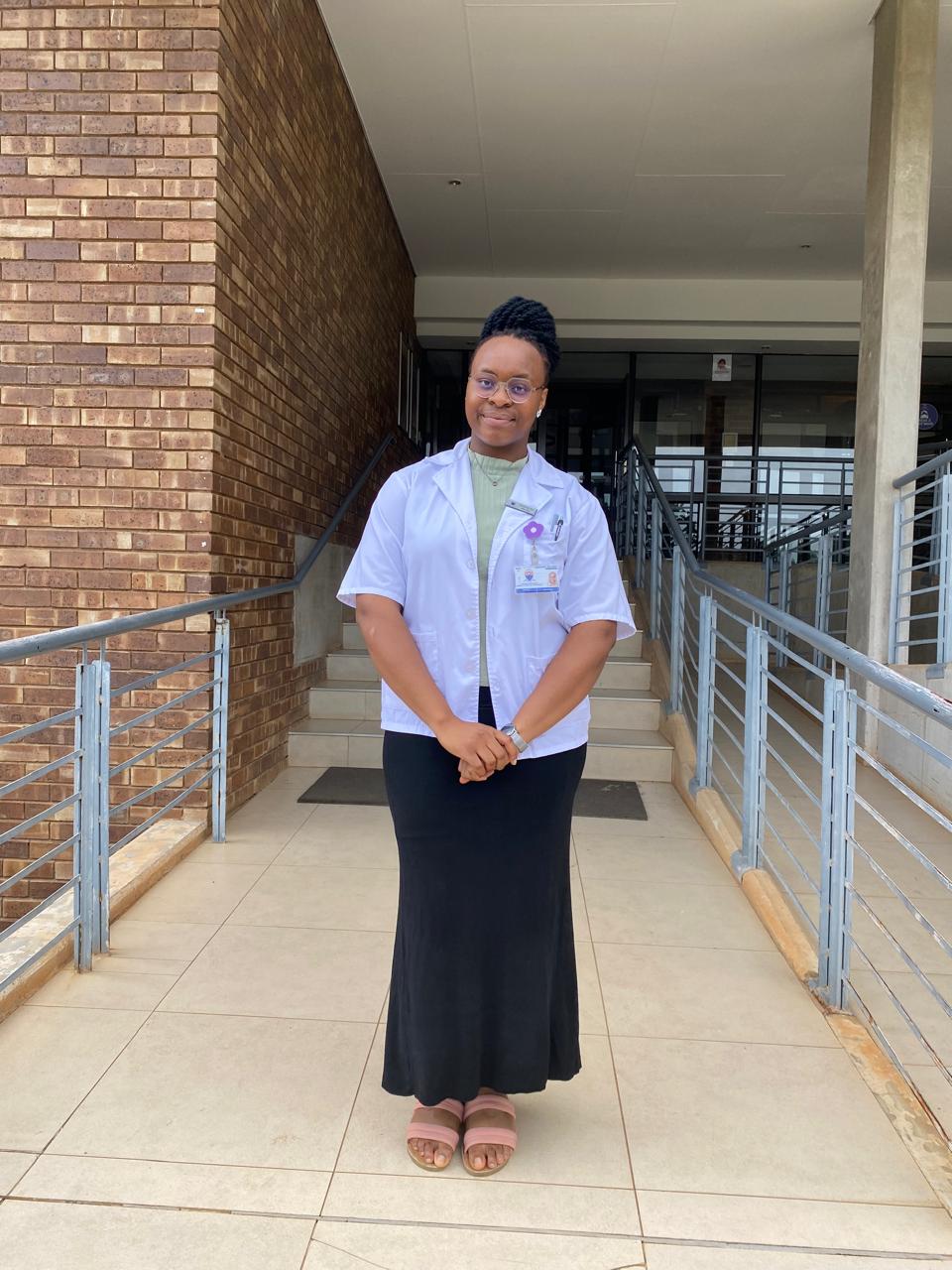 Her academic journey reflects dedication and focus. At Cyrildene Primary School, her dream of becoming a doctor began to take shape, and at Sandringham High School, she pursued it with diligence. Graduating in 2019 with six distinctions, Emeh’s achievements stemmed not only from hard work but also from her desire to contribute to healthcare in areas where access is limited. “From the very beginning, I knew I wanted to become a doctor. It was never just about a career, but about making a real impact where it is needed most,” she reflects.
Initially inspired by maternal health, Emeh once considered specialising in Obstetrics and Gynaecology. However, her clinical training revealed new interests, particularly in Neurosurgery. “The brain holds so many secrets,” she explains. “The more I learn, the more I realise how much there still is to discover. That challenge excites me.”
Outside her studies, Emeh enjoys reading, painting, exercising, journaling, and spending time with family and friends. These activities help her maintain balance in the demanding life of a medical student, reminding her of the importance of nurturing both mind and soul.
Despite her strong academic record, Emeh faced severe financial hardship in her final year, threatening to derail her progress. “I had almost lost hope,” she recalls. It was at this moment that she learned of bursary opportunities through the partnership between Gift of the Givers and Bonitas Medical Fund.
Since 2018, Gift of the Givers and Bonitas have worked together to improve healthcare accessibility in South Africa, from installing boreholes at health facilities to providing bursaries for medical students. Emeh was awarded a Bonitas bursary, which transformed her circumstances. “When I received the news, it was as though light had pierced through one of my darkest moments. The bursary lifted the burden off my family and gave me the final push I needed to complete my degree,” she says.
Grateful for the support, Emeh describes Bonitas and Gift of the Givers as “beacons of light” in her journey. Their belief in her potential inspires her to pay it forward. “They invested in my future, and because of that, I will always strive to support others. The cycle of giving strengthens communities and shapes futures.”
Looking ahead, Emeh hopes to specialise in neurosurgery while pursuing her passion for education and mentorship. “A person is not only a body but also a mind and soul. Recognising the entirety of a human being is what truly makes a great doctor,” she says.
To students facing challenges, she offers encouragement: “Every obstacle shapes your strength. Never be afraid to seek help. Always take care of your mental, emotional, and physical well-being—these are the foundations of your dreams.”
Emeh’s journey demonstrates that hope, perseverance, and the right support can overcome even the most difficult challenges. As she prepares to enter the medical profession, she carries not only the skills of a future doctor but also the lived experience of resilience, compassion, and determination to serve.
By Dimakatso Modise
by Lorato | Aug 27, 2025 | All News, Research, SMU Media, Student Media
Sefako Makgatho Health Sciences University (SMU) recently hosted its flagship Research Days 2025, a three-day celebration of discovery, excellence and innovation under the theme “Advancing Innovation and Entrepreneurship for Sustainable Health.” The event brought together academics, researchers, students and policymakers in a dynamic exchange of ideas aimed at shaping the future of health sciences and developing solutions that matter.
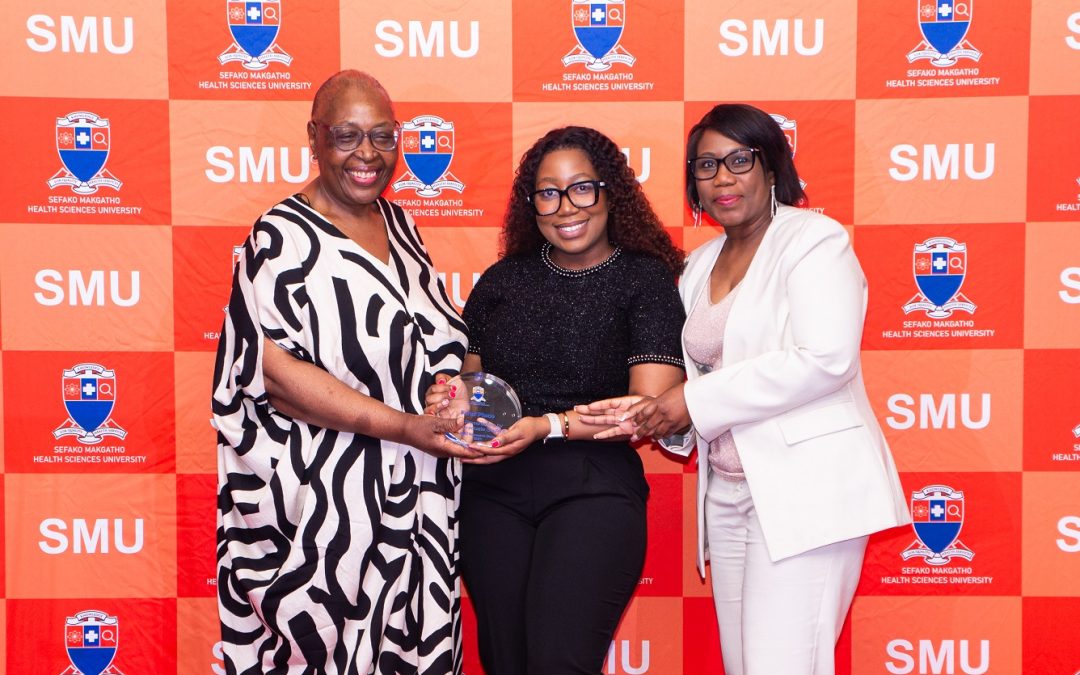
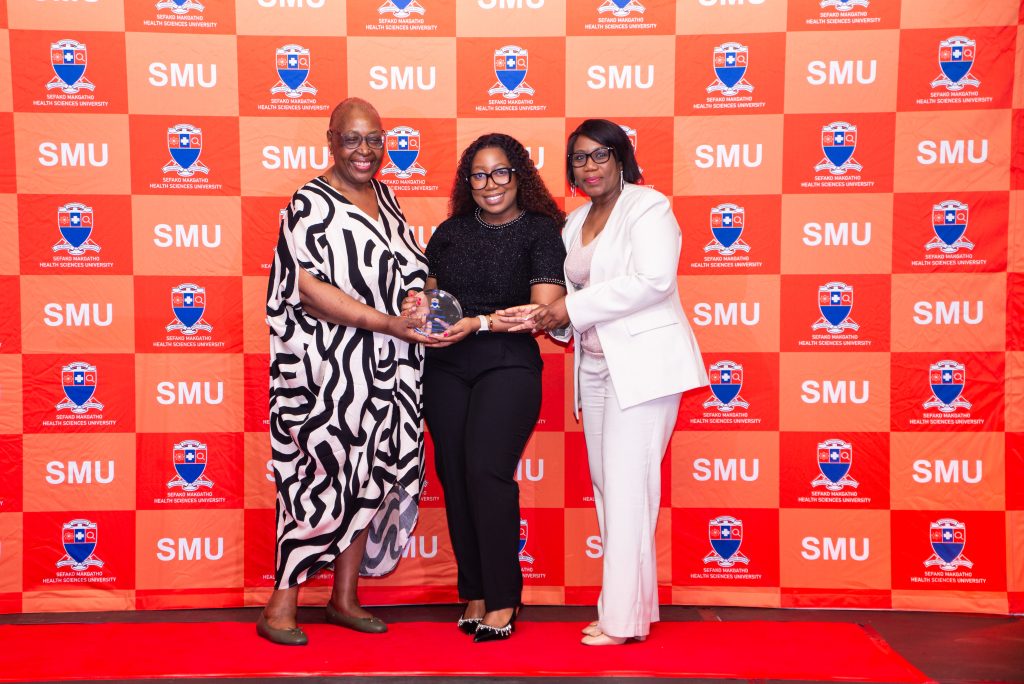 The occasion culminated in a prestigious gala dinner, where exceptional researchers and students were honoured for their groundbreaking contributions. More than an awards ceremony, the evening reflected SMU’s vision: to be a hub of research-driven innovation and a catalyst for transformation across the African continent.
Opening the event, Professor Dini Mawela, Acting Deputy Vice-Chancellor for Academic and Research, emphasised the power of research in driving meaningful change. “Research Days provide an essential platform for showcasing our university’s intellectual prowess and for forging partnerships that drive impactful solutions to the pressing health challenges of our time,” she said. Her words set the tone for an inspiring programme, blending intellectual depth with a shared commitment to improving lives.
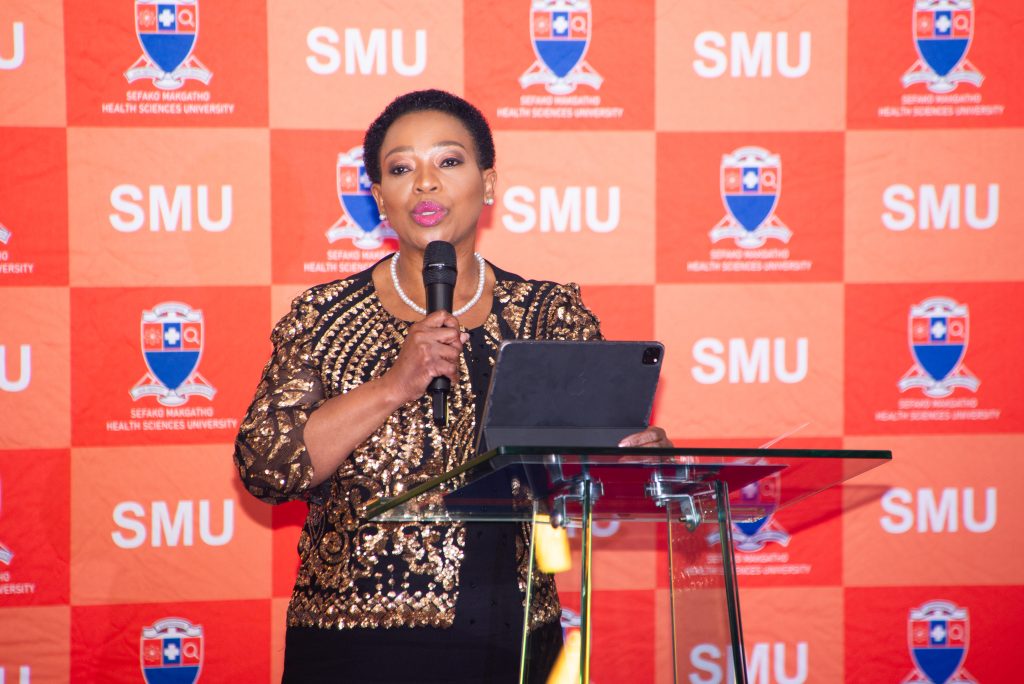 Delivering the keynote address, Deputy Minister of Higher Education and Training, Dr Nomusa Dube-Ncube, highlighted the transformative role of education and research in building resilient societies. “Education is the foundation for empowering women to drive innovation. Tonight, as we gather, we are not merely here to hand over awards but to bear witness to the extraordinary power of science, service and humanity,” she said. She urged researchers to ensure that their work extends beyond laboratories to make tangible impacts in clinics, villages, operating theatres, classrooms and policy spaces. “Research is the bridge between knowledge and societal progress,” she affirmed.
Quoting Ghana’s founding president, Kwame Nkrumah, she added: “We face neither East nor West. We face forward.” This philosophy, she explained, is at the heart of SMU’s ethos— “Boldly African, unapologetically excellent and radically future-facing.” She described the university as a sanctuary of imagination and a crucible of African pride, where the dreams of rural children meet the cutting edge of medical science.
This year’s Research Days attracted over 160 participants daily, both in person and online, with nearly 80 oral and 80 poster presentations across multiple disciplines. From molecular biology and pharmacology to neuroscience, public health and health education, the research showcased SMU’s breadth of expertise. Studies explored subjects such as antimicrobial resistance, genetic characterisation of pathogens, innovative teaching strategies in anatomy and the medicinal potential of indigenous plants. Each presentation reflected a shared vision: research that is globally competitive yet deeply rooted in African relevance.
At the gala dinner, first place in the Poster Presentation category was awarded to Sdady Lucas Kgwete for his research on rotavirus strain characterisation in Pretoria. Second place went to Kabo Masego Moletsane for a study on the anti-inflammatory properties of Drimia sanguinea, while third place was awarded to Oreoluwa Olufunmilayo Priscila Ojobaro for her work on the anti-cancer properties of Schinus molle fruit isolates.
In the Oral Presentation category for undergraduates, Enos Motaka Malatji took first prize for a study on MRI diagnosis of spinal TB and thoracic aneurysm. Among postgraduate students, first prize went to Mahlogonolo Refilwe Motswiane for research on antimicrobial resistance and genome characterisation of A. baumannii, second prize to Senzeni Sandy Hadebe for a morphometric analysis of the thoracodorsal artery, and third prize to Tokologo Prudence Ramothloa for work on Ricinus communis metabolite distribution.
Independent researchers also shone. Dr Tshilidzi Sadiki won first prize for a study on the implication of the updated WHO classifications of CNS tumours on pediatric brain tumours diagnosis: A South African perspective. Daniële Kristen secured second prize for exploring student perspectives on instructional design in anatomy, while Dr Clarissa Marcelle Naidoo received third prize for research into the antibacterial properties of biogenic silver nanoparticles.
Closing the event, Professor Mapaseka Seheri, Director of Research and Innovation, praised the quality and diversity of research. “This year’s Research Days attracted more than 160 participants daily, both physical and online. We had nearly 80 oral presentations and 80 posters. The quality of work underscores the depth of talent and dedication within SMU,” she said. She called on researchers to build on this momentum, reinforcing SMU’s role as a leader in health sciences research, entrepreneurship and knowledge creation.
The 2025 SMU Research Days were not simply an academic gathering—they were a movement. A declaration that Africa’s health future will be shaped by African scholars, innovators and visionaries. As the applause faded and conversations continued, one message echoed clearly: SMU will remain steadfast in its mission to advance health and well-being for all through research that is relevant, impactful and unapologetically African.
By Dimakatso Modise

by Lorato | Aug 27, 2025 | All News, SMU Media, Student Media
Reading is a transformative tool for children and adolescents, enhancing language skills, cognitive development, emotional intelligence, and academic success. In South Africa, where literacy challenges persist—particularly among Grade 4 learners who struggle to read for meaning—targeted interventions are vital. To address this need, Dr Marguerite De Jongh, Senior Lecturer in the Department of Speech-Language Pathology at Sefako Makgatho Health Sciences University (SMU), has implemented a pioneering reading initiative at Dr George Mukhari Academic Hospital (DGMAH).
 Dr De Jongh has dedicated her academic and clinical career to advancing literacy and language development in diverse educational and healthcare contexts. Her qualifications include a PhD in Psychology focused on emergent literacy and ADHD in Grade R learners, B. Logopaedics in Speech Therapy and Audiology, an MPhil in Second Language Studies, and a Certificate in Neuro-Developmental Therapy.
Dr De Jongh has published extensively on early literacy, language stimulation, and inclusive education, including research on reading behaviour in higher education and literacy support for teachers. She has led curriculum development initiatives and facilitated training for professionals and students on literacy facilitation, language enrichment, and reading for pleasure. Her work in the hospital-based literacy initiative reflects a commitment to bridging healthcare and education, ensuring that children and adolescents, regardless of their medical condition, have access to meaningful reading experiences.
“Our goal is to ensure that children continue to grow academically, socially, and emotionally, even while hospitalised,” De Jongh explains. This initiative is rooted in the belief that literacy can serve as both an educational and therapeutic tool.
The initiative targets both young children (ages 5–8) and adolescents, offering age-appropriate materials and structured reading sessions. Through one-on-one or small group interactions, students from SMU engage with patients, guided by De Jongh and a speech-language therapist from DGMAH. The programme focuses on reading for pleasure, language stimulation, emotional engagement, and cognitive development.
“Reading gives children a sense of normalcy and comfort during difficult times,” says De Jongh. “Seeing their faces light up when they connect with a story reminds us why this work matters.”
Hospital-based reading interventions are particularly significant in South Africa, where PIRLS 2021 revealed that 81% of Grade 4 learners cannot read for meaning. By integrating literacy into healthcare settings, the initiative provides a unique opportunity to reach children outside traditional school environments. “Each session presents an opportunity to nurture both academic development and emotional well-being,” says De Jongh.
Speech-Language Pathology and Audiology students from SMU receive comprehensive training in reading facilitation, auditory perception strategies, language stimulation, and techniques to encourage reading for pleasure. Weekly sessions in orthopaedic and oncology paediatric wards are carefully structured to accommodate patients’ medical needs while maximising engagement. Optional enhancements, such as themed reading months, “Book of the Week” displays, and small rewards like certificates, further motivate participation.
“Many of the adolescents ask questions, discuss the stories, and even request books in their home languages,” says De Jongh. “It’s rewarding to see how engaged they become and how it builds their confidence.”
Collaboration with hospital staff, teachers, caregivers, and parents ensures a holistic approach, reinforcing the value of literacy as both an educational and therapeutic tool. Early feedback indicates that patients respond positively, with visible enthusiasm and active participation.
The hospital-based reading initiative at DGMAH exemplifies the power of integrating education and healthcare. “This programme is more than reading—it’s about resilience, inclusion, and lifelong learning,” says De Jongh. By promoting literacy as a tool for emotional support, cognitive development, and academic continuity, the initiative demonstrates how reading can positively impact young patients. As the pilot expands, this model offers a promising blueprint for scaling hospital-based literacy interventions nationwide, ensuring that all children, regardless of circumstance, have access to meaningful reading experiences.
By Tumelo Moila