by Kegorapetse | Feb 5, 2018 | SMU Media
The Department of Nuclear Medicine at Dr George Mukhari Academic Hospital (DGMAH) and Sefako Makgatho Health Sciences University (SMU) had the official opening ceremony of the Positron Emission Tomography – Computed Tomography (PET-CT) Centre. The PET-CT scan is used mainly in Oncology (cancer) patients and allows for more accurate diagnosis, staging and monitoring of response to therapy. It can also be used in Neurology, Cardiology and Infection/Inflammation.
“There was a need for a stand-alone PET-CT Centre, and we cannot undermine all sponsors and stakeholders that made this event possible”, said Prof Trevor Mdaka, Head of Department of Nuclear Medicine at SMU. As a program director and officiator of the event, he also mentioned how this centre will inspire hope for further development in the hospital and that the scanner is a first of its kind in the African Continent, with a high resolution and shorter imaging time aspect of the 64-slice CT Component.
“R36 million has been invested from the National Treasury services grant and I am very excited about this project. Patients from Northern part of Gauteng, North West and Limpopo provinces used to go to Steve Biko Academic Hospital for diagnosis and staging of cancer before treatment. Now they can have the services right here”, said the Gauteng MEC for Health, Dr. Gwen Ramokgopa, who cut the ribbon and unveiling of the the plaque. She continued to say that it is important to strengthen this facility, because SMU has highly trained experts and professors who need this kind of modern technology to treat, diagnose and monitor response for cancer treatment.
The PET-CT camera is a sophisticated piece of equipment that has two components – a PET and a CT scanner that are housed in a single unit. Patients undergo a whole body scan and the acquired images are then displayed on a specialized computer workstation for interpretation by a Nuclear Medicine Physician. “The combination of the two scanners allows for the ‘Best of Both Worlds’ – the high sensitivity from the PET component (which provides physiological/functional imaging); and the high resolution of the CT component (which provides anatomical localization and tissue characterization),” said Dr Aadil Gutta, Principal Specialist and Head of Unit of Molecular Imaging in Nuclear Medicine.
Being the second biggest hospital in the country after Chris Hani Baragwanath Hospital, DGMAH serves up to 1.7 million patients. “It took us nine years to run this project, and this will assist the poorest of the poor to be able access the latest technology in our hospital,” said Dr. Freddy Kgongwana, CEO of Dr. George Mukhari Academic Hospital, who is also very happy about the training of next generation of specialists in Nuclear Medicine.
by Kegorapetse | Jan 24, 2018 | SMU Media
Compliments of the new season, Colleagues, and a warm welcome to you at the beginning of the new academic year.
SMU’s rise to prominence in the fourth year of its existence was the result of many factors: the contribution of dedicated staff, the enthusiasm and inventiveness of graduate and undergraduate students, and the active support and engagement of our government and partners from all walks of life. Just as importantly, the Management and the Council, as well as the academic and administrative staff, have all played a huge role in ensuring that the Sefako Makgatho Health Sciences University remains the fountain of knowledge it is today. Here at SMU, we want to inspire both our students and staff to reach their full potential, to advance knowledge, and to make a positive contribution to the world. I am confident that, together, we will achieve our vision.
In line with SMU’s approved student enrolment plan, I am pleased to say that the registration process is underway and that the University will do its best to accommodate all qualifying students. The registration of returning students commenced on 4 January 2018 and the process was completed successfully. First-time entering students started arriving on 22 January 2018 and colleagues from the Schools and various Support Departments are working hard to ensure that those who qualified are successfully registered.
We are all aware of the announcement by the government regarding free higher education, and the Department of Higher Education and Training (DHET), NSFAS and USAf have been supportive in guiding and providing information to institutions on how to assist qualifying students. All information and circulars in the above regard have been distributed to relevant University officials and the SMU community at large. Kindly familiarize yourself with the content and the concomitant protocols. However, government still needs to engage with various stakeholders to facilitate the impact and full implementation of free higher education for qualifying students.
SMU does not exist in a vacuum – it exists within a particular social, economic, cultural, political and historical context, and it forms an integral part of the community in which it is located. In this regard, SMU’s third core purpose is to discharge its critical social responsibility through community engagement. Let us hold hands and work together to empower our communities.
Thank you for everything you do to make Sefako Makgatho Health Sciences University such a thriving institution.
My very best wishes to all of you for a healthy and productive 2018.
by Kegorapetse | Jan 9, 2018 | SMU Media
The National Student Financial Aid Scheme (NSFAS) welcomes the President of the Republic of South Africa’s pronouncement on free Higher Education and Training for deserving poor and working-class students. A full statement can be accessed by following this link: NSFAS-Press-Statement-on-Free-Education-Pronouncement-Final-1
by Kegorapetse | Jan 9, 2018 | SMU Media
To: ALL MEDIA
DATE: 8 January 2018
For immediate release
Deputy Minister of Higher Education and Training, Mr Buti Manamela, together with senior officials from the Department of Higher Education and Training (DHET) today met with a delegation from the Economic Freedom Fighters Student Command (EFFSC). The meeting was part of the Departments ongoing engagement with stakeholders within the higher education and training sector. Deputy Minister Manamela and Department officials clarified several issues with the EFFSC.
Deputy Minister Manamela reiterated that online applications remain the primary method for applications, however certain institutions have set up mechanisms for late applications. The DHET also recommended that prospective students should still use the Central Applications Clearing House (CACH) for late applications.
The DHET also clarified that there would be no registration fees to be paid upfront for students at TVET colleges and Universities who qualify for NSFAS funding. Students who do not qualify for NSFAS funding will have to pay the registration fees upfront.
The DHET also clarified that all private higher education institutions and colleges have to be registered with the department and a publicly available register of accredited institutions is on the DHET website. The DHET will work with the EFFSC and other student formations to root out these “fake and fly by night institutions” and more public education is needed on this matter.
Deputy Minister will continue meeting with student formations this week to clarify matters related to the implementation of fee-free education so that poor and working class students can continue to benefit from our post school education and training system.
Ends
For more information:
Matshepo Seedat
Media Liaison Officer
Telephone: 012 312 5067
Mobile: 082 679 9473
Email: Seedat.M@dhet.gov.za
Spokesperson
Madikwe Mabotha
Chief Director: Communication
Telephone: 012 312 5024
Mobile: 081 710 3321
Email: Mabotha.M@dhet.gov.za
Issued by the Ministry of Higher Education and Training
by Kegorapetse | Jan 4, 2018 | SMU Media
Details on how the 2018 registration arrangements will be implemented at SMU can be accessed by following this link: 2018-Registration-Arrangements
by Kegorapetse | Dec 5, 2017 | SMU Media
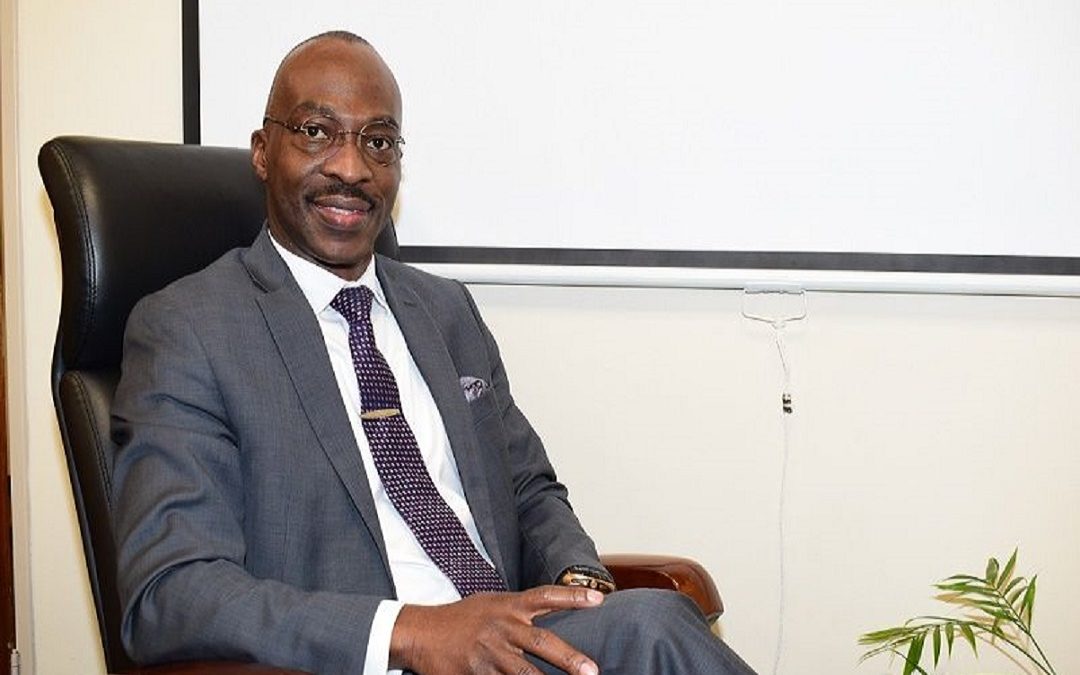
Prof Ayo-Yusuf’s recent ranking as a National Research Foundation’s (NRF) B3 rated scientist is a treasured milestone in his career as a researcher. But, he is quick to point out the ranking comes with huge responsibilities and expectations for him to usher in a turnaround in so far as research at SMU is concerned. Top on his priority list is to create an enabling environment for more researchers to flourish and aspire to become NRF-rated researchers, in their own right.
As the Deputy Vice-Chancellor (DVC) for Research, Postgraduate Studies and Innovation, these huge responsibilities demand of him to make sacrifices which involves burning the midnight oil, a commitment only a handful of researchers commit to.
NRF research ranking system seeks to bring about a globally competitive science system in South Africa (SA). It is a valuable tool for benchmarking the quality of SA’s researchers against the best researchers in the world. These researchers are rated in accordance with their recent research outputs and how its impact is viewed by international peers. Ratings spur on the researchers to publish high quality outputs in high impact journals/outlets. Rated researchers are expected to act as supervisors for upcoming researchers and transfer cutting edge research skills to them. Research outputs over an 8-year period is sent out to a number of world leading researchers in the same field to evaluate their quality and impact.
The categories of the rating system is as follows:
A: Denotes a leading international scholar
B: Internationally recognised researcher
C: Established Researcher
P: Promising young researcher (under 35 years) with leadership potential based on doctoral outputs
Y: Young Researcher (40 years or younger) with potential to become established researcher or leader
Currently, the SMU has six NRF-rated Scientists, namely Professors Ayo-Yusuf (B3), Anna Oelette (C2), Rose Burnett (C3), Mapaseka Seheri (C3), Liuvu Feller (C3) and most recently Dr Setumo Motloung (Y2). Delighted that this figure represents progress, Prof Ayo-Yusuf’s vison is to quantum leap SMU’s research output and its impact. The strategy to achieve that is to focus, for the next five years, on the quality and impact of our research. This will entail a gradual move away from only focusing on quantity of our output to providing financial incentives for quality research and innovation.
This strategy is based on three central pillars, namely developing research capacity of the postgraduate students and academic staff, conducting innovative quality research with integrity and, lastly, encouraging researchers to conduct research that not only positively impact on the lives of people and communities, but also goes a long way to contribute towards the knowledge economy, in line with the National Development Plan (NDP).