
Postgraduate study demands more than intelligence. It demands discipline, independence and integrity. That was the clear message delivered at a high-impact research workshop hosted by the Department of Mathematics and Applied Mathematics at Sefako Makgatho Health Sciences University (SMU).
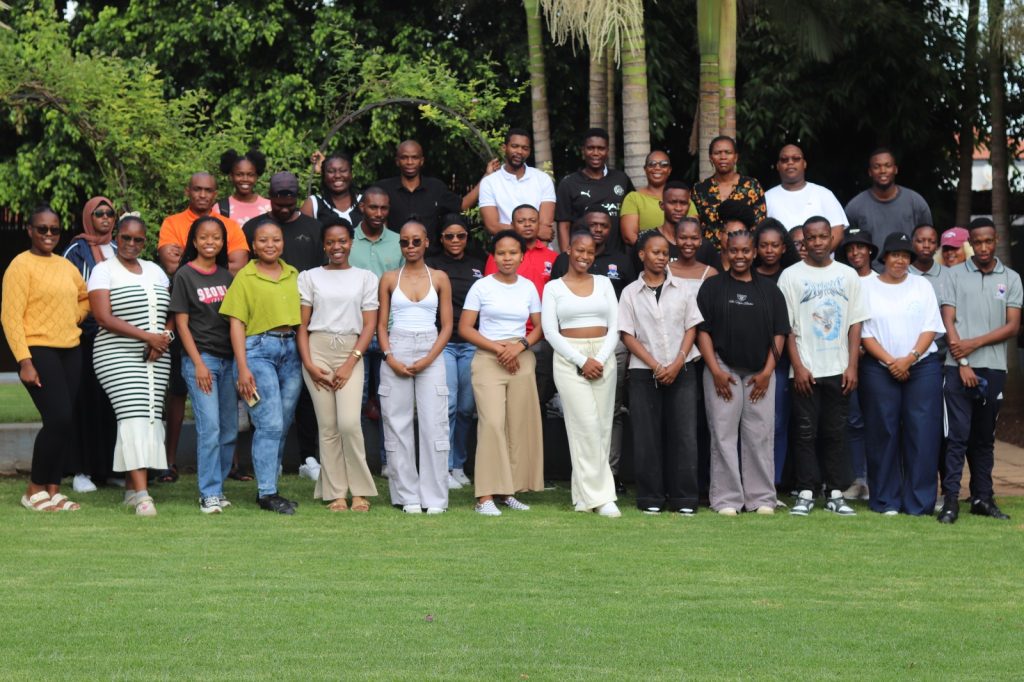 Held at Batter Boys under the theme “Advancing Research and Postgraduate Development,” the workshop brought together postgraduate students, emerging scholars and experienced academics for an intensive exchange of ideas. The programme combined research engagement with candid conversations about academic discipline, workplace expectations and professional credibility.
Programme directors Tumisho Kekana, an nGAP lecturer in the department, and Sanele Mlotshwa, a part-time lecturer and MSc student, designed the event to bridge academic rigour with real-world preparation. “We wanted students to understand that postgraduate study is not simply about completing a thesis,” Kekana explained. “It is about becoming a disciplined thinker who can manage time, produce knowledge and contribute meaningfully to society.”
Opening the workshop, Professor Maggie Aphane, Head of the Department of Mathematics and Applied Mathematics, delivered a direct and uncompromising address that set the tone for the day. “At the postgraduate level, you must learn to work without supervision,” Aphane told participants. “Be your own boss. Do not wait to be pushed before you act.”
Her message focused on personal accountability and professional maturity. She warned students that academic success depends not only on knowledge but also on integrity and work ethic. “Never work only when your supervisor is present,” she said. “Your integrity is tested when no one is watching.” She further emphasised that competence must match ambition. “Develop aptitude and invest in your skills,” she advised. “Confidence without competence will expose you.”
Throughout the workshop, speakers reinforced a set of core principles essential for postgraduate success:
- Own your research journey – Independence is expected at the postgraduate level.
- Manage your time deliberately – Discipline transforms ambition into achievement.
- Build credibility – Your academic reputation becomes your professional brand.
- Pursue consistent progress – Small, daily advances lead to meaningful results.
- Prepare for the workplace – Research discipline translates directly into career success.
Kekana stressed that structure and planning are critical to completing a research degree. “If you do not manage your time, your time will manage you,” he said. “Consistent progress, even in small steps, produces long-term impact.”
Speaking as both a lecturer and postgraduate student, Mlotshwa provided a relatable perspective on the challenges researchers face. “No one will chase you to complete your research,” he said. “You must wake up each day with intention. Research is a marathon, not a sprint.”
He urged students to cultivate resilience and self-motivation, noting that postgraduate success relies heavily on internal drive. “Last-minute effort will not carry you through a research degree,” he added. “Consistency is your greatest advantage.”
 The workshop also featured an international research presentation by Dr Jamshaid Ahmad from the University of Jeddah. His presentation, “Fixed Point Theorems in Generalised Metric Spaces with Applications,” explored advanced mathematical frameworks relevant to modern analysis. “In this work, we examine extended b-suprametric spaces and establish fixed point results for generalised contractions,” Ahmad explained. “These findings extend existing results in the literature and contribute to the ongoing development of fixed-point theory.” He encouraged participants to explore further research directions, including complex-valued extensions and additional applications within mathematical analysis.
By the end of the workshop, one message stood above all others: postgraduate education is not merely about producing research outputs. It is about shaping professionals who can think independently, act ethically and lead with confidence.
As Professor Aphane concluded: “Your name is your brand. Protect it. Once credibility is lost, it is very difficult to recover.” For SMU’s postgraduate community, the challenge was clear — lead your research, lead your discipline, and lead yourself.
By Dimakatso Modise


