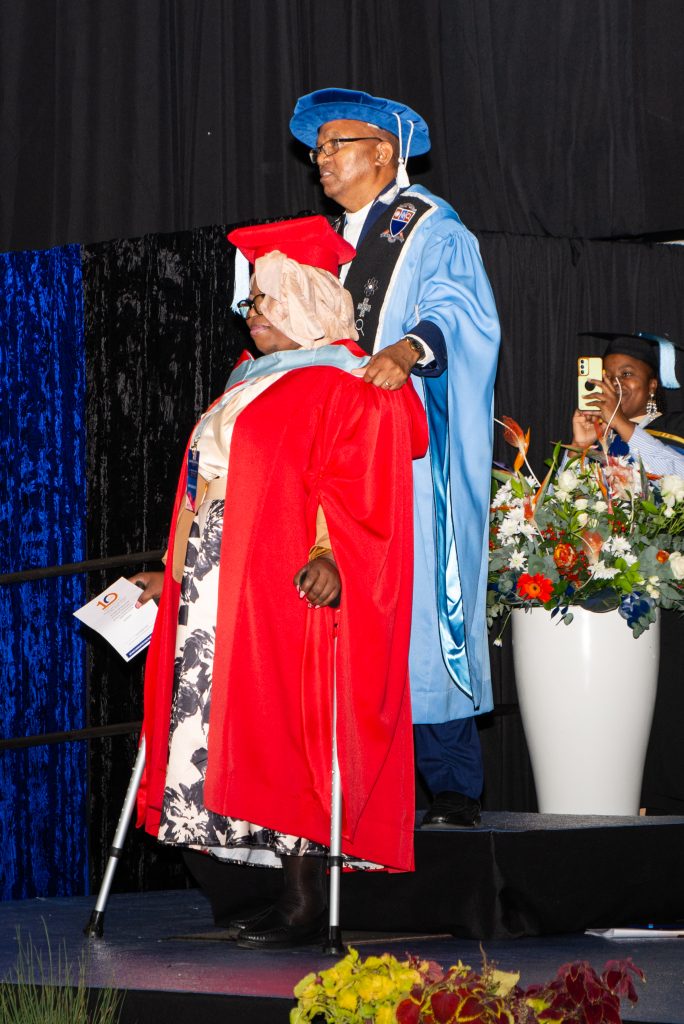
Sefako Makgatho Health Sciences University continues to strengthen its contribution to healthcare research and innovation following the graduation of Matete Olga Kgasha during the School of Medicine Autumn Graduation Ceremony 2026, where her groundbreaking research shed new light on the genetic and bacterial factors driving rheumatic heart disease in South Africa.
 Kgasha graduated with a Doctor of Philosophy in Medical Microbiology after completing a pioneering study titled An epidemiological and genomic description of Group A Streptococcus strains and HLA Class II profiles in patients presenting with pharyngitis, acute rheumatic fever and rheumatic heart disease in Limpopo Province, South Africa. Her work explored the complex relationship between bacterial infections and human genetics in the development of acute rheumatic fever (ARF) and rheumatic heart disease (RHD), conditions that continue to affect vulnerable communities across the developing world.
The research focused on Group A Streptococcus (GAS), a bacterium commonly associated with throat infections that can trigger severe immune-mediated complications if left untreated. Rheumatic heart disease remains a major public health concern in South Africa, particularly among children and young adults in underserved communities.
Using advanced genomic and molecular techniques, Dr Kgasha identified extensive genetic diversity among circulating GAS strains while also uncovering important Human Leukocyte Antigen (HLA) Class II associations linked to increased susceptibility to ARF and RHD.
Speaking about the significance of the findings, Dr Kgasha said the research could play an important role in shaping future prevention and treatment strategies.
“This study provides critical information that may support future vaccine development, strengthen antimicrobial surveillance and improve prevention strategies for rheumatic heart disease in vulnerable communities,” she said.
She explained that understanding both bacterial strains and host genetic factors could help advance more personalised healthcare interventions in South Africa.
“Our findings highlight the importance of integrating molecular epidemiology, antimicrobial resistance monitoring and host genetic profiling into disease prevention programmes,” said Dr Kgasha. “The ultimate goal is to reduce the burden of preventable diseases affecting children and young adults.”
 The study also produced important findings relating to antimicrobial resistance. Although all GAS isolates remained susceptible to penicillin, some showed minimum inhibitory concentrations approaching resistance thresholds. Resistance to erythromycin and clindamycin was additionally identified, reinforcing growing global concerns around antimicrobial resistance and the need for continuous monitoring.
Importantly, the research revealed that less than 50% of the identified emm types were represented in the current 30-valent GAS vaccine under development, suggesting that vaccine coverage may be limited in Limpopo Province and highlighting the need for region-specific surveillance and vaccine strategies. Thanks to the grants received from DHET-UCDG, NRF Thuthuka and SAMRC with HFSP collaboration.
Beyond her doctoral achievement, Dr Kgasha currently serves as a lecturer and postgraduate laboratory manager in Medical Microbiology at SMU, where she is also the AFROStrep coordinator. Her work spans teaching, postgraduate supervision and infectious disease research, with a particular focus on antimicrobial resistance, infection prevention and control.
Over the years, she has contributed extensively to the scientific community through peer-reviewed publications, conference presentations and postgraduate student supervision. Her work has earned recognition both locally and internationally, including scholarships to present her research in Cape Town and Lausanne.
Reflecting on her academic journey, Dr Kgasha described the PhD as a milestone shaped by perseverance and collaboration. “Living with disability doesn’t mean unable but means finding purpose in the unforeseen boundaries. Obtaining this PhD represents years of dedication, resilience and collaboration,” she said. “I hope my work will contribute meaningfully to improving healthcare outcomes and inspire young scientists, particularly women in science, to pursue impactful research.”
As a dedicated health sciences institution, SMU continues to position itself at the forefront of research excellence, innovation and transformative healthcare education. Dr Kgasha’s achievement not only advances scientific understanding of rheumatic heart disease but also reflects the university’s enduring commitment to producing impactful research that addresses some of Africa’s most pressing health challenges.
By Tumelo Moila