Sefako Makgatho Health Sciences University (SMU) PhD candidate and part-time junior lecturer, Bontle Jessica Sibiya, has achieved remarkable recognition on both international and institutional platforms for her research addressing critical gaps in our understanding of human papillomavirus (HPV) among men who have sex with men (MSM) in South Africa.
 Sibiya was honoured as one of four best oral presenters sponsored by The FEBS Journal at the prestigious International Centre for Genetic Engineering and Biotechnology (ICGEB) “Translational Virology of Oncogenic Viruses: From Epidemiology to Intervention in Sub-Saharan Africa” Symposium, hosted recently by the University of KwaZulu-Natal (UKZN) in Durban. She further cemented her success by securing first place in the Best Oral Presenter (Student Category) at the SMU School of Medicine Research Day, where she presented the same study to a home audience.
The accolades coincide with another major milestone in her academic journey. Sibiya graduated as part of the SMU 2026 Autumn Graduation cohort after completing her MSc in Medicine (Medical Virology), with the award-winning research forming the basis of her master’s degree.
“This recognition is deeply meaningful because it validates years of hard work and highlights the importance of addressing overlooked public health challenges,” said Sibiya. “I am honoured that this research has resonated with both international experts and my colleagues at SMU.”
The symposium was co-hosted by UKZN’s Discipline of Virology at the Nelson R. Mandela School of Medicine and the ICGEB, one of the world’s leading intergovernmental organisations dedicated to life sciences research. The event brought together renowned virologists, oncologists and public health experts from across the globe.
Sibiya’s presentation, titled “Translating Epidemiology into Intervention: Urethral High-Risk HPV Burden and HIV-Associated Immunosuppression Among Men Who Have Sex with Men in South Africa,” examined the relationship between HIV-related immunosuppression and urethral HPV infection in MSM.
The cross-sectional study enrolled 199 participants from Gauteng and North West provinces, settings where no prior published data existed on urethral HPV prevalence among MSM. HIV prevalence in the cohort was 66.3%, and urethral HPV infection was detected in 20.9% of participants, with 16.2% of the cohort co-infected with both HIV and urethral HPV. High-risk HPV genotypes accounted for more than half of all urethral infections, with HPV 16, 18 and 68 among the most common. Notably, 60.0% of urethral infections were caused by genotypes targeted by the nonavalent Gardasil®9 vaccine, highlighting a substantial prevention opportunity for MSM. In South Africa, where HPV vaccination is currently offered only to adolescent girls through the national programme using the bivalent Cervarix® vaccine, these findings underscore the need to consider broader-valent vaccines and gender‑inclusive HPV vaccination strategies that explicitly include MSM in high HIV‑burden settings.
Importantly, the research demonstrated a clear association between declining CD4+ T-cell counts and an increased likelihood of HPV infection, highlighting the impact of HIV-associated immunosuppression on vulnerability to oncogenic HPV.
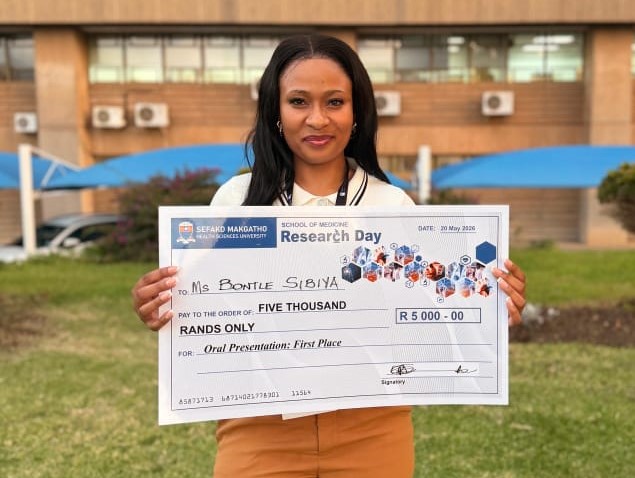 “The urethra has largely been overlooked as a potential reservoir for high-risk HPV,” explained Sibiya. “Our findings suggest that it may play a significant role in ongoing transmission and cancer risk, particularly in settings with a high burden of HIV.”
The research calls for the integration of urethral HPV screening into routine sexual health services for MSM and the expansion of HPV vaccination programmes, particularly the use of the nonvalent vaccine, among high-risk populations. The study was supervised by Dr Ramokone Lisbeth Lebelo and Dr Varsetile Varster Nkwinika from the Department of Virology at SMU.
SMU researchers believe the study contributes critical evidence needed to inform public health policy and strengthen prevention strategies.
“This work exemplifies the kind of impactful, translational research that addresses pressing health challenges in South Africa,” said Sibiya. “Ultimately, our goal is to ensure that scientific evidence translates into interventions that improve health outcomes and reduce the burden of HPV-associated diseases.”
By Tumelo Moila