Sefako Makgatho Health Sciences University (SMU) recently hosted a Deaf Awareness Campaign, bringing together students, staff, community members, clinical partners and hearing-health organisations to promote hearing health, Deaf awareness and inclusive communication.
 Hosted by the Department of Speech-Language Pathology & Audiology, the campaign combined hearing screening, health education, exhibitions, interactive activities and student participation. The initiative provided audiology students with an opportunity to apply their developing clinical skills while engaging directly with the university community.
The campaign focused on hearing loss, hearing conservation, early identification and access to audiological services, while promoting respectful communication with Deaf and hard-of-hearing people. It also highlighted the importance of creating greater awareness of communication access and inclusion.
“The campaign provided an important platform to connect hearing-health education with meaningful community engagement. It also allowed our students to learn through direct interaction while reinforcing the importance of inclusion and communication access,” said Andani Madzivhandila, Audiology Lecturer in the Department of Speech-Language Pathology & Audiology.
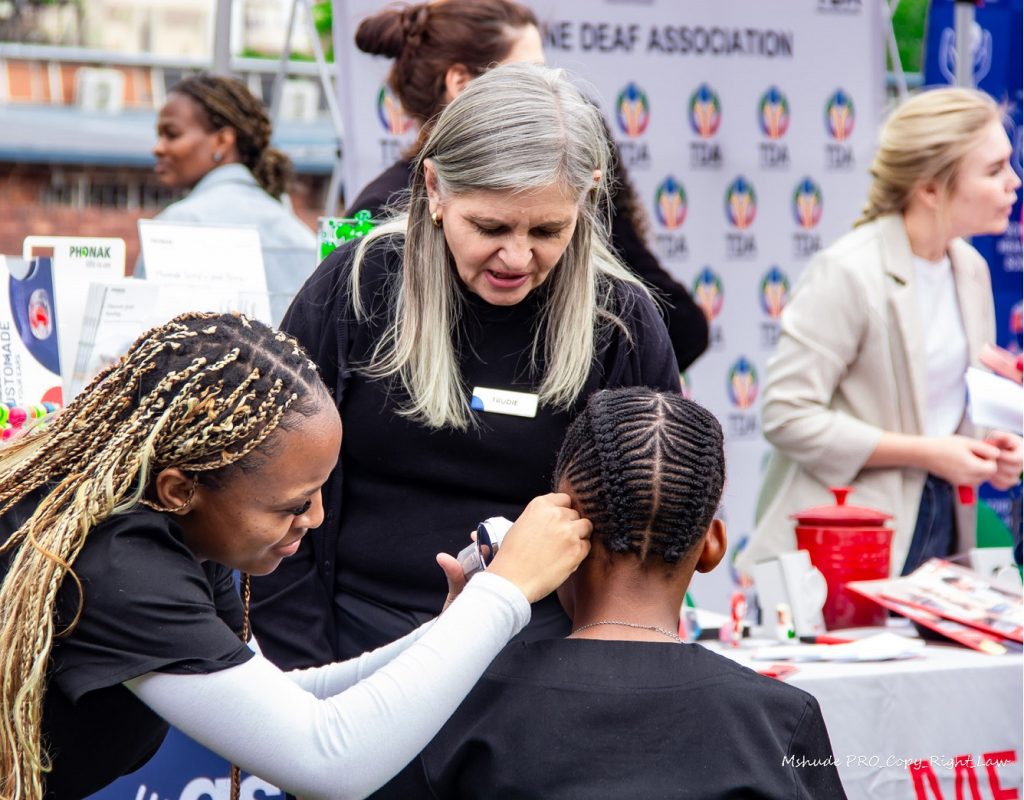
Hearing-screening stations operated throughout the event, with second-year audiology students participating under the guidance and support of fourth-year students. Screening activities included otoscopic ear examinations and other hearing-screening procedures, with referral advice provided where further follow-up was indicated.
The student-led approach strengthened the campaign’s educational value, enabling junior students to gain practical experience while senior students developed leadership, communication and mentoring skills.
“The involvement of students across different year levels demonstrated how clinical education and community engagement can complement one another. It created a supervised environment in which students could build confidence while contributing to an important public-health message,” Madzivhandila said.
 The programme also featured awareness talks addressing hearing health, early identification of hearing difficulties, prevention, communication access and Deaf awareness. Exhibition spaces provided attendees with information on hearing technology, hearing-care services and Deaf-awareness resources.
The campaign received support from MED-EL, Phonak, Tshwane Deaf Association, Amtronix, Dr George Mukhari Academic Hospital (DGMAH) and the National Institute for the Deaf (NID). Their participation strengthened collaboration between SMU, clinical services, Deaf-sector organisations and hearing-health industry stakeholders.
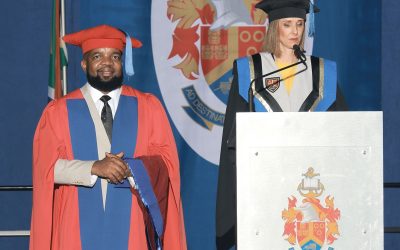
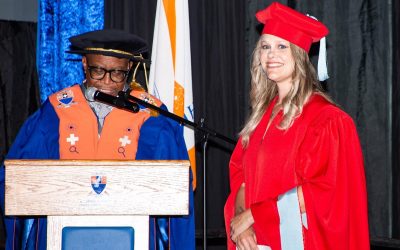
Student involvement extended beyond the screening stations. Second-year students delivered a sign-language rendition during Graduation activities, broadening the visibility of the Deaf-awareness message across campus. Interactive games and prize giveaways further encouraged engagement, creating informal opportunities for attendees to learn more about hearing health.
“The strength of the campaign was its collaborative nature. By bringing together students, clinicians, community organisations and industry partners, we were able to create a visible and engaging platform for conversations about hearing health and Deaf awareness,” said Madzivhandila.
The Department of Speech-Language Pathology & Audiology expressed its appreciation to the campaign’s partners, staff and students, particularly the second- and fourth-year audiology students, for their contribution.
Through initiatives such as the Deaf Awareness Campaign, SMU continues to integrate education, community engagement and healthcare awareness, while preparing health-sciences students to contribute meaningfully to inclusive and responsive healthcare services.
By Tumelo Moila