
Sefako Makgatho Health Sciences University (SMU) has strengthened its efforts to prevent and respond to gender-based violence (GBV) by bringing together government departments, civil society organisations and service providers to improve awareness, access to support services and collective action against violence and abuse.
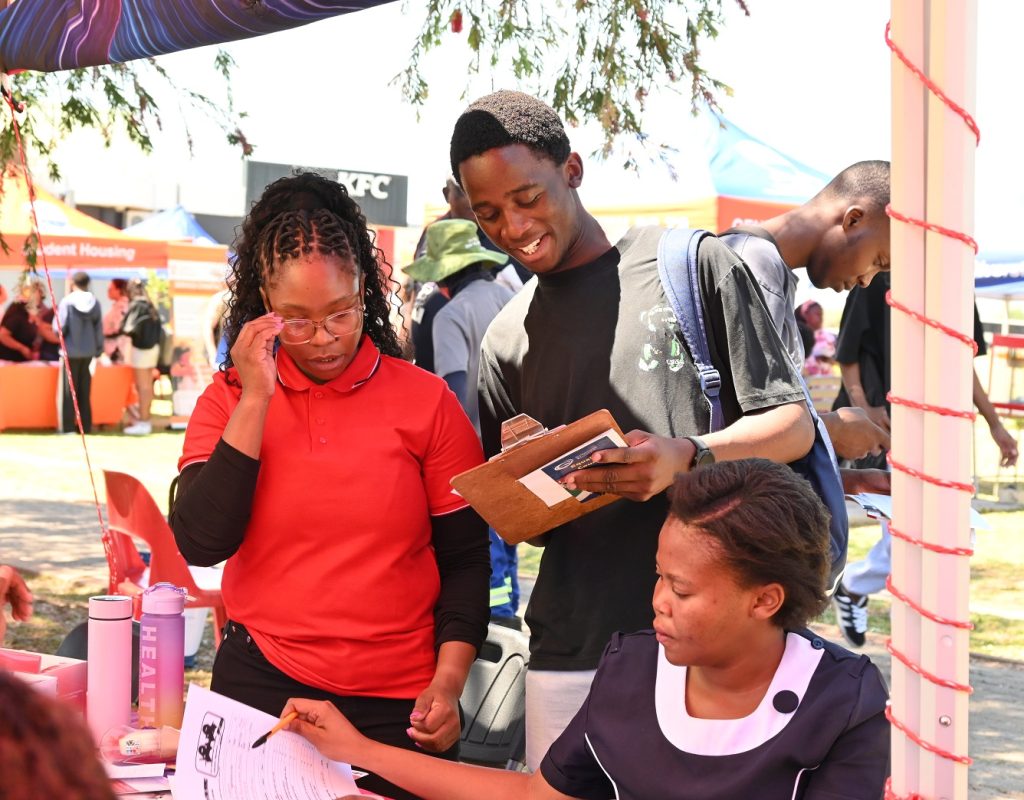 The university recently hosted its Annual GBV Awareness and Support Campaign, allowing students and employees to engage directly with organisations offering counselling, legal assistance, reporting mechanisms, and other forms of support. The campaign also highlighted the importance of addressing the underlying social attitudes and behaviours that perpetuate GBV.
Participating organisations included the Commission for Gender Equality, the National Prosecuting Authority, the Department of Social Development, the Department of Justice and Constitutional Development, Katekani Community Projects, and Akakosha Men’s Forum, among other stakeholders. Their participation reinforced the importance of collaboration in ensuring that individuals know where to seek assistance and how to access available services.
SMU GBV Office Manager Busisiwe Mbanjwa said the campaign aimed to extend support beyond the University by strengthening partnerships with organisations serving surrounding communities. While the University’s internal services primarily support students and employees, she noted that GBV affects families and communities beyond campus boundaries.
“The University does not operate in isolation. While our internal services are primarily for students and employees, we recognise that GBV affects families and communities beyond our campus,” Mbanjwa said. She added that partnerships enable the University to connect individuals with appropriate services, including those who may not qualify for assistance through its internal structures.
Mbanjwa emphasised that sustainable progress requires addressing the causes of violence rather than responding only after incidents occur. “If we do not address the root causes of GBV, we will continue responding to incidents without achieving lasting change. We need to understand the factors that contribute to violence, challenge harmful attitudes and behaviours, promote accountability and ensure that those affected can access the necessary support,” she said.
 Medicine student Lungile Khanyile highlighted the importance of sustained awareness among young people. She stressed that education alone does not make individuals or communities immune to GBV, and that students have a responsibility to challenge harmful behaviour, share information about available services and promote safer communities.
Representing the National Department of Social Development, GBV Command Centre Manager Carol Tladi outlined the national telephone-based counselling and referral service, which connects people experiencing abuse with appropriate support organisations in their communities.
“If anyone is experiencing GBV or any abuse of your human rights, you can call the command centre. We will either give you counselling over the phone, and then we can also link you with other services that can help you within your community where you are,” Tladi said. She encouraged those affected to seek assistance, emphasising: “People don’t have to struggle. People don’t have to suffer in silence.”
The campaign reinforced the need for sustained cooperation between higher education institutions, government and civil society to strengthen prevention, improve referrals and promote accountability. Through initiatives such as this, SMU advances its commitment to respect, integrity and student-centred support while contributing to safer campus and community environments.
By Gabisile Sibeko