Sefako Makgatho Health Sciences University (SMU) has celebrated the doctoral achievement of Dr Letta Mathebula, whose research offers practical, evidence-based solutions to improve the work–life balance of nurse educators in Gauteng. Her study, supervised by Dr Rirhandzu Mathevula and co-supervised by Dr Tshiamo Ramalepa, was conducted within SMU and focuses on strengthening nursing education systems through institutional reform and staff wellbeing interventions.
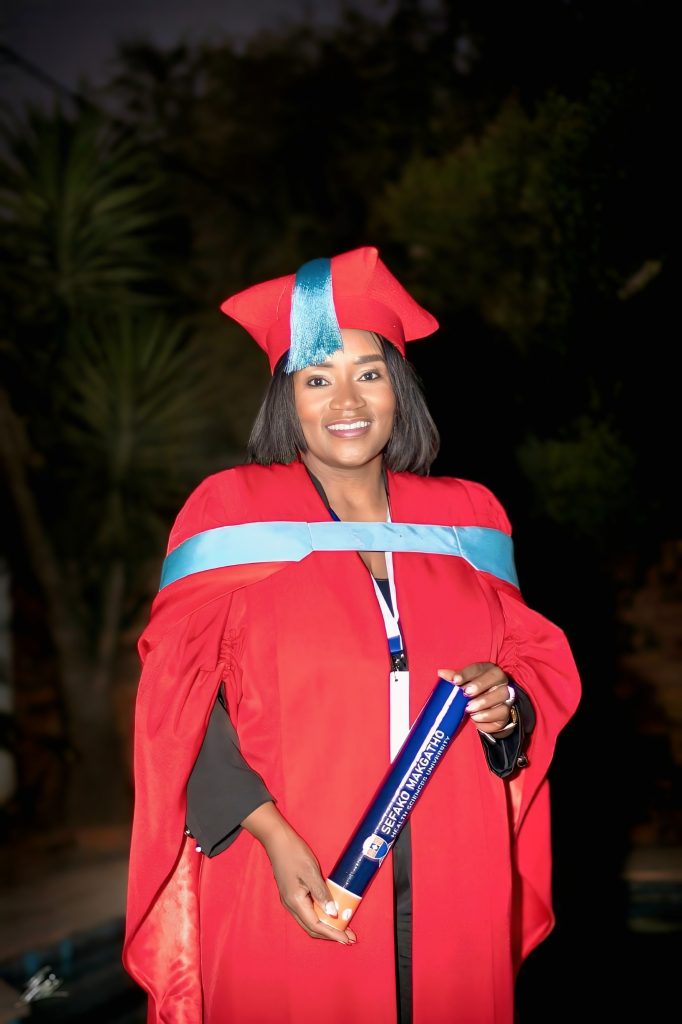 Dr Mathebula’s doctoral work, titled Strategies to support work-life balance of nurse educators in a selected nursing education institution of Gauteng province, South Africa, was executed in three rigorous phases combining evidence synthesis, qualitative inquiry, and expert validation.
“The reality is that nurse educators are expected to perform in increasingly demanding environments without proportional institutional support,” Dr Mathebula said during a research presentation. “My study aimed to translate evidence into actionable strategies that institutions can implement immediately.”
Phase one of the study involved a scoping review that identified four key drivers of poor work–life balance: occupational stress, understaffing coupled with heavy workloads, the growing influence of technology, and limited institutional support systems. These findings provided a foundation for deeper investigation into lived experiences within nursing education environments.
In phase two, Dr Mathebula conducted a qualitative, exploratory study involving 16 nurse educators from two campuses of the Gauteng College of Nursing. Thematic analysis revealed four major themes: work–life balance challenges, managerial influence, psychosocial impacts, and coping mechanisms. She integrated spillover theory and SWOT analysis to develop targeted support strategies.
One participant reflected during the interviews: “We are constantly torn between teaching responsibilities, clinical supervision, and administrative demands. The emotional toll is rarely acknowledged, but it is deeply felt.”
Phase three focused on validating these strategies through a Delphi process involving nine experts from nursing education institutions and the Gauteng Department of Health. The resulting recommendations emphasise wellness programmes, stress management workshops, mental health support services, reduced administrative workload, and flexible work arrangements.
Dr Mathevula, one of the supervisors, noted: “This work is not only academically rigorous but also highly relevant to the current crisis in higher education nursing environments. It provides a roadmap for sustainable institutional reform.”
 The study further recommends integrating work–life balance content into nursing curricula and strengthening collaborative institutional cultures to improve staff retention and well-being.
Beyond the dissertation, Dr Mathebula has established a strong scholarly footprint, presenting at the DGMAH Gauteng Annual Research Summit and the International Research Forum at the University of Johannesburg. Her research consistently highlights the psychosocial burden faced by nurse educators, including burnout risk, emotional strain, and role conflict.
“She has demonstrated that these challenges are not isolated but systemic,” said co-supervisor Dr Ramalepa. “Her contribution pushes nursing education towards evidence-driven policy and practice.”
Dr Mathebula’s doctoral output has also resulted in eight DHET-accredited publications, including one high-impact international journal article, with additional manuscripts accepted and under review.
SMU emphasised that her work aligns strongly with its mission of advancing health sciences education, research excellence, and innovation. The university highlighted that her findings have the potential to strengthen institutional resilience across nursing education systems in South Africa.
In conclusion, Dr Mathebula’s research represents a significant advancement in nursing education scholarship, offering practical strategies to improve wellbeing, strengthen institutional policy, and enhance the sustainability of the nursing education workforce in Gauteng and beyond.
By Tumelo Moila