For final-year Sefako Makgatho Health Sciences University (SMU) Bachelor of Nursing and Midwifery student Cwenga Maliwa, being selected for a prestigious US international exchange programme has broadened her understanding of leadership, civic engagement and the role of healthcare professionals in serving their communities.
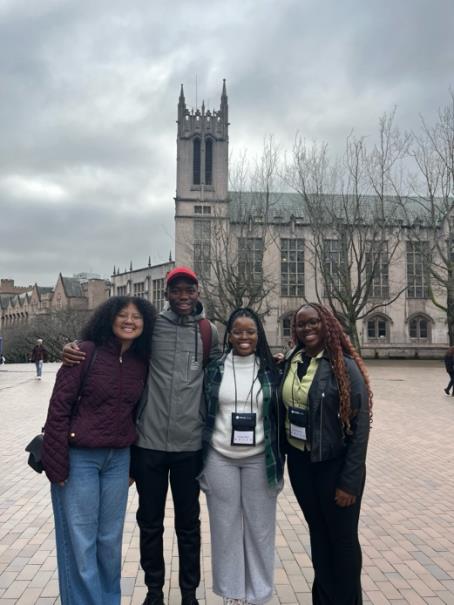
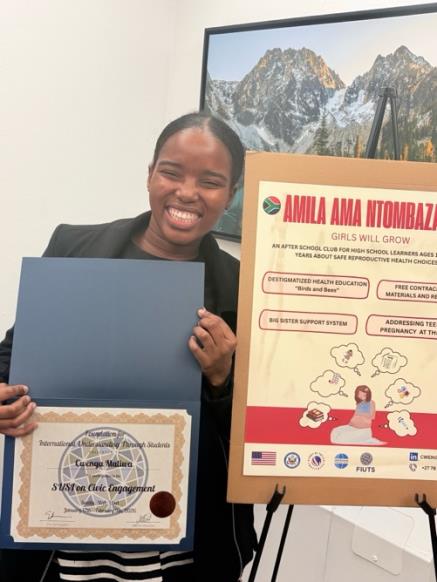 Maliwa was among 20 student leaders from Angola, Botswana, Mozambique, South Africa and Zimbabwe selected to participate in the Study of the US Institutes (SUSI) for Student Leaders programme. The highly competitive US Department of State initiative provided an intensive academic, cultural and leadership experience focused on civic engagement.
Only four students were selected from each participating country following a rigorous interview and selection process. Maliwa’s selection reflected her involvement in student leadership and civic engagement, particularly through her work with the South African Nursing Students’ Association (SANSA), as well as other leadership and community initiatives.
For Maliwa, the five-week programme, held recently, extended the leadership journey she had already begun at SMU. “I wouldn’t describe it simply as ‘I applied for a programme and went to America.’ It was really an extension of the leadership journey I was already on,” Maliwa said.
Hosted in Seattle, Washington, in collaboration with the Foundation for International Understanding Through Students (FIUTS), the programme combined academic learning with community engagement, volunteering, cultural activities and immersion in American society.
One key theme was how communities respond to social challenges, including homelessness and food insecurity. At the Treehouse Foundation, Maliwa observed a model that enables people experiencing homelessness to select essential supplies in a boutique-style environment designed to preserve dignity and choice.
The experience challenged her to think differently about community service. “Service should not only ask, ‘What do people need?’ but also, ‘How can we meet that need while respecting the person receiving it?’” she said.
Maliwa and fellow participants also volunteered at Food Lifeline, packing food parcels for people experiencing food insecurity and homelessness, and took part in community service activities, including painting schools around Martin Luther King Jr. Day.
 As a nursing student, Maliwa particularly valued opportunities to explore healthcare innovation and different healthcare environments. A visit to the Gates Foundation introduced her to the intersection of philanthropy, technology and social impact, including a prototype portable ultrasound device. A visit to an American medical centre also gave her insight into another healthcare system.
Rather than simply viewing the US healthcare system as superior, the experience deepened her appreciation of healthcare in South Africa. “International exposure isn’t necessarily about deciding that one country or system is better than another,” Maliwa said. “It is about seeing different approaches, asking questions, learning what works in different contexts and returning home with a greater appreciation of what we have and what we can continue improving.”
In the final week before returning to their respective countries, the programme took participants to Atlanta, Georgia, where they explored American history and the Civil Rights Movement, before engaging with government and civic leadership in Washington State. Earlier in the programme, within the first four weeks, participants met with Washington Secretary of State Steve Hobbs, while 36th District House Representative Julia Reed provided practical insights into governance and public service.
Reflecting on the experience, Maliwa said it had broadened her understanding of what leadership means. “Leadership isn’t always the person standing at the podium,” she said. “Sometimes it is the person volunteering in their community, painting a school, packing a food parcel, documenting a decision, writing a communiqué, asking a difficult question, creating access for others, caring for a patient, or making sure that people’s voices are represented.”
Maliwa’s SUSI experience demonstrates the value of international exposure in developing student leaders with broader perspectives and a stronger commitment to service. For SMU, such opportunities support its role in developing health sciences professionals equipped to lead, innovate, and make a meaningful contribution to the communities they serve.
By Tumelo Moila