
Sefako Makgatho Health Sciences University (SMU) is strengthening its commitment to a cleaner, safer, and healthier campus environment by continuously improving cleaning and hygiene services, with representatives from its cleaning management team recently attending the University of Pretoria’s Innovation and Technology Event.
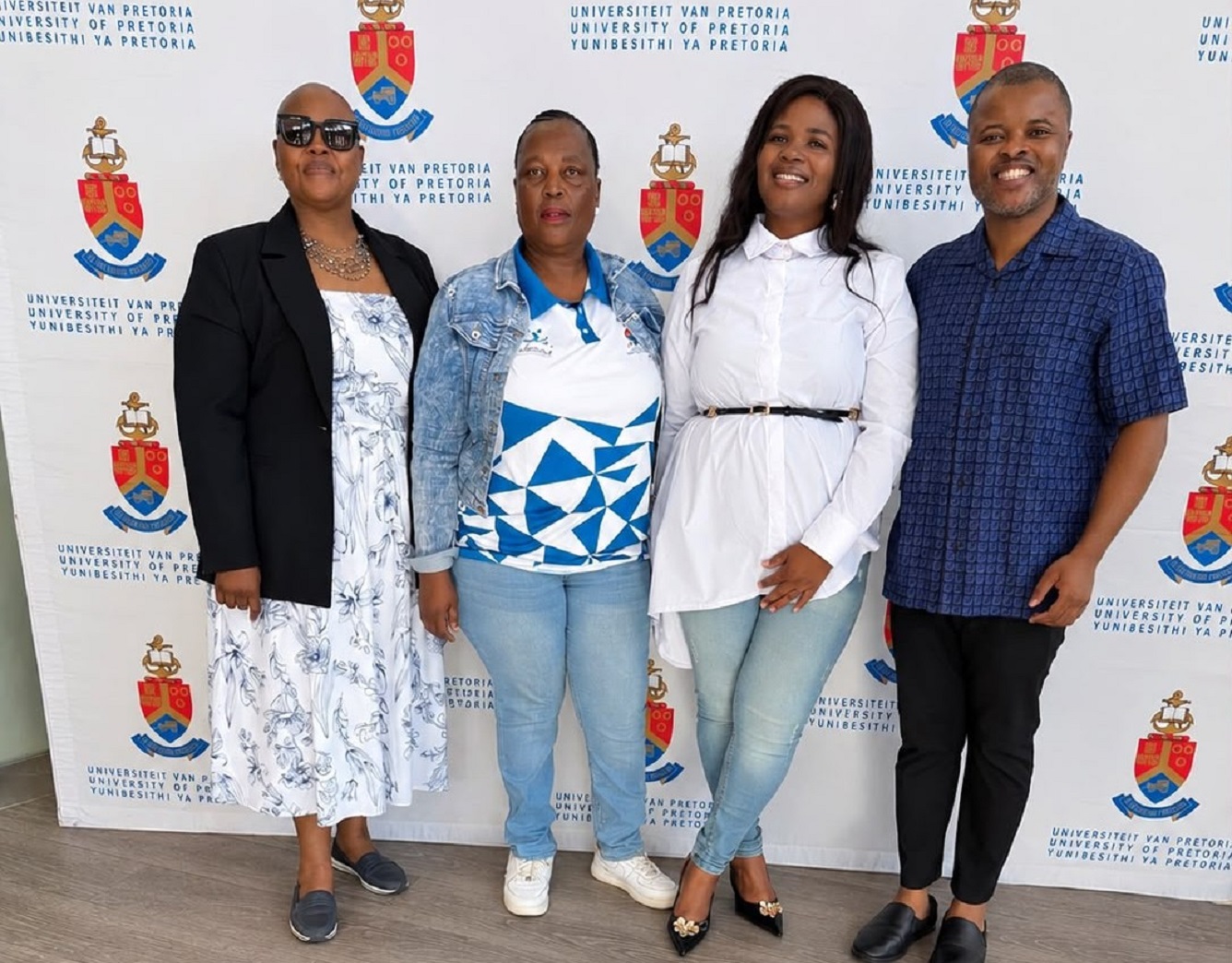 The event, hosted by the University of Pretoria’s Facilities Management Department in collaboration with its Industrial Hygiene Subdivision, provided an opportunity to engage with emerging technologies, innovative practices and approaches to modern facilities management. The participation forms part of the team’s broader efforts to enhance service delivery at SMU, where a hygienic environment is essential to teaching, learning, research and professional training.
Since taking over the university’s cleaning services in March 2026, the team has focused on understanding SMU’s operational requirements and identifying opportunities to improve cleanliness and hygiene standards across its facilities. “For a health sciences university, cleanliness goes beyond appearance. It is fundamental to creating an environment that reflects the values of health, safety, professionalism and care that underpin healthcare education,” said Tulani Nkuntse, Acting Executive Director: Student Affairs.
The team’s participation reflects its recognition that cleaning services are integral to the university’s operational environment. Well-maintained facilities contribute to the daily experiences of students and staff while supporting the institution’s responsibility to provide suitable spaces for academic and professional engagement.
The cleaning industry continues to evolve, with technology, improved equipment, data-driven monitoring systems and more efficient resource management creating opportunities to enhance service delivery. For SMU, understanding these developments is an important step towards identifying practical solutions that can be applied to its campus environment.
However, innovation extends beyond technology. Effective cleaning and hygiene management also depend on skilled personnel, clear processes, accountability, adequate resources and a commitment to continuous improvement. “Improving hygiene standards requires the right combination of people, processes, resources and technology. Our cleaning personnel play a critical role in maintaining the university’s facilities and supporting them with appropriate guidance and management is essential to achieving sustainable standards,” Nkuntse said.
Maintaining these standards also requires collaboration among cleaning personnel, facilities management, university leadership, staff, students and other stakeholders. A shared commitment to cleanliness helps create an environment that respects the dignity and well-being of everyone who uses the campus.
Since assuming responsibility for cleaning services in March, the team has recognised that maintaining high standards requires consistency, communication, monitoring and teamwork. Participation in professional engagements such as the Innovation and Technology Event provides an opportunity to learn from other institutions and explore approaches that could strengthen cleaning operations at SMU.
The initiative aligns with the university’s broader vision of transforming health services through excellence and innovation. As an institution dedicated to health sciences education, professional training and innovative research, SMU has a responsibility to ensure that its campus environment supports these objectives.
The cleaning management team remains committed to identifying relevant innovations and applying lessons that can improve hygiene services for the university community.
Ultimately, a clean campus is more than a reflection of well-maintained facilities; it demonstrates care, responsibility and respect for the people who study, work and conduct research there. Through continuous improvement and collaboration, SMU aims to strengthen its campus environment and reinforce the importance of hygiene in advancing health sciences education.
By Tumelo Moila