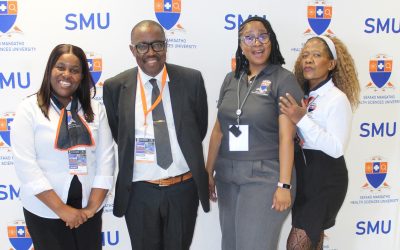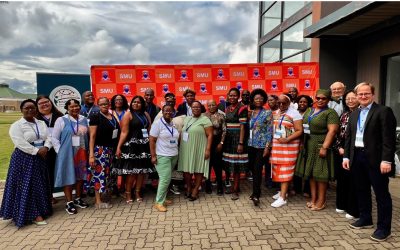
Sefako Makgatho Health Sciences University (SMU), along with 20 other public universities in South Africa, is a member of the Siyaphumelela 3.0 network under the South African Institute for Distance Education (Saide), an American-based foundation sponsored by the Kresge family. As the network lapsing in 2028, the Saide team visited SMU to meet with university leadership and project representatives to explore extending the partnership agreement beyond 2028 into the Siyaphumelela 4.0 network.
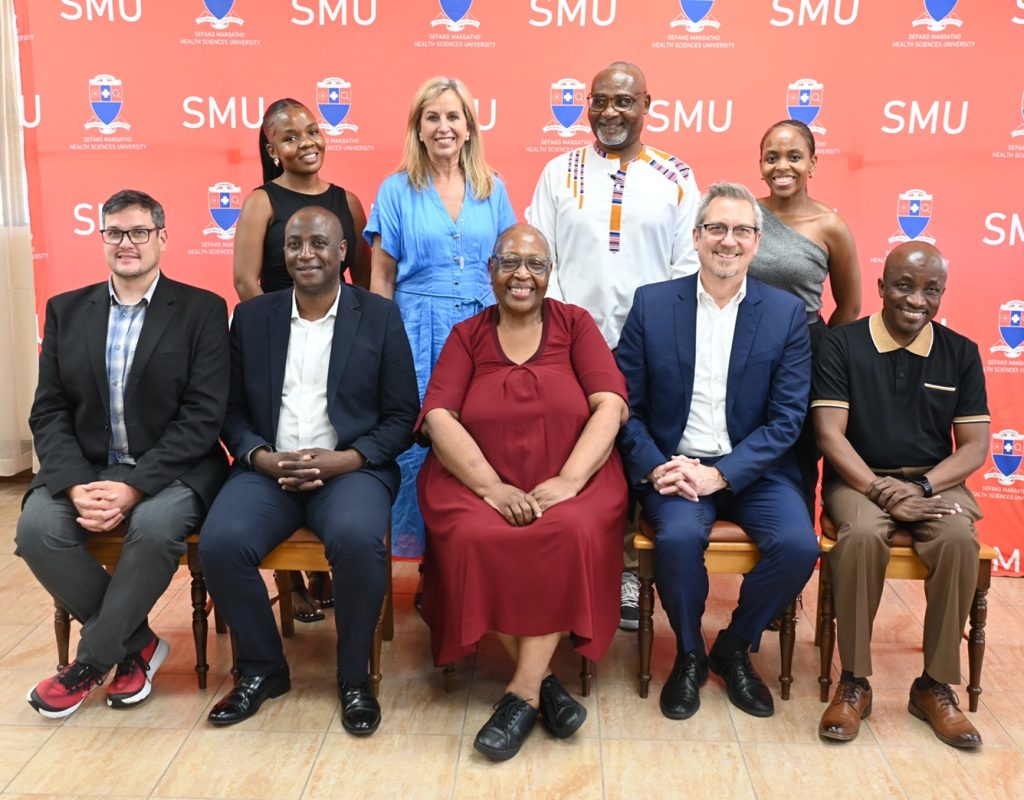 The discussions, held under the theme The Next Chapter of Siyaphumelela, provided an opportunity to assess progress and identify priorities for the next phase of the collaboration. The discussions began with reflections on SMU’s gains in strengthening student success strategies. They then acknowledged the need to strengthen data literacy, institutional capacity-building, and sustainability as essential elements in improving student outcomes.
Launched in 2014, Siyaphumelela supports higher education institutions in using data, research and evidence-based approaches to improve student success, retention and graduation rates. Its broader vision is to help universities develop effective strategies that enable more students to complete their qualifications successfully and within the expected timeframes.
SMU and Siyaphumelela have worked together since late 2024, examining institutional performance and identifying opportunities to strengthen student support. The meeting also highlighted challenges relating to data literacy among academics and students, institutional capacity-building and the sustainability of student success interventions.
SMU presented graphical data showing student pass rates for 2024 and 2025, prompting discussion about how to interpret performance indicators and present institutional information more effectively. The university also acknowledged the difficulties of benchmarking its performance against other institutions because of its distinctive position as a specialised health sciences university.
Bill Moses, Director for Education at the Kresge Foundation, encouraged SMU to establish stronger networks with independent, standalone medical and health sciences universities internationally. He emphasised the value of learning from institutions with comparable academic and operational structures, particularly to strengthen data literacy and develop accessible ways of communicating institutional performance.
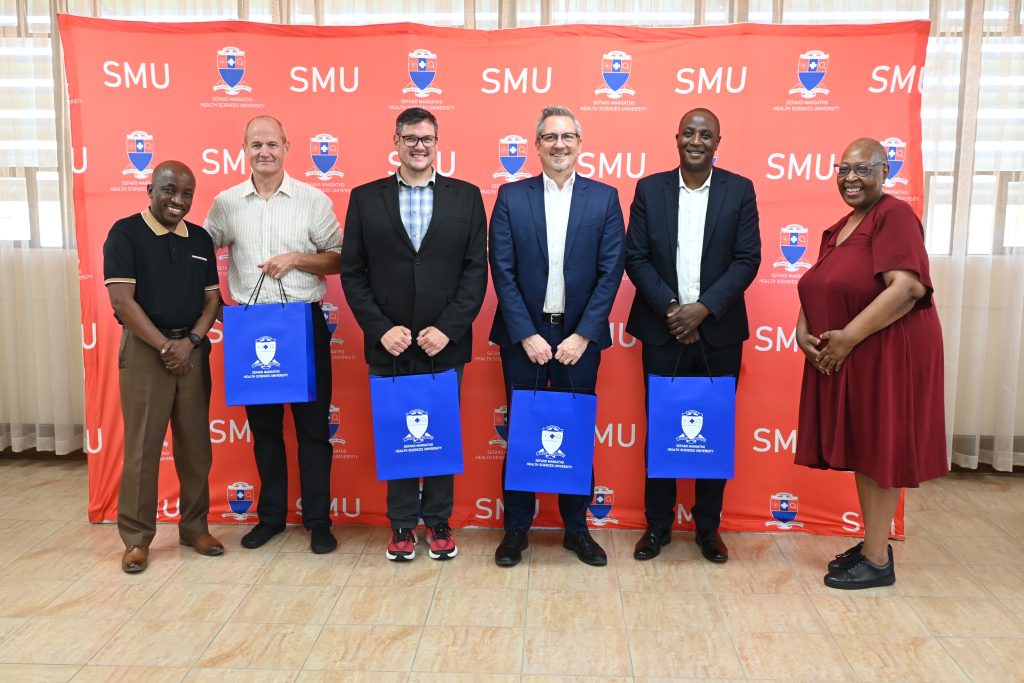 The meeting further highlighted the need to reposition Siyaphumelela within SMU’s broader institutional strategy. Acting Vice-Chancellor Professor Dini Mawela emphasised that student success should not be regarded as an additional project but as an integral mechanism for achieving the university’s academic objectives. Her position reinforced the importance of embedding student success into institutional planning, decision-making and everyday academic practices.
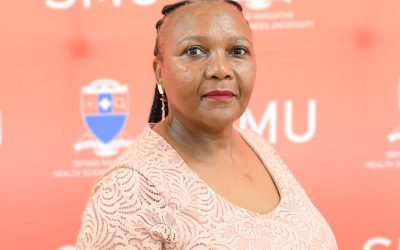
The programme’s impact was also reflected in the experiences of staff/students who have witnessed developments in student support. Onalerena Mabeba, an intern in the Centre for University Teaching and Learning (CUTL) and an SMU alumna, highlighted the programme’s contribution to student development.
“In the last two years that I’ve been working in CUTL and seeing the student success programme, I think it really has benefited a lot of students on a very large scale,” she said.
Mabeba’s observations reflect the growing importance of structured academic support and interventions that encourage students to take ownership of their learning. The programme has also helped cultivate greater academic awareness and pride, with students becoming increasingly conscious of their academic performance and how it contributes to the university’s overall standing.
Through its partnership with Siyaphumelela, SMU continues to advance a student-centred approach to higher education, supported by evidence-based decision-making, institutional collaboration and continuous improvement. By strengthening data literacy and building institutional capacity, the university aims to create an enabling academic environment where students can thrive, complete their qualifications and graduate as competent health professionals who contribute meaningfully to society.
By Gabisile Sibeko