by Lorato | May 23, 2025 | Accolades and Achievements, All News, SMU Media, Student Media
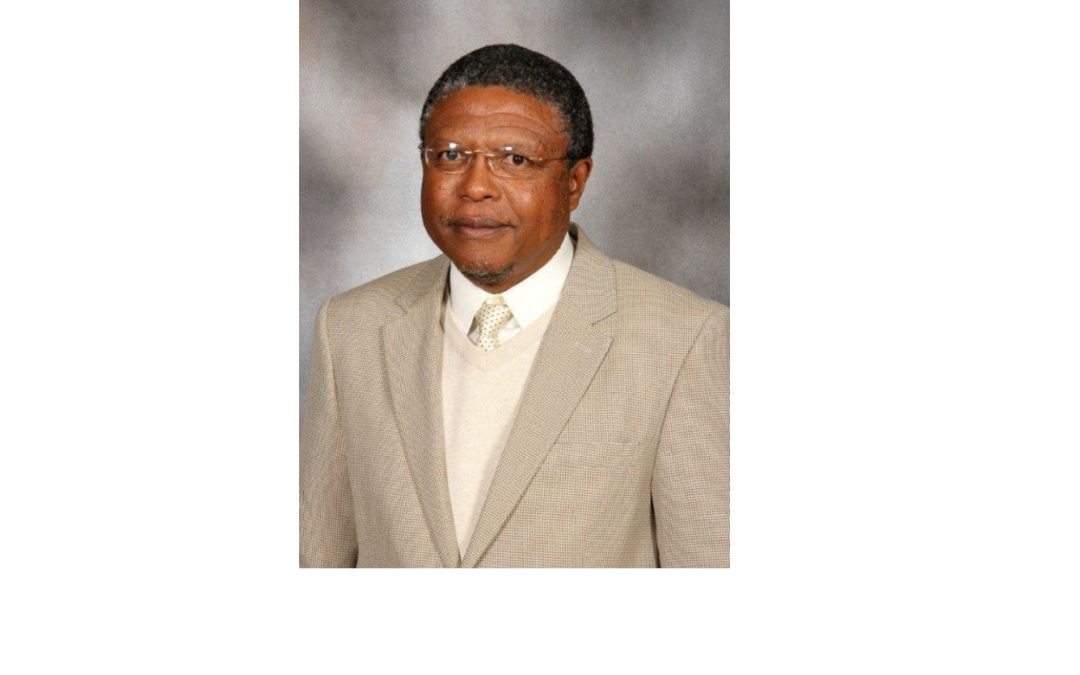
Sefako Makgatho Health Sciences University (SMU) is set to make institutional history as it prepares to confer its first-ever honorary doctoral degree during its Autumn Graduation Ceremony on 23 May 2025. The honour will be bestowed upon Professor Phuti Esrom Ngoepe, an internationally acclaimed scholar in the field of Physics, in recognition of his outstanding academic contributions to Materials Modelling and the advancement of science in South Africa and beyond.
 The honorary doctorate will be awarded within the School of Science and Technology, underscoring SMU’s commitment to academic excellence and its growing recognition of transformative figures in science whose work aligns with the university’s mission to advance knowledge that serves society.
Ngoepe’s contribution to the scientific community spans over five decades, with a career marked by prolific research output, groundbreaking computational modelling in Materials Science, and an enduring commitment to mentorship. He has supervised 61 Master’s and 34 PhD students, mentored 16 postdoctoral researchers, and delivered over 1 000 conference presentations across local and international platforms. His academic footprint also includes a vast body of peer-reviewed publications that continue to influence emerging scholars and practitioners in Physics and allied disciplines.
Beyond the lecture halls, Ngoepe has played a strategic role in shaping science policy and research priorities in South Africa. He has served on numerous high-level councils and expert panels, including the Council for Geosciences, MINTEK, the South African Nanotechnology Initiative, and the Platinum Value Addition Initiative Steering Committee.
His accolades include some of the highest national and international honours: the Order of Mapungubwe (Silver) awarded by the Presidency of South Africa in 2008 for his contribution to the natural sciences; the Chinese Government Friendship Award (2022); and multiple recognitions from science bodies including the Council for Geosciences, the Black Science, Technology and Engineering Professionals Award, and a 2023 Materials Science Workshop held in his honour.
Speaking on the significance of this conferment, Tshimangadzo Mphaphuli, the Acting Director: Department of Communications and Marketing, remarks: “It is both fitting and symbolic that SMU’s inaugural honorary doctorate is awarded to a scholar of Prof Ngoepe’s calibre, whose work exemplifies scientific rigour, innovation, and impact.”
“ Honouring Ngoepe is not only a celebration of a towering figure in science, but a defining moment for SMU. It signals the university’s unwavering commitment to advancing knowledge that transforms society, where health sciences, technology, and innovation intersect to shape a better future for South Africa, the continent, and the world,” concludes Mphaphuli.

by Lorato | May 13, 2025 | Accolades and Achievements, All News, SMU Media, Student Media
Sefako Makgatho Health Sciences University (SMU) continues to solidify its reputation as a leader in health sciences research, with its NRF-rated researchers playing a crucial role in shaping the institution’s academic landscape. Among them is Dr Bwalya Angel Witika, a Senior Lecturer and NRF-rated researcher in Pharmaceutical Sciences, whose work in nanomedicine and drug delivery systems is making significant strides.
 Witika, a Pharmacist by profession, has an extensive background in drug design, development, and delivery. With over 47 ISI-accredited publications, three book chapters, and an editorial role, his contributions to the field of pharmaceutical sciences are substantial. “My research focuses on developing advanced drug delivery systems, nanomedicines, and functional biomaterials for treating infectious, hereditary, and lifestyle diseases,” he explains.
His interest in pharmaceutical research was sparked by the urgent need for innovative healthcare solutions in Africa. Coming from an academic family, with his father a professor of chemical and mining engineering, he was introduced to the importance of scientific research at an early age. This exposure, coupled with his fascination with molecular medicine, led him to specialise in nanomedicine and drug delivery.
Witika’s research journey began at Rhodes University, where he earned his Master’s and PhD in Pharmaceutics. “One of my biggest challenges was navigating resource limitations and securing collaborations,” he recalls. However, strategic networking and perseverance helped him overcome these hurdles.
Since joining SMU in 2021, Witika has been at the forefront of pioneering nanomedicine research at the university. “The leadership at SMU has been instrumental in my success, providing access to cutting-edge research equipment and fostering a collaborative environment,” he says. His contributions have not gone unnoticed—he recently received the Best Emerging Researcher Award and a prestigious NRF Y2 rating.
Witika’s award-winning research centres on innovative drug delivery systems, including nano drug design and functional biomaterials. One of his most notable achievements is the development of SMU’s first-ever product patent aimed at improving breast cancer and osteoporosis treatment. “Our research enhances treatment efficacy while minimising side effects, ensuring better patient compliance,” he explains.
Beyond academia, Witika’s work is geared towards real-world application. “Our technologies are designed to be affordable and adaptable, particularly for underserved communities,” he notes. Although his research has yet to be translated into practical healthcare solutions, it is progressing towards implementation, with support from industry partners.
Witika’s research is highly collaborative, involving partnerships with institutions across five countries. “I have secured grants with collaborators from Northern Ireland, France, and Brazil while maintaining strong ties with local universities,” he says. His work in interdisciplinary research, particularly in nanomedicines and biomaterials, benefits from collaborations with chemists, biologists, and engineers.
Looking ahead, he envisions his research evolving towards personalised medicine and artificial intelligence-driven drug delivery. “I recently secured funding to collaborate with a world-leading researcher in microneedle technology in Northern Ireland, which will open new research avenues,” he reveals. His team is also embarking on an ambitious project for HIV prevention in women, which could revolutionise long-term, cost-effective prevention methods.
For aspiring researchers, Witika emphasises the importance of persistence and collaboration. “Building a strong network of mentors and maintaining adaptability are key to success,” he advises. He also highlights the role of funding in advancing research and calls for greater institutional support for emerging researchers.
As SMU continues to drive excellence in health sciences research, Witika’s work illustrates the university’s commitment to innovation. “I am dedicated to pushing the boundaries of pharmaceutical sciences and mentoring the next generation of researchers,” he concludes.
By Tumelo Moila

by Lorato | May 13, 2025 | Accolades and Achievements, All News, SMU Media, Student Media
Sefako Makgatho Health Sciences University (SMU) is leading advancements in medical research and innovation, identifying globally significant themes with societal impact. Central to this mission is Professor Anna Oettlé, a Full Professor in the Anatomy and Histology Department, whose exceptional contributions to anatomical research have earned her a prestigious accolade at the Vice-Chancellor’s Excellence Awards 2024.
 Oettlé qualified as a medical doctor at the University of the Witwatersrand in 1988 before pursuing an MSc in Anatomy with distinction. Transitioning into academia in 2002, she developed a keen interest in anatomical variations, which ultimately earned her an NRF C2 rating. “Clinical practice revealed the significance of anatomical variations in diagnosis and treatment. Modern 3D imaging techniques enhance visualisation, yet the principle of using multiple views remains essential,” she explains.
Oettlé’s research has evolved from traditional anatomical studies to advanced 3D imaging techniques. A landmark achievement in 2009 saw her collaborate with the South African Nuclear Energy Corporation (Necsa) to conduct the first cone beam tomography scans on human remains, revolutionising 3D anatomical analysis.
Her research spans bone and dental variation, craniofacial morphology, hominin evolution, and forensic applications. Notably, her work in biological profiling methods aids forensic scientists in identifying unknown victims, significantly contributing to criminal investigations.
The significance of an NRF Rating
An NRF rating validates a researcher’s contributions, enhances visibility, and unlocks funding opportunities. “Applicants must present five publications over eight years. A C2 rating confirms that all reviewers recognise the researcher as established, with impactful contributions and international collaborations,” she notes.
At SMU, institutional support has been invaluable. “SMU provides expert consultants to review applications and offer constructive feedback. Since joining in 2017, this environment has been instrumental in increasing my research productivity.”
Among her most cited studies is one that established an age classification system from sternal rib ends for South Africans, widely used in forensic profiling. “This study has been cited 143 times, assisting biological profiling. Similarly, our research on the mandible’s microstructure has crucial applications in orthodontics and forensic science,” she says.
Her research directly benefits medical practice, enabling clinicians to assess cephalopelvic disproportion during childbirth and inform dental procedures. It also equips forensic scientists with localised standards for facial reconstruction in missing persons cases.
Oettlé champions mentorship and interdisciplinary collaboration. “Engineers have helped refine 3D measurement techniques. Cross-disciplinary work fosters innovation. I mentor early-career researchers, believing in their potential and encouraging impactful work.”
She emphasises the role of NRF ratings in strengthening SMU’s research reputation. “These ratings drive early-career researchers to focus and secure funding. Increased funding facilitates mobility and international collaboration.”
Looking ahead, she aims to expand 3D scanning applications and enhance biological profiling methods. “3D imaging is becoming more accessible. My goal is to secure funding for advanced equipment and foster interdisciplinary collaborations.”
Reflecting on her VC Excellence Award recognition, she states: “It is an honour and a motivator to continue publishing. Previous awards funded research assistants to archive skeletal remains. I plan to use this funding to archive our scan collection at SMU’s central archives for future research.”
Encouraging aspiring researchers, she advises: “Dream big, work hard, and embrace new ideas. Stay positive and seek collaboration. Almost anything is possible with dedication.”
As SMU continues to drive medical research and innovation, its commitment to fostering excellence and collaboration ensures a lasting impact on healthcare. Through dedicated researchers like Oettlé, SMU is shaping the future of medical science, making transformative contributions to global healthcare.
By Tumelo Moila
by Lorato | May 13, 2025 | Accolades and Achievements, All News, SMU Media, Student Media
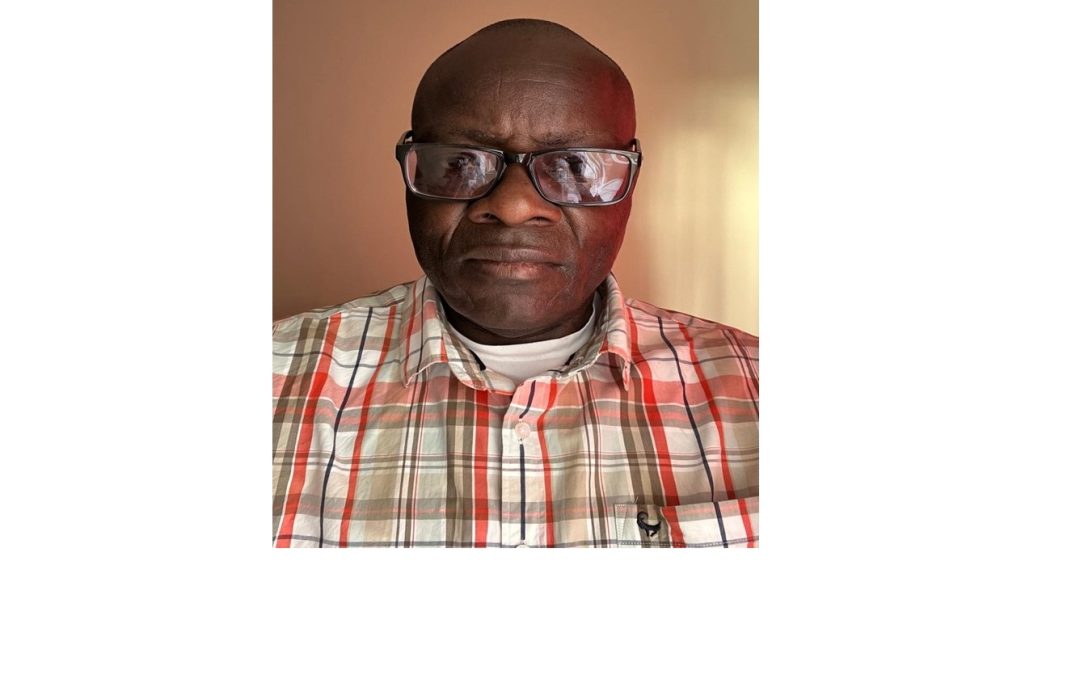
Dr Benson Chuks Iweriebor, a postdoctoral fellow in the Department of Biology and Environmental Science at Sefako Makgatho Health Sciences University (SMU), has been awarded a C2 rating by South Africa’s National Research Foundation (NRF), recognising him as an established researcher with a sustained record of high-quality scientific output.
 The NRF rating system serves as a benchmark for academic excellence in South Africa, evaluating researchers based on the quality and impact of their recent scholarly contributions. A C2 rating signifies that a researcher has produced a coherent and consistent body of work, demonstrating ongoing engagement with their field and the capacity to conceptualise and investigate complex problems.
“The rating really means a lot to me as it will help me establish my footprints in the science community both locally and globally,” says Dr Iweriebor. “It enhances the national and international profile of the researcher’s institution.”
Iweriebor’s academic journey began with a doctoral degree from the University of Venda in 2012. He further developed his expertise during a research stint at the University of Virginia in the United States, collaborating with renowned HIV researchers. His tenure at the University of Fort Hare, working alongside Professor Lawrence Obi, was pivotal, as he secured funding from the NRF and the South African Medical Research Council (SAMRC) to advance his research outputs.
“Some of the major milestones that stand out for me include an award from the African Academy of Sciences for research on climate change and tick-borne disease, and travel grants from the Bill and Melinda Gates Foundation to attend international conferences,” he notes.
His research primarily focuses on infectious diseases, including studies on HIV and HIV drug resistance, circoviruses and parvoviruses affecting piggery and pork production, antibiotic resistance in wastewater effluents, and the prevalence of multidrug-resistant pathogens in various environments. He has also contributed to research on zoonotic diseases and the molecular characterisation of tick-borne pathogens in South Africa. With over 80 peer-reviewed articles, his steady publication record and collaborative efforts have been key to attaining his NRF rating.
Beyond his academic outputs, Iweriebor values mentorship. “I have mentored many scientists along the way. The majority of them are shining the light to brighten the corners where they are in the world,” he shares.
His research interests have evolved over the years, with a current focus on pathogen surveillance metagenomics. “It’s an emerging area of research that can help us better understand the diversity and complexity of microbial ecosystems,” he explains. “By analysing the genetic material of microorganisms present in a sample, researchers can gain insights into the composition, function, and dynamics of microbial communities.”
Iweriebor acknowledged the challenges he has faced in his research career, particularly related to funding and limited research facilities. “Being frugal with the little funds available and designing your research to fit the resources at hand has been the key,” he says.
Collaboration has been central to his scholarly work. “I am a co-author of all my publications. It wasn’t a lone effort but a collaborative endeavour,” he emphasises. He is also exploring interdisciplinary collaborations, particularly in leveraging medicinal plants to combat antimicrobial resistance.
Looking ahead, Iweriebor aspires to mentor more young researchers and stay abreast of technological advancements in his field. “To whom much is given, much is expected. This award is a call to work harder and to attain greater heights, all by his grace,” he reflects.
He expressed gratitude to his family, colleagues, and mentors, including Professor Obi, Professor Mapaseka Seheri, Professor Piet King, Professor Anthony Okoh, Dr Kayode Afolabi, Dr Oyinlola Olaokun, and Professor Nqobile Mkolo, among others. “Success is never achieved alone; it is a cumulative outcome of contributions made by several people,” he acknowledges.
Iweriebor’s recognition underscores the importance of sustained research excellence and collaboration in advancing scientific knowledge and addressing public health challenges.
By Tumelo Moila

by Lorato | May 7, 2025 | Accolades and Achievements, All News, SMU Media, Student Media
Sefako Makgatho Health Sciences University (SMU) is a university rooted in academic excellence, student welfare, and institutional growth, with exceptional leadership and professionalism at its core. Recently, Theo Bhengu, a key figure in the Grants Office, received the Outstanding Leadership and Professionalism Award at the Vice-Chancellor Excellence Awards, recognising his commitment to SMU’s development. His leadership has played a transformative role in the university’s progress.
 In 2017, Bhengu was recruited by the then Deputy Vice-Chancellor, Dr Engela van Staden, to apply his financial expertise at SMU. His leadership drives enhancements in financial operations, paving the way for the creation of the Grants Department, which began with a dedicated single member.
Today, the department has grown into a formidable team, securing millions in grant funding and supporting SMU’s academic and research growth. “I am deeply honoured to receive this award and share it with my team,” Bhengu says, highlighting the collaborative nature of his success. His department plays a crucial role in supporting students, faculty development, and SMU’s academic reputation.
Bhengu’s leadership is defined by collaboration, transparency, and strategic thinking. He promotes teamwork through open communication, shared goals, and professional development, ensuring that grants align with institutional priorities for long-term success.
A key achievement under his leadership was securing R312 million for projects under the Sibusiso Bengu Development Programme. Despite stringent compliance requirements, Bhengu’s strategic planning and teamwork led to a successful application. “This achievement reinforced the importance of collaboration and a proactive approach to leadership,” he reflects.
His client-centric approach ensures stakeholders receive timely support and clear guidance on funding opportunities. While his team does not engage directly with students, their work supports student success by securing funding for academic and research projects. His commitment to efficiency and transparency has set a high standard for service delivery at SMU.
Bhengu’s willingness to support colleagues and departments further distinguishes his leadership. A notable example was in 2024 when the School of Science & Technology faced a funding shortfall for a Work Integrated Learning Summit. His team provided R350,000, ensuring the event’s success.
As higher education evolves, Bhengu has embraced digital tools to enhance grant management efficiency, allowing real-time tracking of funding trends and compliance. However, he acknowledges the challenges of managing grant compliance and external financial constraints. “By staying ahead of funding trends and fostering relationships with funders, we can efficiently manage these challenges and drive successful outcomes for SMU,” he notes.
Leadership and professionalism at SMU extend beyond individual achievements, shaping a culture that prioritises student well-being, academic excellence, and research innovation. Bhengu’s recognition underscores the crucial role of support staff in advancing the university’s mission and cultivating a culture of professionalism.
As SMU continues to evolve, strong leadership remains essential to its success. Graduates nurtured in this environment emerge as ethical, compassionate, and innovative professionals who uphold the university’s values. Leaders like Bhengu set a benchmark for future generations, reinforcing SMU’s commitment to producing socially responsible professionals who make a meaningful impact on society.
By Tumelo Moila
by Lorato | May 7, 2025 | Accolades and Achievements, All News, SMU Media, Student Media
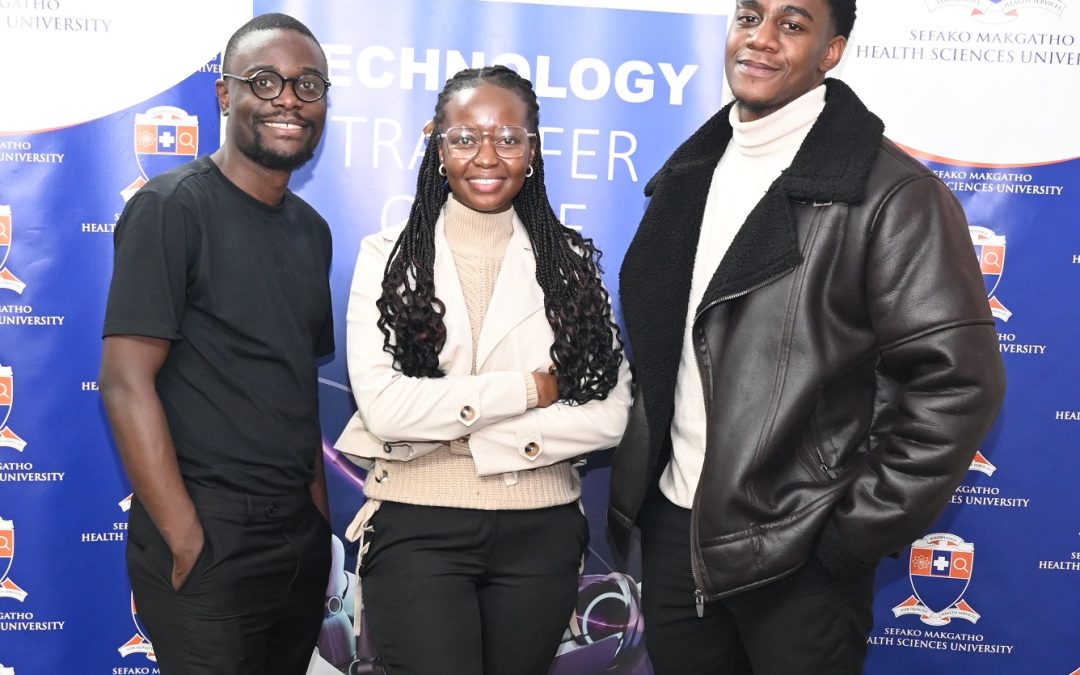
At Sefako Makgatho Health Sciences University (SMU), a new wave of innovation is sweeping across the institution. Guided by the university’s core values of excellence, inclusivity, and social responsibility, three rising stars are emerging from the university’s ranks. Supported by the SMU Technology Transfer Office (TTO), they are not just advancing research; they are united in their mission to improve lives and transform healthcare, both in Africa and globally.
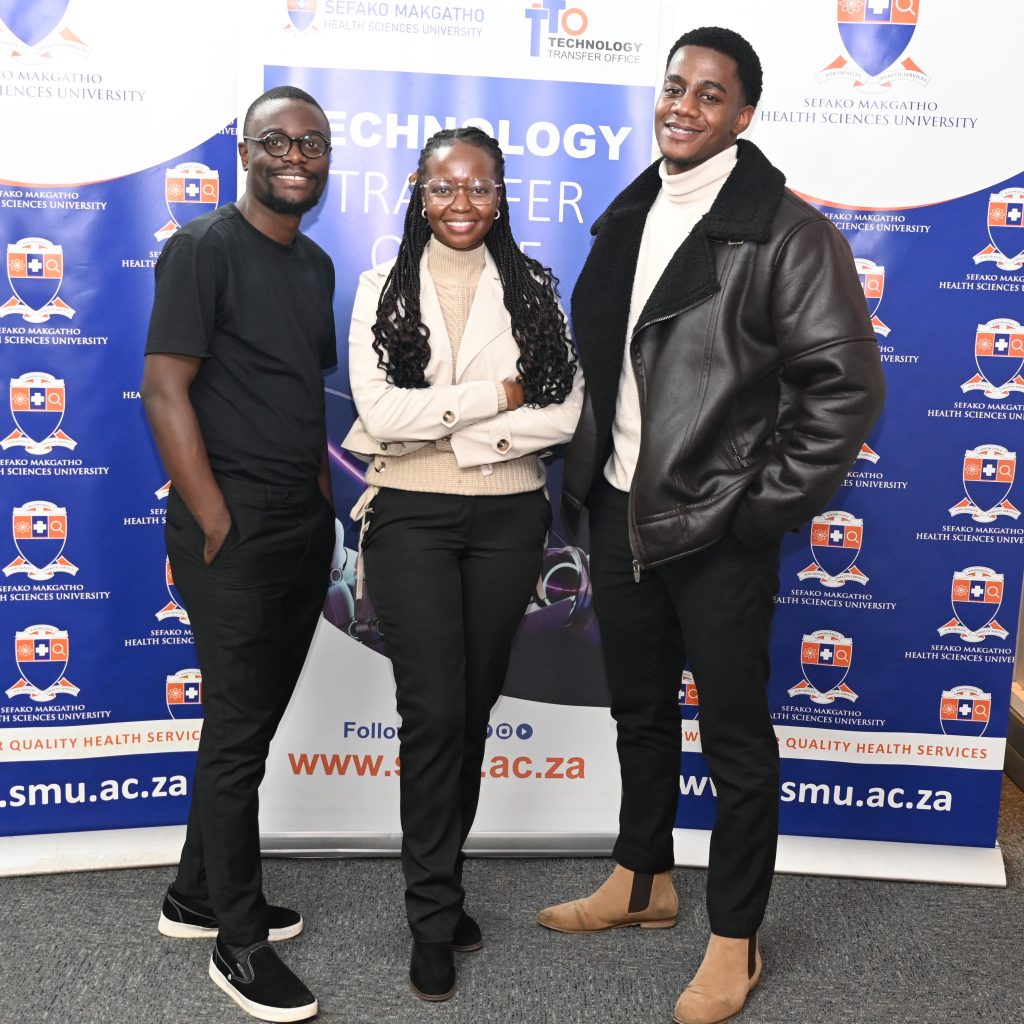 These young innovators, Emmanuel Kiyonga, Thabo Lesiba Lekgoathi, and Nondumiso Nkosi, embody SMU’s commitment to fostering excellence and collaboration in health sciences while simultaneously honouring the institution’s values of inclusivity and social impact. Each of them has made a significant contribution to their field, and their discoveries have the potential to change the course of healthcare in ways that align with the university’s broader goals.
28-year-old Ugandan Pharmacist Emmanuel Kiyonga’s breakthrough drug, Raloxifene Hydrochloride Solvate-Hydrate, is already being hailed as a game-changer in breast cancer treatment for postmenopausal women. His work, which focuses on providing a less invasive and more targeted alternative to existing treatments such as chemotherapy and hormone therapy, underscores SMU’s commitment to social responsibility, especially when it comes to addressing pressing global health challenges.
Kiyonga’s journey, which began with a desire to save lives, has already earned him considerable recognition, including R100,000 in prize money and the prestigious title of Studentpreneur 2024 at the Entrepreneurship Development in Higher Education (EDHE) Intervarsity programme. “Kiyonga’s work is a perfect example of how SMU’s values of excellence and social responsibility come together to create impactful innovations,” says Mohlatlego Sebola, who oversees the operationalisation of the TTO at SMU. “His research not only advances science but also addresses a significant gap in women’s healthcare.”
Kiyonga’s work reflects the ethos of SMU: a commitment to producing transformative research that serves society. “Through the support of the TTO, I’ve been able to bring my idea to life,” Kiyonga explains. “I’m proud to contribute to breast cancer treatment, knowing that it could help women live healthier lives.”
PhD candidate Thabo Lesiba Lekgoathi is a prime example of SMU’s emphasis on the fusion of indigenous knowledge and modern scientific innovation. Lekgoathi’s research centres on a medicinal plant, Schinus molle, which has been used in rural communities to treat respiratory ailments. His work, which led to the identification of geranylgeranyl acetate as a powerful inhibitor of SARS-CoV-2, is a testament to the university’s values of inclusivity and innovation.
Lekgoathi’s research, conducted under the mentorship of Dr Vuyisile Thibane and Professor Stanley Gololo from the Department of Biochemistry and Biotechnology, represents SMU’s focus on socially responsible research that not only draws from local knowledge but also has the potential to address global challenges like the COVID-19 pandemic. By blending traditional medicine with modern scientific methods, Lekgoathi is pushing boundaries in the fight against respiratory diseases and viral infections. His work exemplifies SMU’s belief that inclusivity in research leads to richer, more diverse scientific contributions.
“This innovation is about honouring traditional knowledge while moving science forward,” Lekgoathi says. “It’s about making a real difference, and the support I’ve received from SMU has been invaluable.”
Master’s student Nondumiso Nkosi has developed a diagnostic assay for Hepatitis B, aiming to address the significant gaps in testing accessibility, particularly in resource-limited settings. Nkosi’s diagnostic tool, developed in collaboration with Nagoya City University Hospital in Japan, perfectly aligns with SMU’s values of inclusivity and social responsibility. By providing a solution that is tailored to the unique healthcare challenges faced in Africa, Nkosi’s innovation reflects a strong commitment to improving public health in underserved communities.
Nkosi’s research focuses on creating diagnostic solutions that are not only affordable but also accessible, ensuring that individuals in remote or under-resourced areas can receive early detection and treatment for Hepatitis B. “The partnership with Nagoya City University Hospital was crucial in helping me develop a diagnostic tool that is suited to African healthcare needs,” Nkosi explains. “This innovation is about making a lasting impact where it’s needed most.”
Nkosi’s work represents SMU’s core value of social responsibility, demonstrating how innovation can drive positive change. “At SMU, we are encouraged to think about the greater good,” she adds. “This has been a driving force in my work.”
What unites Kiyonga, Lekgoathi, and Nkosi is not just their individual brilliance, but the sense of community and collaboration fostered by SMU. The support of the Technology Transfer Office (TTO), the mentorship they receive, and the university’s focus on interdisciplinary, inclusive research have been critical to their success.
Under the guidance of the TTO, these students are not only advancing their academic work but also positioning themselves to become leaders in the global healthcare and scientific landscapes. Their shared passion for innovation, social impact, and inclusivity reflects SMU’s mission to nurture talent that makes a difference in the world.
As Sebola puts it: “These three individuals embody the spirit of SMU. They are driven by excellence, committed to social responsibility, and united in their goal to improve the health and well-being of others. We are incredibly proud to support their journeys and look forward to seeing how their work continues to evolve.”
As these rising stars continue to make strides in their respective fields, they remain deeply rooted in the values that SMU stands for—excellence, inclusivity, and social responsibility. Their innovative research is not only changing the future of healthcare but also reinforcing SMU’s position as a leader in higher education that champions transformative, impact-driven research.
The work of Kiyonga, Lekgoathi, and Nkosi serves as a powerful reminder that, at SMU, the future of healthcare and science is bright, and it is united in its pursuit of a better, more inclusive world.
By Dimakatso Modise