by Lorato | Nov 6, 2025 | All News, SMU Media, Student Media
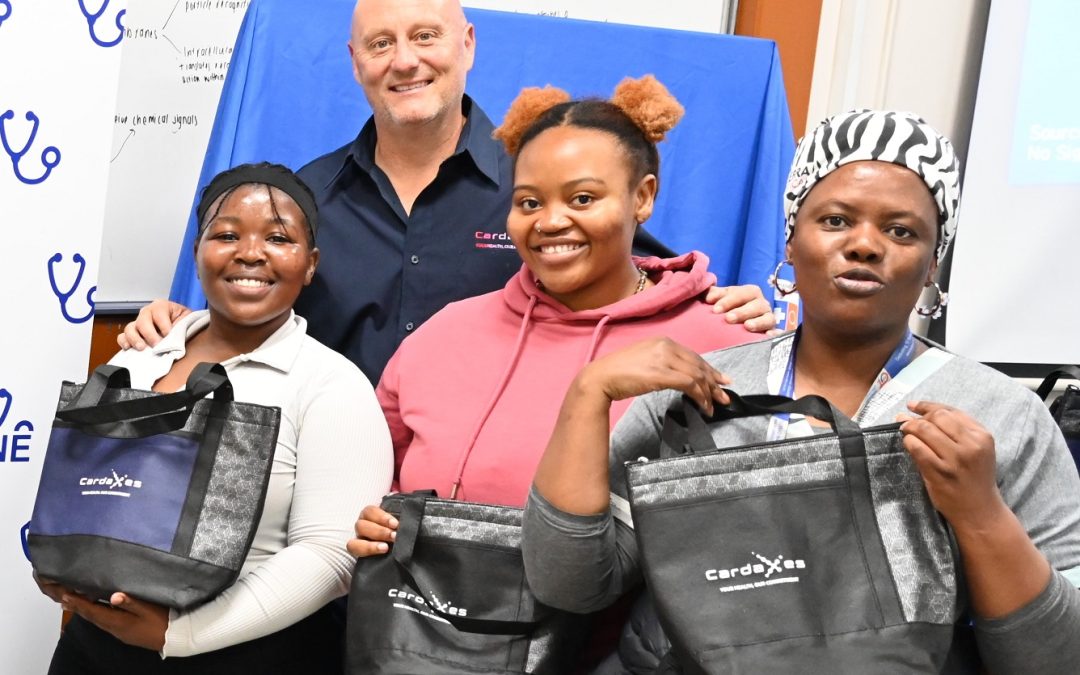
Sefako Makgatho Health Sciences University (SMU) Radiography students received an inspiring show of support from CardaXes, a company at the forefront of Cardiology, Neuro Intervention, Radiology, and Peripheral Vascular technology. The visit formed part of CardaXes’s ongoing drive to strengthen healthcare education and patient care through training, mentorship, and practical support.
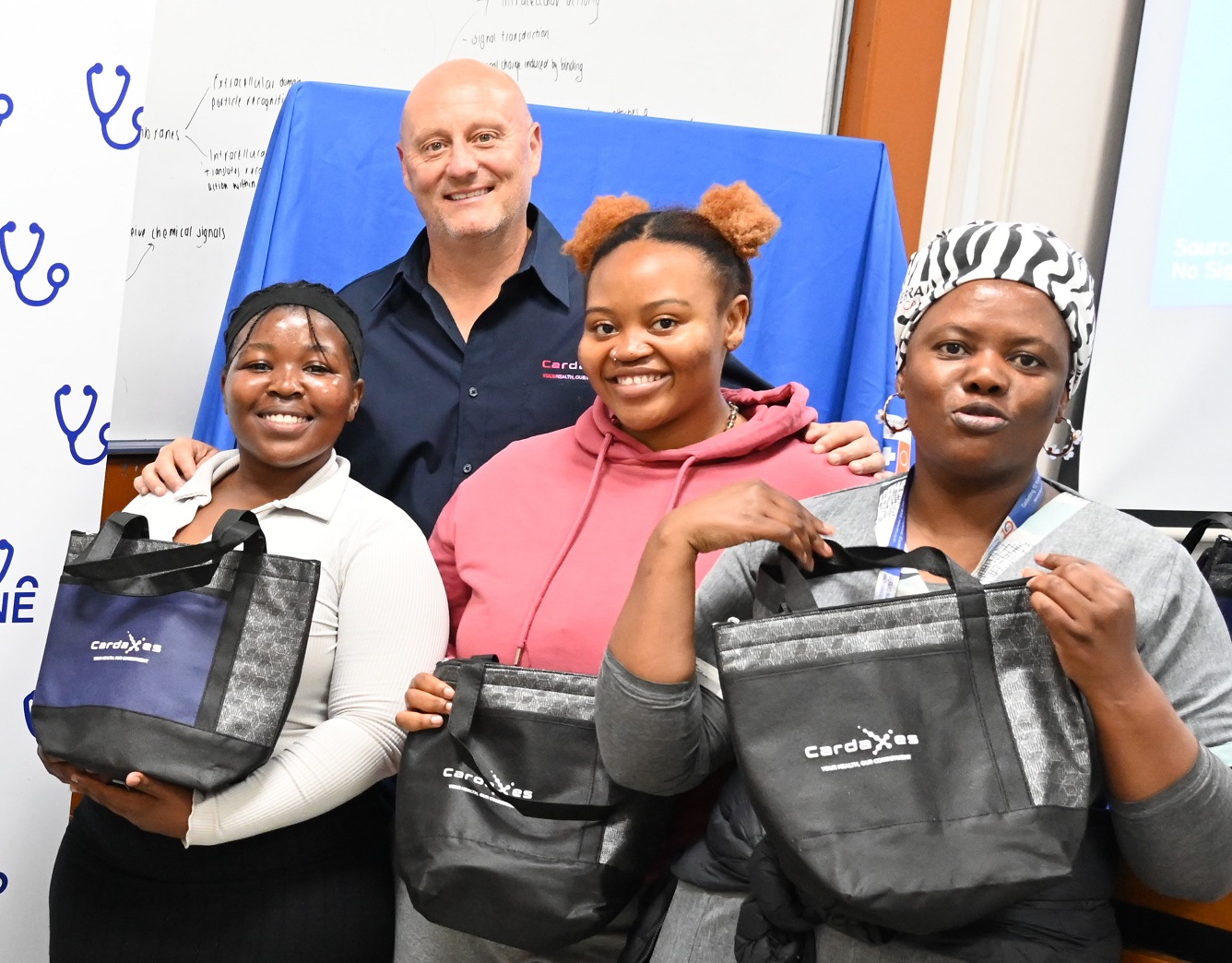 CardaXes representatives visited the Radiography Department to donate lead markers—essential tools for clinical practice—and to motivate students preparing for their final examinations. The gesture, complete with gifts and words of encouragement, highlighted the private healthcare sector’s recognition of young professionals entering the field.
“Our purpose goes beyond technology,” said Marlene Birkholtz, Sales Representative at CardaXes. “We’re committed to supporting the next generation of healthcare professionals. By donating lead markers and engaging with students, we hope to boost their confidence as they approach their exams and future careers. Investing in students today ensures better healthcare tomorrow.”
The department welcomed the contribution with heartfelt appreciation. Portia Tebogo Baloyi, part-time lecturer and clinical tutor, described the donation as both practical and symbolic. “These lead markers represent more than equipment—they’re an investment in our students’ training. CardaXes went further by meeting them personally, offering encouragement and reminding them that their efforts are valued. It lifted morale at a crucial time.”
Lead markers are vital in radiography, helping practitioners ensure accuracy and uphold professional standards in imaging. For students, access to such tools sharpens their technical skills and builds clinical confidence—an essential foundation for their professional growth.
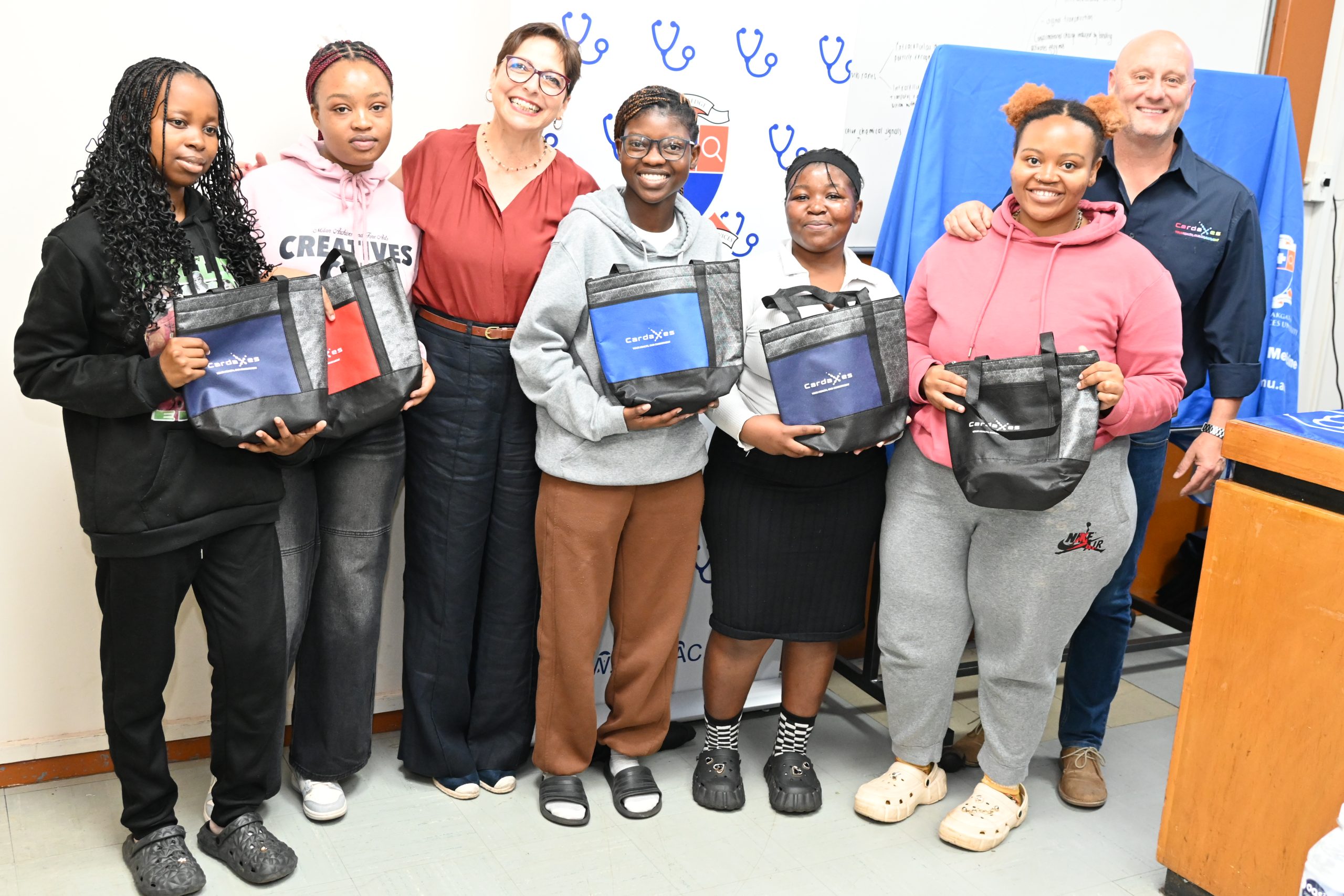 “This partnership reflects our belief in education and mentorship,” Birkholtz added. “We hope our contribution inspires students to keep striving for excellence and assures them that the healthcare industry stands behind them.”
Students were equally moved by the visit. Bachelor of Diagnostic Radiography first year student Bophelo Seroma remarked, “It wasn’t just about the gifts—it was about being seen and supported. Having professionals take time to motivate us before exams renewed our confidence and drive.”
Collaborations like this reinforce SMU’s mission to produce skilled, compassionate healthcare practitioners ready to meet real-world challenges. Partnerships with industry leaders such as CardaXes bridge the gap between classroom learning and clinical application, exposing students to the expectations and values of the healthcare environment.
Baloyi emphasised the importance of such engagements: “When companies invest in our students, they invest in the future of healthcare. CardaXes’s visit was inspiring, educational, and deeply appreciated. It strengthened our commitment to preparing graduates who are competent, confident, and compassionate.”
The SMU Radiography Department expressed sincere gratitude to CardaXes for their generosity and commitment to student development. The company’s contribution not only equipped students with essential tools but also reinforced the value of collaboration, innovation, and shared purpose in advancing healthcare education.
As SMU continues to build partnerships that empower its students, the encouragement and resources from CardaXes will remain a powerful reminder that the future of healthcare is built through shared effort and genuine investment in people.
By Dimakatso Modise
by Lorato | Nov 6, 2025 | All News, SMU Media, Student Media
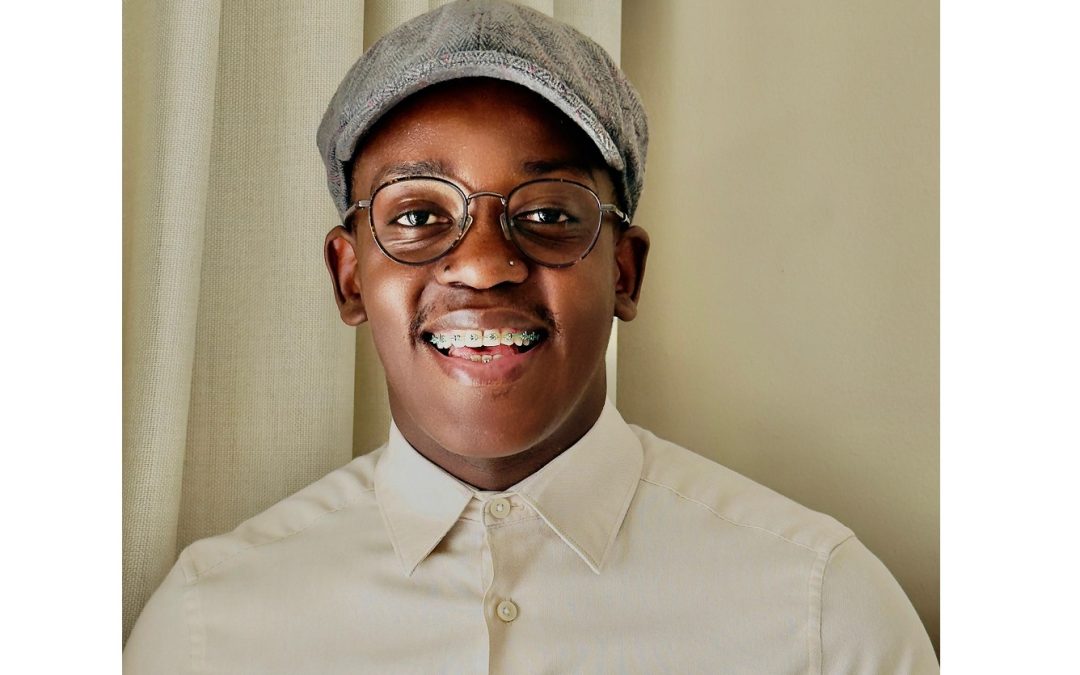
At just 30, Tshegofatso Mohlala, a young doctor from Burgersfort, Limpopo, has already carved an extraordinary path in medicine — one marked by resilience, excellence, and a deep commitment to community health. His story begins in a modest mining town and leads to the halls of Universitas Academic Hospital, where he now serves as a Medical Registrar in Internal Medicine.
 Born and raised in Burgersfort, Dr Mohlala is the eldest of three children in a humble yet loving household. His grandmother — a figure of strength, wisdom, and compassion — played a central role in shaping his character. “She taught me honesty, hard work, and responsibility,” he recalls. By the age of 11, he was driving his grandmother’s tractor, ploughing land to earn income for the family. That early discipline, and her unwavering belief in him, would later fuel his pursuit of academic and professional excellence.
His school years reflected both his talent and determination. After attending WEM School, Burgersfort, he transferred to St. Thomas College, where he matriculated in 2012 as the top student in his class. A year later, he began his medical journey at Sefako Makgatho Health Sciences University (SMU) — a decision inspired by his passion for improving the health and livelihoods of his community.
Tragically, his grandmother passed away during his first year of study, just a day before his final exams. Instead of breaking his spirit, her death became his driving force. “Her dream became my mission,” he says. In 2018, he graduated cum laude and ranked among the top five in his class — a tribute to the woman who instilled in him the values that shaped his success.
His medical career began with an internship at Job Shimankana Tabane Hospital in Rustenburg, where he faced an intense and diverse clinical environment that accelerated his professional growth. Two years later, he completed his community service at Themba Hospital in Mbombela, Mpumalanga’s largest healthcare facility. There, he witnessed the daily struggles of patients facing poverty and limited access to healthcare — experiences that deepened his resolve to serve with empathy and excellence.
In April 2022, he joined Universitas Academic Hospital in Bloemfontein as a Medical Registrar in Internal Medicine, embarking on a demanding four-year specialist training programme. His responsibilities extend beyond patient care: he supervises undergraduate students, contributes to clinical research, and promotes evidence-based medical practice.
Having completed both his Fellowship of the College of Physicians (FCP) and Master of Medicine (MMed) in Internal Medicine at the University of the Free State, he is now officially recognised as a Specialist Physician. This milestone marks the culmination of years of sacrifice, dedication, and perseverance.
Outside the hospital, he actively served through volunteer work with Special Olympics South Africa and Lemon-AID South Africa, organisations devoted to health advocacy and community upliftment. Although his demanding registrar duties have since limited his availability, his commitment to service remains unwavering.
His journey from a rural town to specialist status is a testament to the power of perseverance and purpose. What began as a child’s dream to help others has evolved into a career defined by excellence and impact. In every patient he treats, he honours the lessons of his grandmother — that strength, humility, and compassion are the heartbeats of true medicine.
By Tumelo Moila

by Lorato | Nov 6, 2025 | All News, SMU Media, Student Media
In the fast-paced world of sports broadcasting, Rose Moreki is proving that passion, precision, and presence make a winning combination. The dynamic radio sports broadcaster at SMU FM 97.1 is carving her path as one of the most authentic and engaging voices in South African campus radio.
 Based in Ga-Rankuwa, Gauteng, Moreki’s journey in media is defined by her deep love for sport and community storytelling. Her voice, now familiar to thousands of listeners, bridges the gap between athletes and audiences, giving local sports the spotlight they deserve.
Moreki currently hosts the SMU Sports Show, airing weekdays from 18h00 to 19h00, where she dives into soccer, rugby, cricket, volleyball, and tennis coverage. Known for her sharp match analysis and ability to spark meaningful discussions, she also produces a weekly mental health and wellness segment aimed at athletes and young listeners—a feature that sets her apart in the competitive sports media landscape.
Before joining SMU FM, Moreki honed her craft at Ga-Rankuwa FM, hosting a lively three-hour morning show, Tsoga Le Rona and co-presenting a sports show segment that included news and weather updates. Her role extended beyond the studio—conducting live interviews with athletes, providing match commentary, and filing field reports that kept local fans in the loop.
Her storytelling doesn’t stop on air. As a sports writer for The Ga-Rankuwa Mail, Moreki captures community sports highlights, youth tournaments, and women’s sports initiatives with clarity and passion. Her commitment to visibility for female athletes and grassroots sport has earned her growing respect across the region.
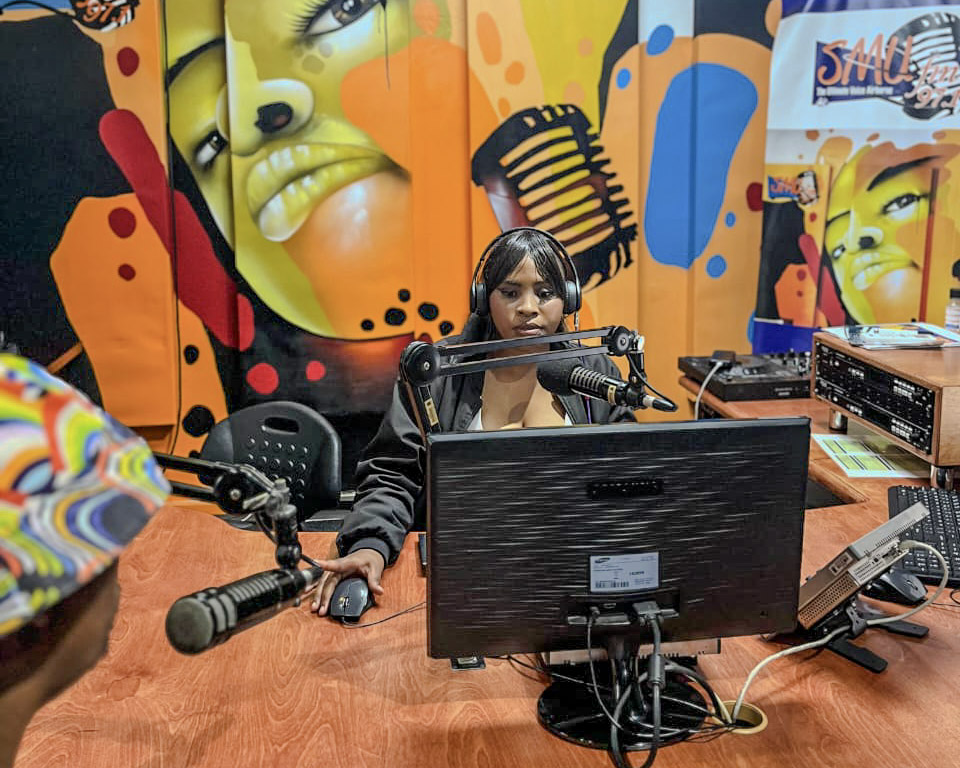 Moreki’s versatility extends to the stage. As a freelance master of ceremonies, she has hosted Mamelodi Sundowns’ Trophy Tour in Rustenburg (2024), presented awards at the G-Sports Awards in Sandton (2024), and emceed the Volleyball Awards Ceremony (2025). Her energy, professionalism, and charisma make her a sought-after event host.
Behind her growing success is a strong academic and professional foundation. Moreki is currently pursuing a Higher Certificate in Accounting Sciences at UNISA and holds a SAFA D Coaching Licence, with her SAFA C Licence in progress. She also completed a Workplace English Certificate to refine her communication and presentation skills.
Her sports journalism portfolio includes interviews with leading personalities such as Mathews Mpete, Xolile Mabuza, and Thabang Temo, along with coverage of Banyana Banyana, Proteas Women’s Cricket Team, and Blind Football South Africa.
Moreki is not just a broadcaster—she’s a builder of sports culture. Through her storytelling, interviews, and stage presence, she amplifies voices that often go unheard. Confident, articulate, and driven, she represents the new wave of South African sports media—bold, authentic, and unstoppable.
By Tumelo Moila
by Lorato | Nov 6, 2025 | All News, SMU Media, Student Media
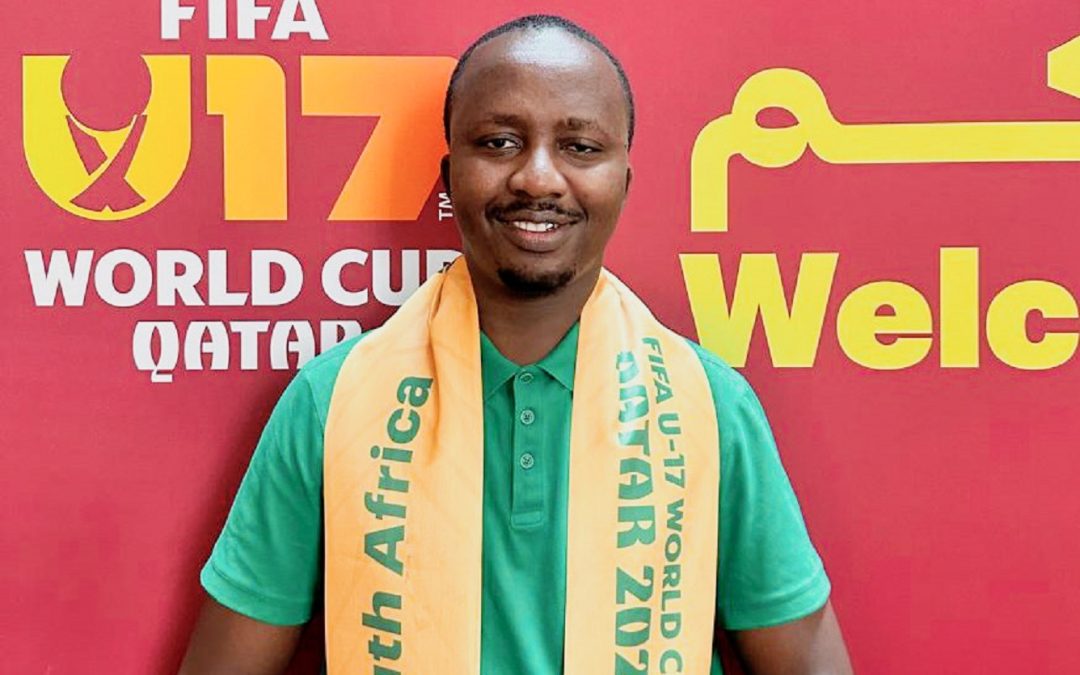
Sefako Makgatho Health Sciences University (SMU) continues to produce graduates who excel on global stages — and this time, it’s Physiotherapy alumnus Kenny Darrel Mziyako, who is part of the South Africa U-17 national team’s medical staff at the 2025 FIFA U-17 World Cup, taking place in Qatar from 3 to 27 November 2025.
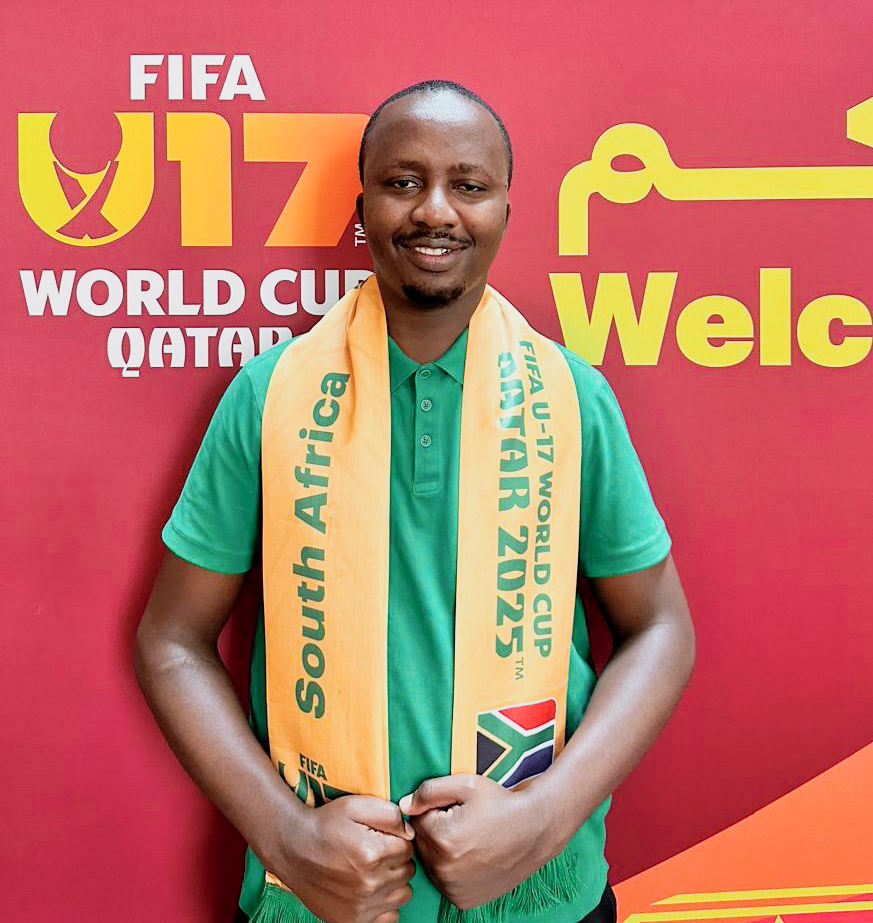 The 2025 edition marks a historic moment for the tournament as the 20th FIFA U-17 World Cup, and the first to adopt an annual format with 48 participating teams, a significant expansion from the traditional 24. It also ushers in a new era for youth football, as Qatar will host the competition for five consecutive years (2025–2029). With Germany entering as the defending champions, the stage is set for a highly competitive and globally celebrated event.
For Mziyako, being part of the Amajimbos’ medical team is both a professional milestone and a personal dream come true. “Football has always been my passion,” he reflects. “To serve my country in a world-class tournament like the FIFA U-17 World Cup is an honour. I’m grateful for the foundation SMU gave me — both academically and professionally.”
Born and raised in Luphisi Village near Mbombela, Mpumalanga, Mziyako’s journey has been defined by dedication, perseverance, and an unwavering love for sports medicine. He completed his BSc in Physiotherapy at SMU in 2019, where his interest in sports and rehabilitation began to flourish. He later obtained the FIFA Diploma in Sports Medicine in 2021, a qualification that has strengthened his expertise in managing sports-related injuries and athlete recovery. Currently, he is pursuing an MSc in Physiotherapy (Sports and Rehabilitation) at his alma mater, SMU.
His early career was marked by volunteer experiences with top football teams, including Mamelodi Sundowns Academy and the SMU soccer team during the USSA Games in 2018 and 2019, where he served as Coordinator of the Sports Rehabilitation Unit. After completing his community service at Witbank Hospital in 2020, he secured a permanent post as a Grade 1 Physiotherapist at Ermelo Hospital in 2021.
His daily work includes designing treatment plans, conducting rehabilitation exercises, and monitoring patient recovery — all while mentoring younger physiotherapists and serving as a NEHAWU shop steward.
Beyond hospital work, Mziyako has also collaborated with the Mpumalanga Department of Culture, Sports and Recreation, accompanying provincial teams to the National School Sports Championships and providing injury screening and rehabilitation services to local football clubs in promotional leagues. His growing profile in sports physiotherapy earned him national recognition, leading to his selection as physiotherapist for the COSAFA U-17 Tournament (2024) and AFCON U-17 (2025) — experiences that paved the way for his upcoming FIFA World Cup role.
With a blend of technical skill, teamwork, leadership, and a passion for athlete wellbeing, Mziyako embodies the excellence and community spirit that SMU stands for. As the Amajimbos prepare to face the world’s best young footballers, his presence on the medical bench will not only support South Africa’s quest for success but also showcase the calibre of SMU graduates making a global impact.
“Physiotherapy is not just about healing bodies,” Mziyako concludes. “It’s about helping athletes perform at their best — physically, mentally, and emotionally. I’m proud to carry the SMU flag to Qatar.”
By Tumelo Moila
by Lorato | Nov 6, 2025 | All News, SMU Media, Student Media
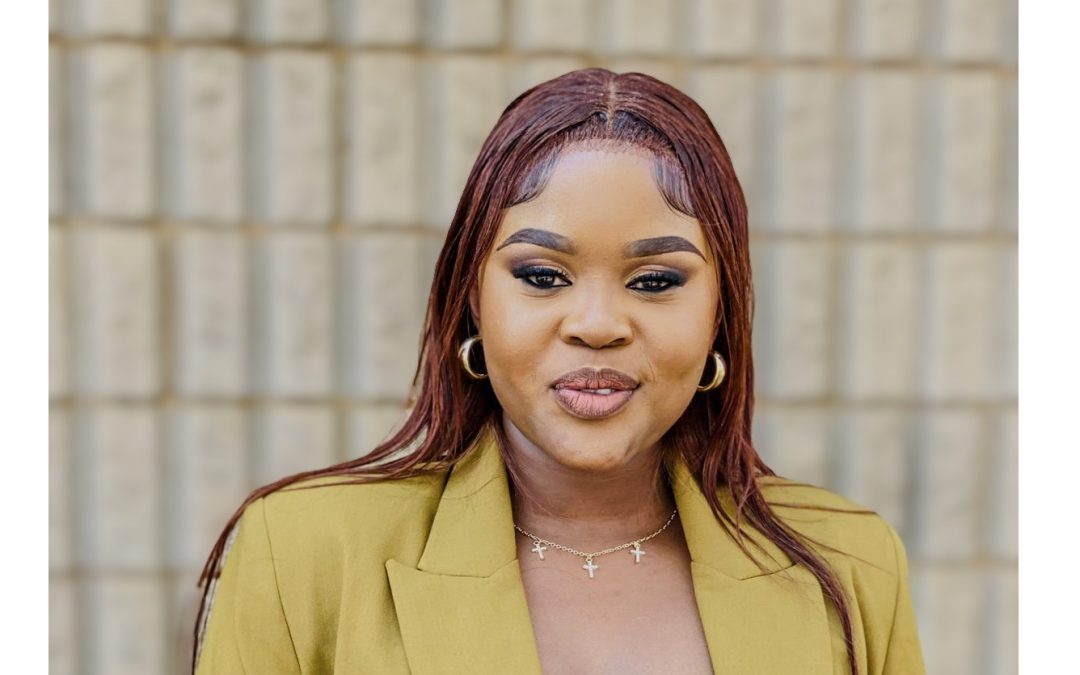
From humble beginnings in the rural village of Moletjie, Limpopo, to completing a Master of Science in Pure Mathematics cum laude at Sefako Makgatho Health Sciences University (SMU), Lehlogonolo Mokaba’s journey is a remarkable testament to focus, perseverance, and the power of education to change lives.
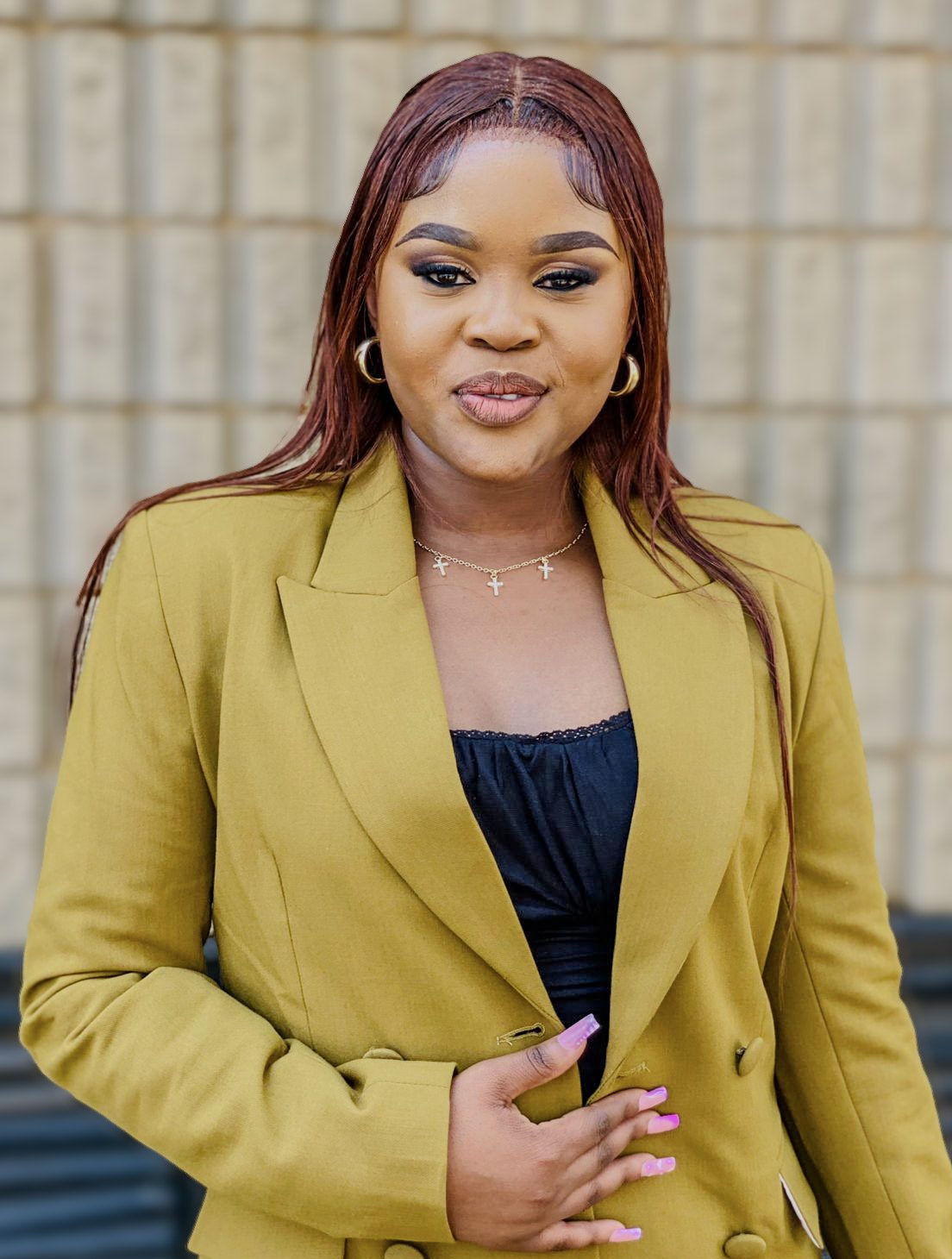 Raised by her grandmother, Mokaba grew up in a loving but financially challenged environment. Those early hardships, instead of discouraging her, ignited an unyielding determination to build a better future. “I knew early on that I didn’t want to remain where I was. My grandmother always reminded me that education was the key to change,” she reflects.
That belief became the cornerstone of her academic pursuit. Though she was not naturally a top-performing learner, Mokaba’s discipline, resilience, and willingness to work harder than most carried her through. Her acceptance into SMU marked a life-changing milestone — one that would deepen her intellectual curiosity and redefine her purpose.
It was during her undergraduate studies that Mathematics revealed itself not just as a subject but as a calling. “Mathematics allows me to think deeply, solve problems independently, and see the world through structure and logic,” she says. What began as an academic interest soon evolved into a passion that would drive her to explore the depths of mathematical theory and its practical applications.
Mokaba’s master’s research, titled “Self-adaptive Technique with Two-step Inertia for Monotone Variational Inclusion Problem in Real Hilbert Space”, focuses on improving iterative algorithms used in solving complex mathematical problems. Her work introduces innovative techniques that enhance computational efficiency, offering valuable insights for fields such as data science, engineering, and applied mathematics. The significance of her findings has already gained international recognition, with two research papers published in peer-reviewed journals, including Results in Applied Mathematics and the International Journal of Analysis and Applications.
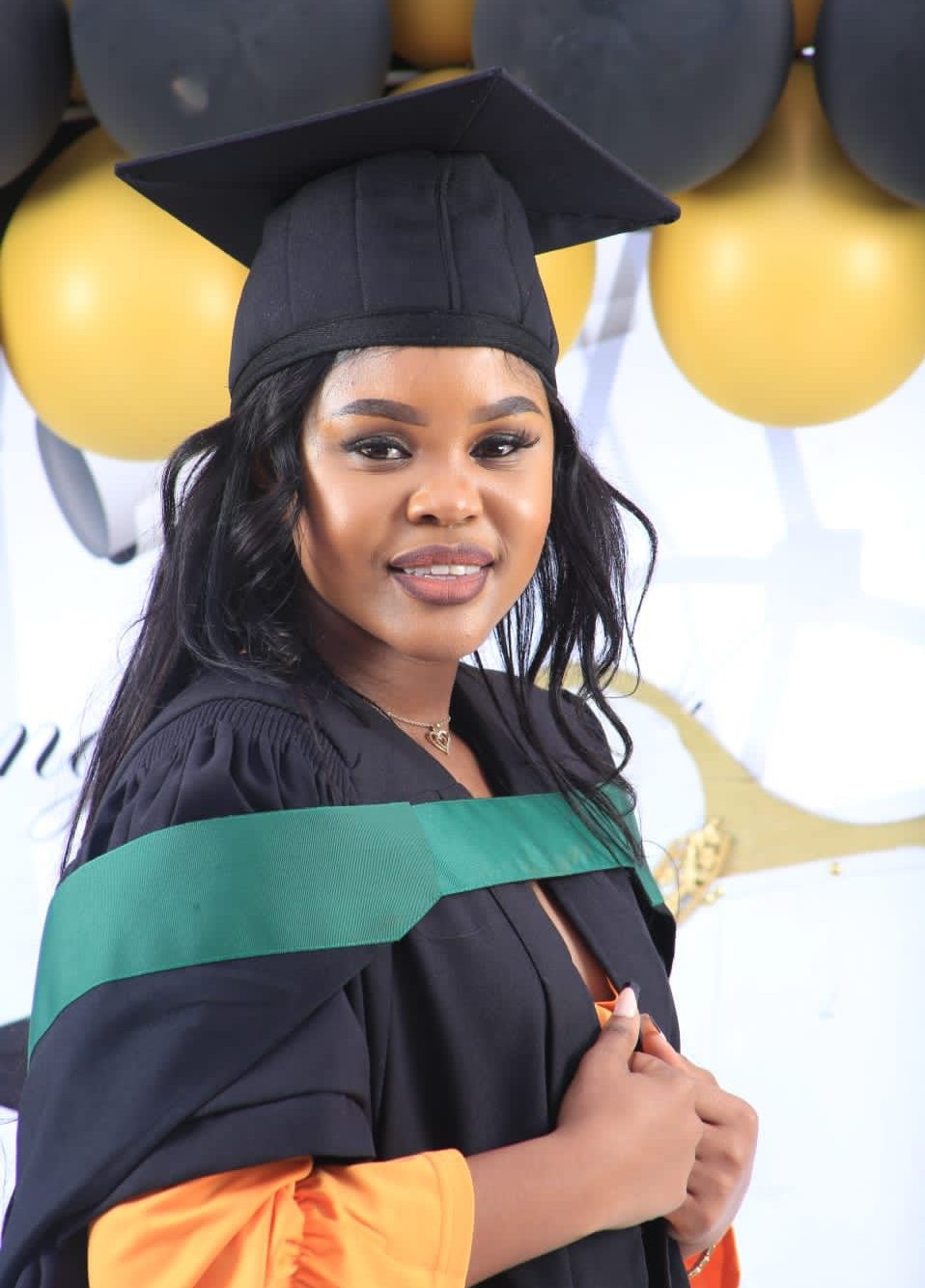 She credits her supervisor, Dr Hammed Abass, and co-supervisor, Dr Abubakar Adamu, for their mentorship and unwavering support. “Their patience, belief, and guidance made all the difference,” she notes gratefully.
In 2025, Mokaba’s academic excellence earned her a part-time position as a Junior Lecturer in SMU’s Department of Mathematics and Applied Mathematics. In this role, she teaches courses such as Set Theory, Linear Algebra, and Abstract Algebra — all while mentoring students who, like her, aspire to rise above their circumstances through education. “Teaching allows me to give back — to make mathematics approachable, exciting, and meaningful,” she explains.
Beyond teaching, Mokaba actively contributes to academic and community initiatives. She serves on SMU’s Community Engagement Committee, coordinates mathematics competitions such as the South African Tertiary Mathematics Olympiads and participates in national and international research workshops.
Her story is not just one of academic triumph but of transformation — from a determined young girl on the dusty roads of Moletjie to a published researcher and lecturer shaping the next generation of mathematicians.
“Success,” she says with quiet conviction, “is not about where you start, but about how far your discipline, faith, and persistence can take you.”
By Tumelo Moila

by Lorato | Oct 30, 2025 | All News, SMU Media, Student Media
Elegance met purpose at the CSIR International Convention Centre in Pretoria as Sefako Makgatho Health Sciences University (SMU) alumni, industry leaders, and partners gathered for the Convocation Fundraising and Alumni Awards Gala Dinner. Themed “Investing in South Africa’s Future of Health Sciences,” the evening celebrated leadership, honoured excellence, and strengthened support for the next generation of healthcare professionals.
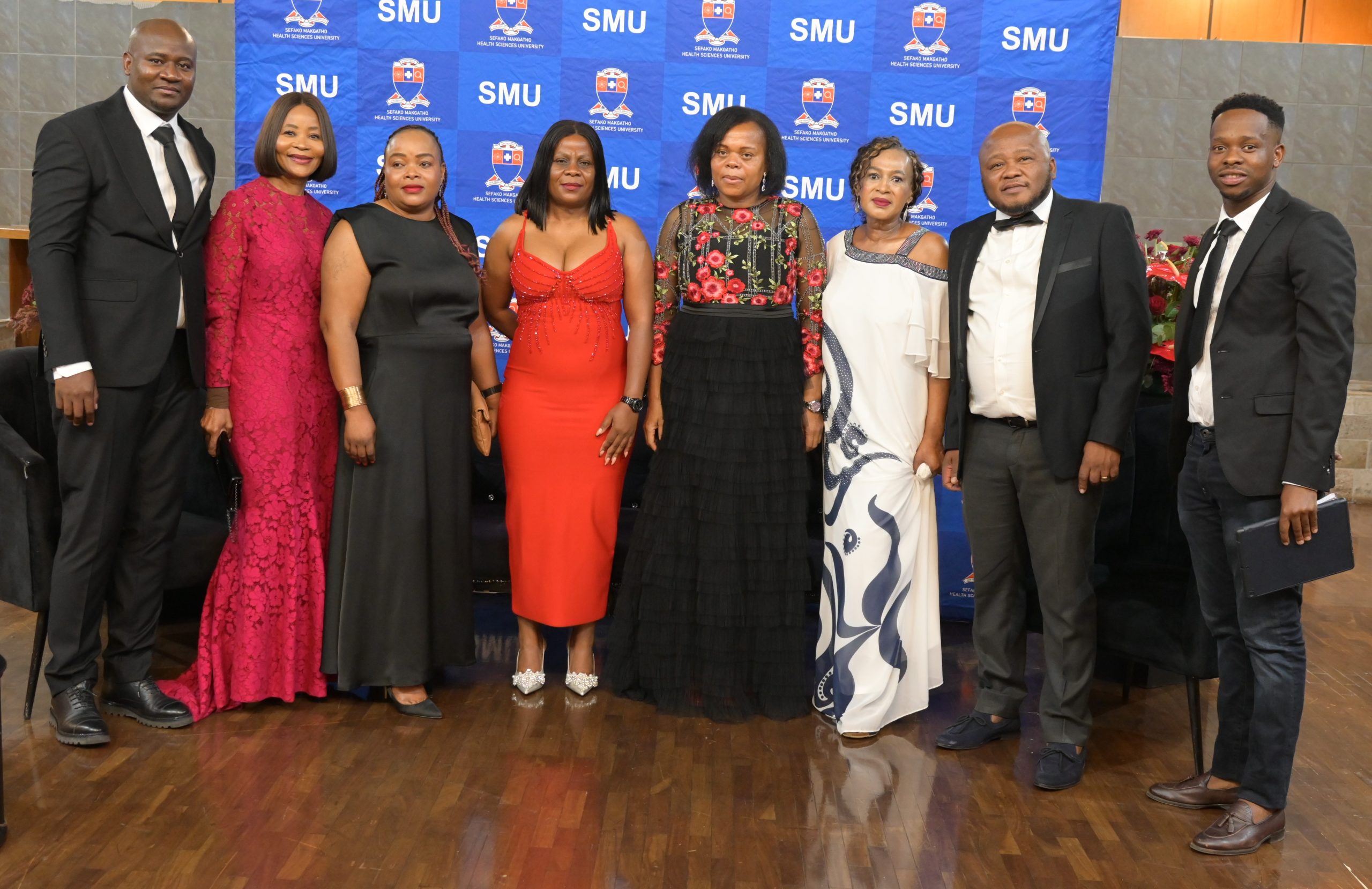 The event opened with an inspiring address from the President of Convocation, Japhta Phala, who urged alumni to champion transformative giving. “Each of us carries a piece of SMU’s legacy,” he said. “Tonight is not just about celebrating our achievements — it’s about taking collective responsibility for our students’ future.”
Vice-Chancellor Professor Tandi Matsha-Erasmus echoed this sentiment, emphasising the University’s dual mission of education and empowerment. “At SMU, we do not only educate; we empower,” she declared. “Our vision is to create healthcare professionals who are competent, compassionate, and capable of leading with integrity.” Highlighting the critical challenge of student funding, she stressed the urgency of alumni engagement. “Behind every struggling student is a dream worth saving,” she said. “Investing in our students is investing in the future of healthcare. No capable student should have their journey cut short due to financial hardship.”
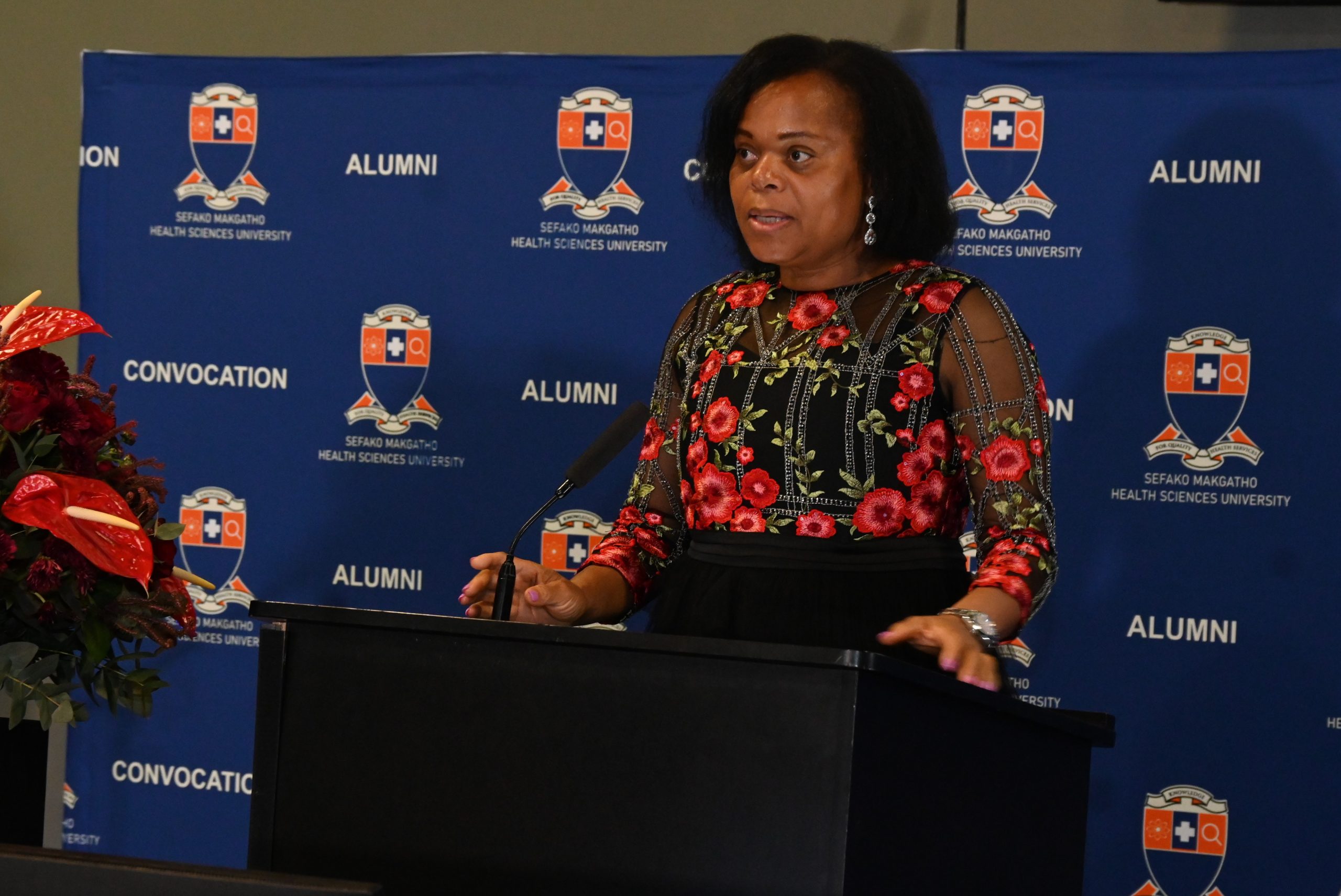 Delivering the keynote address, Limpopo Premier Dr Phophi Ramathuba, a medical doctor and public servant, reinforced SMU’s role in shaping South Africa’s health workforce. “SMU continues to be the heartbeat of health sciences in this country,” she said. “It is here that the seeds of service, compassion, and excellence are planted. The doctors, nurses, pharmacists, and scientists who graduate from SMU are not only skilled — they are change-makers who carry the hope of our nation.” She further called on alumni and stakeholders to rally behind the fundraising initiative, describing it as an investment in both education and equity. “We must ensure that financial barriers never become barriers to healing,” Dr Ramathuba said. “By contributing to this cause, we are not just giving money — we are giving life, dignity, and opportunity.”
Supportive remarks from SMU Chancellor Dr Penny Moumakwa and Council Chair Nontlaza Sizani reinforced alumni unity and stewardship in advancing the University’s mission.
The Gala also featured a red-carpet ‘Legacy Walk’, symbolising SMU’s enduring tradition of excellence, and honoured alumni who have made remarkable contributions to medicine, science, and public service. Beyond glamour, the evening carried a clear purpose: to fund academically deserving yet financially challenged students. Many aspiring healthcare professionals face financial hurdles that threaten to derail their dreams. Through this Convocation-led initiative, SMU continues to bridge the gap between potential and opportunity.
“This Gala is not just a dinner,” Prof Matsha-Erasmus reminded guests. “It is a declaration of hope. Every contribution tonight will echo through hospital wards, research labs, and communities that need care the most.”
Alumni Awards Recipients:
- Young Alumnus Award: Mr Emmanuel Kiyonga and Dr Realeboga Sebitso.
This award recognises young alumni (≤40 years) who have demonstrated proven excellence in their field or career, serving as role models for current and future students.
- Alumni Governance and Leadership Award: Dr Mpho Phalatse, Ms Maria Rambauli, Dr Nomzamo Tutu, Ms Takalani Maumela, Ms Rhulani Thembi Siweya, Dr Lucas Khetani Ndhlovu, Dr Katlego Mothudi and Dr Mangaliso Mahlaba. This award honours alumni who have made exemplary contributions to society, demonstrating ethical leadership and good governance.
- Alumni Academic, Research and Innovation Award: Prof Mojakgomo Motswaledi, Dr Molefe Matima, Prof Paulinah Monene Khuzwayo and Prof Gregory Thabiso Lebona. This award celebrates alumni who have made significant contributions to research, academia, and innovation in health sciences.
- Order of the Champions of Sefako Makgatho: Prof Paulinah Monene Khuzwayo (Gold), Ms Maria Rambauli (Silver), Prof Gregory Thabiso Lebona (Gold), Dr Jeffrey Mabelebele (Bronze). This award is conferred on alumni or former executives for their immense contributions to SMU’s growth and development, actively promoting its mission.
- Alumni Life-Time Achievement Award: Prof Mike Sathekge. This award recognises alumni who have made outstanding contributions to their field and society over the course of their lifetime.
A total of fifteen trophies, fourteen certificates, and five medals were awarded, including a Life-Time Achievement trophy larger than the rest, with certificates signed by the President of Convocation and the Vice-Chancellor across various categories.
As the evening concluded, one message resonated: SMU’s legacy is not only written in its history but in the lives it transforms, shaping a future where education, leadership, and compassion drive South Africa’s healthcare sector forward.
By Dimakatso Modise
