by Lorato | Jul 23, 2025 | All News, SMU Media, Student Media
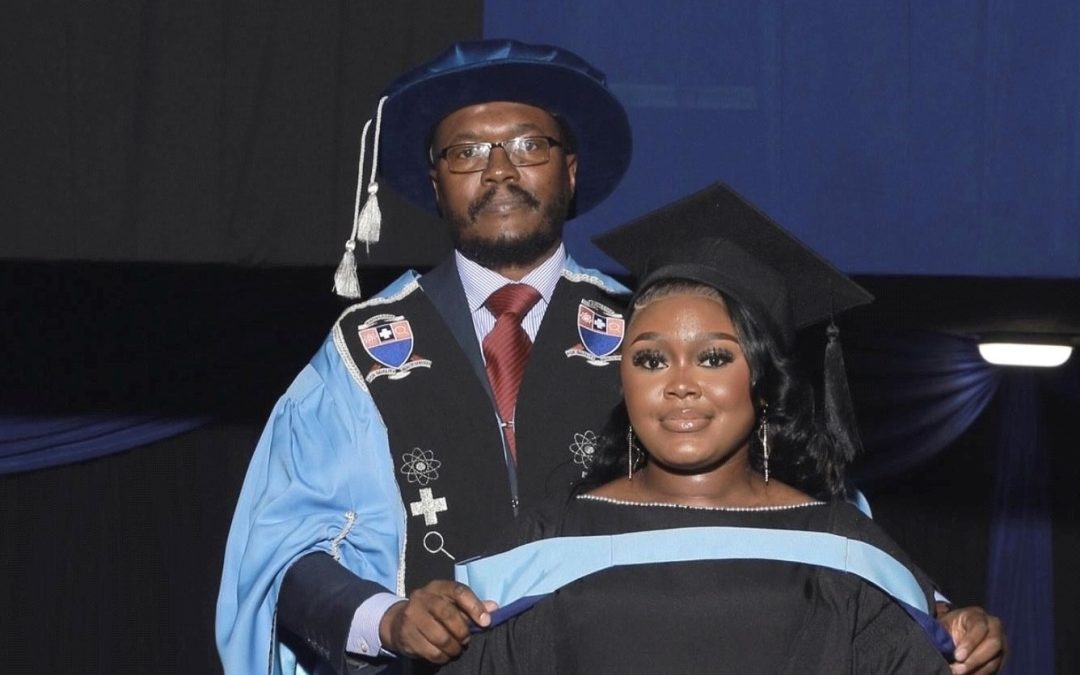
In a heartwarming tale of perseverance and dedication, Dr Sagwadi Ngobeni, a cum laude graduate of Sefako Makgatho Health Sciences University’s (SMU) Bachelor of Medicine and Bachelor of Surgery (MBChB) programme, has defied the odds of growing up in Maxavele Village in Giyani, Limpopo, a rural community with limited resources, to become a doctor. Her journey is a testament to SMU’s commitment to producing competent and compassionate healthcare professionals.
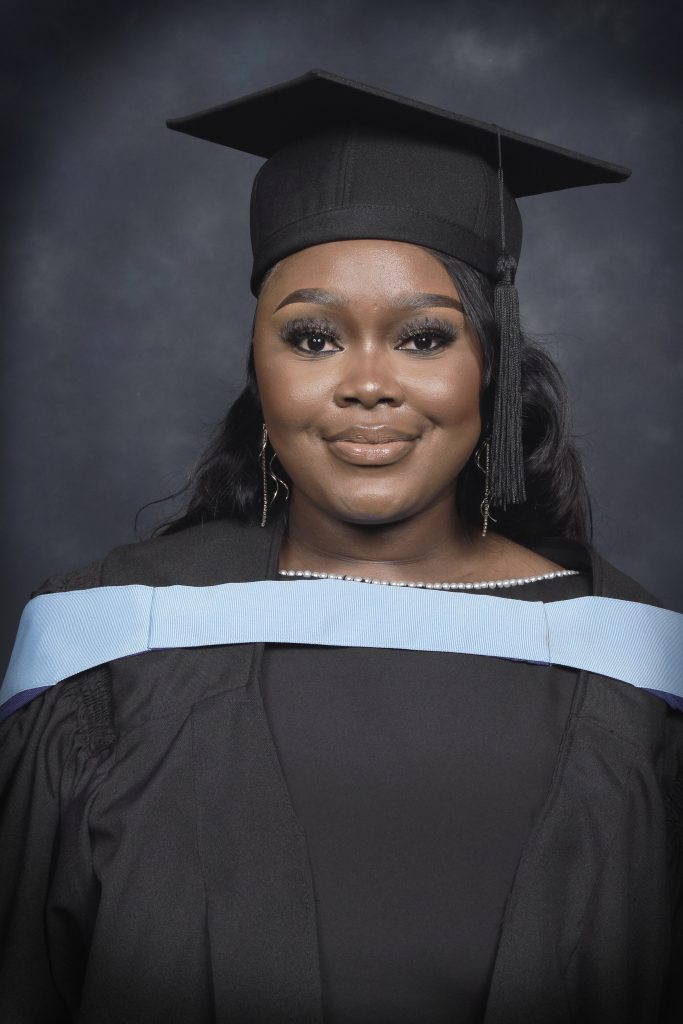 “In Grade 7, we had a career dress-up day. I wanted to be a doctor, but I didn’t have a white coat or a stethoscope. Still, nothing appealed to me like medicine did,” she recalls.
Graduating cum laude is a mark of both academic excellence and resilience. “It wasn’t easy, but every moment of hard work paid off. This achievement reminds me that I can accomplish anything I set my mind to,” she said.
Her study strategy was rooted in consistency and collaboration. “I studied from the start of each block. Group discussions helped me stay accountable and made learning easier. Even when I was exhausted, my peers pushed me to keep going.”
She found Internal Medicine both the most challenging and most rewarding of all her rotations. “Seeing very ill patients improve reminded me why I chose this path,” she shared.
Ngobeni credits SMU for shaping her into a well-rounded healthcare professional. “SMU became my second home. The strong sense of community made the academic journey bearable. Most importantly, I gained the confidence to assess and manage patients effectively, even in resource-limited settings.”
Beyond academics, SMU nurtured her emotional intelligence and empathy. “From patients, I learned kindness. From peers, I learned it’s okay to ask for help.”
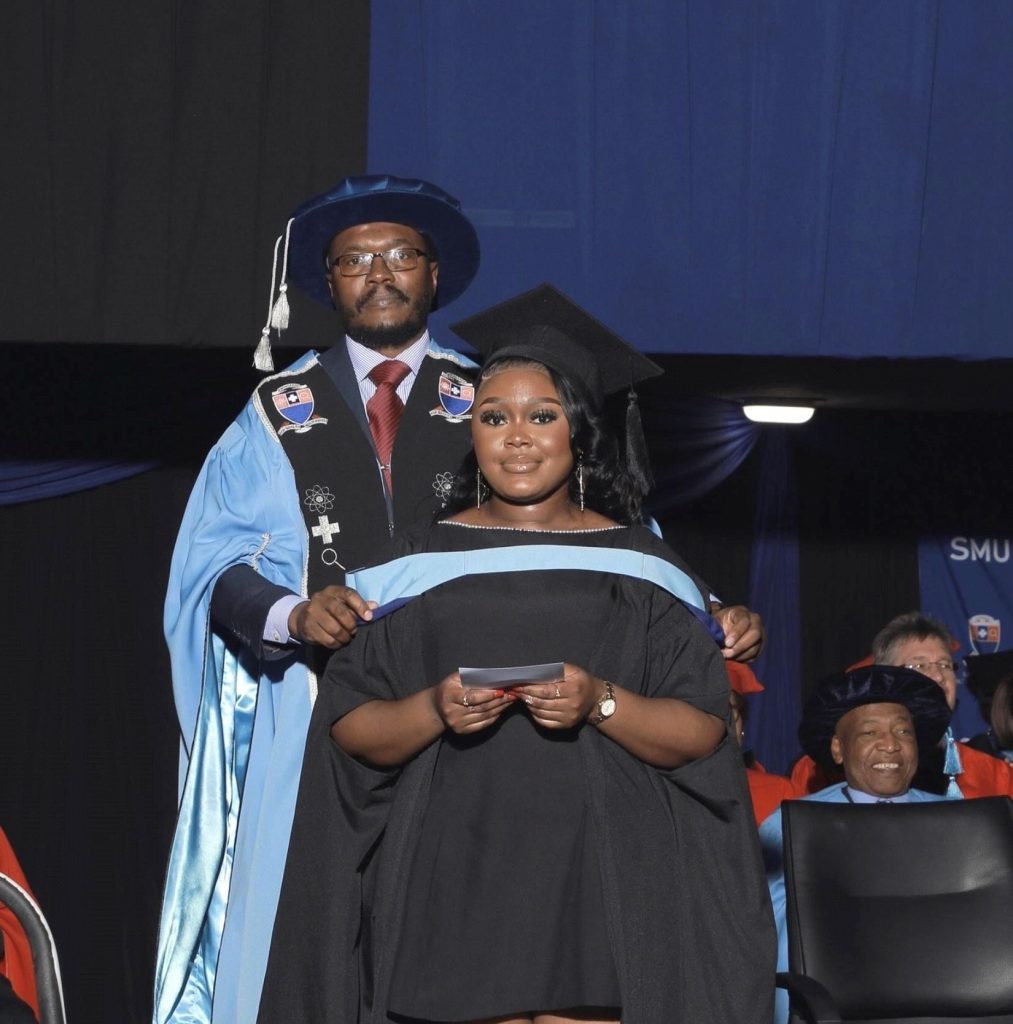 As the first doctor in her family, her success has made a profound impact on her community. “My family is incredibly proud. In my village, not many young people make it to university. I hope my journey inspires others.”
She plans to pursue postgraduate studies and is considering a specialisation in Paediatrics. “Ironically, after my paediatrics exam in fifth year, I cried because I thought I had failed. But I passed with distinction. Now, it’s a field I’m seriously considering.”
Ngobeni also has a passion for community outreach and aims to raise awareness about preventable health conditions through traditional and social media platforms. She is equally dedicated to mentoring aspiring medical students.
Her advice to current students is both practical and profound: “Put in the work. Study smart, not just hard. Don’t leave things to the last minute. Use your support system. And most importantly, trust God’s timing.”
Ngobeni celebrated her graduation with a dinner alongside her proud family. Of all those who supported her, her mother stands out. “She once told me, ‘You’re going to get old either way – rather get old doing something you love.’ That advice changed my life.”
Her story is not only one of personal triumph but also a testament to SMU’s commitment to nurturing excellence in healthcare.
By Tumelo Moila

by Lorato | Jul 23, 2025 | Accolades and Achievements, All News, SMU Media, Student Media
In a significant recognition of academic excellence and public health leadership, Siphiwe Khumalo, a graduate of Sefako Makgatho Health Sciences University (SMU), has been selected as one of only 20 international fellows for the 2025 United Nations Youth for Biosecurity Fellowship. Chosen from more than 2,400 applicants across over 100 countries, her selection by the UN Office for Disarmament Affairs (UNODA) marks a remarkable personal and institutional milestone.
 Hailing from Ulundi in KwaZulu-Natal, Khumalo holds a Bachelor of Pharmacy from Tshwane University of Technology and a Master’s in Pharmacy Public Health and Management from SMU — the only South African university offering this specialised qualification.
Speaking ahead of her visit to Geneva, Switzerland, in August, she said: “Coming from a small village, I never imagined I’d stand on a global platform. This isn’t just my achievement — it’s a door opened for many others.”
The Youth for Biosecurity Fellowship offers early-career professionals training in biosecurity diplomacy, multilateral negotiations, and research collaboration. The three-month programme includes online learning, a group research project, and an in-person visit to Geneva during the Biological Weapons Convention (BWC) meetings from 11–15 August 2025.
Khumalo’s academic and professional work lies at the intersection of pharmacy, public health, and policy. Her Master’s research explored COVID-19 vaccine hesitancy among South African pharmacists. While 74.3% of participants were vaccinated, nearly a third were unwilling to recommend vaccination — a concerning statistic for frontline health professionals.
“We can’t expect healthcare workers to champion vaccines if their own doubts aren’t addressed,” she explained. “My aim was to surface those concerns and offer solutions for future interventions.”
Khumalo is no newcomer to international platforms. She previously served as Regional Secretary for the International Pharmaceutical Students’ Federation (IPSF) and was selected as a delegate to the 78th World Health Assembly — though visa delays prevented her attendance. As the only South African fellow in the 2025 cohort, she sees her Geneva visit as a chance to amplify African voices in global health and biosecurity.
Her fellowship project focuses on bridging the Biological Weapons Convention with the WHO Pandemic Agreement, aiming to strengthen global responses to both natural and deliberate biological threats.
Reflecting on her time at SMU, Khumalo credited mentors such as Professor Hannellie Meyer for helping her grow: “SMU empowered me to claim space in public health as a pharmacist. I hope others will be inspired to do the same.”
Looking to the future, Khumalo envisions a career in global health diplomacy, emergency response, and mentorship. “This fellowship isn’t the finish line — it’s a launchpad. I intend to bring others along on this journey of impact and transformation.”
With determination rooted in her background and a vision shaped by global aspirations, Khumalo’s journey highlights both the calibre of SMU graduates and the power of African leadership on the world stage.
By Tumelo Moila

by Lorato | Jul 23, 2025 | Accolades and Achievements, All News, SMU Media, Student Media
Sefako Makgatho Health Sciences University (SMU) has reason to celebrate as Naledi Mathole, its faculty advisor for the Enactus programme, has been crowned South Africa’s Best Faculty Advisor across all 26 public universities. This prestigious national honour recognises Mathole’s exceptional leadership and mentorship in fostering student entrepreneurship and social innovation at SMU.
 “It’s humbling to be recognised for something I’m so passionate about,” says Mathole. “This award reflects the dedication and resilience of the students I’ve had the privilege to mentor. It reaffirms the importance of servant leadership and why supporting students as future changemakers matters.”
Mathole’s route into enterprise development began in the laboratory. Trained in molecular diagnostics, she later instructed medical professionals in microsurgical techniques before turning her focus to innovation and entrepreneurship in higher education. Appointed Coordinator of SMU’s Economic Activation Office in July 2024, she now steers campus-wide programmes including Entrepreneurship Development in Higher Education (EDHE), the Student Women Economic Empowerment Programme (SWEEP), and a suite of innovation challenges – among them the Tshwane Higher Education Innovation Challenge – that connect students with industry partners and funding pathways. Her office works closely with incubators, faculty colleagues and national entrepreneurship networks to scale student ventures beyond campus.
The results have been striking. In its first active year with Mathole as Faculty Advisor, SMU Enactus posted a series of national performances: Techmed Connect advanced to the Enactus Early‑Stage Round; BioGlux placed in the Top Six of the Schneider Electric Challenge; and the team reached the Top Fifteen in the MTN Business Challenge. Numerous early qualifications and “small wins” helped energise a fast-growing entrepreneurial ecosystem at the university.
She credits her students’ drive: “The Enactus executive were eager, disciplined and brave enough to try. That collective energy carried us.”
Her advisory philosophy centres on empowerment, reflection and real-world learning. “We normalise failure as part of innovation. Students need safe spaces to try, fail, learn and iterate. Increasingly, my role is that of a connector – linking students with industry experts, interdisciplinary partners and practical platforms,” she explains. Structure and empathy underpin her leadership. “I don’t hand over answers. I ask questions, challenge assumptions and help them find their own voice.”
Looking ahead, Mathole wants Enactus projects to move from competition stages into durable, community-facing enterprises. Two standouts show the promise: Techmed Connect is developing an AI-enabled, multilingual healthcare agent that includes South African Sign Language; BioGlux explores technologies to support patients with medical implants.
Recruitment for a new Enactus executive and wider membership is imminent, and Mathole is urging students from all disciplines to get involved. “Entrepreneurship isn’t just about business models. It’s about solving real problems and creating impact. That’s what we’re here to nurture.”
Ultimately, she hopes her legacy will be a culture shift. “I want students to experience entrepreneurship not only within higher education as a module, but as a lifelong tool for transformation – a journey from learning about innovation to living it.”
By Tumelo Moila

by Lorato | Jul 23, 2025 | All News, SMU Media, Student Media
Sefako Makgatho Health Sciences University (SMU) medical student Andile Moloi recently delivered a powerful keynote address at the prestigious Youth Indaba on Research Commercialisation and Entrepreneurship, held at the Council for Scientific and Industrial Research (CSIR). Her message, calling for greater equity and opportunity in science and health, resonated throughout the auditorium — a clear testament to SMU’s commitment to producing socially engaged healthcare professionals.
 A fifth-year MBChB student, Moloi also serves as Chairperson of the Advisory and Alumni Board at Nka’Thuto EduPropeller, a non-profit organisation founded by black professionals committed to advancing science, education, innovation, and entrepreneurship among youth.
The Youth Indaba gathered South Africa’s top young scientists, policymakers, and private sector leaders to explore how science and enterprise can unlock Africa’s youth potential. Moloi, representing SMU on this national platform, drew attention to the persistent disparities facing youth in health, science, and technology fields, especially those from underserved communities.
“I spoke on behalf of millions of young, talented South Africans who remain underrepresented and under-resourced,” said Moloi. “This platform gave me the chance to highlight how structural barriers, especially for young women, continue to limit opportunities. Early mentorship and fair access to resources are crucial if we want to unlock our collective potential.”
Jointly organised by the Academy of Science of South Africa (ASSAf), G20 Empower, the South African Young Academy of Science (SAYAS), the Department of Science and Innovation (DSI), and the Department of Women, Youth and Persons with Disabilities (DWYPD), the Indaba bridged innovation, research, and entrepreneurship with real-world application.
“Research without community impact is a missed opportunity,” Moloi added. “Young scientists must ensure their innovations translate into solutions that improve lives — especially in health. It’s about transforming knowledge into change.”
 Moloi credits SMU for shaping both her medical training and leadership journey. “SMU nurtured more than my clinical skills — it taught me to use my voice,” she said. “Being a healthcare professional today involves influencing policy, advocating for equity, and pushing scientific boundaries.”
The Indaba also allowed Moloi to connect with peers and experts across sectors, engaging in workshops and panel discussions that equipped young innovators with tools to transform their ideas into sustainable, market-ready solutions.
Looking ahead, Moloi intends to complete her medical degree and pursue specialisation, while continuing to advocate for inclusive innovation and youth empowerment in health systems.
“This experience reaffirmed my belief that I can contribute far beyond the consulting room,” she said. “I want to shape healthcare systems that are equitable, people-centred, and responsive to our country’s realities.”
Moloi’s presence at the Youth Indaba signals SMU’s growing influence as a training ground for healthcare professionals who are not only academically capable but socially conscious and nationally engaged.
By Dimakatso Modise

by Lorato | Jul 9, 2025 | All News, Alumni, SMU Media, Student Media
At Sefako Makgatho Health Sciences University (SMU), leadership is more than a skill — it is a core value nurtured through rigorous clinical training, social accountability, and ethical governance. One shining example is Dr Siqiniseko Ntuli (36), who in January 2025 was appointed Chief Executive Officer (CEO) of Dannhauser Hospital in KwaZulu-Natal’s Amajuba District. His journey from rural KwaNongoma to the helm of a district hospital exemplifies SMU’s mission: to produce capable, compassionate leaders who transform systems and uplift communities. “It’s both exciting and terrifying,” Ntuli reflects. “Leading in these financially unstable times is a challenge, but it’s a calling I’m ready for — and one I approach with boldness.”
 Raised in Ulundi in a humble home, Ntuli credits his father for instilling the belief that education could change not only his future but the fate of his community. “Even when the path seemed uncertain, I held on to that belief,” he recalls.
His path to leadership began at SMU, where he pursued medicine with a passion for clinical excellence. Although he didn’t initially set out to manage a hospital, his relentless pursuit of quality care and service excellence naturally positioned him for leadership. “I’ve always believed in doing my best. Leadership followed that commitment.”
After qualifying, he completed his internship within the Pietermaritzburg complex, gaining hands-on experience at Grey’s, Harry Gwala (formerly Edendale), and Northdale hospitals. It was here that his passion for district-level healthcare emerged. “Primary healthcare is the heartbeat of our system,” he says.
His community service at Ceza Hospital and later his post at Dannhauser Community Health Centre reinforced that passion. He eventually returned to Ceza Hospital as Medical Manager and Acting CEO, helping to stabilise operations in the face of major challenges. “We kept the hospital afloat and ensured that patients continued to receive quality care,” he says.
Now at the helm of Dannhauser Hospital, Ntuli is focused on improving access to healthcare, enhancing holistic services, and promoting preventative care. “We need to build a culture of health education and strengthen community participation. Health champions must emerge from within the communities we serve.”
Despite his executive role, Ntuli stays connected to the clinical side. Mornings are reserved for academic rounds and patient care, while evenings are dedicated to continuing education. “I never want to lose touch with medicine,” he says.
His leadership strategy is built on transparency, inclusive staffing, performance monitoring, and constant feedback. “We must create workspaces where individuals and teams thrive — that’s the foundation of quality service.”
Ntuli also emphasises the need for a culture shift. “Healthcare is more than a job — it’s a calling. We must cultivate passion, professionalism, and purpose.”
He attributes much of his leadership development to SMU’s bedside teaching model and Ubuntu-centred mentorship from esteemed figures like Prof Honey Mabuza and Prof Zach Koto. “You represent your university in how you work and how you lead,” he says.
To aspiring leaders, he offers timeless advice: “Be a great follower first. Respect those around you. Work hard, stay curious, and remain humble. That mindset will always take you far.”
Even with his demanding role, Ntuli stays grounded through prayer, reading, and time with family. “I always say I’ll join a gym — maybe one day,” he laughs. “But what keeps me grounded is seeing others make a difference.”
Looking ahead, Ntuli hopes to build leadership pipelines, formalise student placements, and forge deeper partnerships between SMU and healthcare institutions. “Hospitals must become academic allies. Research informs policy, and education drives equity.”
To young professionals navigating the weight of responsibility, he offers heartfelt reassurance: “You’re on the right path. Don’t give up. Rest if you must, reflect, and rise”.
Ntuli’s journey is a striking reflection of what SMU stands for: excellence in leadership, integrity in service, and courage in governance. Through his visionary yet grounded approach, he affirms SMU’s status as a national beacon for developing leaders who not only manage systems but transform them, with skill, purpose, and heart.
By Tumelo Moila

by Lorato | Jul 9, 2025 | All News, SMU Media, Student Media
At Sefako Makgatho Health Sciences University (SMU), academic excellence is not merely a goal — it is woven into the institution’s identity through rigorous clinical training and human-centred education. This commitment is embodied in Reamogetse Ntopo, a 22-year-old Bachelor of Nursing and Midwifery graduate from Taung in the North West Province, who completed her degree cum laude.
 Ntopo’s journey into nursing began with a deeply personal moment. During a family emergency, a local midwife stepped in to assist with a home birth. “The moment I heard that newborn’s first cry, I was deeply moved,” she recalls. “That’s when I knew midwifery was my calling.”
Although she initially considered teaching, that experience ultimately steered her toward healthcare — a decision she has wholeheartedly embraced.
A defining moment in her studies came during her fourth-year clinical rotation when she assisted in a complex birth involving a baby with congenital abnormalities. “Despite the emotional intensity, I remained calm and reassuring. That moment confirmed I was exactly where I was meant to be,” she says.
Graduating cum laude was the result of hard work, deep faith, and strong family support. “I wanted to prove to my siblings that coming from a small town doesn’t limit your dreams,” Ntopo says. “This degree is for them, too.”
Her study strategies included focused evening sessions, collaborative revision with peers, and prioritising rest. But the road wasn’t easy. The death of her grandmother during her first year deeply affected her motivation. “Through prayer and my parents’ encouragement, I found strength again,” she reflects.
Her second year proved equally challenging, with 12-hour clinical shifts and mounting academic pressure. “It was overwhelming,” she admits. “But mentorship and peer support helped me adapt and push through.”
Ntopo credits SMU for nurturing her growth beyond the academic sphere. “It wasn’t just about passing exams. I developed emotionally, intellectually, and spiritually,” she explains. She acknowledges midwifery lecturer Kagiso Tukisi and researcher Dr Tshiamo Ramalepa as pivotal mentors who helped her embrace the depth and purpose of the profession.
Now completing her community service year at Thelle Mogoerane Regional Hospital in Gauteng, Ntopo is setting her sights on the future. Her ambition? To pursue a PhD in Maternal Health and become a specialised midwife with the title “Dr”. She also aims to influence health policy and champion maternal care across the country.
“The most fulfilling part of the profession is empowering women during childbirth and being present during critical life moments,” she says. “It’s a privilege to witness such strength.”
Faith remains central to how she navigates the emotional demands of nursing. “This career can be exhausting, but I draw strength from my Christian faith. My anchor has always been the verse: ‘I can do all things through Christ who strengthens me’,” she shares.
To aspiring nurses, Ntopo offers heartfelt advice:
- Let your purpose guide you.
- Grow through grit.
- Stay humble and curious.
- Practice self-care.
- Lean on others.
- Lead with compassion.
- Celebrate every step.
“I wish more people appreciated the complexity of nursing and midwifery,” she adds. “We are not just caretakers — we are advocates, educators, and critical thinkers who play a vital role in shaping healthcare outcomes.”
Her graduation was a proud moment not just for herself, but for her entire community. “My parents were overjoyed. The whole community celebrated. If I could thank anyone, it would be them — for believing in me when I didn’t.”
With clarity of purpose and a heart committed to healing, Ntopo is more than a graduate. She is a trailblazer — one who represents SMU’s mission to produce healthcare professionals who serve with excellence, integrity, and compassion. Through her journey, SMU’s role as a national hub for clinical training and academic distinction shines ever brighter.
By Tumelo Moila