by Lorato | Jul 9, 2025 | All News, Alumni, SMU Media, Student Media
At Sefako Makgatho Health Sciences University (SMU), leadership is more than a skill — it is a core value nurtured through rigorous clinical training, social accountability, and ethical governance. One shining example is Dr Siqiniseko Ntuli (36), who in January 2025 was appointed Chief Executive Officer (CEO) of Dannhauser Hospital in KwaZulu-Natal’s Amajuba District. His journey from rural KwaNongoma to the helm of a district hospital exemplifies SMU’s mission: to produce capable, compassionate leaders who transform systems and uplift communities. “It’s both exciting and terrifying,” Ntuli reflects. “Leading in these financially unstable times is a challenge, but it’s a calling I’m ready for — and one I approach with boldness.”
 Raised in Ulundi in a humble home, Ntuli credits his father for instilling the belief that education could change not only his future but the fate of his community. “Even when the path seemed uncertain, I held on to that belief,” he recalls.
His path to leadership began at SMU, where he pursued medicine with a passion for clinical excellence. Although he didn’t initially set out to manage a hospital, his relentless pursuit of quality care and service excellence naturally positioned him for leadership. “I’ve always believed in doing my best. Leadership followed that commitment.”
After qualifying, he completed his internship within the Pietermaritzburg complex, gaining hands-on experience at Grey’s, Harry Gwala (formerly Edendale), and Northdale hospitals. It was here that his passion for district-level healthcare emerged. “Primary healthcare is the heartbeat of our system,” he says.
His community service at Ceza Hospital and later his post at Dannhauser Community Health Centre reinforced that passion. He eventually returned to Ceza Hospital as Medical Manager and Acting CEO, helping to stabilise operations in the face of major challenges. “We kept the hospital afloat and ensured that patients continued to receive quality care,” he says.
Now at the helm of Dannhauser Hospital, Ntuli is focused on improving access to healthcare, enhancing holistic services, and promoting preventative care. “We need to build a culture of health education and strengthen community participation. Health champions must emerge from within the communities we serve.”
Despite his executive role, Ntuli stays connected to the clinical side. Mornings are reserved for academic rounds and patient care, while evenings are dedicated to continuing education. “I never want to lose touch with medicine,” he says.
His leadership strategy is built on transparency, inclusive staffing, performance monitoring, and constant feedback. “We must create workspaces where individuals and teams thrive — that’s the foundation of quality service.”
Ntuli also emphasises the need for a culture shift. “Healthcare is more than a job — it’s a calling. We must cultivate passion, professionalism, and purpose.”
He attributes much of his leadership development to SMU’s bedside teaching model and Ubuntu-centred mentorship from esteemed figures like Prof Honey Mabuza and Prof Zach Koto. “You represent your university in how you work and how you lead,” he says.
To aspiring leaders, he offers timeless advice: “Be a great follower first. Respect those around you. Work hard, stay curious, and remain humble. That mindset will always take you far.”
Even with his demanding role, Ntuli stays grounded through prayer, reading, and time with family. “I always say I’ll join a gym — maybe one day,” he laughs. “But what keeps me grounded is seeing others make a difference.”
Looking ahead, Ntuli hopes to build leadership pipelines, formalise student placements, and forge deeper partnerships between SMU and healthcare institutions. “Hospitals must become academic allies. Research informs policy, and education drives equity.”
To young professionals navigating the weight of responsibility, he offers heartfelt reassurance: “You’re on the right path. Don’t give up. Rest if you must, reflect, and rise”.
Ntuli’s journey is a striking reflection of what SMU stands for: excellence in leadership, integrity in service, and courage in governance. Through his visionary yet grounded approach, he affirms SMU’s status as a national beacon for developing leaders who not only manage systems but transform them, with skill, purpose, and heart.
By Tumelo Moila

by Lorato | Jul 9, 2025 | All News, SMU Media, Student Media
At Sefako Makgatho Health Sciences University (SMU), academic excellence is not merely a goal — it is woven into the institution’s identity through rigorous clinical training and human-centred education. This commitment is embodied in Reamogetse Ntopo, a 22-year-old Bachelor of Nursing and Midwifery graduate from Taung in the North West Province, who completed her degree cum laude.
 Ntopo’s journey into nursing began with a deeply personal moment. During a family emergency, a local midwife stepped in to assist with a home birth. “The moment I heard that newborn’s first cry, I was deeply moved,” she recalls. “That’s when I knew midwifery was my calling.”
Although she initially considered teaching, that experience ultimately steered her toward healthcare — a decision she has wholeheartedly embraced.
A defining moment in her studies came during her fourth-year clinical rotation when she assisted in a complex birth involving a baby with congenital abnormalities. “Despite the emotional intensity, I remained calm and reassuring. That moment confirmed I was exactly where I was meant to be,” she says.
Graduating cum laude was the result of hard work, deep faith, and strong family support. “I wanted to prove to my siblings that coming from a small town doesn’t limit your dreams,” Ntopo says. “This degree is for them, too.”
Her study strategies included focused evening sessions, collaborative revision with peers, and prioritising rest. But the road wasn’t easy. The death of her grandmother during her first year deeply affected her motivation. “Through prayer and my parents’ encouragement, I found strength again,” she reflects.
Her second year proved equally challenging, with 12-hour clinical shifts and mounting academic pressure. “It was overwhelming,” she admits. “But mentorship and peer support helped me adapt and push through.”
Ntopo credits SMU for nurturing her growth beyond the academic sphere. “It wasn’t just about passing exams. I developed emotionally, intellectually, and spiritually,” she explains. She acknowledges midwifery lecturer Kagiso Tukisi and researcher Dr Tshiamo Ramalepa as pivotal mentors who helped her embrace the depth and purpose of the profession.
Now completing her community service year at Thelle Mogoerane Regional Hospital in Gauteng, Ntopo is setting her sights on the future. Her ambition? To pursue a PhD in Maternal Health and become a specialised midwife with the title “Dr”. She also aims to influence health policy and champion maternal care across the country.
“The most fulfilling part of the profession is empowering women during childbirth and being present during critical life moments,” she says. “It’s a privilege to witness such strength.”
Faith remains central to how she navigates the emotional demands of nursing. “This career can be exhausting, but I draw strength from my Christian faith. My anchor has always been the verse: ‘I can do all things through Christ who strengthens me’,” she shares.
To aspiring nurses, Ntopo offers heartfelt advice:
- Let your purpose guide you.
- Grow through grit.
- Stay humble and curious.
- Practice self-care.
- Lean on others.
- Lead with compassion.
- Celebrate every step.
“I wish more people appreciated the complexity of nursing and midwifery,” she adds. “We are not just caretakers — we are advocates, educators, and critical thinkers who play a vital role in shaping healthcare outcomes.”
Her graduation was a proud moment not just for herself, but for her entire community. “My parents were overjoyed. The whole community celebrated. If I could thank anyone, it would be them — for believing in me when I didn’t.”
With clarity of purpose and a heart committed to healing, Ntopo is more than a graduate. She is a trailblazer — one who represents SMU’s mission to produce healthcare professionals who serve with excellence, integrity, and compassion. Through her journey, SMU’s role as a national hub for clinical training and academic distinction shines ever brighter.
By Tumelo Moila

by Lorato | Jul 9, 2025 | All News, SMU Media, Student Media
At Sefako Makgatho Health Sciences University (SMU), education goes far beyond lectures and laboratories — it cultivates leaders with depth, purpose, and vision. Dr Andile Molokomme (29), an SMU alumna and trailblazer in medicine, business, ministry, and youth empowerment, stands as a shining example of this ethos. Her journey is a living testament to SMU’s commitment to developing graduates who are not only academically capable but socially conscious and spiritually grounded — leaders cut above the rest.
 Born in Soshanguve and driven by a lifelong desire to serve, Molokomme’s decision to pursue medicine was not just a career path, but a calling. “Since childhood, I knew I wanted to be a doctor,” she reflects. Her years at SMU provided more than clinical training — they offered a platform to explore her faith, leadership, and entrepreneurial ambitions. She was ordained as a pastor during her fourth year, a rare feat for a medical student. “SMU allowed me to be the best version of myself,” she says. “I thrived academically, ministerially, and entrepreneurially — all at once.”
Graduating with a final-year average of 70%, Molokomme credits SMU and her mentor, Pastor Derek Njolomole, for instilling a life-planning framework that continues to guide her: one that integrates health, purpose, finances, and community.
After four years in clinical practice, Molokomme launched Dr Andie Family Practice in Pretoria North — a space for personalised, patient-centred primary care. “I wanted to create a practice that prioritised education, early screening, and holistic wellness,” she explains. Today, the clinic is a trusted community hub serving patients of all ages.
Her entrepreneurial spirit, sparked during her university years, led to the creation of AndiBeauty, a cosmetic brand rooted in empowerment rather than vanity. “I didn’t want just another beauty label,” she says. “I wanted one that uplifted women.” What began as a retail concept has since evolved into AndiBeauty Spa, which offers medical-grade treatments alongside brief wellness consultations and healthcare referrals — a blend of beauty and preventative care that reflects her interdisciplinary vision.
Molokomme is also a media personality, regularly contributing to radio stations such as Thobela FM, Power FM, and Ga-Rankuwa FM. She currently hosts Medical Insights on LoveWorld SAT, using media to educate and inspire.
Yet perhaps her most enduring passion lies in youth development. At 17, she founded Phenomenal Young Persons NPO (181-231), long before she earned her medical degree. “Before I was a doctor or entrepreneur, I was a philanthropist,” she says. The organisation has impacted over 10 institutions, adopted five schools, and has an active presence at major universities, with plans for formal registration at SMU. This May, the NPO brought 130 learners from Lethabong Secondary School, her former school, to the SMU Open Day — continuing a tradition of exposing township youth to higher education. “Exposure breeds aspiration,” she insists.
The organisation offers mentorship, academic awards, and will soon launch an online entrepreneurship course aimed at tackling youth unemployment through capacity building, confidence, and creativity.
“What keeps me going?” she says with a smile. “I love God. Leadership is a joyful burden — in lifting others, I rise too.” For Molokomme, success is mission-driven, not material. “It’s about using who you are to make the world better.”
Her vision for the next five years includes expanding the NPO into ten universities, fifteen colleges, and five African countries; scaling her beauty business; and publishing her autobiography to share the lessons behind her extraordinary journey.
To young professionals and SMU students, her message is clear: “Start with what you have. Be diligent. You don’t need to die with your dreams.”
Molokomme is living proof that SMU does more than educate — it empowers. From township roots to national influence, her life affirms SMU’s role in producing holistic, visionary leaders ready to serve and shape society. She doesn’t just wear many hats — she weaves them into a legacy of impact that will inspire generations to come.
By Tumelo Moila

by Lorato | Jul 9, 2025 | All News, SMU Media, Student Media
At Sefako Makgatho Health Sciences University (SMU), excellence in healthcare education is more than an aspiration — it is a lived reality shaped by dedication, clinical training, and community impact. Few embody this ethos more powerfully than Kagiso Hellen Kgasi, a 29-year-old trailblazer from Jericho village near Brits in the North West Province. Graduating cum laude in the Bachelor of Nursing and Midwifery, she became the first in her family to achieve such a milestone — a generational breakthrough for both her household and community.
 Kgasi’s path into healthcare began in 2014 when she joined the prestigious Nelson Mandela Fidel Castro Medical Programme, studying medicine abroad for three years. Although her original goal was to complete her medical degree, her growing passion for direct patient care led her to pivot toward nursing, a field she now describes as her true calling. “Nursing resonated with me on a personal level,” she explains. “It gave me a practical, immediate way to care for and advocate for people when they need it most.”
Her academic journey was marked by determination, curiosity, and an enduring love for learning. “I didn’t follow a rigid study schedule,” she says. “I studied whenever I could — often spending around 70% of my time learning. I genuinely enjoy it.”
While her academic commitment was unwavering, Kgasi faced considerable obstacles. Financial difficulties and long days that combined lectures with overnight clinicals tested her physical and emotional resilience. “There were moments when I wanted to give up,” she admits. “But I remembered my purpose, leaned on my faith, and pushed forward.”
A defining moment in her journey came in June 2023 during a clinical placement, when she delivered a healthy infant for the first time. “The joy on the mother’s face, knowing I played a part in that safe delivery, confirmed I was exactly where I was meant to be.”
 Kgasi attributes much of her growth to SMU’s high academic standards and the support she received from both lecturers and peers. “At times, I thought the expectations were too high — but I now understand that they helped me rise above what I thought was possible,” she says. “Each year, I had someone around me — a friend or peer — who pushed me to do better.”
Now completing her community service at a primary healthcare facility, Anna Legoale Clinic, Rustenburg, North West, with a focus on midwifery, Kagiso is particularly passionate about maternal and child health. She plans to pursue postgraduate studies, aiming for an NQF Level 10 qualification with hopes of becoming a lecturer or professor in the next decade. “I dream of shaping future nurses and influencing healthcare education. I’m also fascinated by the role artificial intelligence could play in improving patient care — from triage systems to smarter appointment scheduling,” she adds.
Her graduation was not just a personal milestone, but a moment of communal pride. “My family was thrilled. For them, it meant more than just a degree — it was a symbol of what’s possible, even from a small village like Jericho.”
To aspiring nurses, Kgasi offers grounded advice: “This journey isn’t easy. But when things get tough, go back to your ‘why’. That’s what carried me through the hard times.”
Anchored by her faith — “I can do all things through Christ who strengthens me” — Kgasi continues to serve, inspire, and lead with humility and vision.
Her story is not only a personal triumph but a reflection of SMU’s mission: to cultivate skilled, compassionate healthcare professionals who rise to meet the needs of the nation. In Kgasi, SMU has helped shape not just a nurse but a future leader in South African healthcare.
By Tumelo Moila
by Lorato | Jul 9, 2025 | All News, SMU Media, Student Media
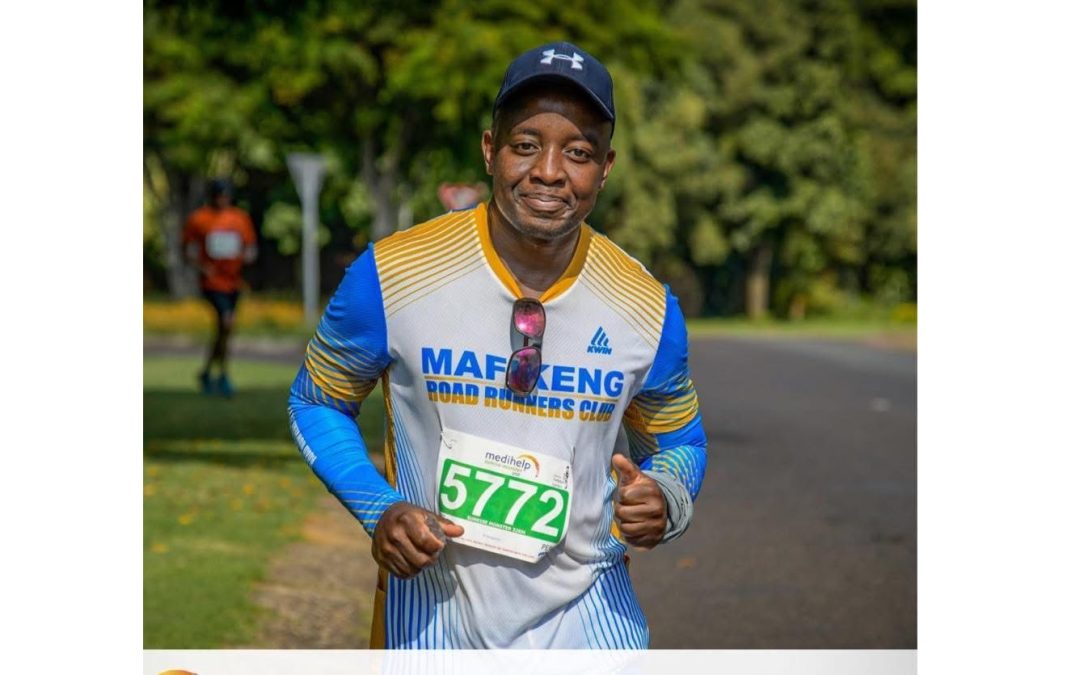
At Sefako Makgatho Health Sciences University (SMU), education is more than academic achievement — it is a launchpad for shaping resilient, purpose-driven leaders. Among its standout alumni is Dr Ndivhuwo Ndou (32), a Medical Officer at Mamelodi Regional Hospital and an avid long-distance runner, currently preparing for the Tokyo Marathon in 2026. His story captures the essence of SMU’s mission: producing well-rounded graduates who thrive in multiple spheres and uplift those around them.
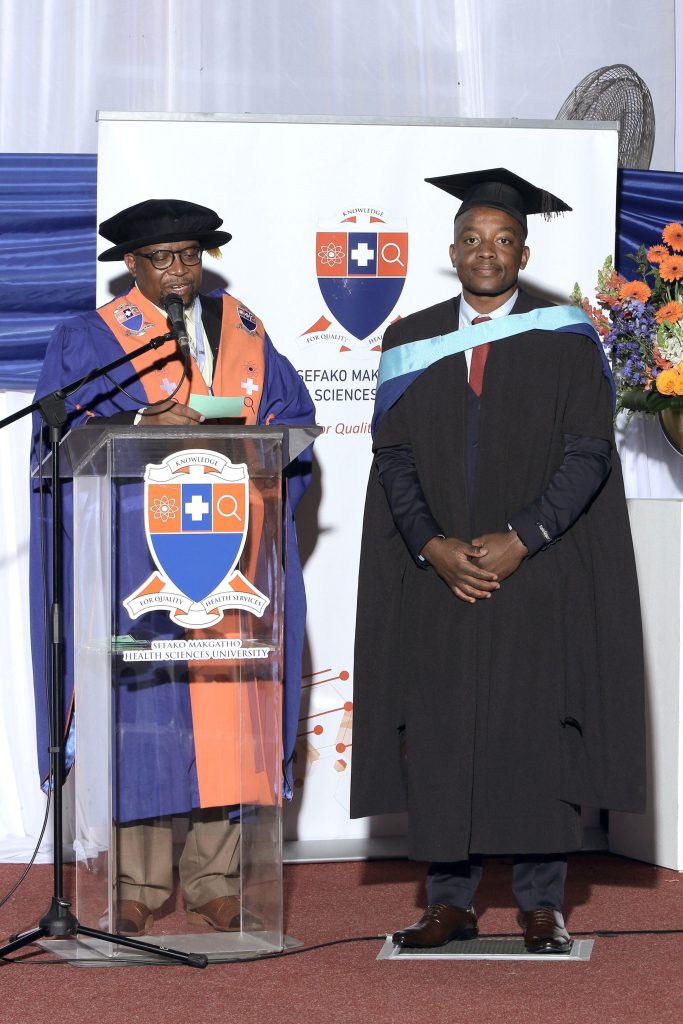 Raised in Tshakhuma Village in Limpopo, Ndou’s values were shaped by his rural upbringing and his mother, a dedicated healthcare worker who became his first role model. “Her achievements set a high bar,” he recalls. “I wanted to serve like she did — and make her proud.”
Determined to pursue medicine, Ndou chose SMU for its health sciences focus and community-oriented ethos. “It was academically demanding,” he admits. “But it taught me time management, resilience, and how to balance intensity with recovery.” Beyond the classroom, he formed lasting friendships and represented the university in football, playing for teams like Santos and Celta Vigo and joining the SMU Dream Team.
It was also at SMU that his passion for running took root. What began in 2015 as a way to unwind quickly evolved. “In 2016, I ran my first official 10km race,” he says. That initial run sparked a long-distance journey that now includes the Comrades and Two Oceans Marathons. His ultimate goal? To complete all six Abbott World Marathon Majors — Berlin, Boston, London, Chicago, New York, and Tokyo.
Balancing life as a full-time doctor and competitive athlete requires discipline. “It’s about routine, diet, and rest,” he says. “When you love something, you make time for it.” His medical training gives him a unique edge. “Understanding sports science helps me train smarter and avoid injuries.”
Fatigue remains a challenge, especially with the demands of hospital work. “There are days when I feel completely drained,” he shares. “But I listen to my body. Recovery is just as important as the work.”
 Despite his packed schedule, Ndou stays grounded in service. “Watching patients recover is the most fulfilling part of my job,” he says. At work, he also encourages healthier lifestyles by sharing tips on nutrition, exercise, and mental well-being. “Health education doesn’t stop in the ward,” he explains. “It should be part of everyday conversation.”
Though his current community outreach is informal — mentoring colleagues and peers — he dreams of launching structured wellness programmes and contributing to sports medicine education. “I’d love to help others improve their health and performance safely,” he adds.
His future plans include specialising further in medicine while expanding his international marathon portfolio. “I want to grow as a doctor and as an athlete,” he says. “Both paths challenge me to be better every day.”
When asked what keeps him grounded, his answer is simple: “My family. I want to be the best husband, father, and brother I can be. That’s my anchor.”
To young professionals from disadvantaged backgrounds, his message is heartfelt: “Your background doesn’t define your limits. With vision, discipline and hard work, anything is possible. Keep going step by step.”
Whether with a stethoscope or a pair of running shoes, Ndou is proof that excellence is not confined to a single lane. His life is a testament to the values of SMU — producing graduates who are intellectually capable, socially responsible, and personally driven. As he races toward new horizons, he carries not only his own dreams but the hopes of a generation inspired by what’s possible when education meets purpose.
By Tumelo Moila
by Lorato | Jul 9, 2025 | All News, SMU Media, Student Media
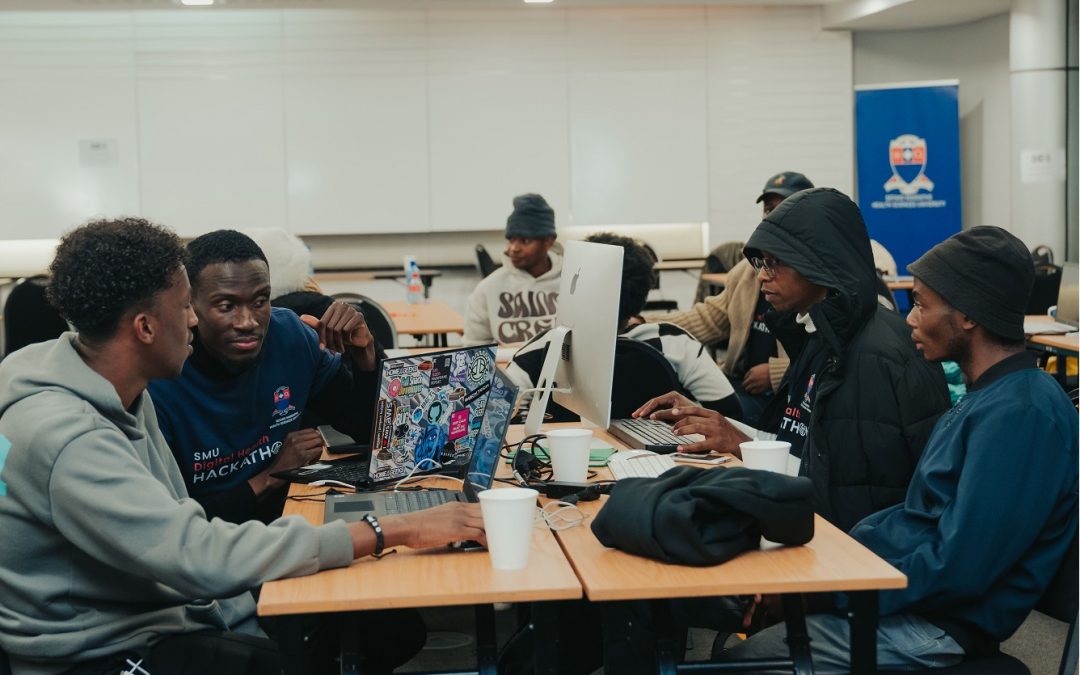
At Sefako Makgatho Health Sciences University (SMU), innovation is not a buzzword — it is a lived reality. From 20 to 22 June 2025, this spirit of ingenuity took centre stage as SMU hosted its Digital Health Hackathon at the Innovation Hub in Pretoria. Designed to spark technological solutions to pressing healthcare challenges, the event marked another milestone in SMU’s evolution as a dynamic hub of innovation, entrepreneurship, and community impact.
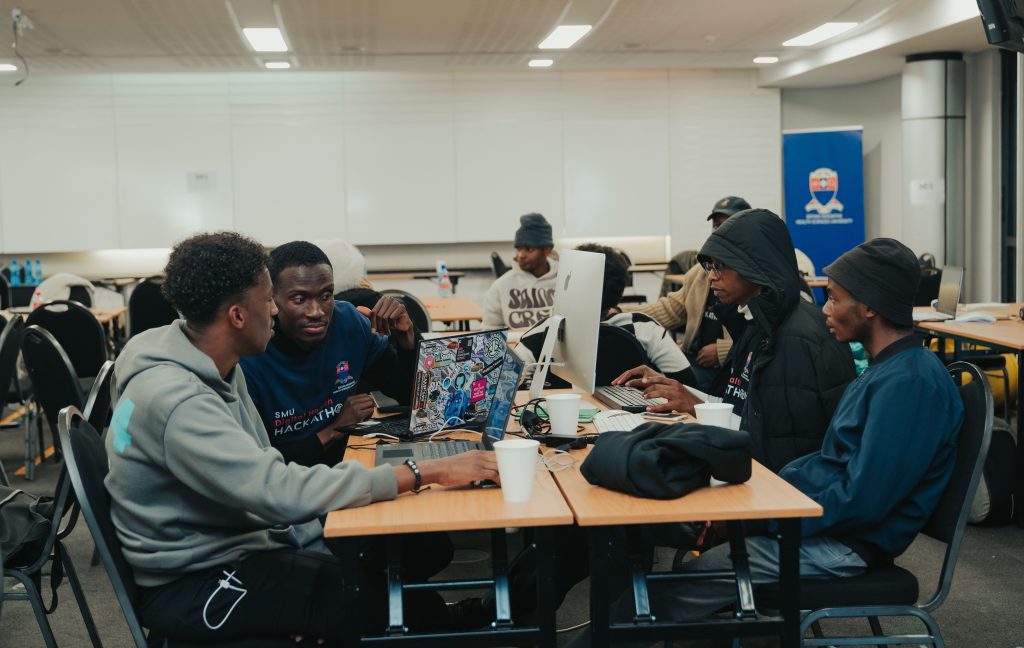 Organised in partnership with ICRD Group Holdings, the City of Tshwane, and other stakeholders, the hackathon brought together students, developers, health professionals, and creatives to collaborate, build, and pitch practical digital health innovations. Significantly, the event took place during youth month, commemorating the 49th anniversary of the 1976 Soweto Uprising — a poignant reminder of the transformative power of young people.
“This event is not just about ideas; it’s about agency,” said Professor Dini Mawela, Acting Deputy Vice-Chancellor: Academic and Research at SMU. “We are empowering students to drive change in healthcare through innovation.”
Structured over three dynamic days, the hackathon provided a comprehensive platform for learning and creation. Day 1 focused on team formation and defining health-related problem statements. Day 2 featured keynote addresses, technical workshops, and hands-on mentoring. Day 3 culminated in final pitches to a panel of expert judges drawn from health, technology, and business sectors.
The event began with a virtual induction on 20 June. Keynote speaker Isaac Kahwema, Executive Director of DOORS Health, joined remotely from the United States to explore Africa’s digital health challenges and opportunities. A standout fireside chat on AI and data protection in healthcare was led by software engineer Bongekile Mabindisa, while ICRD’s Wamozo Cosmas and Geekulcha’s Tiyani Nghonyama equipped participants with practical strategies for innovation under pressure.
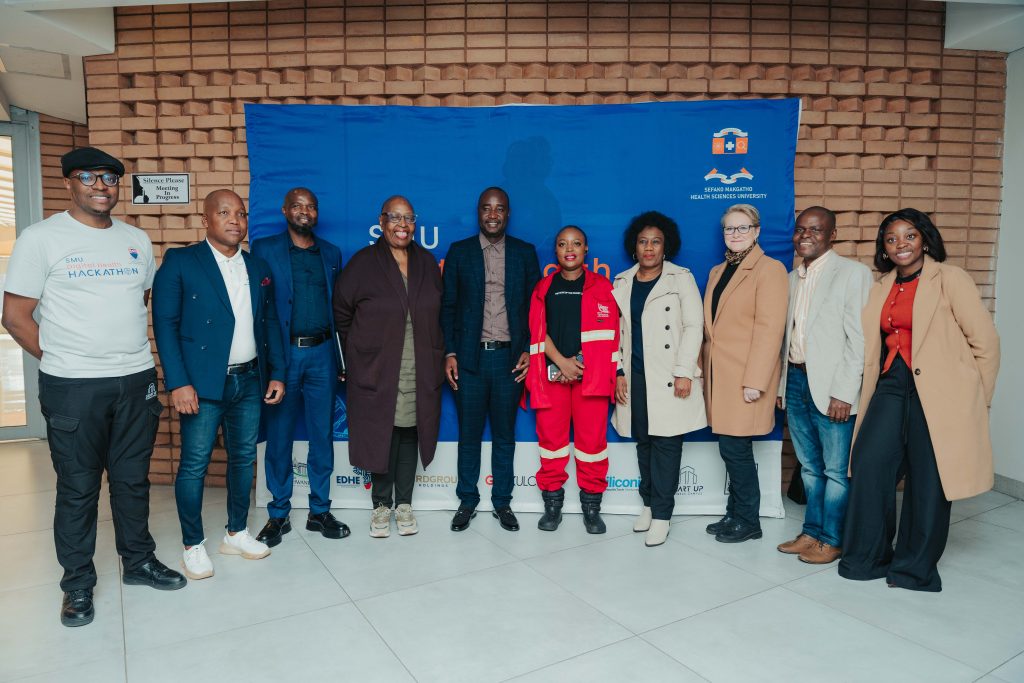 Dignitaries on Day 2 included Councillor Tshegofatso Mashabela, MMC for Health in the City of Tshwane, and Dr Fhatuwani Godfrey Mbara, CEO of Dr George Mukhari Academic Hospital, who delivered an address on behalf of the Gauteng MEC for Health, Nomantu Nkomo-Ralehoko. Both emphasised the urgent need for locally developed tech-enabled healthcare solutions.
The hackathon saw an impressive range of projects — from mobile apps supporting diabetic care to maternal health trackers for rural clinics. Teams also tackled mental health, AI-assisted diagnostics, and low-bandwidth telehealth tools. All solutions were designed with accessibility, scalability, and social impact in mind.
The judging panel evaluated projects on innovation, usability, feasibility, and community impact. With additional support from Buhle Waste, which contributed R5,000 to the prize pool, two teams tied for third place:
- Team Nexus – digitalising paperwork to reduce admin overload in clinics
- MediCoders – improving appointment scheduling at primary healthcare clinics
Second place (R10 000) went to HealthSync Three, a virtual team that developed a smart appointment platform. The R15 000 first prize was awarded to Techmed Connect, formed by SMU students Rosemary Erawemen and Khanyisa Mokgolobotho, who designed a youth-friendly health service model for township communities.
Beyond prizes, the hackathon created real-world opportunities. Two participants were hired immediately by Santam, thanks to software engineer and mentor Molato Sekgobela, highlighting SMU’s potential to drive both innovation and employability.
Participants also built lasting networks. Many teams expressed a commitment to developing their prototypes further, and the top 10 teams will now enter a nine-month venture-building programme, spearheaded by Siliconic HealthTech Ventures and SMU’s Centre for Entrepreneurship Rapid Incubator (CfERI).
“What we saw was the true spirit of SMU,” concluded Professor Mawela. “A university that doesn’t just produce graduates, but nurtures innovators, entrepreneurs, and problem-solvers.”
As SMU deepens its commitment to innovation and entrepreneurship, events like the Digital Health Hackathon prove that the university is more than an academic institution — it is a launchpad for real-world impact. By empowering students to co-create solutions, collaborate with industry, and turn ideas into ventures, SMU is shaping a future where innovation drives inclusive growth and addresses society’s most urgent challenges.
By Dimakatso Modise

by Lorato | Jul 9, 2025 | All News, SMU Media, Student Media
At Sefako Makgatho Health Sciences University (SMU), leadership is more than a title — it is a lived experience. The university has emerged not only as a centre of academic excellence but also as a launchpad for socially conscious, action-driven leaders. Among the standout examples is Atlegang Leeuw, a third-year Environmental Sciences student from Ga-Rankuwa, Pretoria, whose dynamic leadership is making a tangible impact on campus and beyond. “When I arrived at SMU, I came with more than just books and a timetable,” says the 20-year-old. “I wanted to build something that would last beyond my graduation — something rooted in service and purpose.”
 Since enrolling, Leeuw has held several key leadership roles: Chairperson of the Green Campus Initiative (GCI), Treasurer of United Nations Children’s Fund (UNICEF) SMU, Chairperson of the Interprofessional Collaborative Programme (IPECP), peer educator at Khulanathi EduHub, peer counsellor at Residence 5A, and member of the university’s rugby team. Through these platforms, he has fostered a culture of innovation, accountability, and environmental consciousness among his peers. “Leadership is not about status,” he reflects. “It’s about presence — being there, showing up, and creating spaces that uplift others.”
A defining chapter of his journey has been the revitalisation of the Green Campus Initiative. Once a modest awareness campaign, GCI now promotes sustainability across campus — from water conservation in residences to responsible food disposal. “We call ourselves future health professionals, yet sometimes fail to respect our shared environment. That contradiction motivated me to act,” he says.
Inspired by insights from the Association of College and University Housing Officers-International South African Chapter (ACUHO-I-SAC) student housing conference, Leeuw helped expand GCI’s influence in 2024. Under his leadership, it formed partnerships with the Wildlife and Environmental Society of South Africa (WESSA), Miss Earth SA, UNICEF, and student groups from other universities. One of its most visible accomplishments is the SMU Garden — a collaborative project with the Built Environment Department to create a sustainable vegetable garden on campus.
“It’s more than just growing food — it symbolises that meaningful change can start with students, right where we are,” he explains.
Leeuw credits much of the work’s success to his long-time classmate and friend, Tshepo Ntlemeza. “Tshepo’s always been a steady hand — someone who kept things going when challenges felt overwhelming.”
 Together, they led initiatives like the Tembisa Clean-Up, where volunteers collected over 600 bags of waste. They also took part in national biodiversity campaigns, including invasive species removals on International Biodiversity Day.
His leadership extends into health advocacy. As Treasurer of UNICEF SMU, Leeuw has championed campaigns around mental health, children’s rights, and climate justice. In May 2024, he represented SMU at the United Nations Youth Consultation, where young South Africans addressed national challenges such as education, unemployment, and sustainable development.
“That experience made me realise the importance of what we do at SMU. We’re not just students — we’re part of a much larger dialogue shaping the future.”
Another of his achievements lies in the IPECP, where he pushed for the inclusion of Environmental Sciences students in interprofessional learning, a space previously reserved for clinical disciplines. This shift enabled cross-disciplinary collaboration, preparing students to tackle real-world problems at the intersection of science, health, and society.
Yet, for Leeuw, it’s the small victories that mean the most. “When someone tells me they started composting in their res because of GCI, that’s when I know we’re truly changing lives.”
Looking forward, he is developing an eco-friendly cooler box made from recycled pineapple peels — a low-cost, sustainable solution to help students and rural communities safely store medicine in high temperatures.
His long-term aspiration is to work with the United Nations or government departments focused on youth empowerment. But for now, his heart remains with Ga-Rankuwa and SMU — the community and institution that shaped him. “SMU gave me a platform, a voice, and the belief that I can lead change. As long as I’m here, I’ll keep doing exactly that.”
Leeuw is a shining example of the calibre of student leaders SMU continues to cultivate — individuals equipped not just with knowledge, but with vision, resilience, and a commitment to serve.
By Dimakatso Modise

by Lorato | Jul 9, 2025 | All News, SMU Media, Student Media
At Sefako Makgatho Health Sciences University (SMU), leadership is not reserved for boardrooms or podiums — it’s developed in lecture halls, residences, and grassroots initiatives. SMU continues to shape socially conscious leaders who are driven by purpose, service, and impact. One such trailblazer is Tshepo Ntlemeza, a third-year Environmental Sciences student who is proving that leadership from the margins can be powerful and transformative. “In health sciences, Environmental Sciences can feel like the quiet corner,” he says. “But sustainability and public health are inseparable. My mission has been to ensure our faculty is visible, valued, and heard.”
 Ntlemeza’s leadership journey has positioned him at the centre of student life. As Chairperson of the United Nations Children’s Fund (UNICEF) SMU Club, which he helped formally establish following intensive leadership training at UNICEF House in Pretoria, he has opened doors for students to participate in national training initiatives and policymaking conversations. Under his leadership, the club has worked with the Department of Environmental Affairs and the Department of Water and Sanitation, while also contributing to United Nations Youth Consultation roundtables. “Representing SMU at the UN Consultation was a defining moment,” he reflects. “It showed that our voices, even as students, can shape meaningful policies.”
Back on campus, Ntlemeza has helped build strong cross-faculty collaborations with the Interprofessional Education Collaborative Programme (IPECP), the Built Environment Department, Khulanathi EduHub, and the Sefako Makgatho University Student Society (SMUSS). These partnerships have driven campaigns like tree planting and membership drives that highlight how environmental and public health challenges are deeply interconnected. “It’s never just about hosting events,” he says. “It’s about building a lasting culture of shared responsibility.”
 As a key contributor to the Green Campus Initiative (GCI), Ntlemeza has played a leading role in elevating environmental advocacy at SMU. After attending the 11th Green Campus Conference at Nelson Mandela University in July 2024, he returned with a renewed strategy and formed partnerships with organisations like Wildlife and Environmental Society of South Africa (WESSA), Green Raising, and Miss Earth SA. “Engaging with peers and regulators inspired us to think long-term,” he says. “We’re not just running awareness campaigns anymore — we’re building institutional momentum.”
Ntlemeza’s leadership also extends to the academic space. As a Physics tutor appointed by the Centre for University Teaching and Learning (CUTL), he helps students master one of the university’s toughest subjects. But for him, it’s about more than marks. “Tutoring is leadership in disguise,” he explains. “It’s about helping students believe in themselves, especially when they feel like giving up.”
Within student residences, he serves as an Academic Officer and Peer Educator, where he provides academic mentorship and champions mental health support. “Many students struggle quietly,” he says. “Sometimes, the most meaningful leadership is simply being present and listening without judgment.”
Through IPECP, he has advocated for interdisciplinary learning, ensuring that Environmental Sciences students are included in collaborative platforms with medical, dental, and nursing students. “The world’s problems don’t exist in silos. We need to collaborate if we want to find real solutions,” he says.
Outside academics, Ntlemeza is part of the media team of the Student Christian Fellowship (SCF), where he uses storytelling to promote spiritual wellness and purpose-driven leadership. “Leadership is also about alignment — knowing who you are and what drives you,” he adds.
He credits fellow changemakers like Atlegang Leeuw and Mpho Maako for sharing in the vision. “We’re committed to ensuring that no student — especially in the sciences — feels left behind.”
Ntlemeza’s journey reflects SMU’s broader mission: producing leaders who are grounded in academic excellence, fuelled by empathy, and committed to social impact. His work in sustainability, education, health, and spiritual development is a testament to the university’s role in shaping holistic leaders who serve with integrity and vision.
By Dimakatso Modise

by Lorato | Jul 4, 2025 | All News, SMU Media, Student Media
In a powerful celebration of academic achievement, international solidarity, and health system transformation, Sefako Makgatho Health Sciences University (SMU) proudly hosted the 2025 Nelson Mandela/Fidel Castro and South African Military Health Service Medical Graduation Ceremony on Friday, 4 July.
 The momentous event honoured more than 70 newly qualified South African doctors who completed their studies in Cuba through the Nelson Mandela Fidel Castro (NMFC) medical training programme, before returning to South Africa to complete their integration and final clinical training. This cohort represents the latest contribution to the growing legacy of the NMFC programme — a partnership that has, over the past 29 years, produced more than 3,000 doctors, many of whom serve in under-resourced and rural areas across the country.
The university’s sports complex was transformed into a vibrant stage for celebration, attended by graduates’ families, government officials, health professionals, and academic representatives from both South Africa and Cuba. The ceremony opened with the singing of Gaudeamus Igitur, followed by the national anthems of Cuba and South Africa — a symbolic gesture recognising the enduring diplomatic and educational ties between the two nations.
Presiding over the formal proceedings was Professor Heidi Soca González, Acting Chancellor of the Universities of Medical Sciences in the Republic of Cuba. She formally constituted the congregation and led a moment of silence in tribute to former presidents Nelson Mandela and Fidel Castro, whose shared vision of equality and health justice gave rise to this landmark collaboration.
 In her welcome address, SMU Vice-Chancellor Professor Tandi Matsha-Erasmus reaffirmed the institution’s commitment to supporting the integration of NMFC graduates. “Today, we are honoured to host the graduation ceremony of the Nelson Mandela Fidel Castro Medical Programme. At SMU, we take pride in serving as one of the key academic institutions facilitating the reintegration of returning graduates into the South African healthcare system. Today’s ceremony reaffirms our role as a university that is responsive, transformative, and mission-driven,” she said. “SMU continues to advance the national imperative of health equity by preparing graduates who are both clinically competent and socially conscious.”
 Delivering the keynote address, Deputy Minister of Health Dr Joe Phaahla commended the Mandela-Castro Programme for its contribution to addressing the healthcare skills gap in South Africa. “It is a profound honour and privilege for me to stand before you on this significant occasion — the graduation ceremony of our 53 Nelson Mandela Fidel Castro medical training programme graduates, along with 23 members of the South African Military Health Service trained by Cuban medical schools to serve the people of South Africa,” he said. “As graduates, you represent a unique embodiment of excellence, having been trained in a country that has become a second home to many of you, shaped by a healthcare philosophy rooted in primary health care, community, and human dignity.”
One of the most solemn moments of the ceremony was the administration of the oath of the graduates in Medicine, led by Professor Risenga Chauke, Acting Dean of SMU’s School of Medicine. The oath underscored the graduates’ ethical obligations to serve with integrity, respect patients’ rights, and uphold the values of equality and confidentiality.
The highlight of the day — the conferral of medical degrees — was conducted by Professor González, as each graduate crossed the stage to thunderous applause. Many of the new doctors are the first in their families to achieve such a milestone, reflecting the transformational power of education and opportunity.
In recognition of academic excellence, Professor Pindile Mntla presented the prestigious Professor Juan José Ceballos Arrieta Award to top-performing graduates Dr Rosina Momo Mohlala and Dr Sibusisiwe Roselyn Nncube, who exemplified leadership and scholarly excellence throughout their training.
Delivering a heartfelt message on behalf of the graduating class, Dr Tumelo Nicholas Lengoabala said: “To our parents, this achievement is not only ours — it is yours as well. This degree is not merely a certificate; it is a testament to endurance, a symbol of hope, and a celebration of triumph.”
Messages of commendation were also shared by international and military leadership. Dr Fidela Mariana Reyes Obediente, Director General of Medical Teaching from Cuba’s Ministry of Public Health, and Major General Mphikeleli Simelane, Chief Director of Military Health Force Preparation, praised the graduates for their resilience, discipline, and dedication to public service.
As the final notes of Gaudeamus Igitur echoed through the complex, the graduates left not only with degrees in hand but with a calling to serve with honour and to uphold a legacy of solidarity, dignity, and healthcare for all.

by Lorato | Jul 2, 2025 | All News, SMU Media, Student Media
Academic excellence is not merely the attainment of high marks—it is the embodiment of curiosity, resilience, and a relentless pursuit of knowledge. At Sefako Makgatho Health Sciences University (SMU), this ideal lies at the heart of its mission to nurture future leaders in health sciences. It is within this context that the university proudly celebrates Dr Kiara Ramjas, a shining example of intellectual brilliance and compassionate service, who has been awarded the prestigious Dean’s Award for Outstanding Achievement in the School of Medicine.
 Graduating summa cum laude from the Bachelor of Medicine and Bachelor of Surgery (MBChB) programme, Ramjas represents the pinnacle of academic and personal excellence. Honoured during the 2025 autumn graduation ceremony, her achievement is a testament not only to her scholastic aptitude but also to her unwavering commitment to humanity. At just 24 years old, the Centurion-born graduate has already carved a legacy—one defined by purpose, perseverance, and a deep-rooted passion for healing.
Now a first-year intern at Tygerberg Hospital in the Western Cape, Ramjas reflects on the path that led her to this milestone. “It’s been an exciting yet challenging first few months, but my time at SMU truly prepared me for the obstacles I now face as an intern,” she shares.
Born in Laudium and raised in Centurion, Kiara grew up in a home where empathy was a way of life. Her father’s work in healthcare, her mother’s advocacy for persons with disabilities, and her close relationship with her sister, who has Down syndrome, instilled in her a strong sense of service from a young age.
“A career in medicine seemed like a destined choice,” she says. “I’ve always been driven by a desire to make a tangible difference in people’s lives.”
That calling crystallised in high school when she volunteered at a local clinic. The experience of caring for patients in a holistic and respectful manner convinced her that medicine was not just a profession, but her purpose.
Choosing SMU for her studies was no accident. “The MBChB programme’s emphasis on community-based learning and its supportive environment aligned perfectly with my values,” she notes. One of her standout academic experiences was with Professor Gregory Lebona, whose humility and passion for teaching anatomy inspired her deeply. “He taught us that success is rooted in hard work and kindness, regardless of your achievements.”
 Achieving summa cum laude—the highest academic distinction—was no small feat. Ramjas credits her success to a disciplined study routine, peer collaboration, and the unwavering support of her family. “I prioritised consistency—daily reviews, concise notes, past papers, and scheduled breaks. It was about studying smart, not just hard.”
Outside the lecture halls, Ramjas remained actively engaged in community service, particularly through her work with Down Syndrome South Africa. This reinforced her dedication to inclusivity and public health. “It helped me grow not just as a medical student, but as a person.”
One moment that left a lasting impact on her was caring for a young liver cancer patient. “She reminded me that patients remember how you made them feel. That encounter taught me that kindness is the true currency of medicine.”
Her family, friends, and fellow students formed the foundation of her support system. “At university, we built a culture of helping one another. We believed that success is sweeter when shared.”
Looking ahead, Ramjas has her sights set on paediatrics, with long-term aspirations of joining Doctors Without Borders. “Children are the legacy we leave behind. Being a paediatrician means safeguarding the health of future generations. That’s a privilege I want to earn.”
Receiving the Dean’s Award and summa cum laude honours came as a surprise on graduation day. “I was overwhelmed with gratitude. It was a powerful reminder that 18 years of hard work, from primary school to medical school, had finally come full circle.”
As she steps confidently into her role as a doctor, Ramjas remains grounded in her core values—empathy, excellence, and service. “I hope to be remembered as someone who combined academic rigour with compassion and used every opportunity to uplift others.”
In a world that urgently needs healthcare professionals who lead with empathy and integrity, Ramjas exemplifies the calibre of graduates SMU strives to cultivate.
By Tumelo Moila