
by Lorato | Feb 13, 2025 | All News, SMU Media, Student Media
Sefako Makgatho Health Sciences University (SMU) continues to cement its reputation as a powerhouse in health sciences research, tackling some of the world’s most urgent medical challenges. Among its rising scientific minds is Ankonisaho Mahalihali, a dedicated researcher leading the charge against antimicrobial resistance (AMR)—a silent global crisis threatening modern medicine.
 Hailing from Tshilamba, Mutale, in Limpopo, Mahalihali’s journey from the University of Venda to SMU is a testament to her relentless pursuit of scientific excellence. Now pursuing a master’s degree in medical microbiology at SMU, her research delves into resistance mechanisms in bacterial pathogens, a crucial area in the fight to preserve the efficacy of life-saving antibiotics.
With SMU’s cutting-edge facilities and a commitment to advancing high-impact medical research, Mahalihali is not just building a career—she is shaping the future of infectious disease control in South Africa and beyond. “In 2024, I joined SMU to pursue a master’s degree in medical microbiology, focusing on resistance mechanisms in bacterial pathogens,” says Mahalihali.
“SMU is a leading institution in health sciences, making it the ideal choice for my academic pursuits. My interest in medical microbiology stemmed from its direct impact on human health, particularly infectious diseases and antimicrobial resistance. SMU has nurtured my passion by providing mentorship, access to research platforms, and state-of-the-art laboratories.”
Her research investigates the prevalence, antibiotic resistance, and whole-genome sequencing of Klebsiella pneumoniae, a pathogen linked to multidrug resistance. “My research has identified critical resistance patterns and outbreak dynamics, reinforcing the need for improved surveillance and antibiotic stewardship,” she explains.

“With expert guidance from seasoned academics, I have refined my ability to conduct impactful research that contributes to global efforts in combating antimicrobial resistance. SMU’s Department of Microbiology, journal clubs, and research meetings have provided platforms for scientific discussions, enhancing my analytical and presentation skills. Access to well-equipped laboratories has further strengthened my expertise in molecular microbiology.”
Mahalihali credits Dr Andrew Musyoki as a pivotal mentor in her research journey. “SMU plays a crucial role in addressing antimicrobial resistance through its research-driven approach, collaborations, and emphasis on real-world applications. By equipping students with essential skills and supporting innovative research, the university contributes to global efforts in combating antibiotic resistance and shaping policies to mitigate its impact.”
“Through rigorous training and research exposure at SMU, I gained the expertise needed to excel at the International Centre for Genetic Engineering and Biotechnology (ICGEB) in Trieste, Italy. My background in bacterial genomics and antimicrobial susceptibility testing has been instrumental in conducting advanced molecular analyses and collaborating with international researchers.”
Reflecting on her recent achievement, she shares, “From Venda in South Africa to Trieste in Italy via the research team at the Department of Microbiological Pathology in SMU, it has been an incredible journey. Thanks to our collaborator, leader of the Bacteriology group at ICGEB, Vittorio Venturi. I am grateful for the support by ICGEB and the Department of Science and Innovation (DSI). Klebsiella pneumoniae will know who this rising star is!”
“Global opportunities like the ICGEB Special Programme broaden scientific perspectives, enhance skills, and provide exposure to cutting-edge technologies. This experience strengthens my expertise in antimicrobial resistance, demonstrating SMU’s commitment to nurturing globally competitive researchers.”
Mahalihali aims to share her expertise through mentorship, workshops, and research collaborations. “By engaging in research meetings and knowledge-sharing initiatives, I hope to inspire upcoming researchers and contribute to the advancement of SMU’s research community and South Africa’s health sector.”
Encouraging fellow SMU students, she states: “Remain resilient, proactive, and dedicated to continuous learning. Seek mentorship, engage in research, and embrace opportunities to contribute meaningfully to the field of health sciences.”
Mahalihali aspires to become a leading researcher in healthcare-based research, exploring innovative solutions to public health challenges. “With SMU’s strong research culture, mentorship, and collaborative environment, I am confident in achieving my long-term goal of contributing significantly to scientific advancements in infectious diseases and antimicrobial resistance.”
Her selection for the ICGEB fellowship stands out as a pivotal achievement, providing her with invaluable international research exposure and networking opportunities. “SMU’s academic environment fosters a culture of curiosity, critical thinking, and interdisciplinary collaboration. Through access to advanced research techniques and mentorship, I have strengthened my resolve to contribute meaningfully to public health.”
To prospective SMU students interested in microbiology or health sciences, Mahalihali advises: “Remain curious, seek mentorship, and actively participate in research projects. With SMU’s strong academic foundation, networking opportunities, and commitment to excellence, students can build impactful careers in microbiology and health sciences.”
Mahalihali’s journey exemplifies SMU’s commitment to Excellence, Integrity, Ubuntu, and Scholarship. Her dedication to antimicrobial resistance research not only upholds these values but also showcases the university’s mission to advance health sciences for a better future. As she continues to make strides in her field, her work stands as a testament to the transformative power of education and research at SMU.
By Dimakatso Modise
by Lorato | Feb 12, 2025 | All News, SMU Media, Student Media
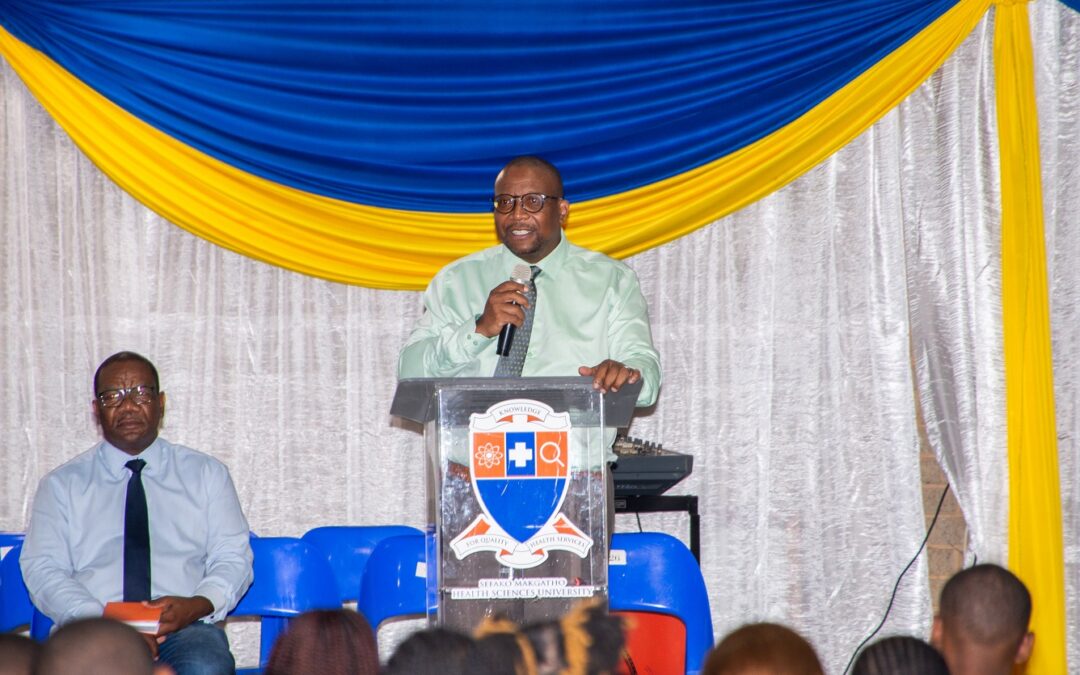
Sefako Makgatho Health Sciences University (SMU) reaffirmed its commitment to shaping future healthcare professionals by hosting a comprehensive orientation event for first-year students in the School of Medicine on 10 February 2025. The event provided an in-depth introduction to university life, academic expectations, and the wealth of support services available to ensure student success.
 As a leading institution in health sciences, SMU continues to prioritise student development, professional readiness, and academic excellence. The orientation event played a crucial role in equipping new students with the knowledge and resources they need to navigate their medical education journey with confidence.
Student support services: A strong foundation for success
Newcomers to the MBChB, Radiography (B.Rad), and Emergency Medical Care (EMC) programmes were introduced to a variety of academic and psychosocial support services aimed at enhancing their student experience. The Centre for University Teaching and Learning (CUTL) was highlighted as a key support structure, offering mentorship, academic advising, and e-learning assistance to ensure students receive the necessary guidance throughout their studies. Recognising the importance of mental health, SMU has also appointed a clinical psychologist to provide students with professional mental wellness support, while Campus Health Services ensures their general healthcare needs are met.
To assist with academic concerns, students were encouraged to visit the Student Centre in the Clinical Pathology Building and consult their academic facilitators, who are available to provide guidance on coursework and university expectations. Senior students also shared insights on adjusting to university life, offering advice on navigating peer pressure, managing study schedules, and handling the academic rigour of a health sciences degree.
Expert advice and motivation for new students
MBChB Academic Project Leader, Botha Gerder, emphasised the importance of active student engagement and urged students to stay informed about key academic dates, institutional regulations, and available support services. 2025 Guardian Lecturer Mabatho Thulo further encouraged students to remain focused on their academic goals while maintaining a balanced lifestyle, reinforcing the importance of remembering their purpose in joining SMU’s School of Medicine.
 Head of Faculty, Professor Honey Mabuza, delivered an inspiring keynote address, offering four essential tips for student success. He advised students to collaborate with their peers to enhance learning experiences and build strong support networks. He encouraged them to embrace vulnerability, seek assistance when faced with challenges, and attach themselves to senior student mentors who can provide valuable guidance. Lastly, he stressed the importance of addressing difficulties head-on, cautioning against withdrawing or avoiding problems.
Mabuza also outlined SMU’s commitment to ensuring students receive career placement support that aligns with the Health Professions Council of South Africa (HPCSA) regulations. Through structured training platforms, students are exposed to practical learning environments that equip them with the necessary skills and experience to transition into professional practice.
The orientation also provided an opportunity for students in the Emergency Medical Care (EMC) programme to gain a deeper understanding of the practical and physical demands of their chosen field. Programme Coordinator, Wisdom Ndhlovu, explained that the EMC programme is built on three foundational aspects: theoretical knowledge, practical application, and simulation-based training. He highlighted the importance of physical fitness, particularly swimming skills, which are required for certain emergency response situations and can pose a challenge for some students.
Adding to the discussion on student support services, Dr Joshua Maliavusa from CUTL introduced a suite of academic support initiatives designed to assist vulnerable students. He explained that mentorship programmes, student tutorship, e-learning support, and student tracking and monitoring systems are in place to help students stay on track with their studies. Additionally, the academic advising programme ensures that students receive timely guidance to navigate their coursework effectively. Maliavusa reassured students that these support structures exist to help them overcome challenges and excel academically.
A bright future at SMU
 Closing the event, Matimu Chauke, Chairperson of the School of Medicine, encouraged students to believe in themselves, take their academic journey step by step, and embrace the challenges of medical school. He reminded them that medicine is a demanding yet rewarding career and that success is possible with the right support system, curiosity, and determination.
The SMU School of Medicine Orientation was a resounding success, equipping first-year students with valuable guidance, motivation, and institutional support. With SMU’s exceptional academic programmes, expert faculty, and strong student support services, SMU students are now well-prepared to embark on a transformative educational journey that will position them as future leaders in healthcare.
By Khanyi Nkosi and Musa Msibi
by Lorato | Feb 3, 2025 | All News, SMU Media, Student Media
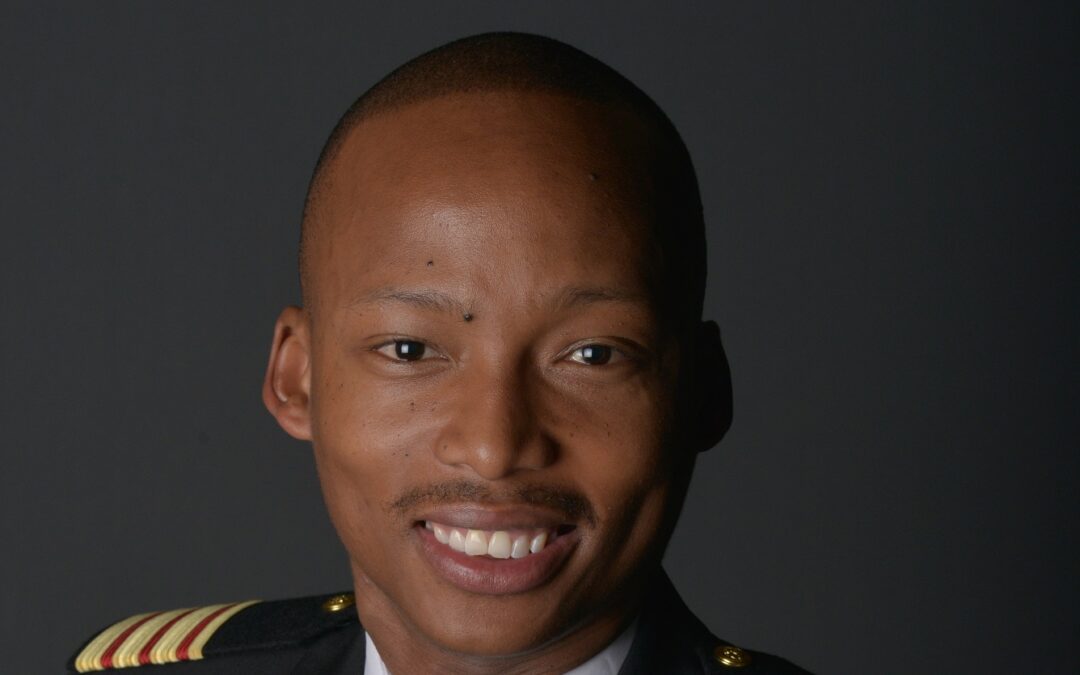
Sefako Makgatho Health Sciences University (SMU) continues to produce visionary healthcare leaders who make a global impact. Among its distinguished alumni is Dr Realeboga Sebitso, a dynamic medical professional whose career exemplifies excellence, resilience, and innovation. At just 31, he serves as the Lead Medical Officer at Carnival Corporation, a role that has taken him across more than 45 countries, refining his expertise in emergency and maritime medicine. As one of the few young black professionals in senior leadership, Sebitso is not only shaping strategic healthcare decisions but also championing inclusive leadership in a highly competitive industry. His remarkable journey is a testament to SMU’s commitment to nurturing world-class medical professionals who transform healthcare on a global scale.
 Reflecting on his medical journey, Sebitso shares: “I have always been driven by a desire to make a meaningful impact. Medicine offered a path to help people at their most vulnerable moments.” His time at Sefako Makgatho Health Sciences University (SMU) played a pivotal role in shaping his career, providing not only academic knowledge but also leadership opportunities through mentorship programmes and student governance.
Balancing rigorous academic demands with leadership roles was challenging, but he embraced each obstacle as a learning opportunity. “I learned to prioritise, lean on my support system, and remind myself of my long-term vision. Challenges are stepping stones,” he explains. His tenure as a Radio Presenter at SMU FM 97.1 further honed his ability to communicate effectively—an essential skill in both emergency settings and cross-cultural interactions aboard a cruise ship.
Though he is not yet a specialist, Sebitso found his calling in emergency medicine. “I have always been drawn to fast-paced environments and making a tangible difference in critical moments,” he says. His transition to maritime medicine allowed him to combine healthcare with his love for global travel. His path has been shaped by mentors such as Dr Junior Manyoni, Dr Kylen Swartzberg, Dr Paul Sandler, and Dr Sashen Murugan, whose clinical acumen, leadership, and dedication inspired him to pursue advanced training, including a Diploma in Primary Emergency Care.
Sebitso credits his postgraduate education for enhancing his clinical proficiency. “The Diploma in Primary Emergency Care strengthened my ability to manage complex emergencies with confidence, even in resource-limited settings,” he explains. His training has prepared him for high-pressure environments, whether at sea, in an emergency department, or in remote locations.
As a Lead Medical Officer, Sebitso’s role extends beyond patient care. He is responsible for managing medical centre operations, emergency preparedness, team supervision, public health compliance, and crisis management. “One of the biggest responsibilities is ensuring the health and safety of thousands of passengers and crew members,” he notes. Despite the high demands, he finds joy in exploring different cultures, cuisines, and landmarks during his travels.
Practising medicine at sea presents unique challenges, from limited resources to remote emergencies. Sebitso emphasises adaptability and teamwork: “Every decision counts when you are miles away from the nearest hospital.” His approach to ensuring wellness onboard includes preventive care, infection control, and proactive public health measures.
One of the most challenging cases he handled was a passenger experiencing a life-threatening myocardial infarction. “Providing thrombolysis, coordinating an emergency evacuation in the middle of the ocean, and managing the patient under extreme pressure required calmness, teamwork, and clear communication,” he recalls. As a senior officer, he balances clinical responsibilities with administrative duties by staying organised and empowering his team.
With a diverse team and patients from different backgrounds, Sebitso values cultural competence. “I lead with respect, curiosity, and a willingness to learn from others,” he shares. Effective public health compliance requires diligence, attention to detail, and proactive communication with international health authorities.
Having worked across various healthcare systems, he has gained a broad perspective on global health. “With the right fundamental principles, medicine is practised similarly worldwide. This gives me confidence, even when responding to emergencies during flights,” he says with a chuckle.
Emergency medicine remains at the core of Sebitso’s passion. “It is dynamic, fast-paced, and gives me an immense sense of purpose. The ability to make critical, life-saving decisions in high-pressure situations is both challenging and deeply fulfilling,” he explains. However, his exposure to maritime medicine has sparked an interest in merging the two fields. His ultimate goal is to develop a synergy between emergency and maritime medicine, ensuring that high-quality emergency care is accessible even in the most remote and unconventional settings.
Sebitso credits SMU for instilling a strong sense of service and excellence in him. “SMU nurtured principles that continue to guide me in every aspect of my career,” he says. Despite his international career, he remains committed to contributing to South Africa’s healthcare system, whether through mentorship, healthcare reforms, or practising emergency medicine.
He aims to become a global leader in maritime and emergency medicine, developing innovative healthcare solutions for remote settings. He hopes to be remembered as a trailblazer who pushed boundaries and demonstrated that leadership, compassion, and innovation can coexist in medicine. “Possibility is my greatest motivation. There is always more to learn, more lives to touch,” he says. His journey exemplifies what it means to be an unconventional doctor—one who leads, heals, and inspires on a global scale.
By Tumelo Moila

by Lorato | Jan 27, 2025 | All News, SMU Media, Student Media
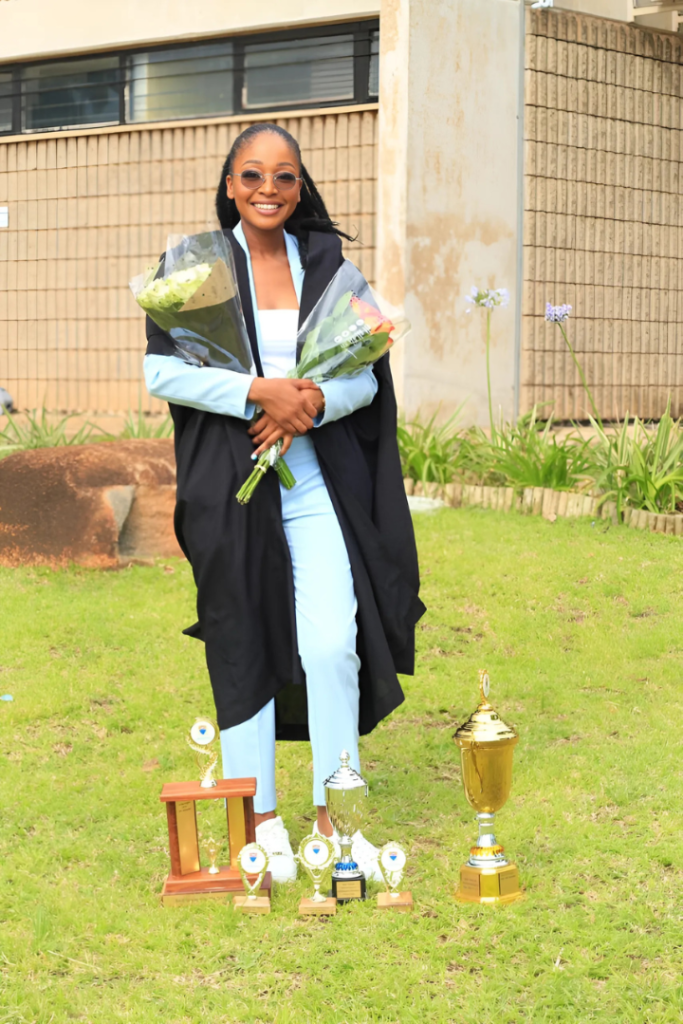
Sefako Makgatho Health Sciences University (SMU) continues to cement its reputation as a beacon of academic excellence and leadership in healthcare education. At the heart of the 2024 Oath-Taking Ceremony was Mosenya Mokgadi Rampedi, a BSc Dietetics graduate whose exceptional achievements and inspiring journey captured the admiration of peers and academics alike. Recognised with three prestigious awards—Rampedi embodies the resilience, determination, and community spirit that SMU strives to instil in its students.
 Hailing from Seshego, Polokwane, and inspired by her parents’ passion for education, Rampedi has carved a path of academic distinction. Her story is not just one of individual brilliance but a testament to the nurturing environment SMU provides to help students realise their potential and contribute meaningfully to society. Rampedi was recognised for her outstanding achievements and received the following awards:
- Best Clinical Performer in Community Nutrition 2024
- Best Student in BSc Dietetics Final Year 2024
- Best Overall Performer in BSc Dietetics I-IV
Reflecting on her accolades, Rampedi described the experience as humbling and extraordinary. “It feels so surreal, but I am incredibly grateful and proud. These awards remind me of the grace of God and the hard work that went into this journey. Studying alongside brilliant and resilient classmates made this recognition even more meaningful.
Growing up in Seshego, Polokwane, Rampedi was inspired by her parents, both professional educators, who instilled a love for education in their children. Her mother’s journey with diabetes also motivated her to pursue dietetics, as she recognised the power of nutrition in managing health conditions.
She attributes much of her success to the supportive environment at SMU. “SMU is more than just a university; it is a family away from home. The sense of community, the excellent academic resources, and access to Dr George Mukhari Academic Hospital all contributed to my growth. SMU’s practical approach to learning prepared me exceptionally well for the challenges of my field,” she remarks.
 She also highlights the pivotal role played by the Department of Dietetics. “The entire department contributed significantly to our success. From the lecturers and administrative staff to the management team, everyone played a part in creating a supportive and nurturing environment. Zanele Mbola went above and beyond, acting as a mentor and creating a mother-daughter dynamic that kept me motivated,” she adds.
Coming from a family of high achievers, Rampedi was driven to excel and set an example. “Success has been a family tradition, and I didn’t want to be left behind. My siblings have achieved so much, and I wanted to maintain the standard while also being a role model for my younger sister. This drive, combined with the support of my family and SMU, kept me going.”
Currently completing her community service at Dr George Mukhari Academic Hospital, Rampedi is gaining valuable hands-on experience. She fondly recalls her time engaging with community members during her clinical rotations. “It was incredibly rewarding to work with patients, offer practical advice, and see the impact of nutritional guidance. The exposure I received at SMU and the hospital gave me the confidence and skills to thrive.”
While she appreciates her journey in dietetics, she has her sights set on further studies in medicine. “I have always been passionate about healthcare, and I aim to contribute to the academic side of medicine in the future. Dietetics has laid a strong foundation, and I am excited about what lies ahead.”
Rampedi encourages students to embrace their studies wholeheartedly. “Take the time to understand your work, as you will deal with real people’s lives. Surround yourself with a support network that inspires and uplifts you. SMU offers a nurturing environment that, if embraced, will help you achieve your goals.
She extends her heartfelt gratitude to her family, lecturers, and peers. “I am deeply thankful to my parents for instilling a love of learning in me and to SMU for creating an environment where students can excel. The mentorship, support, and opportunities I received have prepared me well for the next chapter of my journey.”
Rampedi’s journey is a shining example of the unwavering support offered by SMU. Her accolades underscore SMU’s commitment to producing healthcare professionals of the highest calibre, prepared to address real-world challenges with competence and compassion. Rampedi’s remarkable achievements inspire her peers and future students and demonstrate that excellence is achievable with determination, support, and hard work.
By Dimakatso Modise
by Lorato | Jan 22, 2025 | All News, SMU Media, Student Media
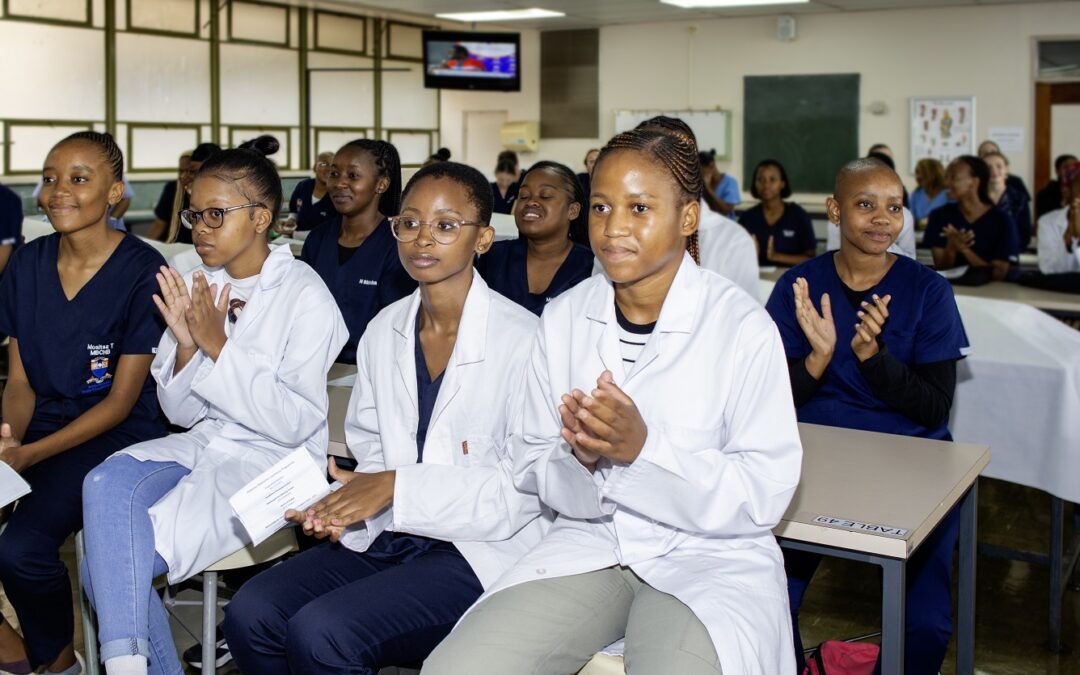
Sefako Makgatho Health Sciences University (SMU) recently hosted its esteemed 2025 Anatomy Dedication Ceremony at the Anatomy Department, a significant event that honours individuals who have selflessly donated their bodies for medical education and research. This annual tradition underscores SMU’s commitment to fostering ethical, professional, and academic excellence in healthcare education. By recognising the profound contributions of these donors, the ceremony serves as a reminder of the critical role they play in shaping the next generation of healthcare professionals, solidifying SMU’s position as a leading institution dedicated to advancing medical science and humanity.The event marked a pivotal moment for students embarking on their journey into studying human anatomy, emphasising the significance of respect, professionalism, and dedication in medical education.
 The ceremony featured a keynote address by the Dean of the School of Medicine, Professor Risenga Chauke, who urged students to treat cadavers with dignity and to approach their studies with care and responsibility. “The study of anatomy forms the cornerstone of medical science, and the cadavers you work with are your first patients,” said Chauke. “Treat them with the utmost respect, as this will shape how you engage with future patients and the medical profession.”
Dr Elize Venter, Director of the Centre for University Teaching and Learning (CUTL) was also a guest speaker. She spoke passionately about the importance of ceremonies like this, emphasising their role in shaping students’ appreciation for the responsibilities and ethical considerations involved in their studies.
Adding a motivational perspective, Luane Mare, the 2024 MIBS 020 Top Achiever, encouraged students not to be too hard on themselves as they adapt to working with cadavers. “It gets better with time. Every challenge you face will shape the kind of doctor you will become. The future of medicine is in your hands,” she said, leaving the audience inspired.
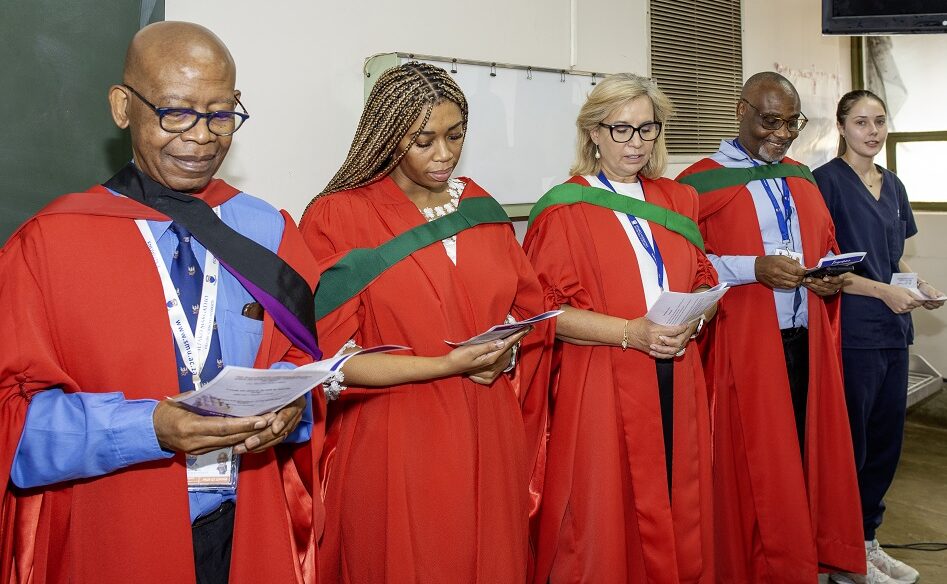
Addressing the second-year students directly, Mare offered additional words of wisdom: “Not only will you learn from textbooks, but also from the generous gift of cadavers. They are not just teaching tools; they are your first silent patients, so handle them with care and gratitude because you owe it to them and to the profession you are entering. Don’t cut because you want to cut; cut because you want to learn.”
One of the students, Portia Matlala, a second-year BSc Physiotherapy student, shared her thoughts: “I am very anxious, but I am willing to learn and hope I will get used to it.” Her sentiment reflected the mixed emotions many students feel when beginning this critical phase of their education.
The ceremony also saw all students take a modified Hippocratic Oath specific to the Anatomy and Histology Department. In their declaration, they solemnly pledged to:
- Not improperly divulge anything they learn in their capacity as anatomy students.
- Not capture or distribute images of human remains.
- Treat the cadavers at the university with respect and dignity.
- Conduct themselves as students of an honourable profession, be loyal to the university, and endeavour to promote its welfare and maintain its reputation.
The 2025 Anatomy Dedication Ceremony highlighted SMU’s unwavering dedication to producing healthcare professionals who uphold the highest standards of respect, professionalism, and academic excellence. As students left the ceremony, they carried a profound sense of gratitude towards the donors who have made their education possible and a renewed commitment to the values instilled by SMU. Through events like these, SMU continues to honour its mission of advancing medical education and solidifies its vital role in shaping compassionate and skilled leaders in healthcare.
By Dimakatso Modise
