by Lorato | Dec 2, 2024 | All News, SMU Media, Student Media
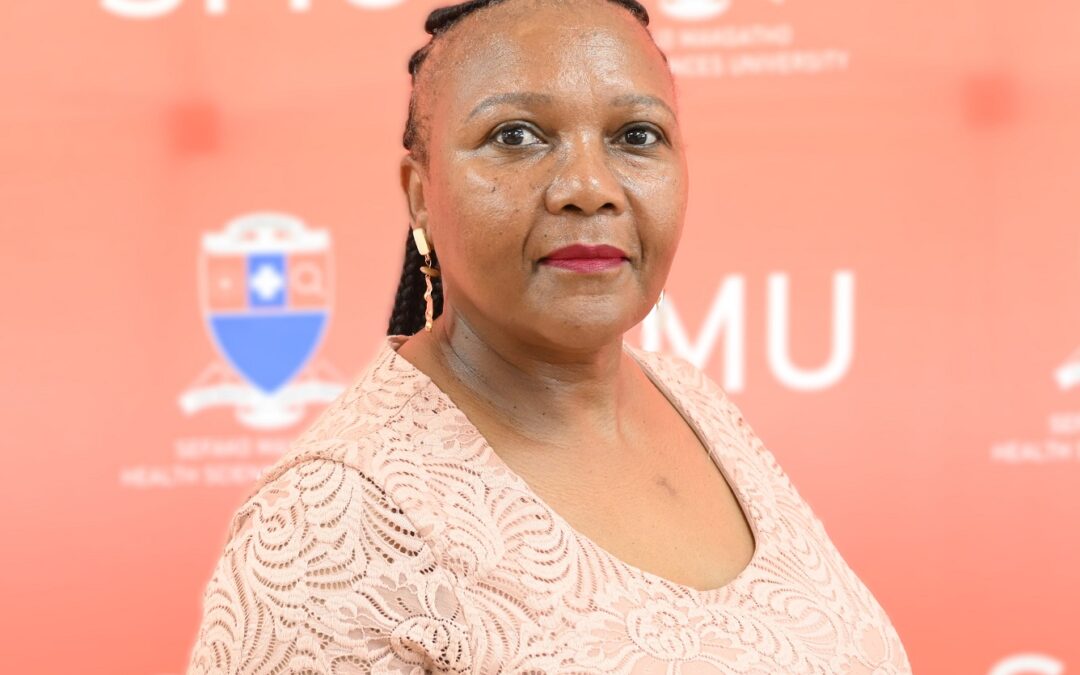
Professor Mathilda Mokgatle, a distinguished academic at Sefako Makgatho Health Sciences University (SMU), has further elevated the university’s academic standing by earning the esteemed National Research Foundation (NRF) C2 rating. This recognition solidifies her reputation as a leading researcher whose impactful contributions to public health exemplify SMU’s role in fostering innovation and excellence in health sciences education.
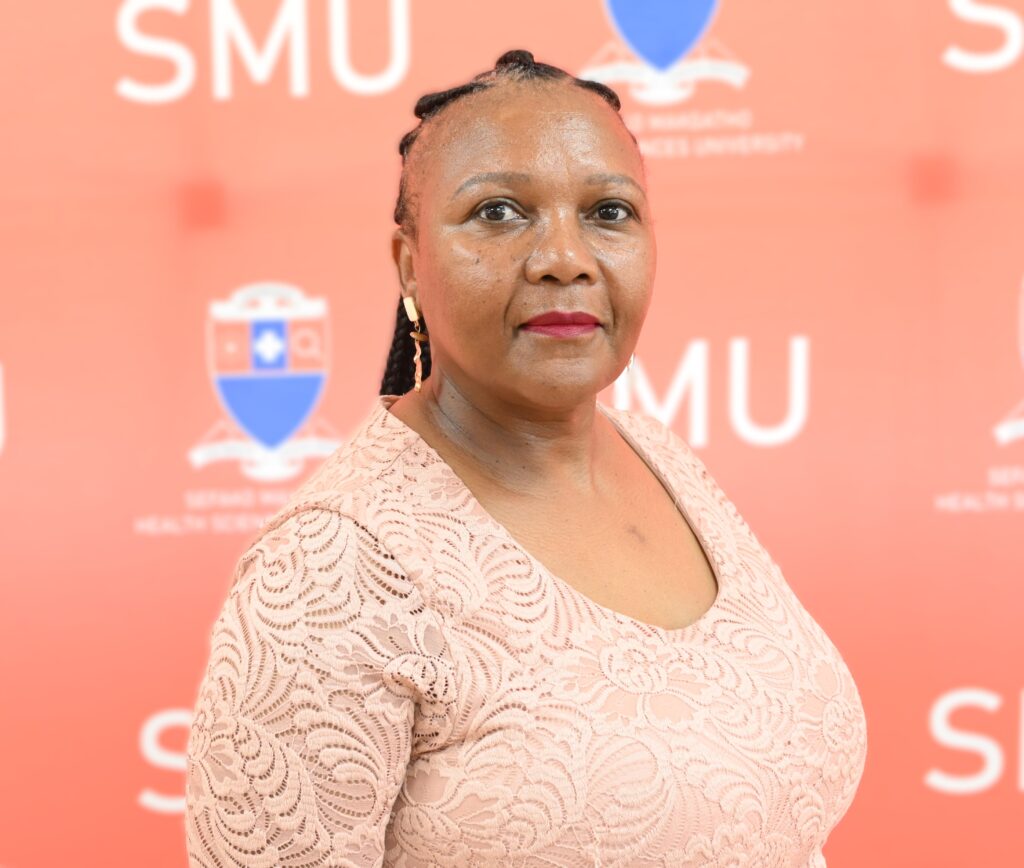
Professor Mathilda Mokgatle
Reflecting on her inspiring journey from Phokeng, a rural mining village in Rustenburg, Mokgatle shares insights into her path to success. “I was born in Phokeng, where I received my basic education. In high school, I discovered a passion for physical science and mathematics, which sparked my interest in healthcare sciences,” she explained. Mokgatle’s pursuit of academic excellence began with a degree in Diagnostic Radiography at Medunsa in 1989, where her curiosity about technology and radiation physics aligned with her desire to contribute meaningfully to health service delivery.
Her early career in the medical imaging industry was dynamic and inspiring, spanning private and public health roles. However, her thirst for knowledge and desire to address deeper societal challenges led her to transition into public health. “After obtaining a Master of Public Health from Medunsa in 2001, I shifted my focus to disease prevention and control, health systems management, and health promotion,” she shares.
A multifaceted career in public health
Mokgatle’s career is a testament to her versatility and dedication. Her research journey began in earnest with her PhD from the University of Johannesburg, where she investigated the well-being of orphans in child-headed households using a grounded theory approach. This work established her research focus on adolescent sexual health, orphans, and vulnerable children.
Her portfolio spans HIV prevention, behaviour modification, and health programme evaluation. “I’ve had the privilege to consult for the Department of Health and Education, developing national policies such as the National Health Promotion Policy and the Fertility Option for people living with HIV,” she explains.
She has also secured major grants, including funding from the Centres for Disease Control and Prevention (CDC) for evaluating home-based care programmes, from the Flemish Interuniversity Council- University Development Co-operation (VLIR/UOS) for interdisciplinary research into sexually transmitted infections, and the University of Michigan, the Preconception and safe Abortion grant. “These opportunities allowed me to address real-world challenges and ensure my work impacts public health policy and practice,” she adds.
Obtaining the NRF C2 rating is a significant milestone in Mokgatle’s illustrious career. “This recognition affirms my role as an established researcher with a coherent body of quality work. It is especially gratifying to know that my peers acknowledge the impact of my contributions,” she reflects.
Her versatility across the five core fields of public health—occupational and environmental health, epidemiology, biostatistics, social and behavioural sciences, and health systems management—has been instrumental in achieving this recognition.
“The rating motivates me to continue developing innovative research frameworks and engaging in impactful collaborations, such as my ongoing work in the acquisition of a South African Population Research Infrastructure Network / South African Medical Research Council (SAPRIN / SAMRC) project to implement a Health and Demographic Surveillance System in the North West Province,” she says.
Mokgatle’s influence extends beyond research. As the Head of the Department of Public Health since 2018, she has supervised eight PhD candidates and over 83 masters’ while authoring 88 peer-reviewed publications. “Training students for the healthcare workforce and seeing them thrive in their careers is one of the most rewarding aspects of my work,” she shares.
She is also a member of the data monitoring board at the Centre for the AIDS Programme Research in South Africa, a member of the South African Centre for Epidemiological Modelling and Analysis, a member of the Ministerial Advisory Committee for COVID-19, and a collaborator with international organisations like the Nottingham Trent University, Chobanian & Avedisian School of Medicine, Boston University and Fred Hutch HIV Trial Network.
Despite her extensive achievements, Mokgatle remains focused on the future. “I plan to expand research on the social epidemiology of sexual and reproductive health across population groups and strengthen the health system. I am particularly excited about the digital health promotion interventions that are being launched to upscale coverage of health promotion, behaviour change, and infectious disease infection,” she notes.
When asked about advice for aspiring researchers, she emphasises self-determination, resilience, and adaptability. “The key is to remain curious, maximise the power of partnerships and collaboration, and prioritise impactful research that addresses societal needs.”
“Today, I am someone who thrives on challenges, values lifelong learning, and enjoys building meaningful connections,” she says. “This NRF C2 rating is not just a recognition of my past work but a springboard for future endeavours in advancing public health.”
*By Tumelo Moila
by Kegorapetse | Nov 27, 2024
Application GuideInstructions for completing this Student Application Form:1. Please complete all sections of the Student Application Form electronically. 2. Upload a certified copy of your Identity Document/Passport3. Upload a certified copy of your Grade 12...

by Lorato | Nov 18, 2024 | All News, SMU Media, Student Media
At Sefako Makgatho Health Sciences University (SMU), excellence is not just a goal but a standard embodied by its exceptional academics. One of SMU’s brightest stars is Lethabo Muila, a Psychology Lecturer and researcher whose work advances understanding of mental health and infertility while placing SMU on the global map as a leader in culturally sensitive health sciences education. Her journey from humble beginnings to international acclaim highlights SMU’s pivotal role in nurturing leaders who make a difference.

Lethabo Muila
Raised in Seshego Township, Limpopo, Muila developed her love for learning under the guidance of her family of educators. Her stellar academic achievements paved the way for her undergraduate studies in Psychology at the University of Limpopo’s Medunsa Campus, now part of SMU. This foundation ignited her passion for mental health and human behaviour, leading her to pursue Honours and Master’s degrees in Clinical Psychology at SMU, where her master’s research received distinction. Her story reflects the quality of mentorship and resources provided by SMU that empower students to excel.
As a psychology lecturer at SMU’s renowned School of Medicine, Muila is at the forefront of academic excellence. She is deeply invested in developing the next generation of psychologists by teaching undergraduate and postgraduate courses, mentoring students, and innovating curriculum development. Her dedication to her students embodies SMU’s commitment to fostering academic and personal growth.
“The most rewarding aspect of my work is witnessing students’ growth,” she shares. “Helping them overcome challenges and achieve their dreams brings immense fulfilment, especially during graduation season, a true celebration of SMU’s transformative impact on its students.”
Muila’s groundbreaking research is a testament to SMU’s emphasis on addressing real-world issues through culturally relevant scholarship. Her studies explore infertility from an African cultural perspective, highlighting the integration of traditional practices and modern medical interventions. Rooted in her Bapedi heritage, her work explores how communities view infertility not only as a medical condition but as a cultural and ancestral challenge, with remedies involving rituals and herbal treatments.
Her PhD research, also undertaken at SMU, focuses on the lived experiences of black married men diagnosed with infertility, a field often neglected in academic discourse. By shedding light on their struggles, she is championing SMU’s mission to advance socially responsive health sciences research that benefits society as a whole.
Muila’s academic journey extends beyond SMU, with her research presented at prestigious international forums such as the International Congress of Psychology in the Czech Republic and the International Academic Forum in Japan. These platforms amplify SMU’s reputation as a hub of innovation and thought leadership, demonstrating how its scholars contribute to global health sciences dialogues.
Balancing her roles as an academic, wife to SMU alumnus Dr Seshoka Muila, and mother of three, she exemplifies the SMU ethos of excellence, resilience, and community impact. Her dedication to advancing culturally sensitive approaches to health sciences is a reflection of SMU’s core values.
Muila’s story is not just her own—it is a testament to the transformative power of SMU in shaping lives, advancing knowledge, and addressing societal challenges. Through her work, SMU continues positioning itself as a premier health sciences university, inspiring future generations of students and researchers.

by Lorato | Nov 7, 2024 | All News, SMU Media, Student Media
Keabetswe Molefe, a determined and visionary leader at Sefako Makgatho Health Sciences University (SMU), has become a beacon of hope and resilience for the student body. Fondly known as “Chairman Kea,” Molefe is currently pursuing his Bachelor of Medicine and Bachelor of Surgery (MBChB) degree and has cemented his place as a passionate advocate for student rights and academic excellence.

Keabetswe Molefe, SMU student fondly known as “Chairman Kea”, currently pursuing his Bachelor of Medicine and Bachelor of Surgery (MBChB)
Born in Letlhabile Township in North-West Province and raised in Ebony Park, Tembisa, Molefe’s journey at SMU began in 2016 when he enrolled for a Bachelor of Occupational Therapy (BOccTher). His outstanding academic performance allowed him to transition to the highly competitive MBChB programme in 2019, a testament to his commitment to academic achievement.
But Molefe’s story extends far beyond his studies. His passion for student governance was ignited early on, and he has consistently worked to improve the welfare of his peers. “I am a young leader who believes in academic excellence and competent student leadership,” he reflects. His leadership journey began when he served as Chairperson of the School of Medicine in the Student Representative Council (SRC) for 2022/23. Today, he serves a second term as Coordinator of the School of Medicine under the Interim Student Governance Structure (ISGS).
Molefe’s leadership style is rooted in his ability to navigate complex challenges, always prioritising the needs of students. Under his leadership, the SMOSCI committee, a registered SRC structure, successfully secured significant student sponsorships, including financial workshops, Investec side bags, and scrubs. His dedication to safeguarding students’ academic futures is evident through his success in leading exclusion appeal efforts. “I have successfully won 100% of the academic exclusion appeals for 2024,” Molefe shares proudly, highlighting his commitment to student success.
His fight against academic and financial exclusion has not been easy, often placing him in challenging spaces. “It has been a journey full of great experiences. You become adept at addressing issues with the necessary decorum, which helps shape your approach to leadership,” Molefe remarks. This resilience and willingness to grow have made him a key figure in SMU’s student governance.
In 2023, he had the opportunity to broaden his horizons on the global stage, participating in an African regional conference in Rwanda themed: “Embracing digital health in global health emergencies.” This experience provided invaluable exposure, allowing him to engage in international dialogues and bring fresh perspectives back to SMU. It’s a memory he continues to cherish as one of the most significant moments in his leadership journey.
Molefe’s leadership philosophy is founded on continuous learning, effective communication, and a deep understanding of university policies. He emphasises that successful student leaders must resist the pressure to win every battle. Instead, they should focus on collaboration, compromise, and educating both students and faculty members on the rules that govern university life. “You should not measure your success by solving all issues, but by understanding and working within the reality that students are not always right,” he advised, urging future leaders to approach matters with fairness and realism.
In Molefe’s view, meaningful change comes from a willingness to learn and foster respectful dialogue between students and university personnel. “The worst leader rushes to insult lecturers, assuming that the student is always right. Being real, learning, and striving for the best outcomes make a leader impactful,” Molefe emphasises.
Beyond his leadership roles, he inspires others with his remarkable balance of academic excellence and service. His story is a shining example of SMU’s commitment to developing well-rounded student leaders capable of advocating for their peers and contributing to the university’s growing reputation for excellence.
SMU has long been a place where student leadership and holistic development thrive, and Molefe’s success is a testament to that tradition. His journey stands as an inspiration to current and future generations of students, reminding them that resilience, humility, and hard work are the keys to effecting meaningful change.
As SMU continues to shape the next generation of healthcare professionals, it is leaders like Molefe who will ensure that the student voice remains at the heart of the university’s mission to empower its students and foster their development as future global leaders.
by Lorato | Nov 6, 2024 | All News, SMU Media, Student Media
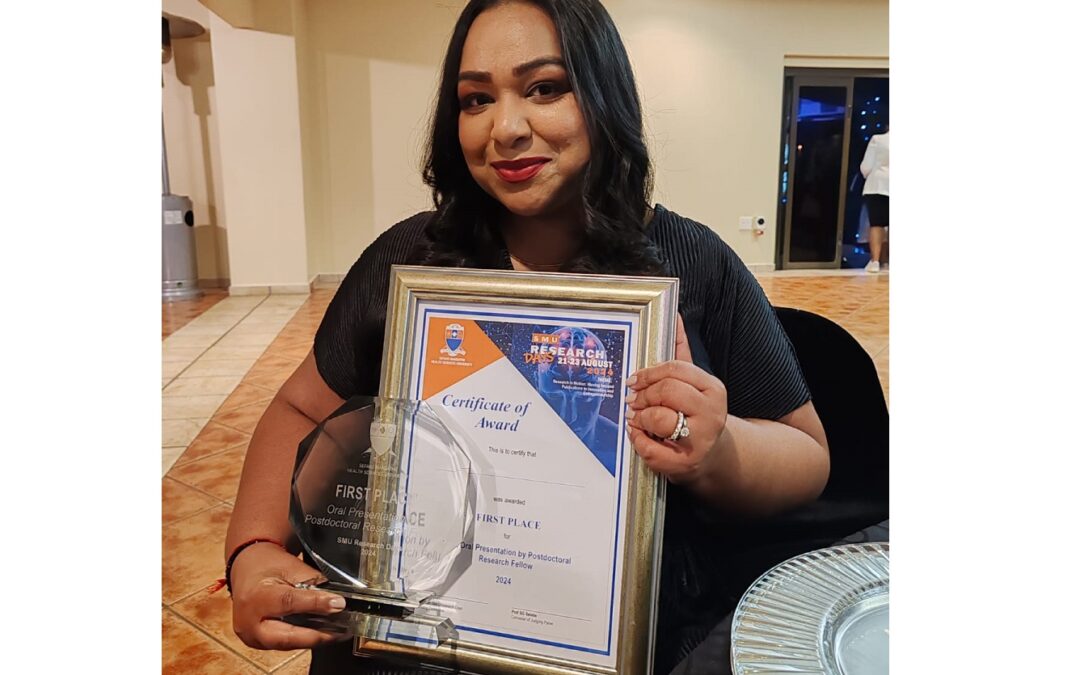
Dr Clarissa Naidoo, a Postdoctoral Researcher in the Department of Biology and Environmental Sciences at Sefako Makgatho Health Sciences University (SMU), is redefining the future of green nanotechnology. At the 2024 SMU Research Day, she was awarded first place in the postdoctoral research category for her groundbreaking work on the biosynthesis of silver nanoparticles (AgNPs) using Tabernaemontana ventricosa, a medicinal plant indigenous to South Africa. This innovative research positions Naidoo at the forefront of sustainable health solutions and reinforces SMU’s reputation as a leader in impactful scientific research.
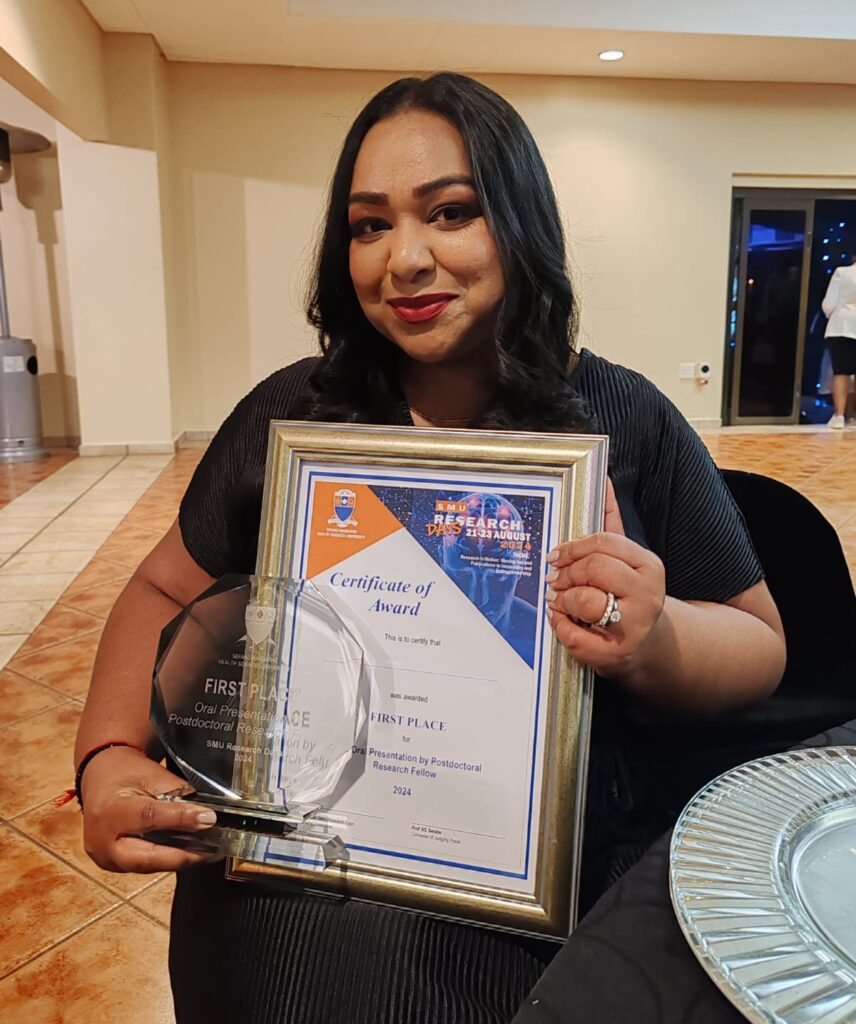
Dr Clarissa Naidoo, Postdoctoral Researcher in the Department of Biology and Environmental Sciences at SMU
Naidoo’s research addresses the growing demand for nanoparticles in medical, agricultural, and environmental applications. Her work stands out for its novel approach to nanoparticle synthesis, using plant-based methods that are more environmentally friendly than conventional chemical processes. By leveraging the unique biochemical properties of T. ventricosa, Naidoo has developed a sustainable method for creating AgNPs, significantly reducing the environmental footprint typically associated with traditional synthesis techniques.
The application of advanced characterisation techniques such as Scanning Electron Microscopy (SEM), Energy-Dispersive X-ray (EDX) analysis, and Fourier Transform Infrared (FTIR) spectroscopy confirmed the successful synthesis of AgNPs. The nanoparticles exhibited a diverse range of shapes, including spherical, ovate, and triangular, with sizes ranging from 16 to 80 nm. Importantly, they demonstrated exceptional stability—an essential feature for their potential therapeutic applications.
The bioactivity of the AgNPs was assessed, with promising results. The nanoparticles demonstrated significant antibacterial properties, effectively combating multiple bacterial strains, which can be attributed to the antimicrobial compounds naturally present in T. ventricosa. More strikingly, the research also revealed the cytotoxic potential of these nanoparticles, with an IC50 value of 0.39 μg/mL in inhibiting the growth of HeLa cancer cells. This suggests that the plant-derived AgNPs could serve as potent agents in cancer treatment, providing new possibilities for future oncological therapies.
Naidoo’s study represents the first documented instance of AgNP synthesis from T. ventricosa, marking a pivotal moment in the exploration of plant-derived nanoparticles. Her research opens exciting new avenues for antibacterial and anticancer applications and highlights the importance of selecting the right plant sources for nanoparticle synthesis. Furthermore, her findings lay the groundwork for future studies into the specific phytochemicals responsible for nanoparticle formation, which could enhance the efficacy and safety of plant-based therapies
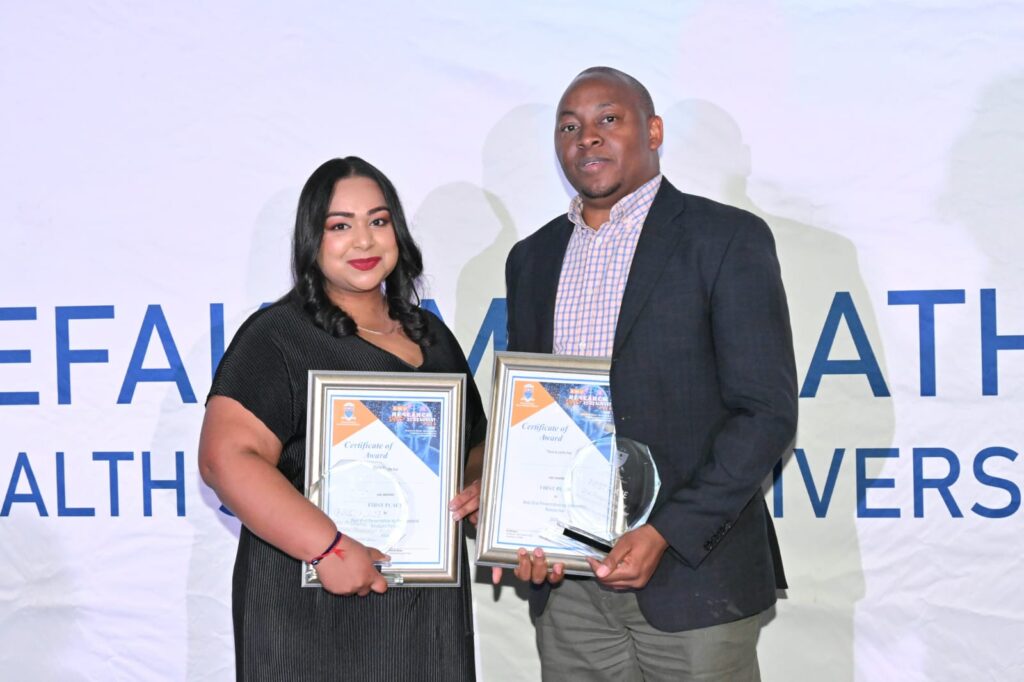
This innovative research has far-reaching implications. Not only does it contribute to the field of nanotechnology, but it also advances the understanding of plant biochemistry and its potential applications in medicine. Naidoo’s work exemplifies SMU’s commitment to integrating cutting-edge science with environmental sustainability, positioning SMU as a hub for research that addresses pressing global challenges
The impact of Naidoo’s work extends beyond the realm of nanotechnology. By developing sustainable, bio-inspired solutions, she is advancing a new era of medical and environmental research. Her contributions underline the value of integrating scientific innovation with ecological responsibility—principles that are at the core of SMU’s broader research mission. Through her work, Naidoo is not only advancing health sciences but also helping to shape a future where sustainable, plant-based solutions play a central role in medicine
As SMU continues to make strides in research excellence, Naidoo’s achievements exemplify the university’s role in shaping the global scientific landscape. With a focus on innovative, eco-friendly solutions to health and environmental issues, her research enhances SMU’s reputation as a world-class institution for cutting-edge, socially responsible science.
Naidoo’s contributions also underscore SMU’s increasing prominence on the global research stage. As the university continues to foster excellence in research, particularly in health sciences and sustainability, the groundbreaking work of academics like Naidoo demonstrates SMU’s leadership in driving scientific innovation with real-world impact. Her research not only positions her as a leader in nanotechnology but also highlights SMU’s dedication to producing research that makes a meaningful difference in the world
Through such achievements, SMU continues to cement its place as a premier institution in health sciences, advancing both the local and global scientific communities with research that balances innovation with sustainability.