
by Lorato | Aug 20, 2025 | All News, SMU Media, Student Media
Raised in the rural heart of Giyani, Limpopo, Amukelani Chauke’s path to becoming a fifth-year medical student at Sefako Makgatho Health Sciences University (SMU) is a story of resilience, vision, and a deep commitment to community. His early years, spent with his grandmother in humble surroundings, taught him discipline, gratitude, and the value of essentials over excess. Later, living with his parents, he witnessed how small businesses could sustain families and create opportunities — lessons that would shape his dual passion for medicine and entrepreneurship.
 Central to Chauke’s journey is the African principle of Ubuntu — “I am because we are.” He applies it in both personal and professional settings, fostering empathy, collaboration, and solutions shaped with community voices at the forefront. His “community-centred approach” ensures that projects are sustainable and inclusive, driven by local needs and resources.
The decision to study medicine came from observing the healthcare gaps in rural areas alongside the potential for positive change. “Medicine isn’t just about diagnosing and treating,” he says. “It’s about prevention, education, and working with other sectors to address the root causes of illness.” His interest in Internal Medicine has strengthened his ability to think holistically, connecting complex details to improve patient outcomes.
Chauke balances demanding studies with leadership and innovation by focusing on initiatives that align with his long-term mission. In Entrepreneurship Development in Higher Education (EDHE), he promotes student entrepreneurship by linking ideas, mentors, and resources. As Partnerships and Sponsorships Lead in Enactus, he secures funding and collaborations to grow impact-driven projects. Representing SMU at the Technological Higher Education Network South Africa (THENSA) entrepreneurship workshop, where he won the Highest Growth Business Innovation Award, reinforced the power of innovative thinking and cross-institutional collaboration.
He has also embraced international learning opportunities, joining incubator, accelerator, and innovation lab programmes under Mashauri and Guilford College. Being the only SMU medical student in his cohort, he offered unique health insights while absorbing fresh perspectives from peers in diverse fields. Achieving a Top 10 Cum Laude ranking among 700 students nationwide is, for him, a testament to curiosity, discipline, effective time management, and a good support system from Family, friends, supervisors and mentors.
One of his signature projects — a hydroponics farming initiative — aims to tackle food insecurity and water scarcity in agricultural regions like Giyani. The experience underscored the importance of community engagement and inter-professional collaboration in healthcare, linking nutrition, environment, and economic sustainability. Working with the Agricultural Research Council (ARC) further expanded his view of innovation, demonstrating that resourcefulness can transform even unconventional materials into effective food production systems.
Chauke’s leadership extends to medical societies, where he serves as Treasurer of SMU’s Diagnostic Society. Early sponsorship successes, such as with TANC Scrubs, came from aligning mutual goals and presenting strong value propositions.
Looking ahead to 2030, he envisions himself as a clinician and community leader integrating healthcare with education, entrepreneurship, and sustainable development, aligning with the UN Sustainable Development Goals. If he could launch a project tomorrow, it would combine primary healthcare with agricultural entrepreneurship — empowering communities to cultivate health and livelihoods simultaneously.
From rural beginnings to shaping the future of healthcare innovation, Chauke is living proof that vision, curiosity, and collaboration can turn humble roots into a far-reaching legacy.
By Tumelo Moila
by Kegorapetse | Aug 18, 2025
by Lorato | Aug 13, 2025 | All News, SMU Media, Student Media
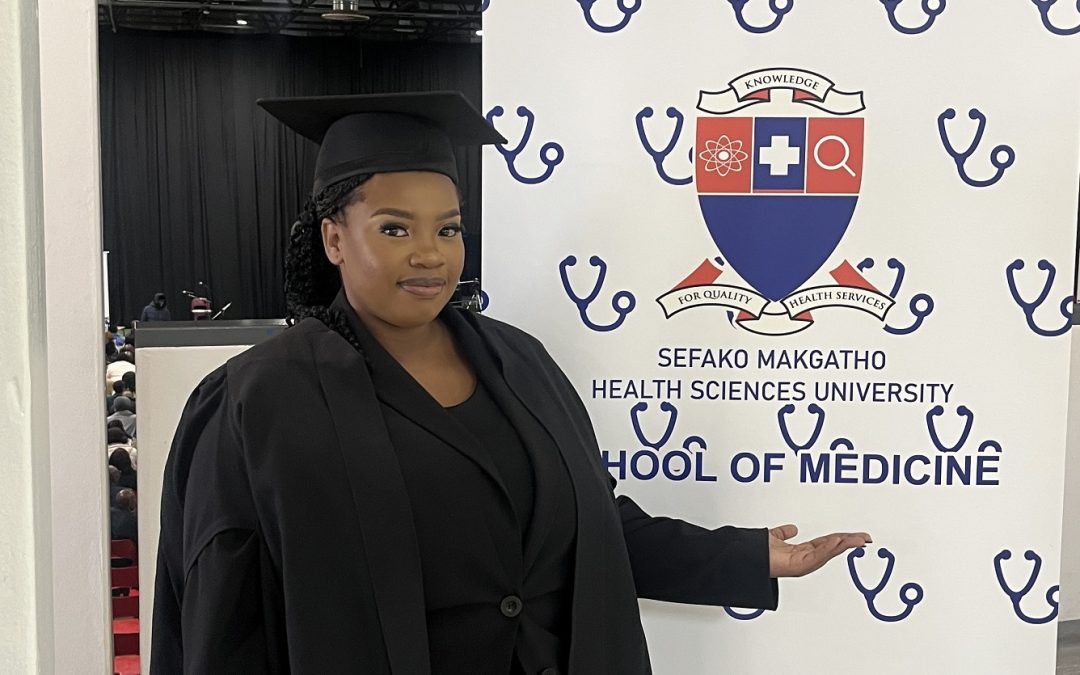
Sefako Makgatho Health Sciences University (SMU) has again proven to be a fertile ground for cultivating exceptional scientific talent. Among its recent success stories is Pearl Keatile Segwagwa, a driven young scientist whose academic journey from Midrand to graduating cum laude with a Bachelor of Science Honours in Medical Science (Anatomical Pathology) is both inspiring and instructive.
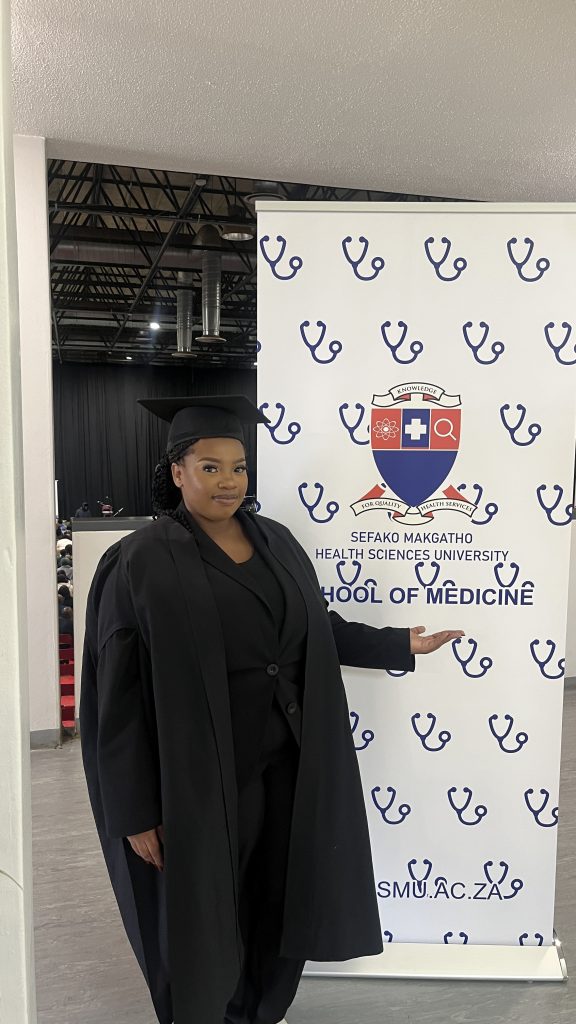 Born in Gqeberha, formerly named Port Elizabeth, but raised in Gauteng, Segwagwa first earned her BSc in Biomedicine, a degree she describes as the bridge between science and healthcare. This foundation ignited her interest in medical research, particularly in addressing gaps in South Africa’s healthcare landscape through innovation. Her choice to pursue Honours at SMU was strategic: as one of the few institutions offering this specialisation, it provided the perfect environment for her to refine her expertise while contributing to a growing body of local medical research.
“SMU’s identity as a dedicated health sciences university drew me in,” she says. “I knew I would be surrounded by people whose passion and strength lay in advancing healthcare.”
Unlike the undergraduate experience, SMU’s Honours in Medical Science programme combined rigorous coursework with advanced laboratory training. Here, Segwagwa moved from consuming knowledge to generating it, culminating in an intensive research project:
Her dissertation, “Histopathological Spectrum of Paediatric Hepatic Tumours at a Tertiary Laboratory in Tshwane,” explored rare but critical paediatric liver tumours over 10 years. Reviewing 66 biopsy cases, she found a tumour prevalence of 13.6%, with hepatoblastoma — particularly its aggressive mixed subtype — being the most common. The tumours demonstrated early onset, underscoring the urgent need for early detection, clinician awareness, and targeted monitoring in paediatric oncology.
The project faced unexpected hurdles, including data access delays caused by a cyberattack on the National Health Laboratory Service. Undeterred, Segwagwa adapted by sourcing information manually from recorded archives — a process she describes as “time-consuming but invaluable for teaching adaptability and resourcefulness.”
Among her coursework, molecular pathology stood out as both a formidable challenge and a deep fascination. She was captivated by the field’s power to trace disease origins down to single mutations and its potential to transform diagnosis and treatment in South Africa.
“Molecular pathology is evolving rapidly,” she explains. “We’re catching up with global standards, and it’s exciting to contribute to a field that will directly improve patient care in our communities.”
Graduating cum laude was the result of discipline, time management, and an insatiable curiosity. She credits her success to maintaining consistency, integrating theory with practical skills, and leaning on a robust support system of family, peers, and supervisors.
Her supervisory team — led by Dr Nosipho Thobakgale and supported by Ms Lucia Mhlongo and Dr Katlego Motlhatlego — provided both expertise and encouragement. “They nurtured my creativity, challenged my thinking, and helped me find my confidence as a researcher,” she recalls.
Segwagwa is now pursuing a Master of Science in Medicine in Anatomical Pathology at SMU, with the goal of becoming a registered medical scientist. Her long-term vision is to advance diagnostic precision, integrate molecular techniques into routine laboratory practice, and contribute to paediatric genomics research, a passion she hopes to return to later in her career.
Her message to aspiring scientists is clear: “Work hard, research your options, and have the courage to take that leap. Resilience and patience will carry you through the challenges.”
Segwagwa extends heartfelt thanks to her family, mentors, and fellow students, describing them as “the foundation of my success.” For her, science is not an abstract pursuit, but a human one: “Behind every test and report is a patient — someone whose life can be improved by what we do. That’s what keeps me inspired.”
In her journey, Segwagwa embodies SMU’s mission: producing health professionals and scientists who are not only technically competent, but also deeply committed to transforming healthcare in South Africa and beyond.
By Tumelo Moila

by Lorato | Aug 13, 2025 | Accolades and Achievements, All News, SMU Media, Student Media
Final-year Bachelor of Dental Surgery (BDS) student, Tshepang Lenkoe, has proudly reintroduced Sefako Makgatho Health Sciences University (SMU) Dental School to the national stage after winning the prestigious 2025 South African Dental Association (SADA) Young Dentist Publisher Undergraduate Research Award.
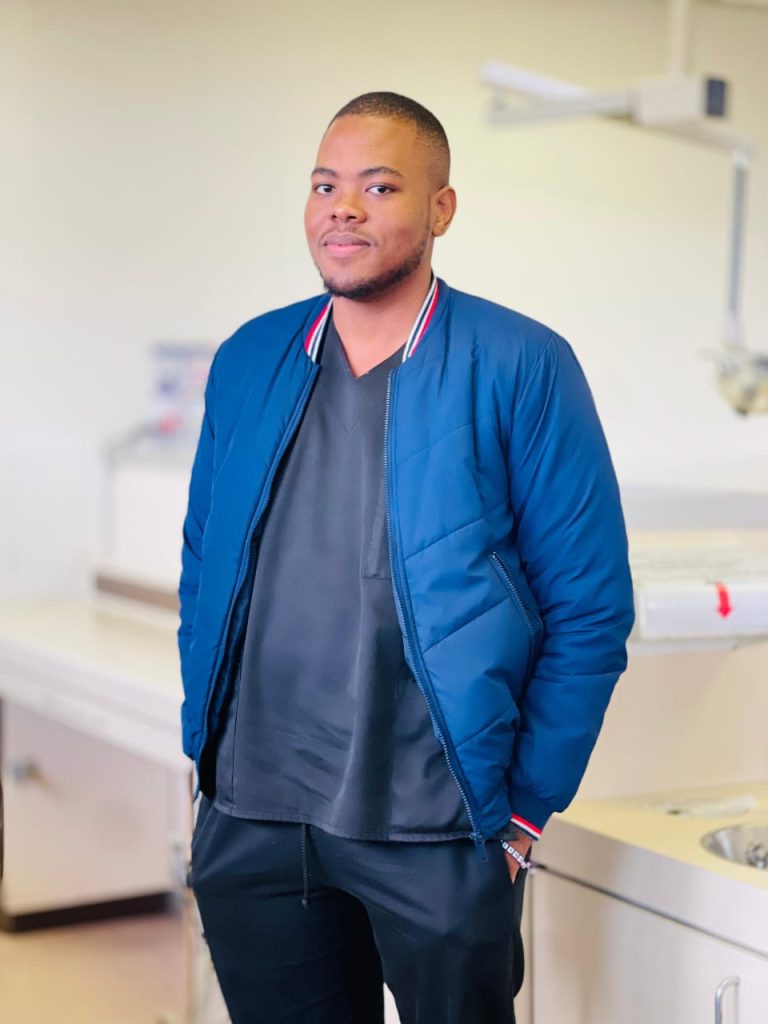 Lenkoe, who also serves as a class representative and member of the Dental Student Council, chose dentistry to address the pressing need for accessible oral healthcare in South Africa. Growing up, he witnessed countless individuals suffering from oral health problems without access to a dentist. “I wanted to bring change to my community,” he said. “Dentistry offered me the opportunity to provide a direct service that could transform lives.”
His journey through dental school has been far from easy. Balancing demanding clinical duties with student leadership roles required discipline, effective time management, and resilience. “Helping my peers while excelling academically meant structuring my time meticulously. It’s been challenging physically and mentally, but it has taught me patience and the importance of perseverance,” he reflected.
The award-winning research that earned him national recognition was titled Diagnosis and Management of a Cystic Lesion: The Use of CBCT – A Case Report. His study compared the diagnostic accuracy of Cone Beam Computed Tomography (CBCT) with conventional radiographic imaging. “SMU Dental School handles many head and neck cystic lesions, serving as a primary referral hospital for Gauteng, Limpopo, and North West. My research highlighted CBCT’s superior diagnostic capabilities, showing reduced chances of misdiagnosis compared to traditional methods,” Lenkoe explained.
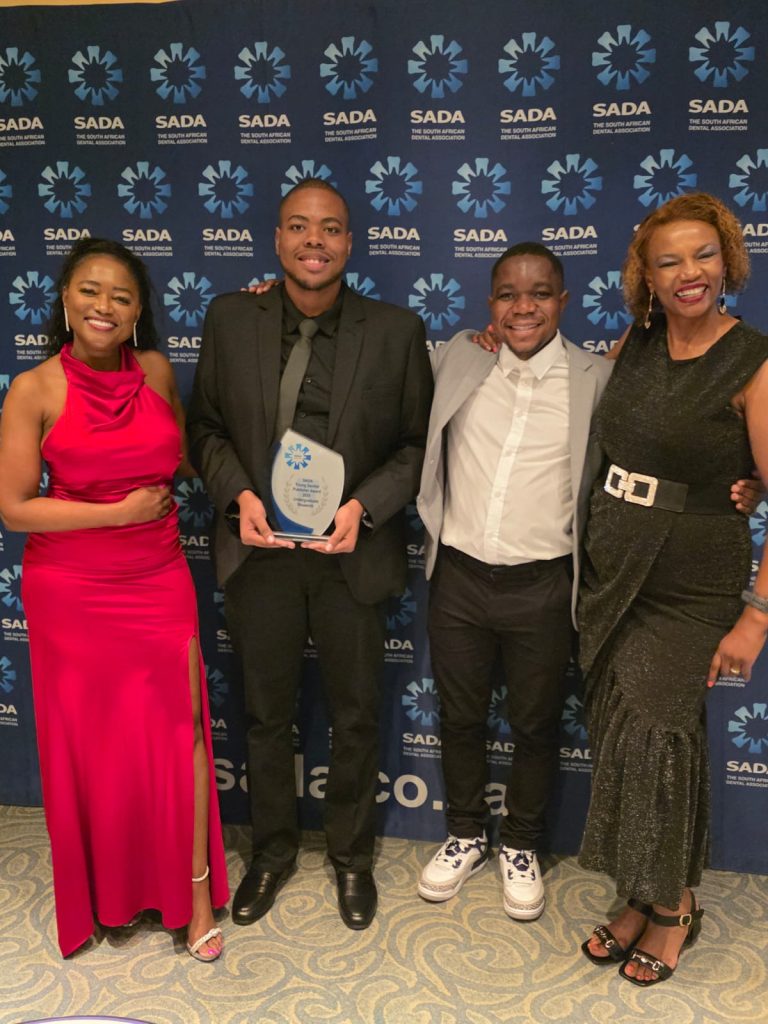 His findings also carried a broader message: the urgent need for investment in state-of-the-art diagnostic equipment to better serve South Africa’s population. While obtaining biopsy results in time posed challenges, the radiographic reports from CBCT enabled him to make a confident diagnosis and compare it to international literature.
Winning the award was a deeply personal achievement. “It was surreal,” he said. “I wanted to make my family proud and represent black students on a national platform. No SMU dental student had attended SADA or participated in the research competition for five years, and no SMU student had won in seven. This victory showed that we can compete at the highest level.”
The experience at the SADA Congress was both inspiring and affirming. An international keynote by Canadian dual specialist Dr David Chvartszaid reinforced Lenkoe’s passion for academic dentistry, while the encouragement of SMU lecturers and research mentors Dr Idah Mmutlana and Dr Ntombizodwa Zwane kept him motivated during research setbacks.
Looking ahead, Lenkoe aims to specialise in prosthodontics and remain active in academic dentistry to train future professionals. He also intends to continue research to contribute to South Africa’s growing body of dental knowledge. His advice to young dentists is simple yet powerful: “Pursue research. It enhances clinical skills, professional competence, and the quality of patient care.”
Through his dedication, Lenkoe has not only earned a national accolade but also reignited SMU’s presence in the dental research arena—an achievement that may inspire a new generation of South African dental scholars.
By Tumelo Moila
by Lorato | Aug 13, 2025 | All News, SMU Media, Student Media
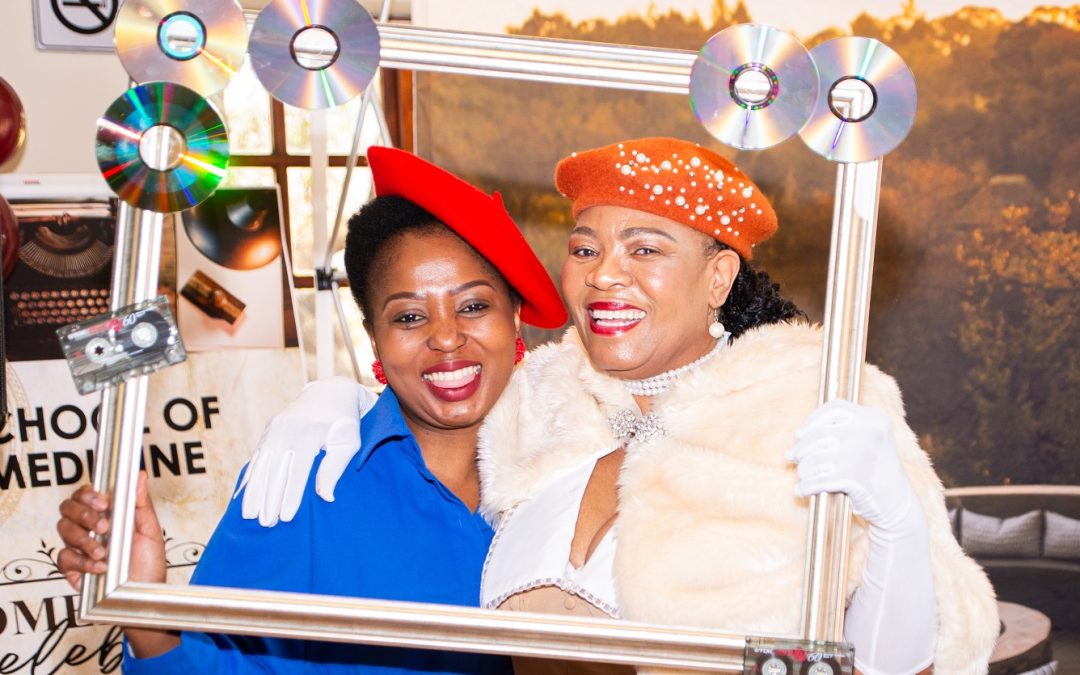
The School of Medicine at Sefako Makgatho Health Sciences University (SMU) painted Pretoria in vintage flair as it hosted a lively Women’s Day celebration at The Blades. With the theme “Vintage”, the occasion brought together an inspiring mix of female academics and support staff from across the School to celebrate the achievements, resilience, and leadership of women in health sciences.
 Professor Risenga Chauke, Acting Dean of the School of Medicine, opened the programme with warmth and admiration. “Women are phenomenal – the architects of life,” he said, reminding the audience that their influence stretches across every corner of health sciences — from the laboratory bench to the highest levels of leadership.
The keynote speaker, Dr Moyahabo Brenda Nemukongwe, a dedicated histopathologist from Limpopo and part-time Senior Lecturer at SMU, delivered a captivating motivational talk titled “Cultivating a State of Presence.” Her words carried a powerful call for women to stand tall, speak out, and claim their space in both professional and personal spheres.
A graduate with a master’s degree in Anatomical Pathology and currently pursuing a master’s in Cytopathology at the University of Stellenbosch, Nemukongwe is also the founder of Pulse Path Solutions — a platform she established in 2018 to train medical professionals and raise awareness on women’s health, especially early detection of breast and cervical cancers.
 “Women must stop being silent or ignorant about the issues they face,” she urged. “Open and honest conversations are essential for growth and change. The women of the 1956 march showed us the way, and today SMU women are carrying that torch — leading with power and purpose.”
Professor Lineo Matsela, an accomplished obstetrician and gynaecologist and the newly inaugurated President of the South African Menopause Society (SAMS), shone a spotlight on a rarely addressed topic — menopause. “It is a gender-specific psychological phenomenon,” she explained, “yet it remains under-discussed in both medical practice and social discourse. We must talk about it openly so women can navigate this phase with knowledge and confidence.”
The celebration also heard from Professor Dini Mawela, Dean of the School of Dentistry and Acting Deputy Vice-Chancellor at SMU, who paid tribute to the women who drive the university forward. “Women at SMU are central to advancing our mission in education, research, and community engagement,” she said. “Your leadership, innovation, and dedication inspire progress in every sphere of health sciences.”
The formalities blended beautifully with a vibrant programme of activities that left attendees smiling, laughing, and connecting. Awareness presentations were followed by interactive games such as the Tissue and Cup Challenge, Tin Can Alley, and the Spoon and Egg Race. These light-hearted moments fostered camaraderie, teamwork, and plenty of cheer, with prizes adding a touch of excitement.
Lunch was served in a relaxed atmosphere, accompanied by the smooth sounds of jazz that had some guests tapping their feet and others simply soaking in the ambience. The presentation of thoughtful gifts drew delighted reactions, while group photographs captured the joyful spirit of the day. Many attendees commented on how refreshing it was to step away from their demanding schedules and share in a celebration that recognised not only their work but also their well-being.
The event’s success was evident in the animated conversations, the laughter echoing across the venue, and the many lingering goodbyes at the end. For those present, it was more than just a Women’s Day celebration — it was a moment to connect, recharge, and reflect on the strength and influence of SMU women.
By Dimakatso Modise