


Landmark SMU innovation: PhD researcher secures provisional patent for respiratory treatment from medicinal plant
In a landmark achievement for Sefako Makgatho Health Sciences University (SMU), PhD candidate Thabo Lesiba Lekgoathi has successfully filed a provisional patent for a novel compound derived from a medicinal plant, demonstrating significant activity against respiratory diseases, including COVID-19. This innovation, developed under the mentorship of Dr Vuyisile Thibane and Professor Stanley Gololo in the Department of Biochemistry and Biotechnology under the School of Science and Technology (SST), exemplifies SMU’s commitment to pioneering research that bridges indigenous knowledge with modern scientific advancements.
 The Technology Transfer Office (TTO) at SMU facilitated the patent filing process, highlighting the university’s dedication to translating research into tangible health solutions. This development not only underscores SMU’s role in addressing pressing health challenges but also positions the institution at the forefront of innovation in the health sciences sector.
Lekgoathi’s research centres on Schinus molle, a plant traditionally used in rural communities to treat colds and flu-like symptoms. Through meticulous analysis, he identified geranylgeranyl acetate, a diterpenoid extracted from Schinus molle, which exhibits inhibitory effects on key SARS-CoV-2 protease enzymes, PLpro and Mpro. These enzymes are critical for viral replication and immune system suppression. By inhibiting them, geranylgeranyl acetate disrupts the virus’s ability to mature and allows the immune system to remain active.
“The compound’s ability to inhibit broad targets of the virus makes it unique,” Lekgoathi explains. “Its volatile nature allows for administration through an oil-based formulation which has been enriched with the compound and/or through pelletized extracts which can be deposited into a hot water system for inhalation, potentially offering a natural, accessible treatment for respiratory symptoms associated with SARS-CoV-2 infection.”
The journey from concept to provisional patent was not without challenges. Lekgoathi faced infrastructural limitations and personal hardships, including the loss of loved ones to COVID-19. Despite these obstacles, he remained resolute. “Computational studies helped narrow down the search for a novel active compound, which would have been an expensive exercise through other methods,” he notes.
Securing a provisional patent for this compound is a pivotal step, in safeguarding the intellectual property and facilitating further development. The TTO at SMU played an instrumental role in this process. “The TTO provided essential resources, including legal expertise, ensuring that the patent application was properly structured,” Lekgoathi acknowledges.
Looking ahead, the focus is on conducting analytical tests such as toxicity studies to validate the compound’s efficacy and safety. Exploring various formulations and delivery methods will be crucial to ensure practical application. Lekgoathi envisions potential partnerships with pharmaceutical companies and government agencies to support the development, testing, and commercialisation of this compound. “This innovation has the potential to make a significant contribution to global health by offering a natural, accessible, and effective treatment for respiratory infections,” he asserts.
Dr Esmey Moema, Operations Manager of the SST at SMU, emphasises the broader implications of this achievement. “This accomplishment is a powerful reflection of the school’s evolving research strategy, aligned with innovation-driven outputs and the potential for commercialisation,” she states. “It underscores our commitment to advancing translational research that contributes to health security and economic development.”
This development not only highlights the potential of indigenous plants in modern therapeutics but also positions South Africa’s biotechnology and pharmaceutical industries for growth. By bridging traditional knowledge with scientific research, Lekgoathi’s work exemplifies the transformative impact of integrating cultural heritage with contemporary science.
By Tumelo Moila

SMU graduate honoured for excellence in Hospital Pharmacy Practice-Based Learning
Sanyu Kiyonga, a distinguished pharmacy graduate from Sefako Makgatho Health Sciences University (SMU), has been recognised for her outstanding academic performance, securing the Academic Excellence Award for Best Portfolio in Hospital Pharmacy Practice-Based Learning with an impressive 81% mark during the School of Pharmacy Oath Taking Ceremony 2024. This prestigious achievement underscores her dedication to the field of pharmacy and her commitment to improving healthcare services.
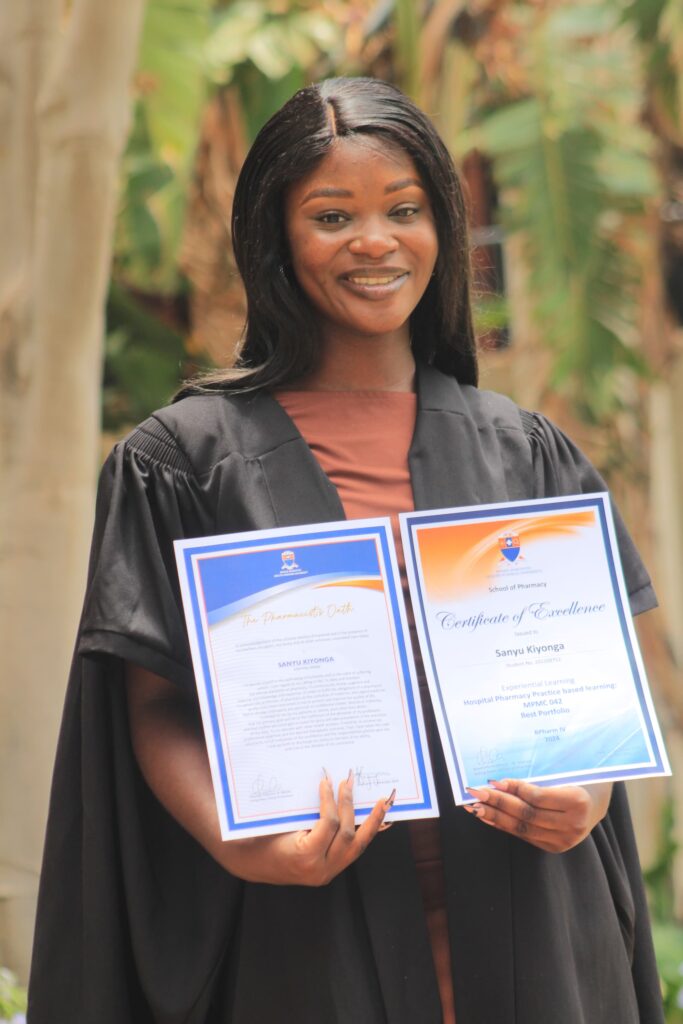 Kiyonga, who pursued her studies at SMU from 2021 to 2024, has demonstrated an unwavering passion for pharmacy, driven by her profound desire to treat patients and contribute to the advancement of medical care. Having grown up in Uganda, where healthcare infrastructure faces considerable challenges, she developed a deep-seated resolve to make a tangible impact in the field. Her experiential learning journey in hospital pharmacy has solidified her expertise and positioned her as a rising leader in pharmaceutical care.
Reflecting on her achievement, Kiyonga expressed gratitude for the opportunity to refine her skills in a hospital setting. “This recognition is not just a personal milestone but a testament to the support I have received from my lecturers, mentors, and peers at SMU. I am deeply passionate about making a difference in patient care, and this award motivates me to keep striving for excellence,” she says.
The Best Portfolio award highlights Kiyonga’s ability to integrate academic knowledge with practical application, a crucial skill in the evolving landscape of healthcare. Her work in hospital pharmacy practice-based learning involved medication management, patient counselling, and collaborative healthcare interventions, all of which are essential in optimising treatment outcomes.
Kiyonga credits her success to the mentorship she received from her lecturer, Jackson Mahlaba, as well as guidance from the hospital manager and other professionals in the field. “I actively sought feedback and dedicated time to refine my portfolio, which ultimately contributed to this achievement,” she notes.
A crucial component of Kiyonga’s education was her experiential learning in hospital pharmacy, which provided her with hands-on experience in inventory management, patient counselling, and teamwork. This exposure reinforced her understanding of pharmacists’ vital role in patient care. “One of the most impactful experiences for me was working alongside other healthcare professionals who were willing to assist and teach me,” she says. “It taught me the importance of patient-centred care and effective communication, both of which are essential skills in pharmacy.”
Success is rarely achieved alone, and Kiyonga acknowledges the unwavering support she received from her family, friends, and academic mentors. She emphasises that time management and seeking help were crucial in overcoming obstacles throughout her academic journey. “Having a strong support system kept me motivated, especially during challenging times,” she says. “I learned the importance of balancing academics with personal well-being and seeking guidance whenever I needed it.”
The culmination of her pharmacy studies was marked by the symbolic oath-taking ceremony, a defining moment in Kiyonga’s journey. “Taking the oath was incredibly significant, as it reaffirmed my commitment to ethical practice and the well-being of my patients,” she shared.
Looking ahead, Kiyonga aspires to contribute meaningfully to the pharmacy profession by leveraging her knowledge and skills to improve patient outcomes. “My goal is to expand my expertise and become a trusted healthcare professional, positively impacting patients’ lives,” she says.
“I am grateful for the support I have received from the School of Pharmacy and SMU. This journey has reinforced my commitment to patient care and professional growth,” she concludes.
By Tumelo Moila
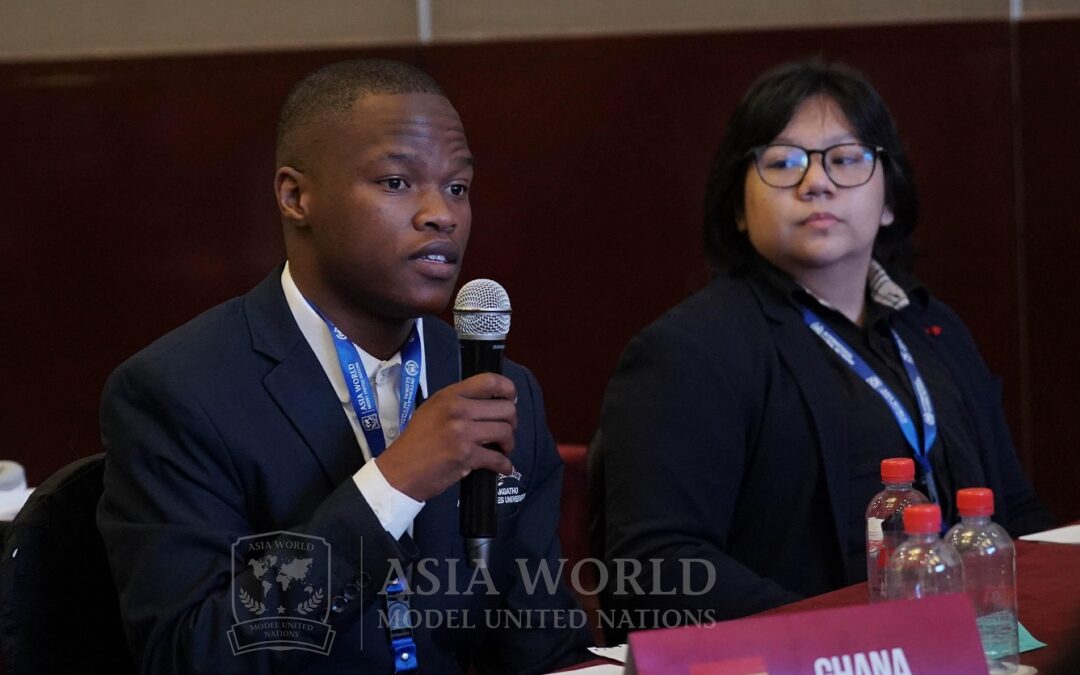
Marvelous Moagiemang represents SMU at Asia World Model United Nations X Conference
Sefako Makgatho Health Sciences University (SMU) recognises the importance of nurturing student leaders who can make a positive impact in their communities and the healthcare sector. To achieve this goal, the university provides various opportunities and programmes that help students develop their leadership skills.
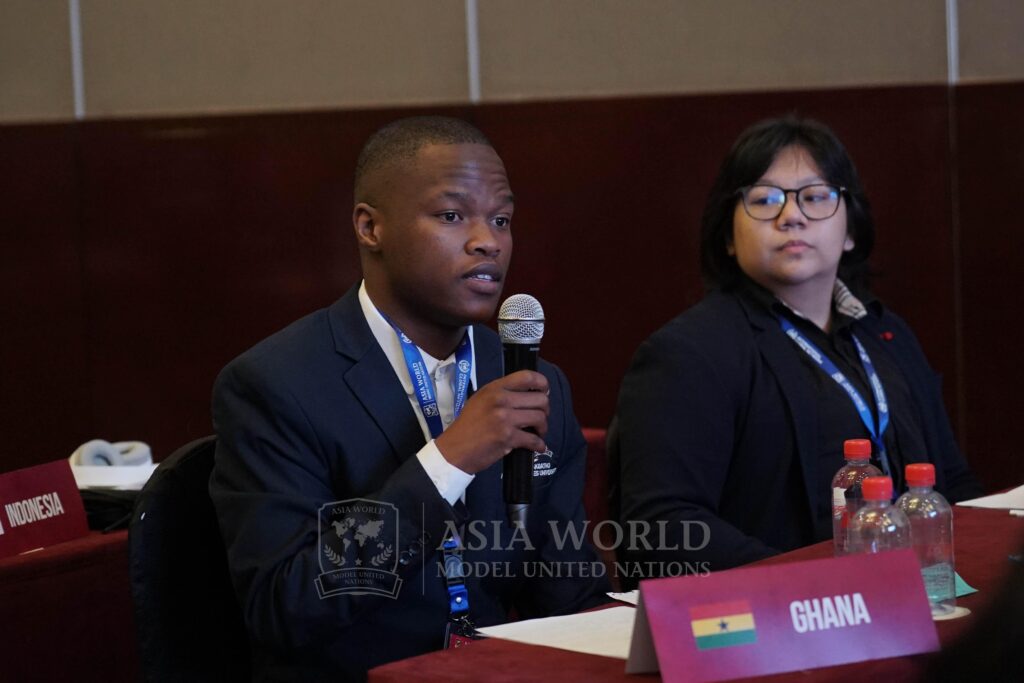 Marvelous Moagiemang, a Bachelor of Science student at SMU, recently had the honour of representing the institution at the Asia World Model United Nations (AWMUN) X conference in Kuala Lumpur, Malaysia. The prestigious event brought together young leaders from around the world to engage in high-level debates on pressing international issues.
Reflecting on the significance of AWMUN X, Moagiemang explained, “AWMUN X is a highly reputable Model UN conference that simulates the United Nations. Its prestige stems from its international reach, attracting delegates from diverse backgrounds, and its focus on pressing global issues. The conference fosters critical thinking, diplomacy, and negotiation skills in a realistic and challenging environment.”
For Moagiemang, participating in AWMUN X was an opportunity to deepen his understanding of global governance and international relations. “My primary motivation was to engage with global issues and develop my negotiation and public speaking skills in a professional setting,” he shares.
The selection process was rigorous, requiring applicants to submit detailed applications outlining their background, experience, and motivation. Upon receiving his acceptance, Moagiemang was overwhelmed with excitement. “It was a validation of my efforts and a fantastic opportunity to represent my university on an international stage,” he says.
During the conference, Moagiemang served as a delegate for Ghana in the International Labour Organisation (ILO) committee. “Representing Ghana was both an honour and a responsibility. I felt a strong sense of duty to accurately represent Ghana’s perspectives on labour and employment issues,” he notes.
The conference theme, Shaping Our Role in the 5th Industrial Revolution, influenced discussions on youth unemployment in 2025. “We explored how technological advancements, automation, and digitalisation would impact the future of work and how best to prepare young people for these changes,” he explains.
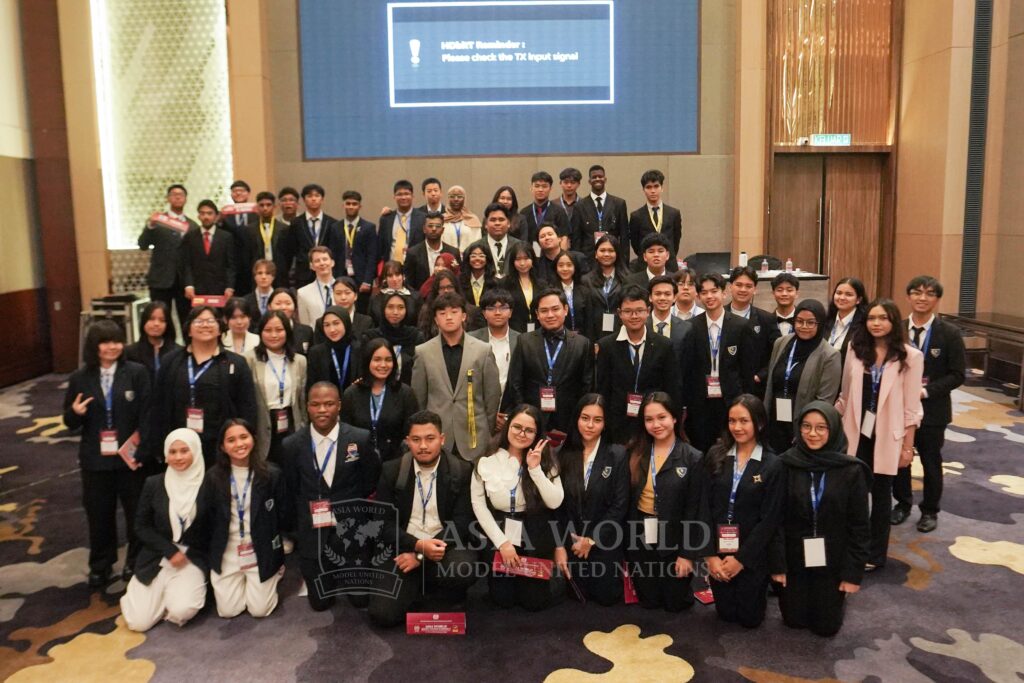 Throughout the committee sessions, delegates debated the challenges of youth unemployment, including the skills gap, lack of entrepreneurship support, and inequitable access to education and training. Moagiemang advocated for investment in vocational training and skills development to equip young people for the evolving job market. “I also emphasised the need for policies that promote entrepreneurship and provide access to financing for young entrepreneurs,” he adds.
Beyond policy discussions, AWMUN X provided Moagiemang with valuable lessons in diplomacy, negotiation, and leadership. “The conference reinforced the importance of effective communication, alliance-building, and navigating complex political dynamics,” he says.
His experience at AWMUN X has significantly influenced his career aspirations. “As a Life Sciences student, I am now more aware of how technological advancements impact public health, food security, and environmental sustainability. This experience has inspired me to explore career paths that bridge science and policy,” he states.
AWMUN X was not just a conference—it was a gateway to lifelong friendships and professional connections. “I formed several lasting friendships with delegates who share my passion for international affairs. We have stayed in touch since the conference,” he adds.
To maintain and leverage this global network, Moagiemang plans to engage in regular communication, participate in online forums, and attend future international events. He is also committed to sharing his experience with fellow students at SMU. “I am organising workshops and mentorship programmes to help students develop public speaking, negotiation, and resolution-drafting skills,” he says.
For students interested in Model UN, Moagiemang offers valuable advice: “Research thoroughly, prepare well, and be open to different perspectives. Don’t be afraid to speak up, and most importantly, enjoy the experience.”
Moagiemang is determined to apply his experiences from AWMUN X to his academic and professional journey. “My biggest takeaway is the importance of interdisciplinary collaboration. This experience will shape my future by encouraging me to integrate my scientific knowledge with policy-making to address global challenges.”
By Tumelo Moila
Pi Day 2025: Celebrating the beauty and depth of mathematics
March 14th, globally recognised as Pi Day, is an annual celebration dedicated to the mathematical constant π (pi ≈ 3.14159…). The occasion provides an opportunity for learners, educators, and mathematics enthusiasts to appreciate the significance of this irrational number in various disciplines. This year, Pi Day 2025 was marked with great enthusiasm at Sefako Makgatho Health Sciences University (SMU), bringing together high school learners, university educators, and professionals in mathematics and applied mathematics.
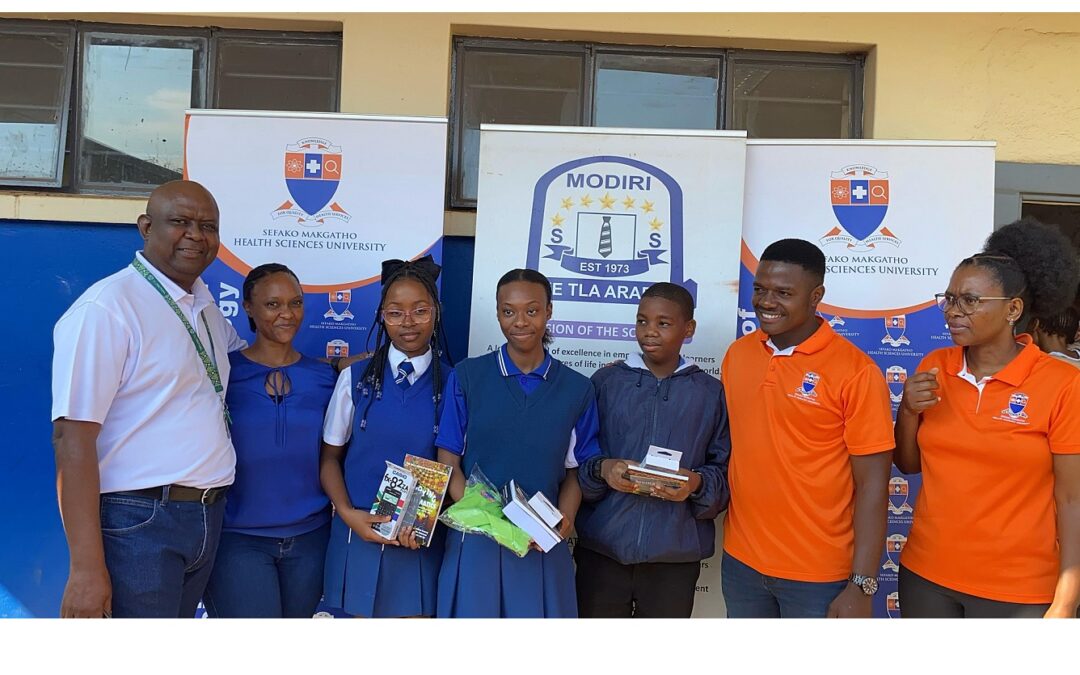
 Professor Ndlovu, a dedicated mathematics lecturer at SMU, expressed his excitement for Pi Day, emphasising its importance beyond the numerical value of π. “Pi Day is more than just a date on the calendar; it’s a celebration of the beauty, depth, and elegance of mathematics. This year, we celebrated with learners from P.H. Moraka, N.H. Tsheune, Modiri, and Bethsaida high schools in Tshwane. Our goal was to educate them about the history of Pi, introduce them to careers in mathematics and applied mathematics, and provide guidance on Admission Point Score (APS) requirements for pursuing a Bachelor of Science (BSc) in Mathematics.”
While Pi is commonly associated with circles, its applications extend into physics, engineering, and computer science. Pi Day serves as a valuable opportunity to explore these applications and appreciate the number’s infinite and non-repeating nature. “Pi appears in engineering, physics, technology, and even nature,” Ndlovu explained. “Understanding its applications helps students see the real-world relevance of mathematics.”
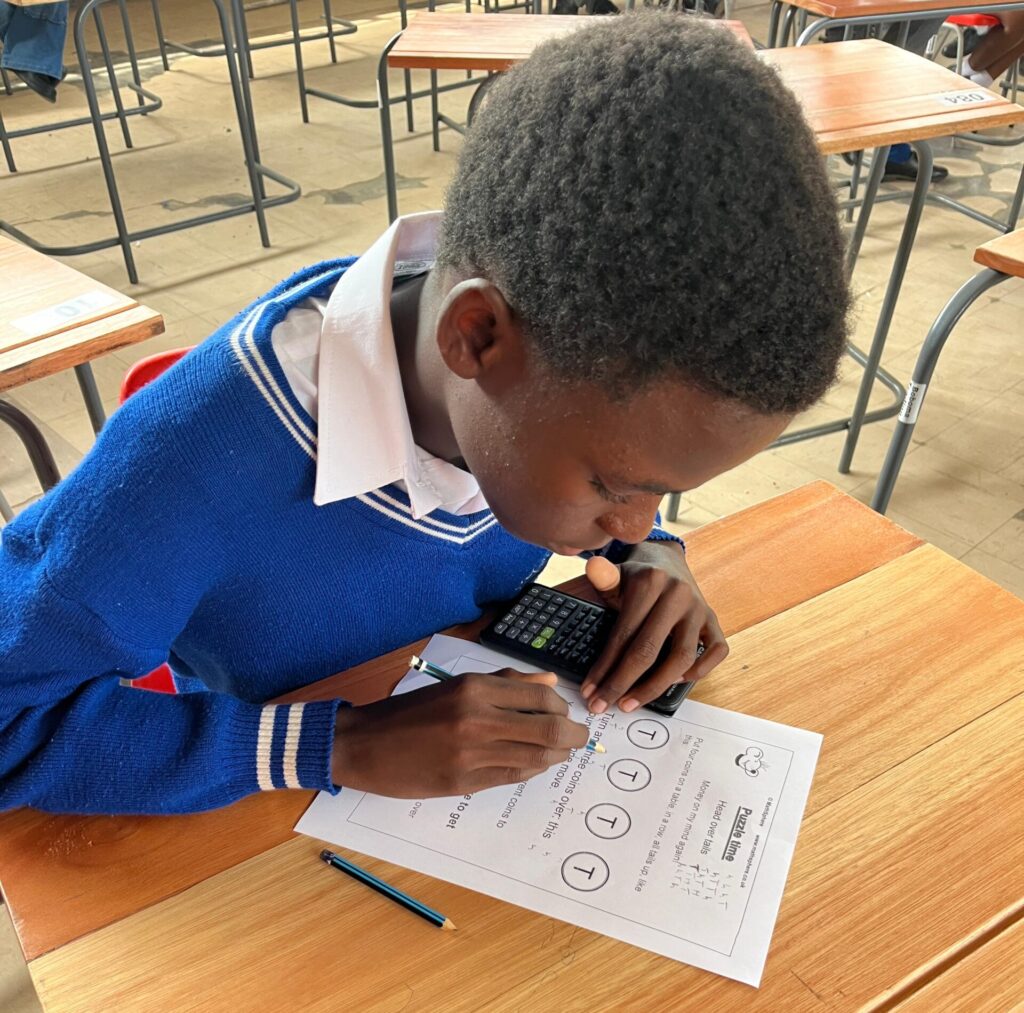
Among the many Pi Day activities, problem-solving sessions remain a favourite for both learners and teachers. Educators use interactive games, real-world applications, and fun challenges to make learning mathematics engaging. These activities help demystify complex concepts, fostering an appreciation for mathematics beyond the classroom.
According to Ndlovu, one of the biggest misconceptions learners have about Pi is that it is “just a number with no use.” However, by demonstrating its significance in real-world applications such as architecture, space exploration, and digital technology, learners gain a newfound appreciation for this mathematical constant.
 Pi Day provides a platform to inspire young minds and encourage them to explore mathematics as a career. The Mathematics and Applied Mathematics Department at SMU believes that such events foster curiosity and enthusiasm among students. Professor Maggie Aphane, Head of the Department, highlighted the importance of celebrating Pi Day: “It provides an opportunity for students and staff to engage with mathematical concepts in a fun and interactive way. It also serves as a platform to promote mathematics and inspire future mathematicians.”
The Mathematics and Applied Mathematics Department at SMU works closely with local schools to promote mathematical literacy. Through Pi Day events, workshops, and competitions, they engage learners in meaningful ways. They also collaborate with local businesses and organisations to foster community involvement in mathematics education.
The event was organised in collaboration with the South African Mathematics Foundation (SAMF) and the Department of Science and Innovation (DSI). SAMF, as the custodian of the Mathematics Olympiad, relies on institutions like SMU to assist in conducting primary, secondary, and tertiary mathematics competitions. DSI sponsors these activities, ensuring learners gain exposure to mathematics beyond the school syllabus.
A total of 50 staff and postgraduate students from SMU participated in the celebration. Patrick Rasehwete, a representative of SAMF, shared his experience: “Our mandate was to engage with DSI to secure funding, ensuring the event’s success.” DSI sponsored the prizes and refreshments for learners and officials through their agency, the South African Agency for Science and Technology Advancement (SAASTA). Additionally, CASIO collaborated with SAMF to sponsor 15 scientific calculators for the day.”
The success of Pi Day 2025 has set the stage for future collaborations between SMU, SAMF, and DSI. Plans are already underway to expand the participation of more secondary schools in mathematics olympiad competitions and to celebrate other mathematics-related days, such as Euler Day, Pythagorean Theorem Day, Square Root Day, and Palindrome Day.
As Pi Day continues to grow in popularity, it serves as a reminder that mathematics is not just about numbers and equations—it is a universal language that connects us all. Professor Aphane concluded: “Mathematics is everywhere. Events like Pi Day help students see its significance and encourage them to pursue their passions with confidence.”
By Tumelo Moila