by Lorato | May 13, 2025 | All News, SMU Media, Student Media
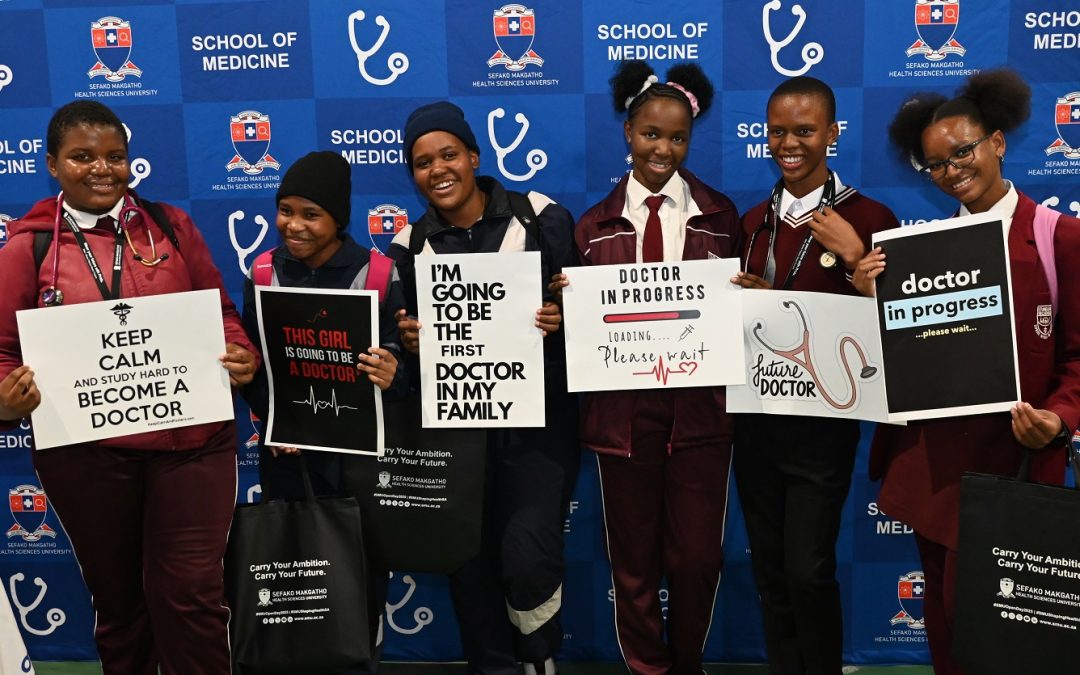
Sefako Makgatho Health Sciences University (SMU) was abuzz with excitement and learning as it welcomed approximately 6,000 learners, parents, and educators to its highly anticipated 2025 Open Day. The event provided an immersive and informative experience for aspiring health sciences professionals.
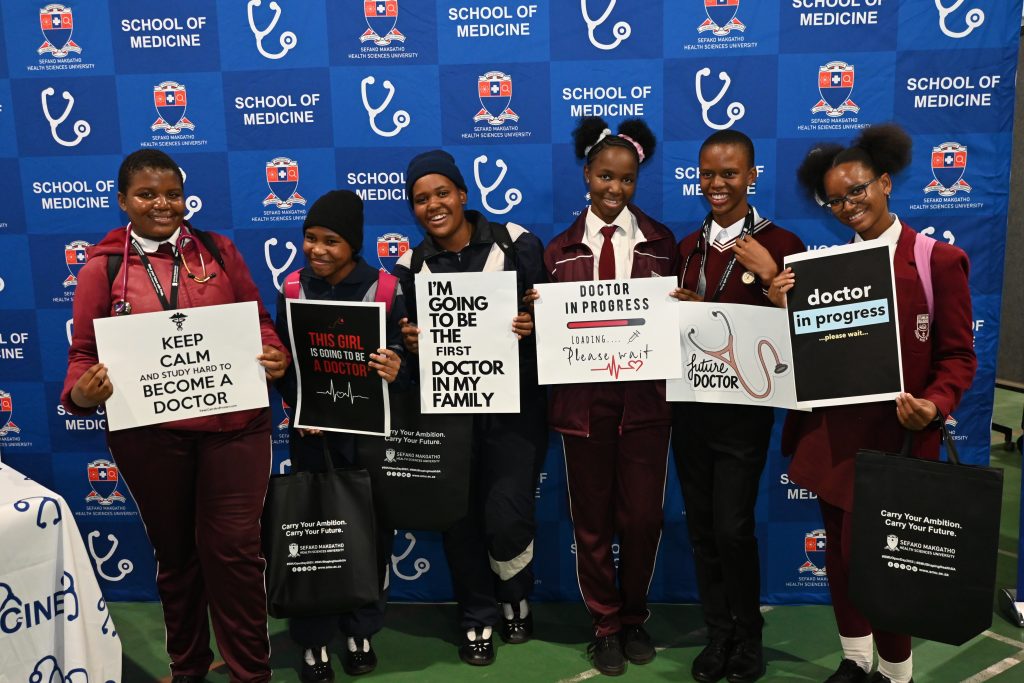 Hosted on the university’s campus the day served as a valuable platform for learners specialising in mathematics, physical sciences and life sciences—particularly those in Grades 10, 11 and 12—to explore academic offerings across SMU’s five schools: Dentistry, Health Care Sciences, Medicine, Pharmacy, and Science and Technology. Attendees engaged directly with academic staff, current students, and alumni while experiencing the university’s state-of-the-art facilities first-hand.
The programme featured interactive exhibitions, live demonstrations, guided campus tours, and individual consultations. Among the most popular exhibits was the Emergency Medical Care Unit from the School of Medicine, where staff conducted realistic trauma simulations, including CPR and spinal immobilisation techniques, captivating both learners and educators.
The School of Dentistry welcomed guests to the SMU Oral Health Centre, where students receive clinical training. Meanwhile, the School of Pharmacy introduced prospective students to its problem-based learning approach. This educational method enables students to collaboratively tackle real-world health issues, encouraging critical thinking, teamwork and self-directed learning, and promoting a deeper understanding beyond rote memorisation.
“I’ve always wanted to be a medical practitioner, but today made it feel real,” said Ashley Ngwenyama, a Grade 11 learner from Hazyview Comprehensive School in Mpumalanga. “The staff and students were so welcoming and explained everything in a way I could understand. I can’t wait to reach Grade 12 and apply.”
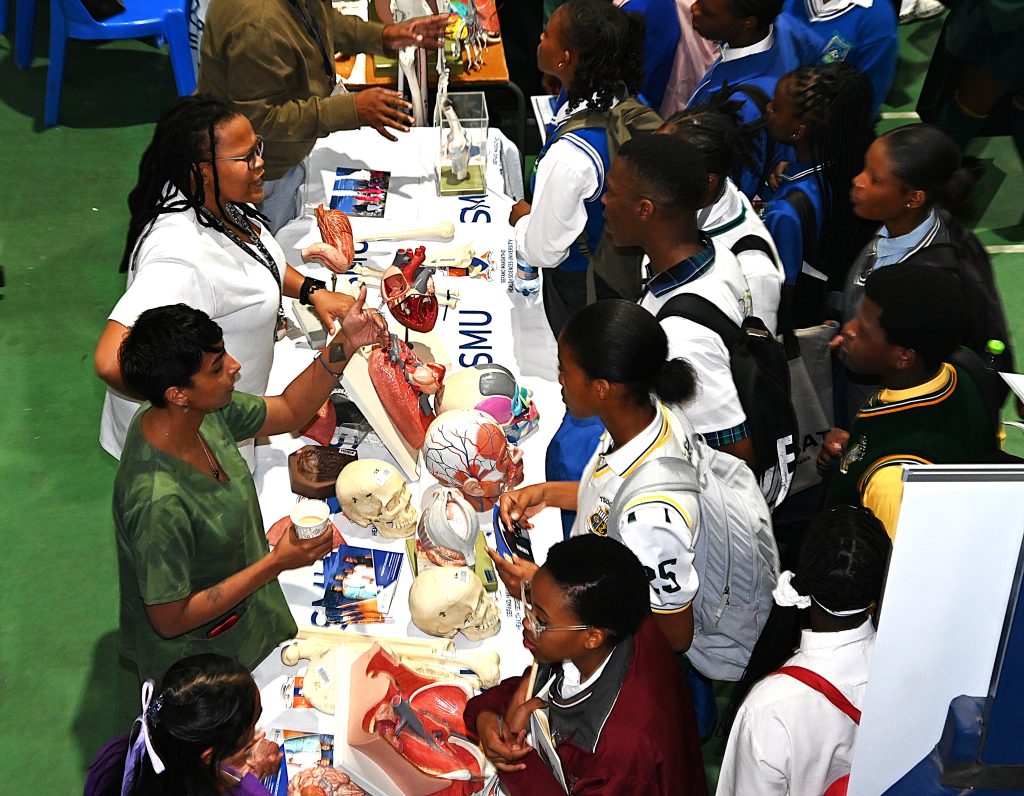 The Department of Occupational Therapy, under the School of Health Care Sciences, drew large crowds with its interactive displays on rehabilitation, human movement, and disability support. These exhibits encouraged learners to consider diverse and impactful careers within the healthcare sector beyond the more traditional roles.
Academic staff, including lecturers and postgraduate students, were available throughout the day to provide detailed information on admission requirements, application processes, financial aid, and the extensive student support services offered at SMU. Visitors also toured the university’s cutting-edge laboratories, simulation centres, and the Oral Health Centre, which forms a vital part of students’ clinical education.
“We focus on both academic excellence and the development of compassionate, community-conscious professionals,” said Winnie Marishane, Manager: Branding and Marketing at SMU. “Open Day is about helping learners visualise their place in this ecosystem.”
Dedicated information sessions for learners, parents and educators covered essential topics such as NSFAS funding, student accommodation, campus safety, and mental health and wellness support—reinforcing SMU’s commitment to holistic student wellbeing.
“As an alumnus and educator, I appreciated the transparency and detail around student life and academic support,” noted Tiisetso Phooko, an SMU alumnus and Life Orientation educator at Machepelele Secondary School in Limpopo. “It’s reassuring to know that our learners will be in good hands.”
SMU’s student brand ambassadors played a crucial role in the day’s success, sharing their personal journeys and offering peer-to-peer advice to aspiring applicants. “I was once in their shoes, unsure about where to go or what to study,” shared Trevor Bvuma, a final-year Master of Science (Biology) student and ambassador. “Today, I am part of a university that values both excellence and Ubuntu. That’s the spirit we’re passing on.”
The School of Science and Technology also captivated learners with hands-on scientific demonstrations, sparking curiosity about careers in applied sciences and research. As the day drew to a close, learners departed with university prospectuses, application guidelines, and—most importantly—a renewed clarity and enthusiasm for their future paths.
With applications for the 2026 academic year now open—and closing on Thursday, 31 July 2025 for undergraduate programmes and the MSc in Clinical Psychology, and on Friday, 29 August 2025 for postgraduate programmes—SMU’s Open Day 2025 not only attracted an impressive turnout but also successfully inspired the next generation of South African health sciences professionals.
By Tumelo Moila
by Lorato | May 7, 2025 | All News, SMU Media, Student Media
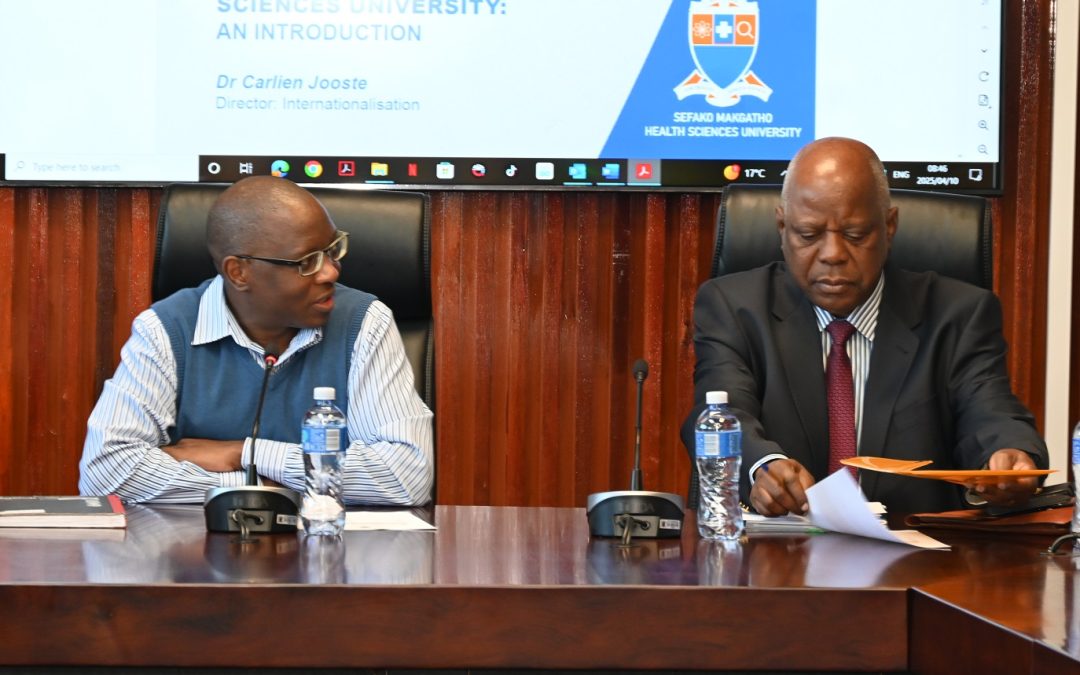
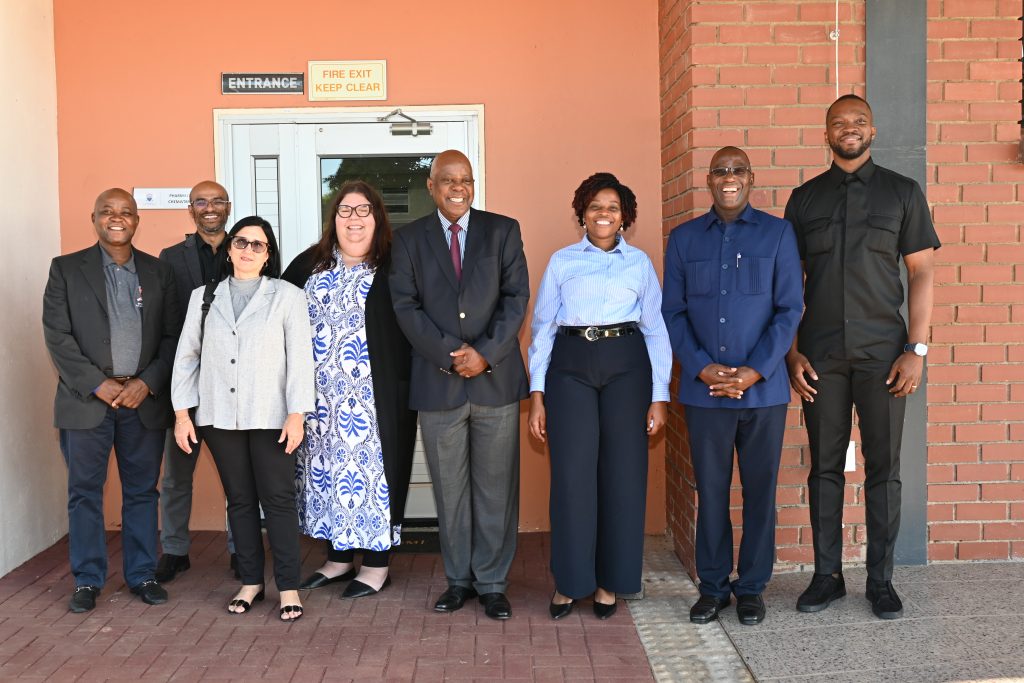
Sefako Makgatho Health Sciences University (SMU) recently welcomed a delegation from Mozambique’s Universidade Wutivi (UniTiva), led by its Chancellor, Professor Domingos Tivane, for a high-level benchmarking visit. The visit focused on exploring best practices across SMU’s flagship academic programmes in medicine, pharmacy, hospital management, nursing and midwifery, and clinical psychology.
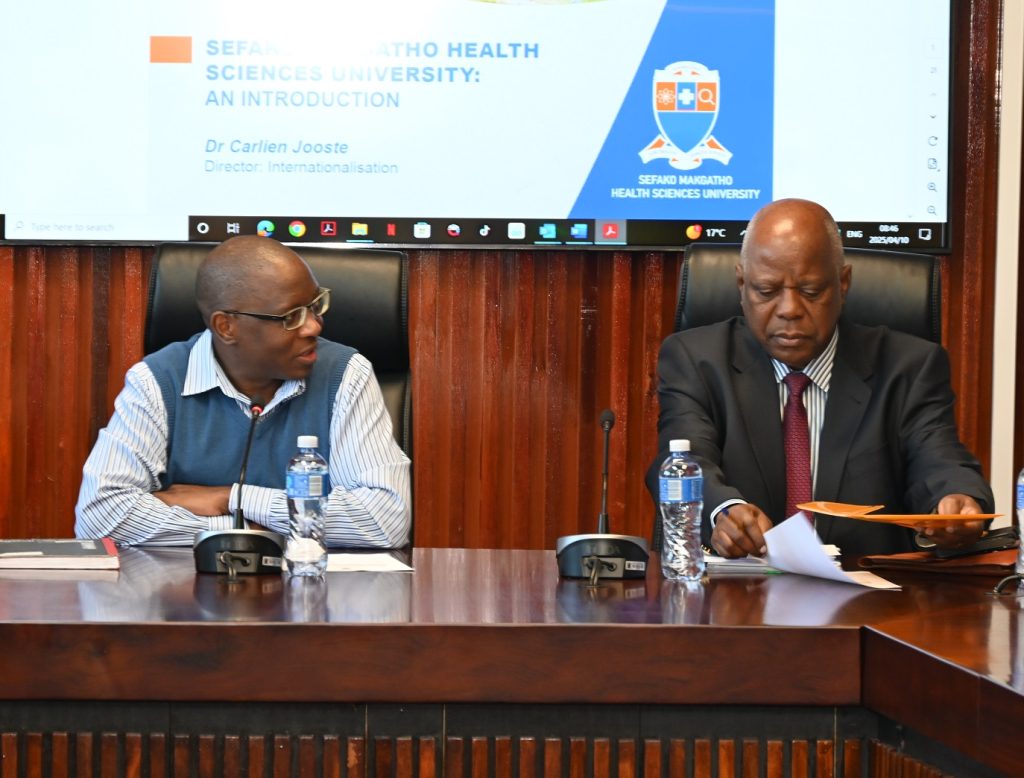 The day commenced with a warm welcome from Dr Jeffrey Mabelebele, Acting Deputy Vice-Chancellor: Teaching, Learning and Community Engagement, who emphasised the spirit of collaboration between the two institutions. “We are honoured to host Professor Tivane and the UniTiva delegation. This is an opportunity not only to showcase our strengths but also to learn from one another and build sustainable academic partnerships,” said Mabelebele.
Dr Carlien Jooste, Director of Internationalisation, provided an overview of SMU’s institutional footprint and introduced the South African Policy Framework for the Internationalisation of Higher Education as the basis for the visit. Professor Tivane responded by reaffirming the purpose of the engagement.
“We are here to learn, to be inspired, and to build bridges between our institutions,” he said. “UniTiva is looking to enhance its own health sciences training, specifically Medicine, which will commence in July 2025, and SMU, with its track record of academic excellence, is the ideal institution to benchmark against.”
An insightful overview of the School of Medicine’s curriculum and operations was delivered by Gerda Botha and Professor Honey Mabuza, followed by a session on best practices per year level in the Bachelor of Medicine and Bachelor of Surgery (MBChB) programme. Notable contributors included Dr Edwin Seleka (MBChB I) and Professor Robert Ndou (MBChB II), with further input from Professor Honey Mabuza on undergraduate research and Thokozile Kgongwane on Interprofessional Education and Collaborative Practice (IPECP).
 “Our fourth-year students are publishing in accredited academic journals, which speaks to the quality and impact of our undergraduate research training,” noted Mabuza. Professor Lesiba Baloyi was joined by colleagues Prof Mokoena Maepa and Maryke Pierce to discuss the University’s clinical psychology programme and their African-focused approach in SMU’s highly competitive postgraduate clinical psychology programme.
Thokozile Kgongwane, along with Skills Centre Director, Dr Lesego Phiri, then led the delegation on a hands-on tour of the SMU Skills Centre, offering a glimpse into simulation-based teaching and the university’s commitment to experiential learning.
The afternoon sessions focused on Nursing and Midwifery, Hospital Management and Pharmacy, where Dr Madan Poka outlined innovative teaching methods, student support, and community engagement initiatives.
“This visit is not just about showing what we do, but how we do it—our pedagogy, our partnerships, and our passion,” Dr Poka, Acting Dean of Pharmacy, observed.
Professor Sogo Matlala, Dr Andile Mokoena-De Beer, and Kgomotso Mabasa presented best practices in nursing, midwifery and hospital management. These included competency-based education aligned with the South African Nursing Council’s R174 regulations, incorporating rigorous objective structured clinical examinations (OSCEs), a 50% pass mark threshold, and 2,120 supervised clinical hours across key disciplines—closely aligned with international standards set by the United Kingdom’s Nursing and Midwifery Council (NMC) and European Union (EU) directives.
SMU’s unique IPECP programmes are redefining healthcare education through interprofessional collaboration, shared values, and ethical practice. The programme aligns with global frameworks from the World Health Organization (WHO) and the International Council of Nurses while maintaining a strong local impact.
“Our IPECP model improves patient outcomes, reduces duplication of resources, and supports our graduates to thrive in multidisciplinary teams,” noted Kgongwane.
Dr Jooste stressed that any Memorandum of Understanding (MoU) developed must be “intentional, mutually beneficial, and active.” A lively discussion on the potential MoU followed, setting the tone for future collaborations and an invitation for SMU delegates to visit UniTiva.
The day concluded with a tour of the School of Pharmacy laboratories and reflections on SMU’s continuous quality improvement efforts. These include quarterly academic review meetings, internal and external moderation processes, peer reviews, and student feedback loops that inform module planning and redesign.
SMU’s commitment to innovation was also on full display, from hybrid and flipped-classroom models to the integration of 3D-printed anatomical structures and dispensing software in Pharmacy education. The institution’s research-integrated curriculum prepares students for evidence-based practice, lifelong learning, and global competitiveness.
“We pride ourselves on excellence, innovation, and relevance. This benchmarking visit confirms that we are on the right track in shaping Africa’s next generation of healthcare professionals,” concluded Jooste.
SMU continues to set the pace in health sciences education across the continent, with international visits such as this reaffirming its role as a beacon of health care sciences academic excellence and societal impact.
By Tumelo Moila