by Kegorapetse | Apr 15, 2020 | SMU Media
Thank you for showing interest in applying for the Master of Science (MSc) in Clinical Psychology training programme, at Sefako Makgatho Health Sciences University (SMU), Department of Clinical Psychology in the School of Medicine.
The MSc (Clinical Psychology) programme is a 2-year, full time and comprehensive training programme that provides an integrated academic, clinical and professional training to equip students to function as well-balanced and grounded Clinical Psychologists in the future
Print and hand deliver/courier the Student Application Form with the compulsory documents attached to Ms. Brenda Ledwaba (Departmental Secretary), Sefako Makgatho Health Sciences University (SMU), Department of Clinical Psychology, 5th Floor, Room N547, Clinical Pathology Building, Molotlegi Street, Ga-Rankuwa, 0204) on or before 12 June 2020 (before 13h00).
No late and/or incomplete applications will be accepted.
It remains the applicant’s responsibility to ensure that the department receives the application before the closing date, and that the application is complete.
by Kegorapetse | Apr 2, 2019 | SMU Media
Please follow the following steps in order to apply:
- Download the MSc-Clinical-Psychology-2020-Application-Form and 2019-MSc-Clinical-Psychology-Course-guide
- Complete the downloaded application form (as per instructions) and either courier or hand deliver the completed form to the Department of Clinical Psychology. [Please see address on the application form].
- Ask your referee to complete the referee form and to send it directly to the administrative personnel of the Department of Clinical Psychology, Ms Brenda Ledwaba on brenda.ledwaba@smu.ac.za before the closing date.
Closing dates and application fees:
- All applications including referee forms should be submitted before 14 June 2019.
- No application fee is required at this initial stage
- All short listed candidates will be notified via email [provide a reliable email address.]
- Selections will take place from 15 – 19 July 2019.
Disclaimers:
- Please note that incomplete applications will not be considered.
- Please note that if you provide any false information your application will be rejected immediately.
- Please note that admission into the MSc Clinical Psychology programme is subject to a selection process.
Important notice
- The department reserves the right not to make selections
- Only selected candidates will have to apply to the university administration department with the assistance of the departmental administrator after the selection process
Check list
Application form
Referee forms
Copy of qualifications
ID copy

by Lorato | Sep 10, 2025 | Accolades and Achievements, All News, SMU Media, Student Media
Sefako Makgatho Health Sciences University (SMU) has once again made its mark on the global academic stage through the leadership of its Senior Lecturer in the Department of Public Health, Dr Moreoagae Randa, who has played a pivotal role in an international collaboration funded by the British Academy.
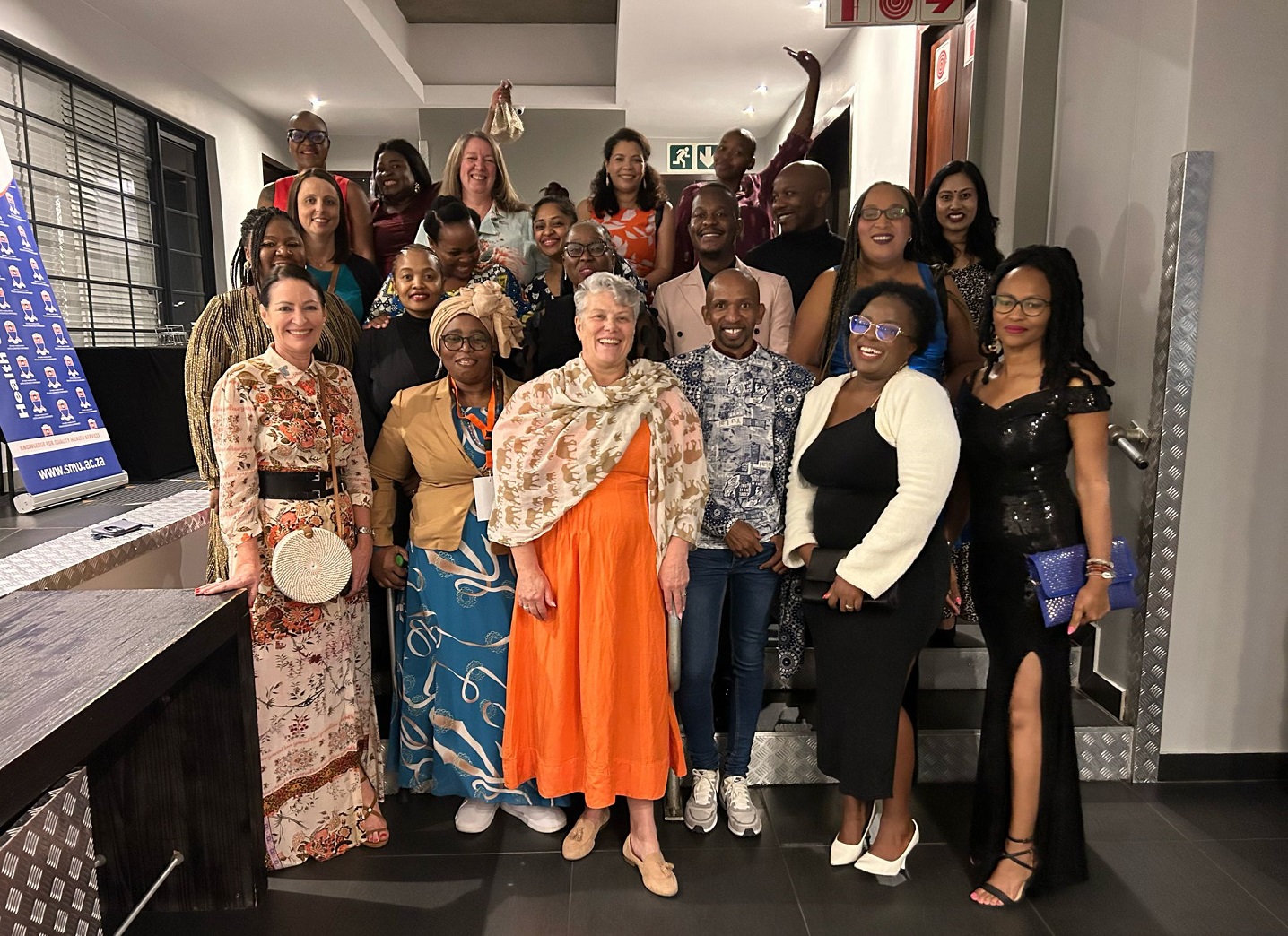 The programme, valued at £29,577 and running from 2023 to 2025, was awarded to De Montfort University (DMU) in the United Kingdom as the lead applicant. Dr Randa serves as the principal South African partner, ensuring the effective disbursement and accountability of funds to SMU. The project, themed “Strengthening South African Writing for Academic Outputs”, reflects her longstanding commitment to advancing research and innovation at SMU and beyond.
The initiative represents a strategic partnership between SMU, Stellenbosch University, DMU, the University of Sheffield, and the University of Nottingham. Co-led by Dr Kathyrn Hinsliff-Smith of DMU and Dr Randa, the project has supported 22 Early Career Researchers (ECRs) drawn from six South African public universities, including 11 from SMU. These researchers, either completing their PhDs or engaged as postdoctoral fellows, were provided with a two-year structured, mentored writing experience.
Reflecting on the collaboration, Randa said: “This programme has strengthened the capacity of early career researchers to publish, secure grants, and engage globally. Its impact will continue to resonate across institutions, disciplines, and the country’s research agenda.”
Workshops, mentoring sessions, and virtual engagements have enabled participants to strengthen their writing capabilities, expand professional networks, and produce tangible research outputs. Activities included an inaugural three-day workshop in November 2023 at Stellenbosch, online group sessions focusing on academic search strategies, and a recorded open forum with representatives of the National Research Foundation (NRF). These interventions provided participants with crucial insights into academic publishing, grant writing, and the South African promotion system for academics.
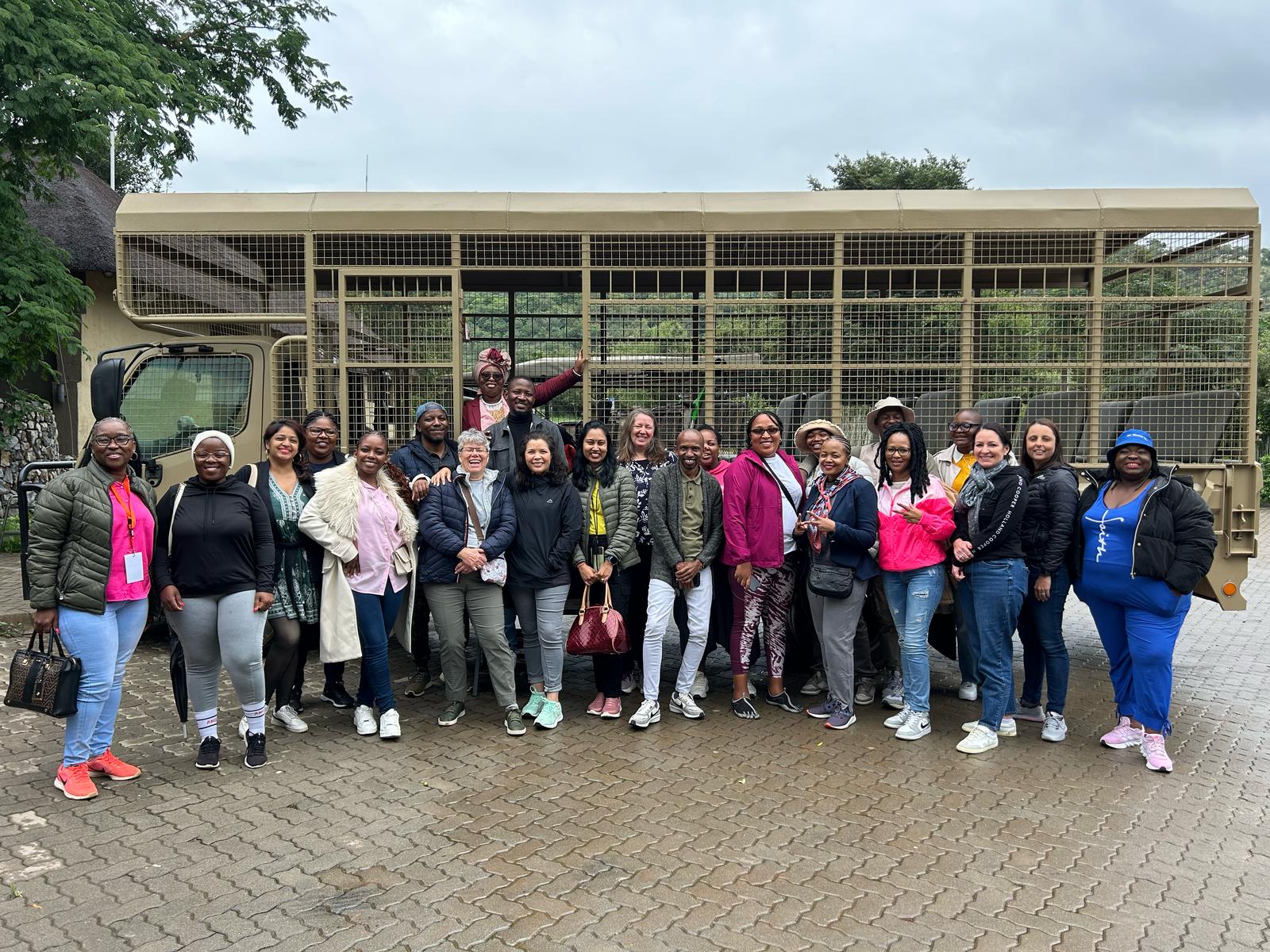 The outcomes of the programme are already evident. Participants have delivered successful journal publications, completed doctoral studies, secured research grants, and forged international collaborations. According to co-lead Dr Hinsliff-Smith: “The progress of these researchers has been remarkable. This project has not only improved their writing skills but has also created new opportunities for collaboration across borders.”
The diversity of disciplines represented by the cohort further amplified the programme’s impact. Researchers came from fields as varied as public health, pharmacy, cultural and political studies, radiotherapy, psychology, and optometry. This breadth fostered interdisciplinary learning and exchange, creating a platform for cross-pollination of ideas and methodologies that enriched the experience for all involved.
The collaboration culminated in the “Road to Success Conference” hosted at the Protea Hotel OR Tambo International Airport from 18–20 February 2025. Here, the ECRs showcased their progress, shared experiences, and celebrated achievements alongside mentors and international collaborators.
One of the participants, Portia Ramashia, Lecturer and PhD candidate in the Department of Radiation Therapy at the University of Johannesburg, noted: “The mentorship provided a safe, supportive environment to learn and grow. I now feel equipped to publish confidently and to position myself for future academic opportunities.”
The recognition of Randa’s leadership in this programme builds upon her earlier work in collaborative projects addressing pressing social issues, such as gender-based violence, where she partnered with UK counterparts and local organisations to develop training materials for health professionals.
Through her vision and dedication, Randa exemplifies the values of academic excellence, international collaboration, and societal impact, positioning SMU as a key contributor to research and innovation both nationally and globally.
By Tumelo Moila

by Lorato | Aug 27, 2025 | All News, SMU Media, Student Media
Reading is a transformative tool for children and adolescents, enhancing language skills, cognitive development, emotional intelligence, and academic success. In South Africa, where literacy challenges persist—particularly among Grade 4 learners who struggle to read for meaning—targeted interventions are vital. To address this need, Dr Marguerite De Jongh, Senior Lecturer in the Department of Speech-Language Pathology at Sefako Makgatho Health Sciences University (SMU), has implemented a pioneering reading initiative at Dr George Mukhari Academic Hospital (DGMAH).
 Dr De Jongh has dedicated her academic and clinical career to advancing literacy and language development in diverse educational and healthcare contexts. Her qualifications include a PhD in Psychology focused on emergent literacy and ADHD in Grade R learners, B. Logopaedics in Speech Therapy and Audiology, an MPhil in Second Language Studies, and a Certificate in Neuro-Developmental Therapy.
Dr De Jongh has published extensively on early literacy, language stimulation, and inclusive education, including research on reading behaviour in higher education and literacy support for teachers. She has led curriculum development initiatives and facilitated training for professionals and students on literacy facilitation, language enrichment, and reading for pleasure. Her work in the hospital-based literacy initiative reflects a commitment to bridging healthcare and education, ensuring that children and adolescents, regardless of their medical condition, have access to meaningful reading experiences.
“Our goal is to ensure that children continue to grow academically, socially, and emotionally, even while hospitalised,” De Jongh explains. This initiative is rooted in the belief that literacy can serve as both an educational and therapeutic tool.
The initiative targets both young children (ages 5–8) and adolescents, offering age-appropriate materials and structured reading sessions. Through one-on-one or small group interactions, students from SMU engage with patients, guided by De Jongh and a speech-language therapist from DGMAH. The programme focuses on reading for pleasure, language stimulation, emotional engagement, and cognitive development.
“Reading gives children a sense of normalcy and comfort during difficult times,” says De Jongh. “Seeing their faces light up when they connect with a story reminds us why this work matters.”
Hospital-based reading interventions are particularly significant in South Africa, where PIRLS 2021 revealed that 81% of Grade 4 learners cannot read for meaning. By integrating literacy into healthcare settings, the initiative provides a unique opportunity to reach children outside traditional school environments. “Each session presents an opportunity to nurture both academic development and emotional well-being,” says De Jongh.
Speech-Language Pathology and Audiology students from SMU receive comprehensive training in reading facilitation, auditory perception strategies, language stimulation, and techniques to encourage reading for pleasure. Weekly sessions in orthopaedic and oncology paediatric wards are carefully structured to accommodate patients’ medical needs while maximising engagement. Optional enhancements, such as themed reading months, “Book of the Week” displays, and small rewards like certificates, further motivate participation.
“Many of the adolescents ask questions, discuss the stories, and even request books in their home languages,” says De Jongh. “It’s rewarding to see how engaged they become and how it builds their confidence.”
Collaboration with hospital staff, teachers, caregivers, and parents ensures a holistic approach, reinforcing the value of literacy as both an educational and therapeutic tool. Early feedback indicates that patients respond positively, with visible enthusiasm and active participation.
The hospital-based reading initiative at DGMAH exemplifies the power of integrating education and healthcare. “This programme is more than reading—it’s about resilience, inclusion, and lifelong learning,” says De Jongh. By promoting literacy as a tool for emotional support, cognitive development, and academic continuity, the initiative demonstrates how reading can positively impact young patients. As the pilot expands, this model offers a promising blueprint for scaling hospital-based literacy interventions nationwide, ensuring that all children, regardless of circumstance, have access to meaningful reading experiences.
By Tumelo Moila