by Lorato | Aug 20, 2025 | All News, SMU Media, Student Media
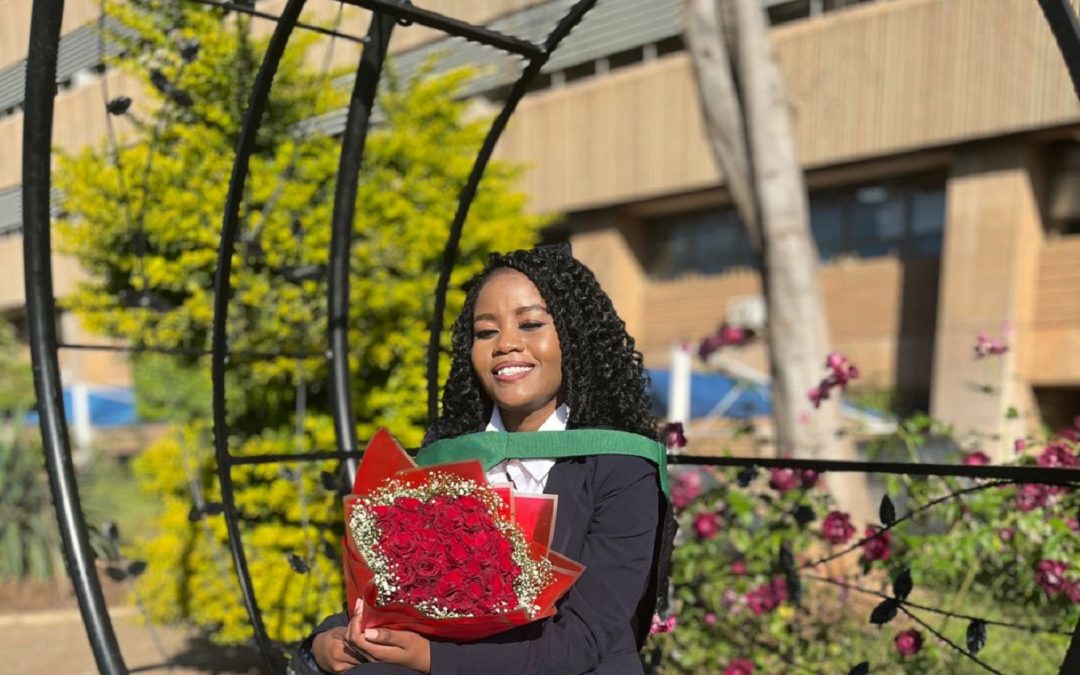
At just 21 years old, Tumisho Glory Matlala has already made her mark as an academic high-flyer. Graduating cum laude with a Bachelor of Science in Occupational and Environmental Health (Psychology) from Sefako Makgatho Health Sciences University (SMU), she now embarks on her first year of medical school — armed with discipline, resilience, and a vision to integrate mental and physical healthcare in South Africa.
 Originally from Moletji Ga-Ramongoana 2 in Limpopo, Matlala chose SMU for its strong reputation in the health and sciences fields. Her academic journey quickly proved she was destined for distinction. By her second year, consistently strong results hinted at her potential, and this was confirmed in her third year when she was named top achiever in her programme for both 2023 and 2024, and overall top achiever in the School of Science and Technology for the 2023 academic year.
Majoring in Psychology and Physiology, Matlala initially gravitated towards psychology, but over time developed a deep interest in physiology. “It was challenging but fascinating,” she reflects. “I asked for help when needed and approached my studies with curiosity.” Chemistry posed hurdles in her first year, but extra lessons and determination helped her overcome them.
A typical day for Matlala as a BSc student began with early lectures and practicals, followed by reviewing coursework during breaks or working on assignments. Evenings were dedicated to consolidating her understanding of class topics. She credits active recall, regular note review, and — perhaps surprisingly — strategic breaks as essential to her consistency and productivity.
Matlala is quick to acknowledge the role others played in her success. Supportive lecturers in the Psychology and Physiology departments, mentors who guided her study techniques, and friends who encouraged and challenged her all contributed. Above all, she credits her family’s unwavering belief in her abilities and her faith in God. “I can do all things through Christ who strengthens me,” she says, quoting the verse that kept her grounded during moments of self-doubt.
Balancing studies with family time and social connections was made possible by strong time management. “Balance is not something you find, it’s something you create,” she notes, quoting author Jana Kingsford. While she chose to focus solely on academics rather than join student organisations during her undergraduate years, she remains open to leadership opportunities in the future.
Matlala’s SMU experience, she says, was both challenging and rewarding, offering exposure to diverse people and perspectives that enriched her learning beyond the classroom. The personal qualities strengthened during her time at university — self-discipline, resilience, adaptability, and teamwork — will continue to serve her in her medical career.
Looking ahead, Matlala’s goal is to finish her medical degree while leveraging her background in psychology to shape more holistic approaches to healthcare. She hopes to address both physical and mental health challenges in communities, particularly by creating strategies that integrate the two.
Her advice to aspiring SMU students is simple yet powerful: “Build healthy study habits, manage your time well, and don’t be afraid to ask for help. Remember why you started — every challenge is an opportunity to grow.”
With her track record, determination, and vision, Matlala is poised to be a healthcare professional who bridges the gap between body and mind — and inspires the next generation of SMU achievers.
By Dimakatso Modise
by Lorato | Aug 20, 2025 | All News, SMU Media, Student Media
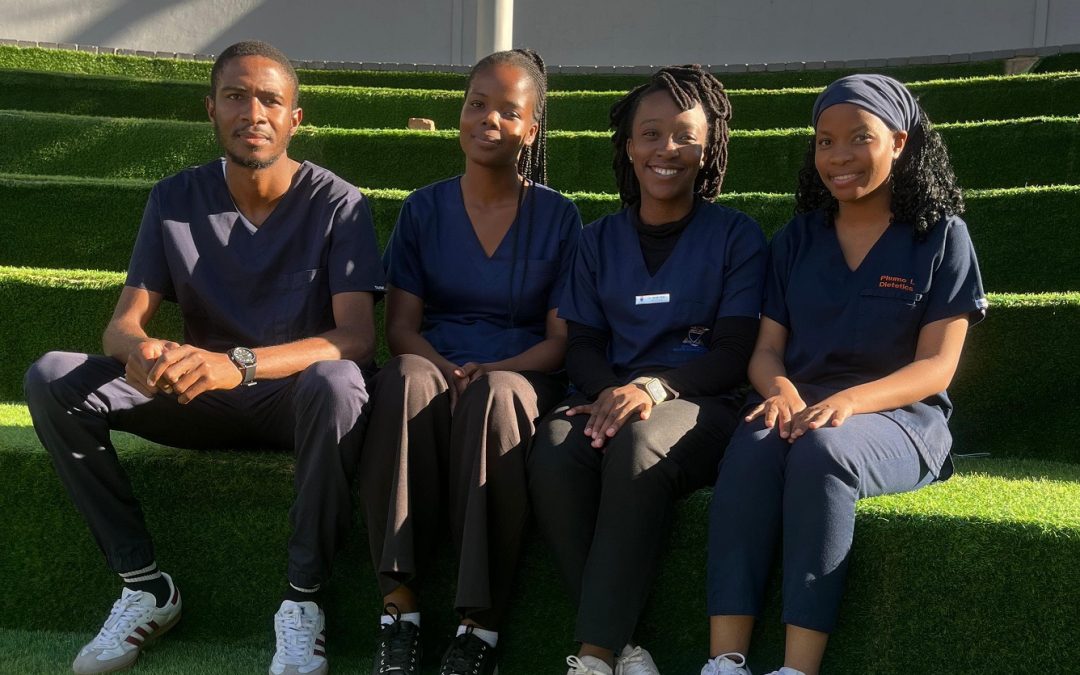
Final-year Dietetics students from Sefako Makgatho Health Sciences University (SMU) are proving that practical learning can lead to real-world change, as they wrap up their hospital-based foodservice placements across Gauteng. With placements at Helen Joseph Hospital and Tembisa Provincial Tertiary Hospital, these students not only fulfilled their academic requirements but also introduced impactful projects that addressed long-standing foodservice challenges in the public healthcare sector.
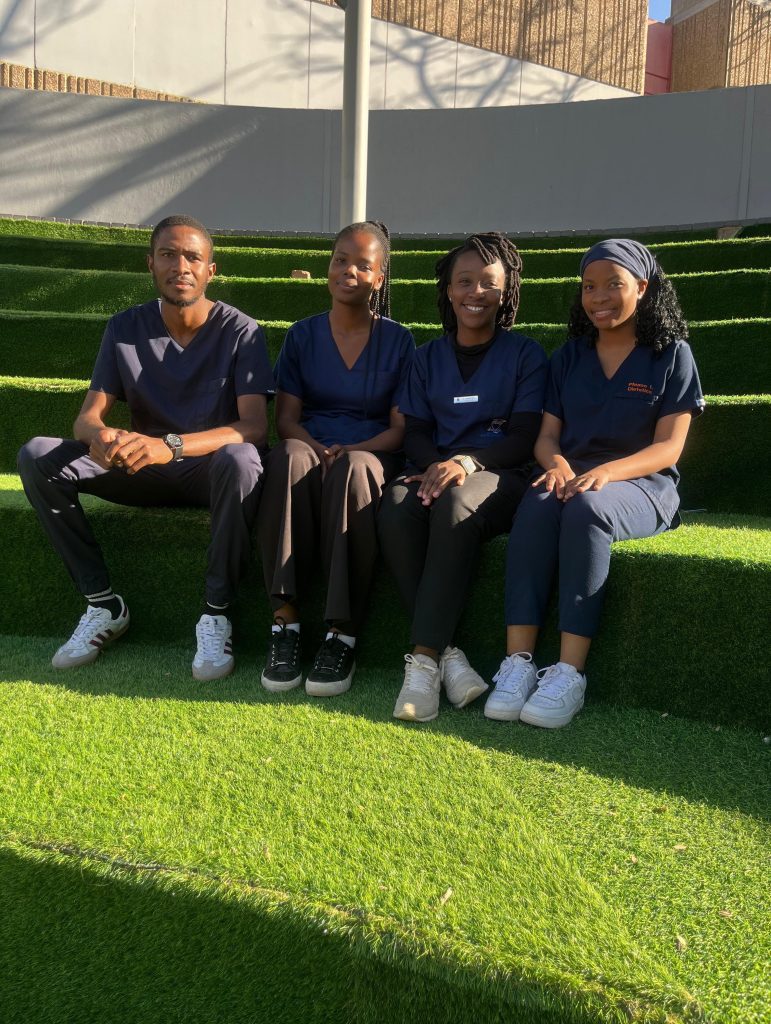 Lore Phumo, placed at Helen Joseph Hospital, took a systematic approach to improving food safety at the point of delivery. “During my SWOT analysis, I noticed the receiving staff were not using the standard checklist properly and didn’t know the corrective actions to take when goods were compromised,” said Phumo. In response, she developed a redesigned Standard Operating Procedure (SOP) for receiving dry, cold, and frozen foods. The new checklists, simplified to a ‘Yes or No’ format and including corrective action columns, are now in active use, resulting in better documentation and improved food safety outcomes.
Also stationed at Helen Joseph, Lerato Makuwa tackled hygiene and storage inefficiencies. “Spices were stored in unlabelled plastic bags, which posed a contamination risk,” she noted. Makuwa’s cost-effective innovation involved recycling and sanitising containers to create labelled condiment storage units. “It improved cleanliness, reduced spillage, and made condiments easier to access,” she said. Staff at the hospital have since adopted her system, and it is already making daily operations smoother.
At Tembisa Hospital, Amanda Mashabela took a culinary approach by modifying vegetable recipes to reduce plate waste and improve taste. “The vegetables were often overcooked and bland. I introduced new recipes with low-fat, low-salt ingredients and simple flavour enhancers like garlic and herbs,” she explained. With training sessions for the foodservice aids and improved cooking methods, the changes led to better patient acceptance and less plate waste.
Fellow student Moloko Mehala also left his mark at Tembisa, focusing on staff safety. “I noticed foodservice staff were lifting heavy goods improperly, which put them at risk of back injuries,” he said. He partnered with the hospital’s Physiotherapy Department to conduct workshops on proper lifting techniques. The project not only improved staff well-being but also contributed to better service delivery, as staff became more confident and effective in their tasks.
Each student credited their academic preparation at SMU as instrumental in navigating their foodservice placements. “The five-week preparation block helped us feel confident and ready to apply what we’d learned in class,” said Phumo. Their exposure to menu planning, costing, waste management and food safety enabled them to approach hospital challenges with practical and sustainable solutions.
As they prepare to graduate, these students reflect on the broader impact of dietitians in public health. “Dietitians are not just about meal planning—we are essential to patient recovery and foodservice quality,” said Mehala. All four students hope to see continued improvements in SOP implementation, interprofessional collaboration, and training in hospital foodservice systems.
Their collective contributions serve as a powerful reminder: when theory meets practice, meaningful change is not only possible—it’s inevitable.
By Tumelo Moila

by Lorato | Aug 20, 2025 | All News, SMU Media, Student Media
Hope, action and determination converged at Sefako Makgatho Health Sciences University (SMU) as students officially launched the UNICEF Club—a movement dedicated to championing children’s rights and advancing climate action. More than just a campus society, the club embodies a new generation of leaders committed to taking action, engaging with their communities, and driving meaningful change for children and the environment.
 The launch drew representatives from across the SMU student body, including the Student Surgical Society, the Diagnostic Society, Interprofessional Education and Collaborative Practice, Kulanathi Edu Hub, and Medics on Motion. Their participation highlighted the power of collaboration—when diverse groups unite around a shared purpose, meaningful social impact follows.
Delivering the keynote address, Tiisetso Mokoena, Volunteer Club Coordinator for UNICEF South Africa, emphasised the organisation’s four key pillars: Education, Nutrition, Ending Violence Against Children, and Healthy Lifestyle and Mental Health. She also underscored the urgency of climate action, reminding students that environmental sustainability is essential to safeguarding children’s futures.
“Universities are more than places of learning,” Mokoena said. “They are hubs of creativity, energy, and influence. Students have the power to advocate for children’s rights and create lasting change in their communities while addressing climate challenges.”
Though newly established, the SMU UNICEF Club has already made an impact. Members showcased their involvement in community cleaning projects, contributions to the university garden, partnerships with other UNICEF university clubs, and climate-focused initiatives such as tree planting and awareness campaigns. These activities not only benefit society but also equip students with vital leadership, teamwork, and organisational skills.
The launch was a lively celebration, featuring dance competitions, interactive question-and-answer sessions, and prizes including UNICEF-branded T-shirts, caps, and wristbands. Around 180 students attended, creating an atmosphere brimming with enthusiasm and purpose.
Reflecting on the day, Ntshadi Bokaba, a Medicine student, shared:
“It is inspiring to see so many students coming together for a common goal. Being part of this launch motivates me to make a tangible difference in my community and in protecting the environment.”
Another Medicine student, Andile Moloi, added: “The launch was not only enjoyable, but it reminded us why advocacy, community service, and protecting our environment matter. Small actions, when combined, can lead to meaningful change.”
The event signalled more than the creation of a club—it marked the rise of a movement. Through advocacy, education, and climate action, the SMU UNICEF Club is nurturing a culture of responsibility while empowering students to be agents of positive change.
Universities are vital in shaping tomorrow’s leaders, and the SMU UNICEF Club stands as proof of that potential. Every initiative, from planting trees to raising awareness, strengthens a society where children can grow up safe, educated, healthy, and empowered.
With passionate members, a clear mission, and an unwavering commitment to service, the SMU UNICEF Club is poised to make an enduring impact. The launch was only the beginning. As students continue to unite their energy, ideas, and creativity, they are demonstrating that meaningful change is possible—one child, one community, and one initiative at a time.
By Dimakatso Modise

by Lorato | Aug 20, 2025 | All News, SMU Media, Student Media
Raised in the rural heart of Giyani, Limpopo, Amukelani Chauke’s path to becoming a fifth-year medical student at Sefako Makgatho Health Sciences University (SMU) is a story of resilience, vision, and a deep commitment to community. His early years, spent with his grandmother in humble surroundings, taught him discipline, gratitude, and the value of essentials over excess. Later, living with his parents, he witnessed how small businesses could sustain families and create opportunities — lessons that would shape his dual passion for medicine and entrepreneurship.
 Central to Chauke’s journey is the African principle of Ubuntu — “I am because we are.” He applies it in both personal and professional settings, fostering empathy, collaboration, and solutions shaped with community voices at the forefront. His “community-centred approach” ensures that projects are sustainable and inclusive, driven by local needs and resources.
The decision to study medicine came from observing the healthcare gaps in rural areas alongside the potential for positive change. “Medicine isn’t just about diagnosing and treating,” he says. “It’s about prevention, education, and working with other sectors to address the root causes of illness.” His interest in Internal Medicine has strengthened his ability to think holistically, connecting complex details to improve patient outcomes.
Chauke balances demanding studies with leadership and innovation by focusing on initiatives that align with his long-term mission. In Entrepreneurship Development in Higher Education (EDHE), he promotes student entrepreneurship by linking ideas, mentors, and resources. As Partnerships and Sponsorships Lead in Enactus, he secures funding and collaborations to grow impact-driven projects. Representing SMU at the Technological Higher Education Network South Africa (THENSA) entrepreneurship workshop, where he won the Highest Growth Business Innovation Award, reinforced the power of innovative thinking and cross-institutional collaboration.
He has also embraced international learning opportunities, joining incubator, accelerator, and innovation lab programmes under Mashauri and Guilford College. Being the only SMU medical student in his cohort, he offered unique health insights while absorbing fresh perspectives from peers in diverse fields. Achieving a Top 10 Cum Laude ranking among 700 students nationwide is, for him, a testament to curiosity, discipline, effective time management, and a good support system from Family, friends, supervisors and mentors.
One of his signature projects — a hydroponics farming initiative — aims to tackle food insecurity and water scarcity in agricultural regions like Giyani. The experience underscored the importance of community engagement and inter-professional collaboration in healthcare, linking nutrition, environment, and economic sustainability. Working with the Agricultural Research Council (ARC) further expanded his view of innovation, demonstrating that resourcefulness can transform even unconventional materials into effective food production systems.
Chauke’s leadership extends to medical societies, where he serves as Treasurer of SMU’s Diagnostic Society. Early sponsorship successes, such as with TANC Scrubs, came from aligning mutual goals and presenting strong value propositions.
Looking ahead to 2030, he envisions himself as a clinician and community leader integrating healthcare with education, entrepreneurship, and sustainable development, aligning with the UN Sustainable Development Goals. If he could launch a project tomorrow, it would combine primary healthcare with agricultural entrepreneurship — empowering communities to cultivate health and livelihoods simultaneously.
From rural beginnings to shaping the future of healthcare innovation, Chauke is living proof that vision, curiosity, and collaboration can turn humble roots into a far-reaching legacy.
By Tumelo Moila
by Lorato | Aug 13, 2025 | All News, SMU Media, Student Media
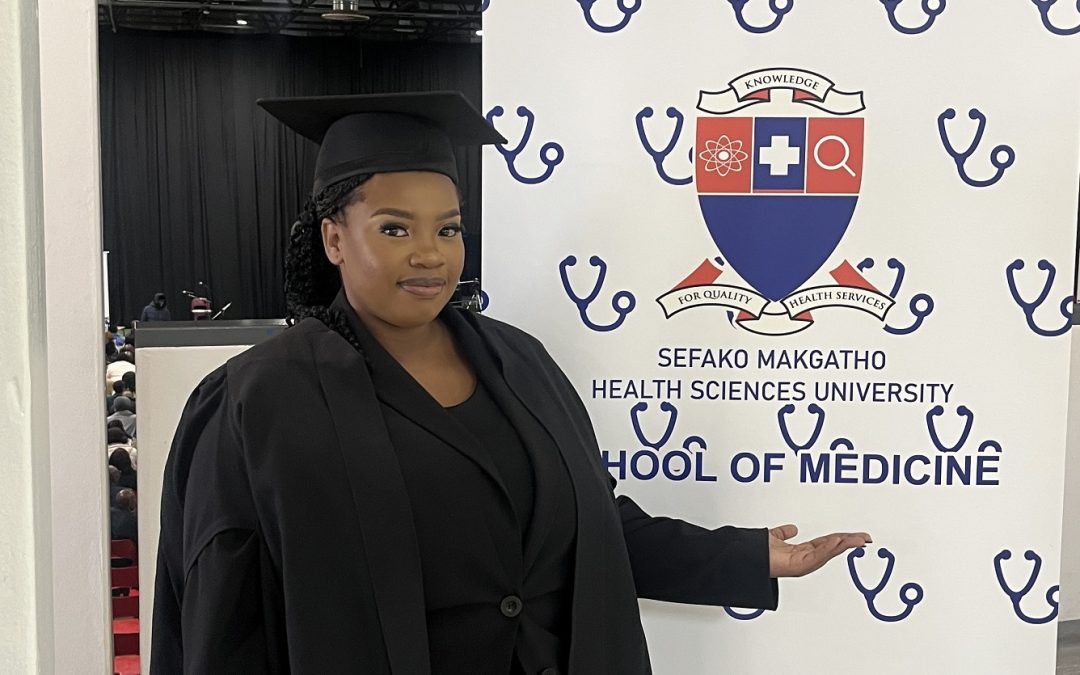
Sefako Makgatho Health Sciences University (SMU) has again proven to be a fertile ground for cultivating exceptional scientific talent. Among its recent success stories is Pearl Keatile Segwagwa, a driven young scientist whose academic journey from Midrand to graduating cum laude with a Bachelor of Science Honours in Medical Science (Anatomical Pathology) is both inspiring and instructive.
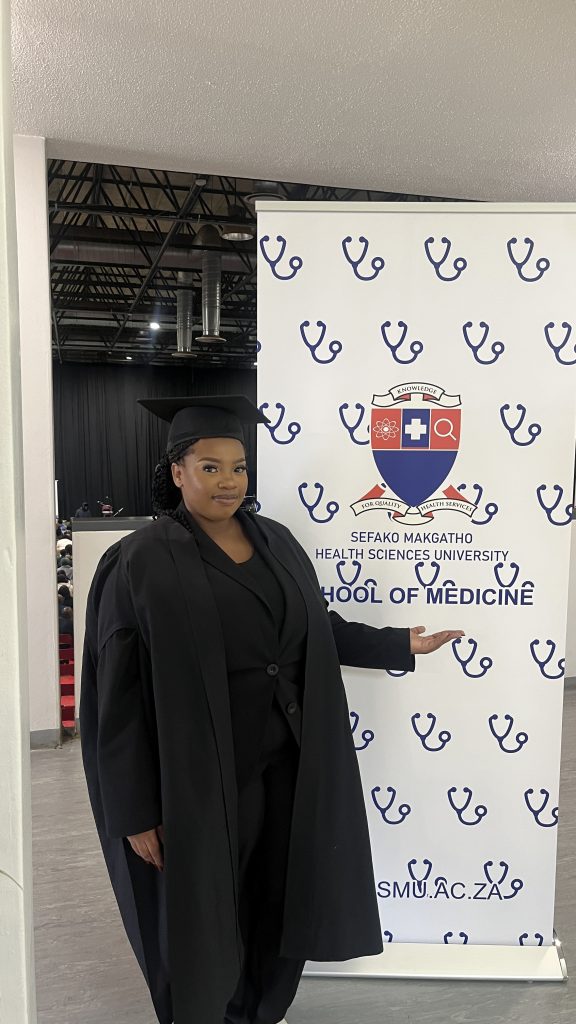 Born in Gqeberha, formerly named Port Elizabeth, but raised in Gauteng, Segwagwa first earned her BSc in Biomedicine, a degree she describes as the bridge between science and healthcare. This foundation ignited her interest in medical research, particularly in addressing gaps in South Africa’s healthcare landscape through innovation. Her choice to pursue Honours at SMU was strategic: as one of the few institutions offering this specialisation, it provided the perfect environment for her to refine her expertise while contributing to a growing body of local medical research.
“SMU’s identity as a dedicated health sciences university drew me in,” she says. “I knew I would be surrounded by people whose passion and strength lay in advancing healthcare.”
Unlike the undergraduate experience, SMU’s Honours in Medical Science programme combined rigorous coursework with advanced laboratory training. Here, Segwagwa moved from consuming knowledge to generating it, culminating in an intensive research project:
Her dissertation, “Histopathological Spectrum of Paediatric Hepatic Tumours at a Tertiary Laboratory in Tshwane,” explored rare but critical paediatric liver tumours over 10 years. Reviewing 66 biopsy cases, she found a tumour prevalence of 13.6%, with hepatoblastoma — particularly its aggressive mixed subtype — being the most common. The tumours demonstrated early onset, underscoring the urgent need for early detection, clinician awareness, and targeted monitoring in paediatric oncology.
The project faced unexpected hurdles, including data access delays caused by a cyberattack on the National Health Laboratory Service. Undeterred, Segwagwa adapted by sourcing information manually from recorded archives — a process she describes as “time-consuming but invaluable for teaching adaptability and resourcefulness.”
Among her coursework, molecular pathology stood out as both a formidable challenge and a deep fascination. She was captivated by the field’s power to trace disease origins down to single mutations and its potential to transform diagnosis and treatment in South Africa.
“Molecular pathology is evolving rapidly,” she explains. “We’re catching up with global standards, and it’s exciting to contribute to a field that will directly improve patient care in our communities.”
Graduating cum laude was the result of discipline, time management, and an insatiable curiosity. She credits her success to maintaining consistency, integrating theory with practical skills, and leaning on a robust support system of family, peers, and supervisors.
Her supervisory team — led by Dr Nosipho Thobakgale and supported by Ms Lucia Mhlongo and Dr Katlego Motlhatlego — provided both expertise and encouragement. “They nurtured my creativity, challenged my thinking, and helped me find my confidence as a researcher,” she recalls.
Segwagwa is now pursuing a Master of Science in Medicine in Anatomical Pathology at SMU, with the goal of becoming a registered medical scientist. Her long-term vision is to advance diagnostic precision, integrate molecular techniques into routine laboratory practice, and contribute to paediatric genomics research, a passion she hopes to return to later in her career.
Her message to aspiring scientists is clear: “Work hard, research your options, and have the courage to take that leap. Resilience and patience will carry you through the challenges.”
Segwagwa extends heartfelt thanks to her family, mentors, and fellow students, describing them as “the foundation of my success.” For her, science is not an abstract pursuit, but a human one: “Behind every test and report is a patient — someone whose life can be improved by what we do. That’s what keeps me inspired.”
In her journey, Segwagwa embodies SMU’s mission: producing health professionals and scientists who are not only technically competent, but also deeply committed to transforming healthcare in South Africa and beyond.
By Tumelo Moila
by Lorato | Aug 13, 2025 | All News, SMU Media, Student Media
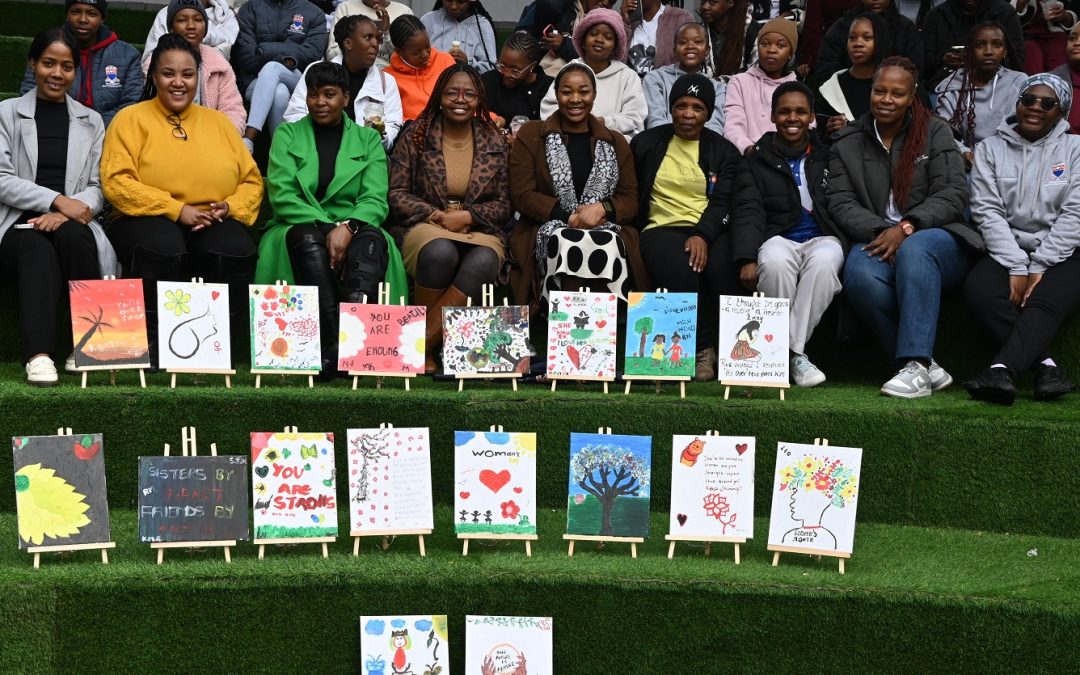
As part of Women’s Month celebrations, female students at Sefako Makgatho Health Sciences University (SMU) recently gathered for Hoop Over a Cup of Tea, an interactive event organised by the Student Affairs Department to foster connection, support, and sisterhood. With the rising pressures of academic life, social adjustment, and mental health challenges, the gathering offered students a space to relax, share experiences, and feel part of a community beyond their classrooms.
 The event was facilitated by Dr Gundo Nepfumbada, Social Worker; Sibusisiwe Komane, Educational Psychologist; Lesego Tsima, Social Worker; and Eunice Modiba, Administrative Officer. Together, they created a warm and informal atmosphere, guiding students through interactive games, painting exercises, and discussions that encouraged them to express themselves and connect meaningfully with their peers. “We wanted this to be a safe, friendly space where female students could engage freely—no pressure, no judgement—just real conversations and shared moments,” says Nepfumbada.
Students were welcomed with breakfast and invited to participate in activities that sparked creativity and conversation. Canvas painting allowed them to express their artistic sides, while writing messages of encouragement offered a way to support fellow students who might be facing challenges. The relaxed setting encouraged laughter, meaningful chats, and a sense of belonging that went beyond academic achievement. “The face-to-face interactions, the laughter during games, the quiet focus of painting together—all of this reminded students that they are not alone, that they belong, and that they are seen and heard,” says Tsima.
The primary aim of the event was to strengthen sisterhood among female students as a source of support. It encouraged collaborative thinking, improved communication skills, and created opportunities for friendships and future collaboration through study groups, joint projects, or club involvement. “Collaboration and support don’t just happen in lecture halls. Sometimes, it’s over tea, laughter, and shared creativity that the strongest bonds are formed,” says Komane.
Students left the event inspired and motivated. Musa Mulaudzi, a first-year Bachelor of Medicine and Bachelor of Surgery (MBChB) student, said: “The event was a great way to meet people and have meaningful conversations in a relaxed setting, which made the cold almost unnoticeable. I enjoyed the canvas painting the most since I got to express my artistic side.”
For Precious Betty Didintle Mangwane, also a first-year MBChB student, the highlight was seeing the impact of connection and encouragement: “For me, the highlight was seeing students open up and enjoy themselves in such a simple, friendly setting. It reminded me how important small moments of connection are, especially during stressful times. I was truly touched when one student said I was the woman they look up to because of my academic achievements—it means a lot to know that I can inspire others. I honestly would love to attend more of these kinds of events.”
Activities such as painting and writing messages of encouragement helped participants express themselves, build confidence, and strengthen empathy. Sharing personal journeys provided a sense of psychological safety, allowing students to feel valued and appreciated. The interactive games also promoted goal-setting and collaboration, showing how fun activities can foster meaningful engagement and personal growth.
The event created opportunities for genuine connection, enabling students to build friendships, support each other, and feel part of a larger community. “Creating informal yet meaningful opportunities for engagement is vital for building a strong, resilient student community,” says Modiba. Hoop Over a Cup of Tea, organised by the Student Affairs Department as part of Women’s Month, demonstrated that student engagement thrives when openness, respect, and shared humanity take centre stage. For SMU, the event highlighted the importance of sisterhood, collaboration, and connection—one cup of tea at a time.
By Dimakatso Modise