
by Lorato | Feb 13, 2025 | All News, SMU Media, Student Media
In a bold move to strengthen its media presence and cultivate the next generation of broadcasting talent, Sefako Makgatho Health Sciences University (SMU) recently appointed Themba “Techtonics” Chauke as the new SMU FM Coordinator. With a wealth of experience spanning community, commercial, and public radio, Chauke’s appointment signals SMU’s commitment to recruiting top industry professionals to enhance student-led media and transform SMU FM into a leading campus-based radio station.
 Chauke, a seasoned broadcaster with an impressive track record in radio production, content strategy, and media mentorship, brings a vision of innovation, excellence, and collaboration to SMU FM. His appointment aligns with the university’s ongoing efforts to enrich student experiences through dynamic and professional media platforms. Under his leadership, SMU FM is set to become a powerhouse of student broadcasting, offering a training ground for young media professionals while amplifying the voice of SMU’s student community.
A journey through the airwaves: Chauke’s rise in radio
Chauke’s passion for radio was ignited at a young age, fascinated by how presenters connected with audiences. This early interest led him to pursue a degree in Media Studies and Communications at the University of Limpopo, where he refined his craft as a presenter and producer at Radio Turf.
In 2013, he took his first professional step at Malamulele Community Radio (Mala FM), later moving through Choice FM, Energy FM, and Vhembe FM. His breakthrough came at Capricorn FM, a commercial radio station in Limpopo, where he gained exposure to a broader audience and an in-depth understanding of the industry.
“Like many in the industry, my journey required perseverance, long hours, and an unwavering commitment to my craft,” Chauke reflects. His experience spans community, commercial, and public radio, each platform shaping his approach to broadcasting. At Munghana Lonene FM (SABC), he held multiple roles in content production, sound imaging, and music direction, playing a crucial role in shaping the station’s musical identity.
He was also instrumental in conceptualising the theme for the 19th edition of the Xitsonga Music Awards, “Ku rila xinari,” showcasing his influence in creative direction and programming strategy.
“Each station taught me something unique—community radio grounded me in grassroots engagement, commercial radio refined my content packaging, and public radio gave me a broader perspective on audience needs,” Chauke shares.
A new era for SMU FM
In December 2024, Chauke stepped into his new role as SMU FM Coordinator, ready to elevate campus radio and nurture future broadcasting talent. “It was an incredible honour and a humbling moment,” he says. “SMU FM has great potential, and I am excited about shaping it into a thriving student/community media platform.”
His vision for SMU FM is ambitious. He aims to enhance content quality, expand training programmes for presenters and producers, and integrate campus media with broader university activities. Chauke is already engaging with established radio stations to create collaborative training opportunities for students. “Collaboration is key,” he explains. “I’m in talks with other radio stations to develop strategies that will help students gain hands-on industry experience.”
Beyond broadcasting, Chauke envisions a culture of innovation, creativity, and inclusivity at SMU FM. He believes that teamwork and a healthy work environment are essential for success. “A great leader listens, provides guidance, and encourages creative freedom while maintaining a clear direction,” he emphasises. Mentorship is a core pillar of Chauke’s leadership approach. Through workshops, mentorship programmes, and partnerships with industry professionals, he hopes to equip students with real-world experience.
“SMU FM should be a platform that nurtures and develops young media talent,” he asserts. “By exposing students to professional broadcasting techniques and industry trends, we can ensure they graduate with a competitive edge. “Chauke is also focused on enhancing student engagement through interactive programming, live campus discussions, and student-driven content. He believes that radio should reflect the student experience, addressing topics relevant to university life, career development, and social issues. “By covering student-focused topics, hosting engaging campus events, and providing a platform for open discussions, we can make SMU FM a key voice within the university,” he says.
When asked what advice he has for students hoping to break into the radio industry, Chauke offers words of wisdom: “Stay humble. Start where you are. Take advantage of community and campus radio, learn as much as possible, and be patient. Passion, consistency, and a willingness to grow will open doors.”
Chauke acknowledges the mentors and colleagues who have played a significant role in his journey, fuelling his passion for radio and leadership. “Support systems matter, and I am grateful for those who believed in my journey,” he shares. Looking ahead, he hopes to build a legacy of excellence at SMU FM, shaping it into a premier campus radio station that consistently produces top industry talent.
“The SMU community can support us by tuning in, participating in discussions, and contributing ideas. SMU FM is a platform for students, and their involvement is key to its success.”
With his visionary leadership, extensive industry experience, and deep passion for radio, Chauke is poised to transform SMU FM into a powerhouse of student broadcasting.
By Tumelo Moila

by Lorato | Feb 13, 2025 | All News, SMU Media, Student Media
Sefako Makgatho Health Sciences University (SMU) continues to cement its reputation as a powerhouse in health sciences research, tackling some of the world’s most urgent medical challenges. Among its rising scientific minds is Ankonisaho Mahalihali, a dedicated researcher leading the charge against antimicrobial resistance (AMR)—a silent global crisis threatening modern medicine.
 Hailing from Tshilamba, Mutale, in Limpopo, Mahalihali’s journey from the University of Venda to SMU is a testament to her relentless pursuit of scientific excellence. Now pursuing a master’s degree in medical microbiology at SMU, her research delves into resistance mechanisms in bacterial pathogens, a crucial area in the fight to preserve the efficacy of life-saving antibiotics.
With SMU’s cutting-edge facilities and a commitment to advancing high-impact medical research, Mahalihali is not just building a career—she is shaping the future of infectious disease control in South Africa and beyond. “In 2024, I joined SMU to pursue a master’s degree in medical microbiology, focusing on resistance mechanisms in bacterial pathogens,” says Mahalihali.
“SMU is a leading institution in health sciences, making it the ideal choice for my academic pursuits. My interest in medical microbiology stemmed from its direct impact on human health, particularly infectious diseases and antimicrobial resistance. SMU has nurtured my passion by providing mentorship, access to research platforms, and state-of-the-art laboratories.”
Her research investigates the prevalence, antibiotic resistance, and whole-genome sequencing of Klebsiella pneumoniae, a pathogen linked to multidrug resistance. “My research has identified critical resistance patterns and outbreak dynamics, reinforcing the need for improved surveillance and antibiotic stewardship,” she explains.

“With expert guidance from seasoned academics, I have refined my ability to conduct impactful research that contributes to global efforts in combating antimicrobial resistance. SMU’s Department of Microbiology, journal clubs, and research meetings have provided platforms for scientific discussions, enhancing my analytical and presentation skills. Access to well-equipped laboratories has further strengthened my expertise in molecular microbiology.”
Mahalihali credits Dr Andrew Musyoki as a pivotal mentor in her research journey. “SMU plays a crucial role in addressing antimicrobial resistance through its research-driven approach, collaborations, and emphasis on real-world applications. By equipping students with essential skills and supporting innovative research, the university contributes to global efforts in combating antibiotic resistance and shaping policies to mitigate its impact.”
“Through rigorous training and research exposure at SMU, I gained the expertise needed to excel at the International Centre for Genetic Engineering and Biotechnology (ICGEB) in Trieste, Italy. My background in bacterial genomics and antimicrobial susceptibility testing has been instrumental in conducting advanced molecular analyses and collaborating with international researchers.”
Reflecting on her recent achievement, she shares, “From Venda in South Africa to Trieste in Italy via the research team at the Department of Microbiological Pathology in SMU, it has been an incredible journey. Thanks to our collaborator, leader of the Bacteriology group at ICGEB, Vittorio Venturi. I am grateful for the support by ICGEB and the Department of Science and Innovation (DSI). Klebsiella pneumoniae will know who this rising star is!”
“Global opportunities like the ICGEB Special Programme broaden scientific perspectives, enhance skills, and provide exposure to cutting-edge technologies. This experience strengthens my expertise in antimicrobial resistance, demonstrating SMU’s commitment to nurturing globally competitive researchers.”
Mahalihali aims to share her expertise through mentorship, workshops, and research collaborations. “By engaging in research meetings and knowledge-sharing initiatives, I hope to inspire upcoming researchers and contribute to the advancement of SMU’s research community and South Africa’s health sector.”
Encouraging fellow SMU students, she states: “Remain resilient, proactive, and dedicated to continuous learning. Seek mentorship, engage in research, and embrace opportunities to contribute meaningfully to the field of health sciences.”
Mahalihali aspires to become a leading researcher in healthcare-based research, exploring innovative solutions to public health challenges. “With SMU’s strong research culture, mentorship, and collaborative environment, I am confident in achieving my long-term goal of contributing significantly to scientific advancements in infectious diseases and antimicrobial resistance.”
Her selection for the ICGEB fellowship stands out as a pivotal achievement, providing her with invaluable international research exposure and networking opportunities. “SMU’s academic environment fosters a culture of curiosity, critical thinking, and interdisciplinary collaboration. Through access to advanced research techniques and mentorship, I have strengthened my resolve to contribute meaningfully to public health.”
To prospective SMU students interested in microbiology or health sciences, Mahalihali advises: “Remain curious, seek mentorship, and actively participate in research projects. With SMU’s strong academic foundation, networking opportunities, and commitment to excellence, students can build impactful careers in microbiology and health sciences.”
Mahalihali’s journey exemplifies SMU’s commitment to Excellence, Integrity, Ubuntu, and Scholarship. Her dedication to antimicrobial resistance research not only upholds these values but also showcases the university’s mission to advance health sciences for a better future. As she continues to make strides in her field, her work stands as a testament to the transformative power of education and research at SMU.
By Dimakatso Modise

by Lorato | Feb 13, 2025 | All News, SMU Media, Student Media
The Sefako Makgatho Health Sciences University (SMU) Karate Team has once again demonstrated excellence and determination, securing podium finishes at the prestigious FKO-AFRICA Selection Tournament. The competition, held on 25 January 2025 at Leondale Hall in Germiston, served as a crucial qualifier for the 1st World Full Contact Karate Organisation (WFCKO) Tournament, scheduled to take place in Japan in May.
 Four outstanding karatekas represented SMU with remarkable performances: Tshiamo Sefolo (1st Place – Women under 50kg) clinched the gold medal, showcasing discipline, focus, and technique. As a second-year BSc Life Science student, her victory not only highlights her athletic prowess but also reflects SMU’s commitment to balancing sports and academics. She will proudly represent Africa at the World Tournament in Japan. Innocent Zikhali (2nd Place – Men under 90kg) fought his way to a silver medal, earning a position as a reserve for the world competition. Oratilwe Sethabela (2nd Place – Women under 54kg) delivered a strong performance, securing silver and a reserve spot for the World Tournament. Ntsako Sono (3rd Place – Women under 59kg) completed the team’s success with a well-earned bronze medal.
The tournament provided an opportunity for top African karatekas to showcase their skills on an international stage. SMU’s team embodied the values of excellence, integrity, and accountability, proving that dedication and rigorous preparation yield remarkable results. The university takes pride in its student-athletes who balance academics and sports with efficiency and student-centredness at the core of their journey.
Leondale Hall in Germiston served as the battleground where top athletes competed fiercely for a chance to represent Africa at the WFCKO Tournament in Japan. This significant event marked another milestone in SMU’s commitment to fostering sporting excellence.
Participation in the tournament was not only about winning medals but also about securing a place at the upcoming WFCKO World Tournament in Japan. The SMU karate team’s success reinforces the university’s dedication to student development, leadership, and respect for diverse talents.
SMU Karate Instructor, Issac “The African Tiger” Mashinini Shihan, expressed his gratitude to the Sports and Recreation department for granting the team access to the sports facilities during the festive season for their preparation. He also commended the karatekas for sacrificing their family time during this period. “Having produced countless champions from SMU, this is only the beginning of the year, true training is yet to begin. This is yet another important year where the SMU flag must be flown high, and the team is poised to meet the challenge,” he stated.
The SMU Karate Team’s remarkable success was made possible through intense training, mentorship, and institutional support. Their achievements highlight the university’s emphasis on effective leadership in sports, guiding students towards global opportunities. The university community celebrates this milestone and extends its best wishes to Tshiamo Sefolo as she embarks on a historic journey to represent both SMU and Africa on the world stage.
SMU takes immense pride in its students’ success and looks forward to more victories that reflect the institution’s values and dedication to holistic student development.
By Dimakatso Modise
by Lorato | Feb 12, 2025 | All News, SMU Media, Student Media
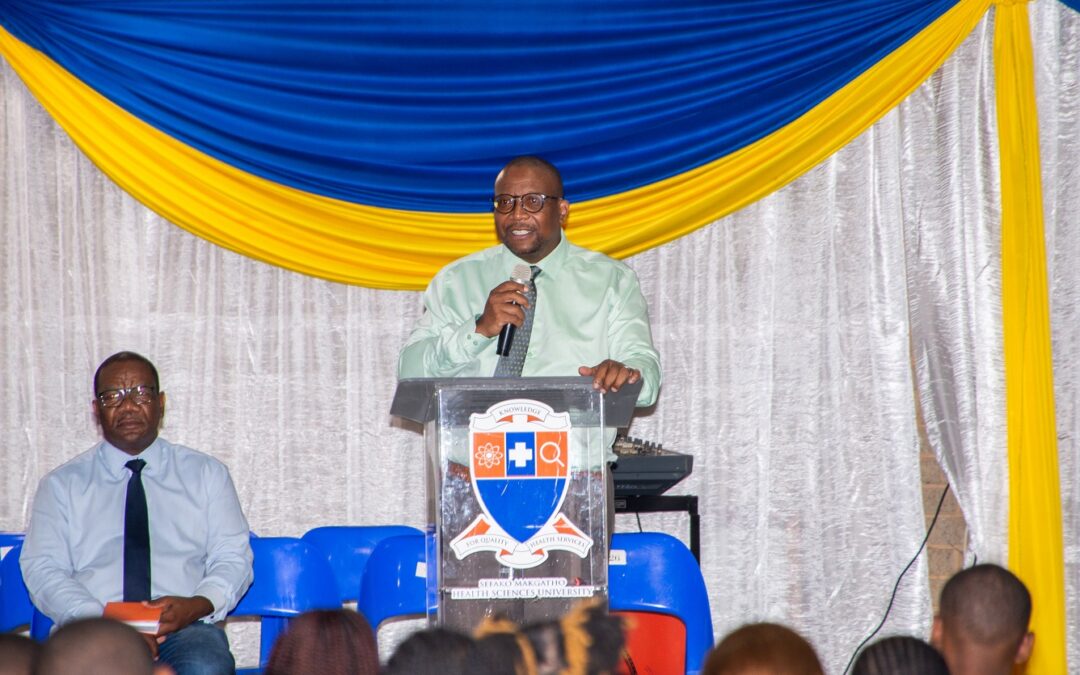
Sefako Makgatho Health Sciences University (SMU) reaffirmed its commitment to shaping future healthcare professionals by hosting a comprehensive orientation event for first-year students in the School of Medicine on 10 February 2025. The event provided an in-depth introduction to university life, academic expectations, and the wealth of support services available to ensure student success.
 As a leading institution in health sciences, SMU continues to prioritise student development, professional readiness, and academic excellence. The orientation event played a crucial role in equipping new students with the knowledge and resources they need to navigate their medical education journey with confidence.
Student support services: A strong foundation for success
Newcomers to the MBChB, Radiography (B.Rad), and Emergency Medical Care (EMC) programmes were introduced to a variety of academic and psychosocial support services aimed at enhancing their student experience. The Centre for University Teaching and Learning (CUTL) was highlighted as a key support structure, offering mentorship, academic advising, and e-learning assistance to ensure students receive the necessary guidance throughout their studies. Recognising the importance of mental health, SMU has also appointed a clinical psychologist to provide students with professional mental wellness support, while Campus Health Services ensures their general healthcare needs are met.
To assist with academic concerns, students were encouraged to visit the Student Centre in the Clinical Pathology Building and consult their academic facilitators, who are available to provide guidance on coursework and university expectations. Senior students also shared insights on adjusting to university life, offering advice on navigating peer pressure, managing study schedules, and handling the academic rigour of a health sciences degree.
Expert advice and motivation for new students
MBChB Academic Project Leader, Botha Gerder, emphasised the importance of active student engagement and urged students to stay informed about key academic dates, institutional regulations, and available support services. 2025 Guardian Lecturer Mabatho Thulo further encouraged students to remain focused on their academic goals while maintaining a balanced lifestyle, reinforcing the importance of remembering their purpose in joining SMU’s School of Medicine.
 Head of Faculty, Professor Honey Mabuza, delivered an inspiring keynote address, offering four essential tips for student success. He advised students to collaborate with their peers to enhance learning experiences and build strong support networks. He encouraged them to embrace vulnerability, seek assistance when faced with challenges, and attach themselves to senior student mentors who can provide valuable guidance. Lastly, he stressed the importance of addressing difficulties head-on, cautioning against withdrawing or avoiding problems.
Mabuza also outlined SMU’s commitment to ensuring students receive career placement support that aligns with the Health Professions Council of South Africa (HPCSA) regulations. Through structured training platforms, students are exposed to practical learning environments that equip them with the necessary skills and experience to transition into professional practice.
The orientation also provided an opportunity for students in the Emergency Medical Care (EMC) programme to gain a deeper understanding of the practical and physical demands of their chosen field. Programme Coordinator, Wisdom Ndhlovu, explained that the EMC programme is built on three foundational aspects: theoretical knowledge, practical application, and simulation-based training. He highlighted the importance of physical fitness, particularly swimming skills, which are required for certain emergency response situations and can pose a challenge for some students.
Adding to the discussion on student support services, Dr Joshua Maliavusa from CUTL introduced a suite of academic support initiatives designed to assist vulnerable students. He explained that mentorship programmes, student tutorship, e-learning support, and student tracking and monitoring systems are in place to help students stay on track with their studies. Additionally, the academic advising programme ensures that students receive timely guidance to navigate their coursework effectively. Maliavusa reassured students that these support structures exist to help them overcome challenges and excel academically.
A bright future at SMU
 Closing the event, Matimu Chauke, Chairperson of the School of Medicine, encouraged students to believe in themselves, take their academic journey step by step, and embrace the challenges of medical school. He reminded them that medicine is a demanding yet rewarding career and that success is possible with the right support system, curiosity, and determination.
The SMU School of Medicine Orientation was a resounding success, equipping first-year students with valuable guidance, motivation, and institutional support. With SMU’s exceptional academic programmes, expert faculty, and strong student support services, SMU students are now well-prepared to embark on a transformative educational journey that will position them as future leaders in healthcare.
By Khanyi Nkosi and Musa Msibi

by Lorato | Feb 10, 2025 | All News, SMU Media, Student Media
Sefako Makgatho Health Sciences University (SMU) set the stage for academic excellence and professional growth as it successfully hosted the 2025 First-Time Entering Students (FTEN) Orientation on 30 and 31 January. Designed to ease the transition into university life, the two-day programme immersed new students in SMU’s vibrant academic and social environment through inspiring addresses by university leaders, an engaging campus tour, and lively entertainment.
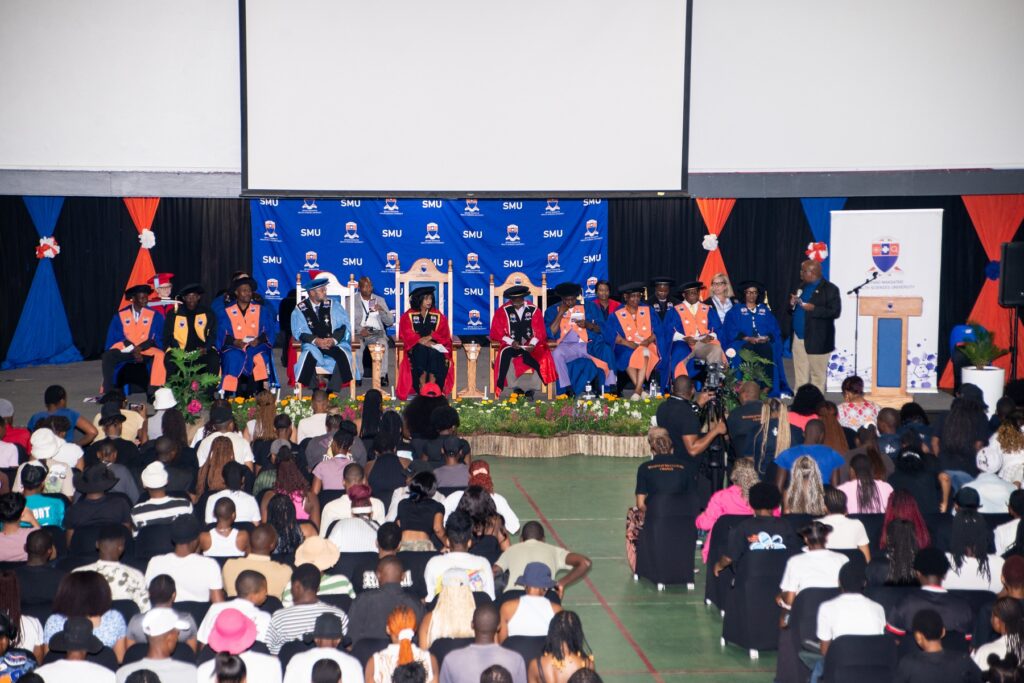 Welcoming the new cohort, Acting Vice-Chancellor Professor Tandi Matsha-Erasmus underscored the significance of this milestone. “Today is not just another day; it is a defining moment. For our first-year students, this marks the beginning of an academic journey that will not only shape your future but also influence the future of health sciences in South Africa and beyond. To the parents and guardians, thank you for entrusting your children to SMU. We are deeply honoured to partner with you in their academic and personal development.”
Matsha-Erasmus further urged students to embrace their journey at SMU with determination, curiosity, and an open heart. She said: “Engage fully in your studies, immerse yourself in campus life, and seize every opportunity to grow academically, socially, and personally. Remember, this is not just a university; it is a community united by a shared purpose—to lead, serve, and transform.”
Following the Vice-Chancellor’s address, students were introduced to essential university services. Mahlatlholle Masha, Acting Chief Financial Officer, provided an overview of financial aid, student services, student debtors, and transport. His presentation ensured that students had a clear understanding of the financial support structures available to them.
Next, Tulani Nkuntse, Director of Student Affairs, took the stage to discuss student life at SMU under the theme: “Where learning meets adventure.” He encouraged students to take advantage of academic and extracurricular opportunities to enrich their university experience.
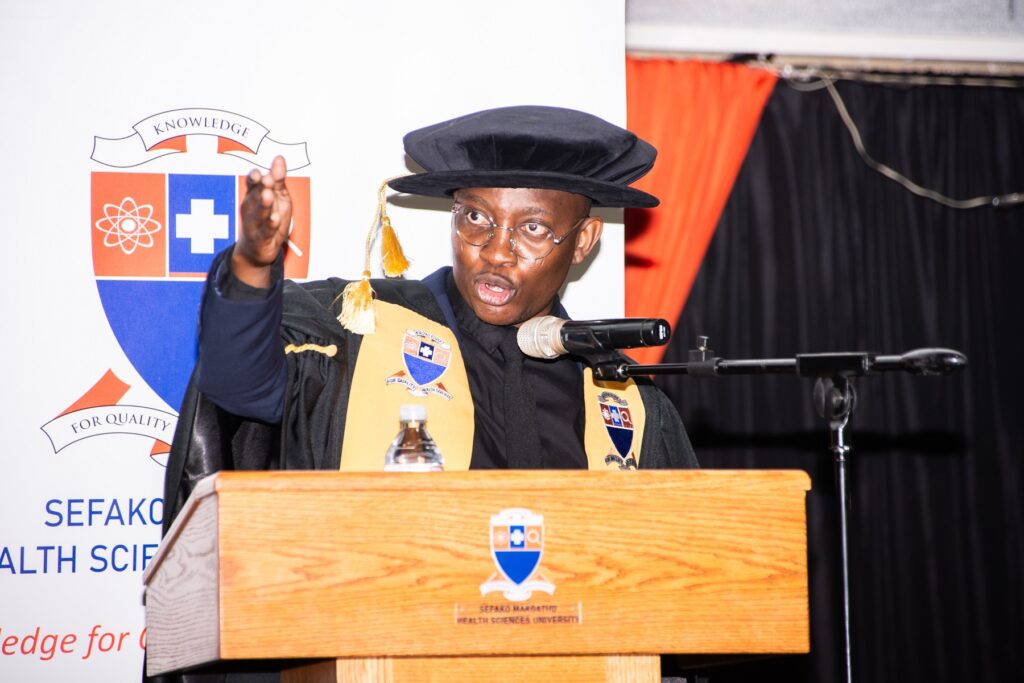 Student Representative Council (SRC) President, Katlego Peter Moshonyane, delivered a powerful message. He urged students not to let their backgrounds discourage them, stating: “Your background should never discourage you. Study hard and make sure you go far in life – never struggle alone.” He also introduced the SRC executive members, reinforcing the council’s commitment to student support and advocacy.
Adding to the student support system, Alizwa Boco, an MBChB 3 student and FTEN Guardian & General Student Buddy Coordinator, encouraged students to support each other and stay committed to their academic journey. Her message emphasised the importance of mentorship and peer assistance in achieving academic success.
To close the first session, Dr Elize Venter, Director of the Centre for Teaching and Learning, explained the various mentorship sessions and assessments provided by her unit. She assured students that the university has structured support systems to help them succeed academically.
The second session of the orientation commenced with an exciting campus tour. New students had the opportunity to explore SMU and familiarise themselves with key buildings and their functions. The tour aimed to help students easily navigate campus life, ensuring they knew where to access essential services and facilities.
 As part of the orientation programme, Campus Health, led by Health Promoter Kelebogile Nonkwelo, facilitated a solemn moment to remember victims of HIV and COVID-19. She led a prayer and a candlelight ceremony, urging students to keep those affected in their thoughts as they embark on their journey in the health sector. This moment served as a reminder of the importance of compassion in healthcare.
In addition to the speeches and entertainment, various sports codes were introduced to students, encouraging them to stay active and engaged in university life beyond academics. This initiative aimed to promote a well-balanced student experience by offering opportunities for physical fitness, teamwork, and social interaction.
The 2025 SMU Orientation successfully introduced first-time entering students to the university’s academic, financial, and social support structures. With inspiring words from university leadership, the support of the SRC, an engaging campus tour, and exposure to different sports codes, new students are well-equipped to begin their studies with confidence. As SMU continues its mission of shaping healthcare leaders, the orientation has set the foundation for a transformative academic journey.
By Dimakatso Modise

by Lorato | Feb 3, 2025 | All News, SMU Media, Student Media
Sefako Makgatho Health Sciences University (SMU) continues to nurture future leaders in healthcare, and Motheo Mmola is a shining example of this legacy. Raised in Diepsloot, she grew up in an environment that championed education and perseverance—values that shaped her path into the field of oral health. Determined to make a tangible impact in underserved communities, she set her sights on a career that would bridge the gap in oral health awareness and accessibility.
 Enrolling at SMU proved to be a transformative experience. The university provided her with a solid foundation in both the theoretical and practical aspects of oral healthcare, offering hands-on experience through community outreach programmes. Surrounded by experienced lecturers and a supportive academic environment, Mmola thrived—turning challenges into stepping stones toward excellence.
“The university provided a solid foundation in both theoretical and practical aspects of oral health care,” Mmola explains. Throughout her studies, she worked alongside experienced lecturers and gained invaluable hands-on experience through community outreach programmes. Though the workload was demanding, her dedication to the field kept her motivated.
Her passion for oral health and community service was recognised when she was awarded Best Student in Dental Public Health. “This award is not just a personal achievement but a call to continue advocating for better oral health awareness in South Africa,” she says. The recognition reaffirmed her commitment to her studies and the field of public health dentistry.
Receiving the Van Schaik’s Dental Award was another milestone in Mmola’s academic journey. “This award symbolises my perseverance and commitment to excellence in oral health,” she notes. Professionally, it opens new doors and strengthens her credibility as a dedicated oral health professional. It fuels her ambition to continue excelling and making a meaningful contribution to the industry.
Like many students, Mmola faced intense academic pressure, procrastination, and moments of self-doubt. “The rigorous nature of the course required resilience and commitment,” she admits. She successfully balanced theoretical learning with practical application by mastering time management and focusing on her long-term goals. Her ability to adapt and remain disciplined played a significant role in her success.
 Winning these awards has reinforced Mmola’s passion for public health dentistry. She now envisions a future where she can contribute to oral health advocacy, policy improvements, and increased accessibility to dental care. “I want to be at the forefront of improving oral health standards in South Africa,” she says. Whether in private practice, community initiatives, or further studies, she aims to be a key player in shaping the future of oral health care.
To those considering a career in oral health or other health fields, Mmola offers invaluable advice: “Stay committed, work hard, and embrace continuous learning. Oral health is a growing field with vast opportunities, and perseverance is key.” She encourages students to seek mentorship, participate in community outreach programmes, and never underestimate the significance of their studies.
Mmola’s ultimate goal is to use her knowledge and achievements to inspire others and contribute to the broader field of dental health in South Africa. She plans to engage in initiatives that promote oral health awareness, particularly in rural and underserved communities. “Through education, outreach programmes, and potential research, I hope to drive positive change and make quality dental care more accessible,” she says.
As she steps into the next phase of her career, Mmola remains committed to advancing oral health advocacy and policy reforms in South Africa. Her accolades, including the Best Student in Dental Public Health award and the Van Schaik’s Dental Award, are not just personal milestones but symbols of her unwavering dedication to the field.
With SMU as the launchpad for her success, Mmola envisions a future where quality dental care is accessible to all, particularly in underserved communities. Whether through private practice, community initiatives, or further studies, she is determined to be a driving force in shaping the future of oral healthcare. “With passion, perseverance, and a commitment to service, I hope to inspire others and create lasting change,” she affirms.
By Dimakatso Modise