by Lorato | Nov 7, 2024 | All News, SMU Media, Student Media
From the modest township of Tsakane in Gauteng to the halls of Sefako Makgatho Health Sciences University (SMU), Bongisizwe Sibeko—known by his peers as Bharaza—has charted a remarkable path of leadership, resilience, and growth. As a Bachelor of Science student, Sibeko’s journey is a testament to the power of determination and the importance of an enabling environment like SMU, which nurtures young leaders to shape the future.
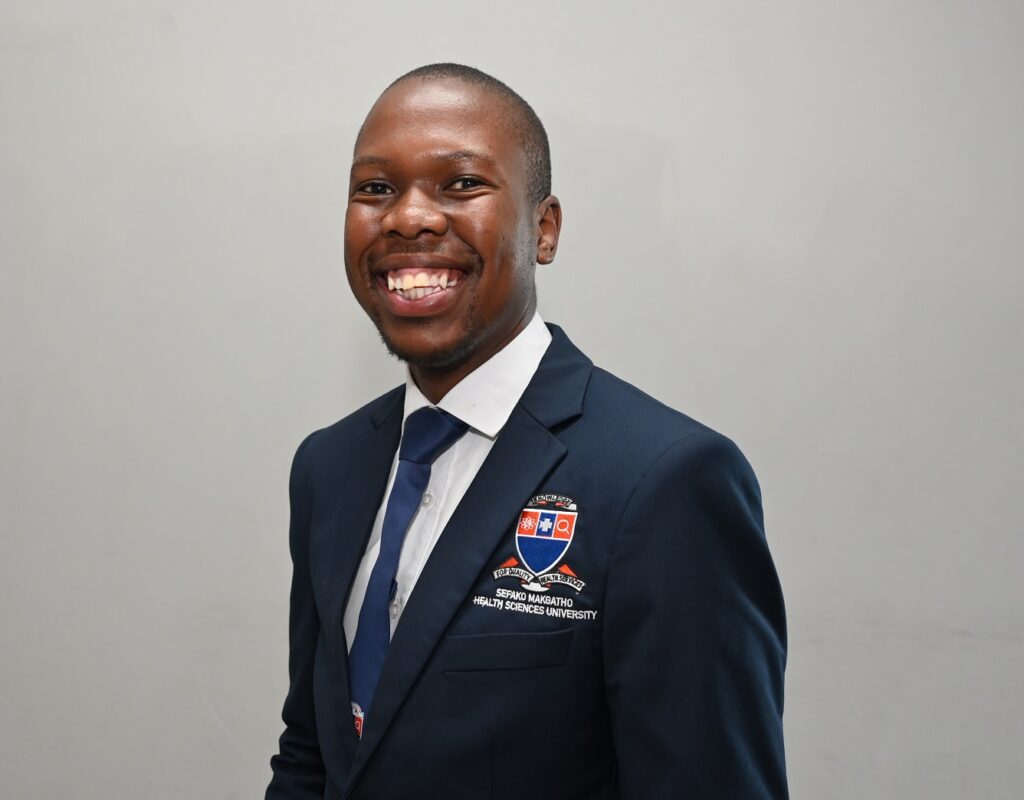
SMU student Bongisizwe Sibeko, leading with purpose and impact
Sibeko’s leadership journey began early, first as a class representative and later as the Chairperson of the Student Representative Council (SRC) School of Science and Technology (SST) Committee, a role he held for two terms. What started as a desire to inspire and uplift others evolved into a deep understanding of leadership’s complexities. “Leadership is not about being perfect,” Sibeko reflects. “It’s about recognising that even your imperfections can be seen as strengths by others.”
His tenure as Chairperson revealed the importance of belief—belief in oneself, belief in a vision, and belief in the possibility of transformation. “Believe before seeing,” he explains, capturing a philosophy that has guided him through both the triumphs and challenges of leading a student body. This mindset has allowed him to face the pressures of leadership with calm confidence, teaching him that not every challenge demands a reaction and that patience is key.
At SMU, Sibeko found an institution that provided the platform and support he needed to thrive as a leader. Through an environment that fosters growth and self-discovery, SMU enabled him to explore his leadership potential and cultivate the skills necessary to inspire others. “Living a purpose to inspire is my greatest motivation,” he shares a sentiment that captures his deep commitment to making a difference in the lives of those around him.
His leadership role taught him patience, the importance of small steps, and the value of persistence. “You can’t win every battle,” Sibeko acknowledges, but he has learned that progress often comes from consistent, steady efforts rather than quick victories. His journey from Tsakane to becoming a prominent leader at SMU serves as an inspiring example of what is possible with dedication and an enabling support system.
Sibeko’s story is also one of personal growth. His leadership experience was not only about guiding others but also about discovering his own strengths and staying true to his values. “I may not be where I want to be yet,” he admits, “but with consistent, small steps, even those who once ignored the difference will start to notice.”
SMU’s role in nurturing young leaders like Sibeko is pivotal. By providing a supportive environment where students can take on leadership roles, make mistakes, learn from them, and grow, the university demonstrates its commitment to empowering the next generation of change-makers. Sibeko’s journey shows that leadership is not just a title but a process of continuous learning and self-discovery.
Sibeko’s path from Tsakane to SMU illustrates the power of perseverance and the importance of an enabling environment that allows young people to rise, lead, and inspire. His story is a reminder that leadership is not confined to those born with it but can be nurtured in anyone willing to grow, learn, and take on the challenge. SMU continues to be a catalyst for this kind of personal and leadership development, empowering students like Sibeko to lead with purpose and impact.

by Lorato | Nov 7, 2024 | All News, SMU Media, Student Media
Growing up in Nkowankowa Township, a few kilometres outside Tzaneen (Limpopo), SMU postgraduate student, Khanyisa Faith Mokgolobotho dreamt of achieving remarkable things and making a mark in the world of technology and leadership. Driven by the pursuit of better opportunities, her family moved to Soweto and later to Lenasia (Gauteng). She started schooling at Odin Park Primary School in Ennerdale (a predominately Coloured community) and then graduated and enrolled at Azara Secondary School (an Indian community). She credits these diverse communities for shaping her into who she is today: a Student Leader, Entrepreneur and Software Development Engineer.

SMU postgraduate student, Khanyisa Faith Mokgolobotho
“My community was plagued by taxi violence and gang fights, which meant I didn’t have many friends outside of school for safety reasons. This environment fuelled my determination to use education as my ticket out of this crime-ridden environment. From a young age, I was outspoken and confident, inspired by figures like former State President Jacob Zuma and Economic Freedom Fighter Commander-in-Chief Julius Malema. Their presence in politics and leadership fascinated me, and I knew from then that one day, I wanted to be a leader too,” says Khanyisa.
Leadership roles have always been a significant part of her life, and she set a goal of becoming a student leader when she registered to study for a Bachelor of Science (BSc) in Mathematical Science at Sefako Makgatho Health Sciences University (SMU) in 2020. “My leadership journey started as a Sports Officer of Residence 1B’s House Committee in 2022, ultimately became a House Committee Chairperson in 2023, and eventually took on the role of Interim Student Governance Structure (ISGS) as the Residence Officer for the 2023/2024 term of office. These roles allowed me to make a tangible difference on campus and gave me the platform to advocate for my peers,” she shares.
In December 2022, she had an incredible opportunity to participate in the Data Intensive Research Initiative of South Africa (DIRISA) Student Datathon Challenge under the theme, ‘using social media data to find innovative solutions.’ The DIRISA student Datathon is a competition showcasing how open research data can be used to develop creative and innovative solutions to some of South Africa’s problems. Its objectives include allowing students to learn about the benefits of open data(it gives undergraduate students an opportunity and exposes them to the world of data science), showcasing innovative solutions using open data and data science techniques, finding new solutions to problems, and advocating for the use of open data. “I was among the first cohort of students to represent SMU, competing with students from different universities nationwide. My performance earned me the Best Female Student Participant award and a R100 000 annual bursary that funded the remainder of my undergraduate degree and my Honours in Computer Science and Information Science studies. This achievement did not just benefit me personally; it also opened doors for my fellow SMU Computer Science students. The Datathon has since become an annual event at SMU, encouraging more students to participate and develop their skills,” she emphasises.
She said that before switching to a BSc in mathematical science studies, she initially had ambitions of becoming a civil engineer, which led her to apply for a BSc in physical science. However, she made a switch after researching and reflecting on her goals. This path aligned more with her engineering aspirations, and she is proud to say that today, she is a Software Development Engineer, fulfilling her dream of becoming an engineer. The shift from civil engineering to software development was a journey of discovery and research, and she could not be happier with the outcome.
In July 2023, she took another leap of faith by joining the IM IN Ideation Programme for Women. Out of hundreds of applicants, she was proud to be among the top 150 selected to participate. She later graduated in April 2024 with the top 30 cohort as a female entrepreneur with a fully registered business. This programme, sponsored by JP Morgan, Telkom, and the Embassy of Ireland, was instrumental in helping her and co-founder Rosemary Erawemen of Techmed Connect Cloud Computing Machine Learning startup to the next level. They made it to the top 15 young female startups, a milestone she holds dearly.
She says: “I am immensely grateful for the opportunity to have been part of the “IM IN Ideation Program. It has equipped me with the skills, knowledge, and confidence to pursue my entrepreneurial aspirations in the tech industry with determination. I look forward to witnessing the continued impact of the ‘IM IN Ideation Program’ on future participants”.
Currently, she is employed as a Software Development Engineer at PyCentric PTY LTD, which she considers one of her most significant achievements. “My journey has been one of perseverance, leadership, and unwavering ambition. I am proud to say that I am a young black woman, an Entrepreneur, a Student Leader, and a Software Development Engineer. My name, Khanyisa Faith Mokgolobotho, is a testament to the light, faith, and determination that have guided me through every step of my journey,” she concludes.

by Lorato | Nov 7, 2024 | All News, SMU Media, Student Media
Keabetswe Molefe, a determined and visionary leader at Sefako Makgatho Health Sciences University (SMU), has become a beacon of hope and resilience for the student body. Fondly known as “Chairman Kea,” Molefe is currently pursuing his Bachelor of Medicine and Bachelor of Surgery (MBChB) degree and has cemented his place as a passionate advocate for student rights and academic excellence.

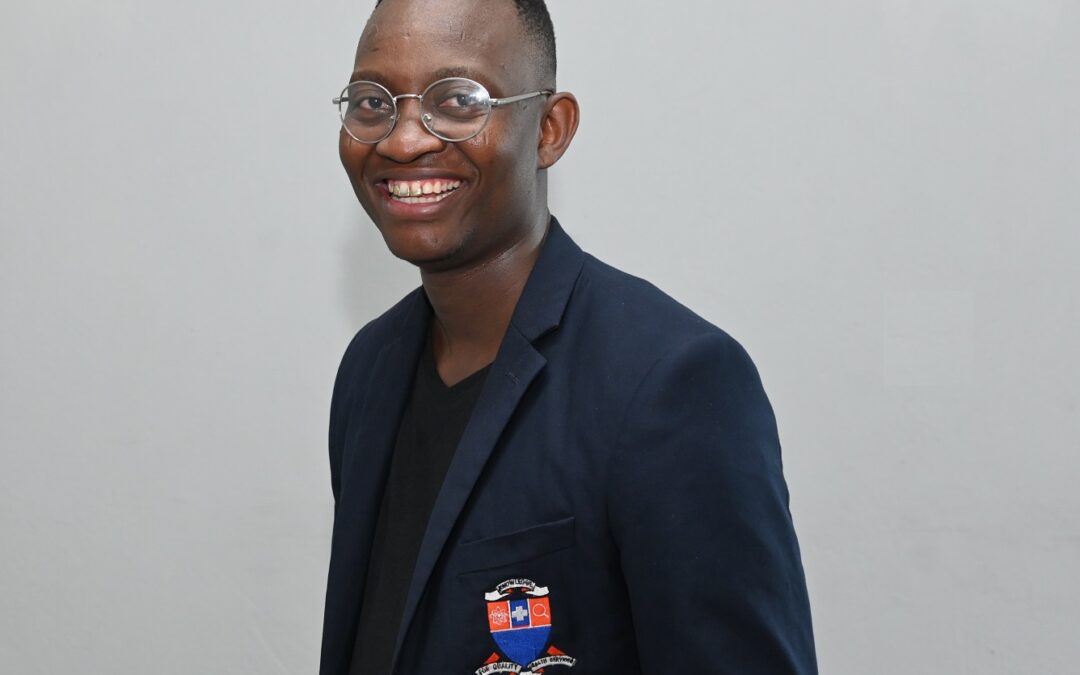
Keabetswe Molefe, SMU student fondly known as “Chairman Kea”, currently pursuing his Bachelor of Medicine and Bachelor of Surgery (MBChB)
Born in Letlhabile Township in North-West Province and raised in Ebony Park, Tembisa, Molefe’s journey at SMU began in 2016 when he enrolled for a Bachelor of Occupational Therapy (BOccTher). His outstanding academic performance allowed him to transition to the highly competitive MBChB programme in 2019, a testament to his commitment to academic achievement.
But Molefe’s story extends far beyond his studies. His passion for student governance was ignited early on, and he has consistently worked to improve the welfare of his peers. “I am a young leader who believes in academic excellence and competent student leadership,” he reflects. His leadership journey began when he served as Chairperson of the School of Medicine in the Student Representative Council (SRC) for 2022/23. Today, he serves a second term as Coordinator of the School of Medicine under the Interim Student Governance Structure (ISGS).
Molefe’s leadership style is rooted in his ability to navigate complex challenges, always prioritising the needs of students. Under his leadership, the SMOSCI committee, a registered SRC structure, successfully secured significant student sponsorships, including financial workshops, Investec side bags, and scrubs. His dedication to safeguarding students’ academic futures is evident through his success in leading exclusion appeal efforts. “I have successfully won 100% of the academic exclusion appeals for 2024,” Molefe shares proudly, highlighting his commitment to student success.
His fight against academic and financial exclusion has not been easy, often placing him in challenging spaces. “It has been a journey full of great experiences. You become adept at addressing issues with the necessary decorum, which helps shape your approach to leadership,” Molefe remarks. This resilience and willingness to grow have made him a key figure in SMU’s student governance.
In 2023, he had the opportunity to broaden his horizons on the global stage, participating in an African regional conference in Rwanda themed: “Embracing digital health in global health emergencies.” This experience provided invaluable exposure, allowing him to engage in international dialogues and bring fresh perspectives back to SMU. It’s a memory he continues to cherish as one of the most significant moments in his leadership journey.
Molefe’s leadership philosophy is founded on continuous learning, effective communication, and a deep understanding of university policies. He emphasises that successful student leaders must resist the pressure to win every battle. Instead, they should focus on collaboration, compromise, and educating both students and faculty members on the rules that govern university life. “You should not measure your success by solving all issues, but by understanding and working within the reality that students are not always right,” he advised, urging future leaders to approach matters with fairness and realism.
In Molefe’s view, meaningful change comes from a willingness to learn and foster respectful dialogue between students and university personnel. “The worst leader rushes to insult lecturers, assuming that the student is always right. Being real, learning, and striving for the best outcomes make a leader impactful,” Molefe emphasises.
Beyond his leadership roles, he inspires others with his remarkable balance of academic excellence and service. His story is a shining example of SMU’s commitment to developing well-rounded student leaders capable of advocating for their peers and contributing to the university’s growing reputation for excellence.
SMU has long been a place where student leadership and holistic development thrive, and Molefe’s success is a testament to that tradition. His journey stands as an inspiration to current and future generations of students, reminding them that resilience, humility, and hard work are the keys to effecting meaningful change.
As SMU continues to shape the next generation of healthcare professionals, it is leaders like Molefe who will ensure that the student voice remains at the heart of the university’s mission to empower its students and foster their development as future global leaders.
by Lorato | Nov 7, 2024 | All News, SMU Media, Student Media
In a remarkable turn of events at Sefako Makgatho Health Sciences University (SMU), Katlego Peter Moshanyane has emerged as the newly elected President of the Student Representative Council (SRC). His ascension to this pivotal role is not just a personal triumph; it embodies the spirit of resilience and determination that characterises the student body at SMU. With a compelling story rooted in defying adversity, Moshanyane is poised to be a transformative force, advocating for the rights and welfare of his fellow students.

Katlego Peter Moshanyane, SMU newly elected President of the Student Representative Council (SRC)
Growing up in the small village of Cokonyane in Taung, his early life was marked by significant loss. The death of his mother when he was just in Grade 3 left a profound void, but it was his grandmother’s unwavering support that steered him through the darkest times. “I have so much respect and love for her because I saw the sacrifices she made for my family and me,” he shares, reflecting the humility and gratitude that define him today.
Moshanyane’s academic journey has not been without challenges. Despite setbacks in his secondary education, including repeating Grade 10, he demonstrated incredible determination. After taking a year off to regroup, he enrolled at SMU, completing his Bachelor of Oral Hygiene in record time. But his ambition did not stop there; he has since embarked on a Bachelor of Dental Surgery (BDS) programme, where he is progressing through his fourth year.
His decision to run for SRC President was driven by his intimate understanding of the struggles faced by students, particularly around financial exclusion and housing instability. “I can’t count how many students I have seen crying because of the challenges in institutions of higher learning,” he reflects, voicing the pain that many students endure. This connection to his peers’ challenges compelled him to step into a leadership role, determined to effect meaningful change.
Moshanyane’s political journey began in 2018 when he sought to become chairperson of the School of Oral Health Sciences, an experience that laid the groundwork for his current success. “I literally voted for myself,” he chuckles, reminiscing about the humble beginnings of his political career. Now, as SRC President, his vision is crystal clear: To amplify the student voice through open dialogues and student body meetings (SBMs), fostering an environment where every issue can be discussed and addressed.
His leadership style is rooted in democracy, characterised by transparency and collaboration with both students and university management. He is fiercely committed to creating stable structures that attract sponsorships, ensuring that financially struggling students receive the support they need. “My vision is to see a stable university that can attract sponsors for students in need,” he asserts, driven by a profound belief that every student deserves the opportunity to succeed.
Moshanyane’s values of respect, authenticity, and bravery underpin his approach to leadership. He strives to cultivate a university culture that recognises and nurtures student potential, addressing pressing issues like funding, financial exclusion, and academic challenges. By working closely with academic staff and support services, he aims to create sustainable solutions that benefit the entire student community.
Beyond academics and leadership, Moshanyane enjoys playing soccer and cherishes life’s simple pleasures, such as laughter and spending quality time with loved ones. His grandmother remains a central source of strength and inspiration, influencing his journey in profound ways. “O e tshwere mo bogaleng mosadi mogolo. Ke mo rata thata, ebile ke motlotlo tota ka ene,” he expresses in Setswana, underscoring his deep love and respect for her.
As Moshanyane steps into his role as SRC President, he brings a wealth of personal experiences and an unwavering commitment to enhancing the student experience at SMU. His message to fellow students is encouraging: “I call on students to prioritise their academic activities since that is the route that will open doors for many. Additionally, prayer is mighty.”
With him at the helm, the future of student leadership at SMU looks brighter than ever. His story is not just one of overcoming adversity; it is a testament to the strength of the SMU community, a place where resilience, dedication, and hope converge to create an environment where every student can thrive.
by Lorato | Nov 7, 2024 | All News, SMU Media, Student Media
In a remarkable display of talent and dedication, Lehlohonolo Mbongela, a fourth-year BSc Physiotherapy student at Sefako Makgatho Health Sciences University (SMU), claimed the coveted title in the Adult Championship section at the South African Dance Foundation Championships recently held at the University of the Western Cape. This prestigious competition brought together the nation’s finest dance sports athletes, and Mbongela’s achievement is a testament to his commitment and the supportive environment fostered by SMU.
Balancing rigorous academic demands with an intense training schedule, Mbongela exemplifies the essence of what it means to be a student-athlete. “It’s all about making time and having a schedule that works for you,” he explains, underscoring the necessity of meticulous planning in achieving success. His preparations for the championship began a month prior, coinciding with the demanding period of mid-year exams. Undeterred, Mbongela ramped up his training following the exams, committing up to ten hours a day to perfect his skills. This comprehensive regimen included strength and agility workouts, flexibility training, and precise choreography refinement.
For many students, the fear of extracurricular commitments hindering academic performance looms large. However, Mbongela advocates for a proactive approach: “Always have a plan that makes it easier to balance sports and academics.” His advice resonates with those striving to find equilibrium in their student lives, offering a roadmap for success in both arenas.
Mbongela draws motivation not just from his own aspirations but from the collective ambition of those around him. “I am inspired by everyone striving to be the best version of themselves, regardless of the sporting code they choose,” he reflects, highlighting the universal pursuit of excellence that drives him.
His triumph inspires fellow students, encouraging them to chase their passions relentlessly. “Focus on what improves your life and brings you happiness and fulfilment,” Mbongela advises, a message rooted in his personal journey and one that aligns with the ethos of SMU.
Key to his success are the qualities of discipline, hard work, and a robust support network. His story embodies the spirit of perseverance, reminding all SMU students and beyond that anything is possible with dedication and a strategic approach.
Mbongela’s victory at the South African Dance Foundation Championships transcends mere accolades; it is a powerful reminder of the potential within each individual to excel academically and personally. His journey is about winning and setting an inspiring example for others to follow, reinforcing SMU’s commitment to holistic student development and excellence.

by Lorato | Nov 7, 2024 | All News, SMU Media, Student Media
At Sefako Makgatho Health Sciences University (SMU), students are empowered to excel in multiple arenas, from academics to creative arts and business. Boitumelo Makofane, a second-year Speech-Language Pathology and Audiology student, exemplifies this dynamic approach. As a skilled hip-hop dancer and co-owner of a popular food business, Makofane’s journey reflects SMU’s commitment to fostering student success inside and beyond the lecture halls.

As an athlete, he recently participated in the South African Sport Aerobics, Fitness & Hip-Hop Federation (SASAFF) Provincial and National Championships 2024. He exceptionally won first place in the Provincial Championships 2024 held at Gauteng under the Adult Hip Pop Duo category. After winning first place in the Provincial Championships, he qualified to participate in the National Championships 2024 held in Cape Town, where he won second place under the category of Adult Hip-Hop Duo.
“I joined SASAFF through the university. SMU Sports Officer Busisiwe Sijora and Coach Ignitious Moeletsi facilitated all the processes and registrations. My team and I have been competing at University Sports South Africa (USSA) and have won all the competitions we have attended. This led us to join the SASSUF through Coach Moeletsi, where we managed to win at the provincial and national levels. We were proud to win the Adult Hip Pop Duo category, and I believe the unique techniques and skills we showcased on the floor convinced the judges enough,” explains the Champion.
His talent as a hip-hop dancer and choreographer elevated him throughout the years, and he arrived at where he is today as an athlete. He won first place at the USSA in 2018 and 2019 under Small Crew Hip Hop. In 2019, he entered the SMU Explosive Talent competition and won first place under the category of Trio Hip Hop. He continued participating at the USSA in 2023 and won third place under the small Crew Hip Hop category.
On the other hand, the athlete is the co-owner of Mr Marinate Chicken Dust, a cook-and-grill food eatery based in Ga-Rankuwa Zone 2, Pretoria, next to a car wash at Mmatsela. Mafokane and his partner, Thabiso Makhubela, established the affordable food eatery business in 2022, and most of their clientele consists of SMU and Tshwane University of Technology (TUT) students. Mafokane explains their business currently employs two students from SMU in response to job creation for youth.
He explains, “My love for business began in primary school when I was in Grade 4. I used to sell sweets to my classmates during lunch breaks. Initially, managing both the business and my studies was quite challenging, but we hired additional staff to improve productivity.” Mafokane continues, “In the short term, my goals include targeting a diverse range of customers, including SMU and TUT students, as well as those from nearby colleges and universities across all TUT campuses and the University of Pretoria (UP). In the long term, I aspire to develop my business into a leading national franchise, akin to other well-known food outlets.”
Makofane’s achievements in athletics, the arts, and entrepreneurship reflect SMU’s holistic approach to student development. By supporting and encouraging students to explore their passions beyond academics, SMU continues to foster a new generation of well-rounded leaders. With ambitions of growing his business and expanding his success in hip-hop dance, Makofane is a testament to the university’s role in shaping versatile and driven students poised to excel in all areas of life.