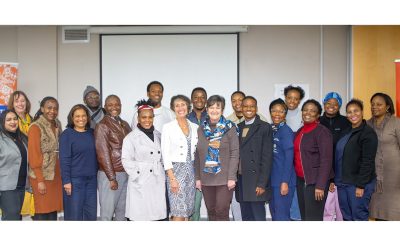
At the heart of the Sefako Makgatho Health Sciences University (SMU) Skills Centre lies a dynamic, human-centred teaching innovation that continues to shape the clinical competencies of future healthcare professionals: the Standardised Patient (SP) Programme. Established in 2011, SMU’s SP Programme has evolved from a modest team of five to a dedicated group of fourteen trained individuals. These SPs play a pivotal role in preparing students for the realities of clinical practice. Carefully trained to portray specific medical conditions consistently, they are an integral part of a simulation-based teaching strategy that brings realism, rigour, and empathy into the learning environment.
 The SP Programme is embedded across several disciplines, including medicine, nursing, speech-language pathology and audiology, psychiatry, occupational therapy, human nutrition and dietetics, physiotherapy, and dentistry. Through the simulation of a wide range of clinical scenarios, SPs help students develop essential skills in communication, history-taking, physical examination, and counselling within a safe, structured setting.
“The SP Programme brings an irreplaceable human element to our simulations,” explains Xolelwa Dyani, SP Facilitator at the SMU Skills Centre. “Students interact with ‘patients’ who talk, move, and respond just as real individuals would. That makes all the difference when preparing them for actual patient care.”
A distinctive feature of the programme is the use of moulage—a specialist technique that replicates physical injuries and conditions such as bruises, wounds, and burns. “It adds both visual and tactile realism,” Dyani adds. “Students must respond not just with clinical knowledge, but with empathy and professionalism.”
Beyond classroom simulations, SPs play a critical role in high-stakes assessments such as Objective Structured Clinical Examinations (OSCEs). They are also actively involved in Interprofessional Education and Collaborative Practice (IPECP) initiatives. SMU is a proud participant in Africa Virtual Interprofessional Education (AFRI-VIPE), a virtual interprofessional education platform connecting universities across the continent.
Dr Kefillwe Evelyn Hlabyago, a lecturer who has worked with SPs at SMU for over a decade through the Bachelor of Medicine and Bachelor of Surgery (MBChB) 6 and Master of Medicine (MMED) Family Medicine programmes, notes: “They offer students a safe environment in which to practise clinical consultations and procedures. Mistakes are allowed, discussed, and corrected. This approach helps produce more confident and competent healthcare professionals.”
From the student’s perspective, the impact is equally significant. Nomfundo Ngwenya, a sixth-year MBChB student, reflects on how the SPs have contributed to her clinical development: “They challenged us to adapt, reflect, and be more thoughtful in how we approach patient care. I remember one SP asking to speak Portuguese during a family medicine session—it reminded me that real patients don’t follow scripts, and adaptability is key.”
SMU’s SP Programme has also garnered national and international interest. As the first university in South Africa to establish such a programme, SMU has become a recognised leader in simulation-based education. Institutions from across the country and abroad regularly visit the university to learn from its approach.
Peter Mashaba, one of SMU’s experienced SPs, underscores the importance of their work: “We are not merely actors—we are educators. We provide students with honest feedback on their communication skills, bedside manner, and overall approach. Our insights help shape not only better clinicians, but more compassionate ones too.”
The flexibility of the programme allows for simulation sessions to be conducted at the Skills Centre, across various departments, and at clinical partner sites such as Jubilee Hospital. According to Dyani, this adaptability is crucial to the seamless integration of SPs into a broad range of academic and clinical training contexts. For further information or to schedule the use of SPs, departments are encouraged to contact the Skills Centre.
With its innovative design, expanding reach, and lasting impact, the SP Programme continues to set the benchmark for experiential learning, equipping SMU students with the confidence, skills, and compassion needed to thrive in their clinical careers.
By Dimakatso Modise