Sefako Makgatho Health Sciences University (SMU) reaffirmed its institutional leadership in community-centred health development during the Health Sector Stakeholders Summit held from 10 to 13 February 2026 under the theme “Strategic Collaboration for Sustainable Health Outcomes.” The four-day convergence brought together traditional authorities, government representatives, private sector companies, academics, health practitioners and community stakeholders in a unified effort to strengthen health systems, advance wellness and stimulate socio-economic progress in Tsitsing and neighbouring villages.
 The summit coincided with the official launch of the Botsogo, Bophelo le Boitekanelo Summit 2026 by Kgosana Koketso Rakhudu of the Kgotla Ya Rakhudu, marking the commencement of a transformative partnership between traditional leadership and the university. In his opening address, Kgosana Rakhudu described the gathering as a watershed moment in the community’s developmental trajectory. “This summit represents hope translated into action,” he asserted. “It unites leadership, academia, business and the community in a shared commitment to improving health outcomes and securing a sustainable future for our villages.”
Anchored in a collaborative framework that integrates traditional leadership structures, government departments, academic institutions, non-governmental organisations, corporate partners and community formations, the initiative seeks to position Tsitsing as a demonstrative site for community-based health innovation. The active involvement of several companies underscored the growing recognition that sustainable health development requires public–private partnerships capable of mobilising financial resources, technical expertise and innovation. Through coordinated planning, evidence-driven research, capacity development and sustainable interventions, stakeholders aim to fortify primary healthcare systems, enhance service delivery efficiencies and generate enduring socio-economic dividends.
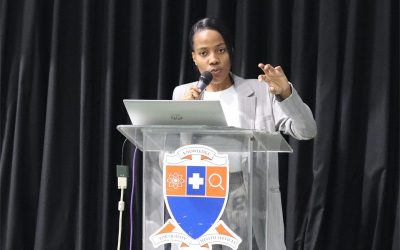
During the Stakeholder Pledge and Closing Remarks session, SMU formalised its commitment to the partnership, underscoring its enduring mandate of socially responsive scholarship. Representing the institution was Professor Mathildah Mokgatle, Head of the Department of Public Health. Prof. Mokgatle articulated the university’s conviction that sustainable transformation emerges from authentic collaboration across sectors. “As a university dedicated to advancing public health, we recognise that meaningful change occurs when institutions, business and communities work in concert,” she said. “SMU commits to supporting this ongoing partnership to strengthen local health systems and improve sustainable health outcomes.”
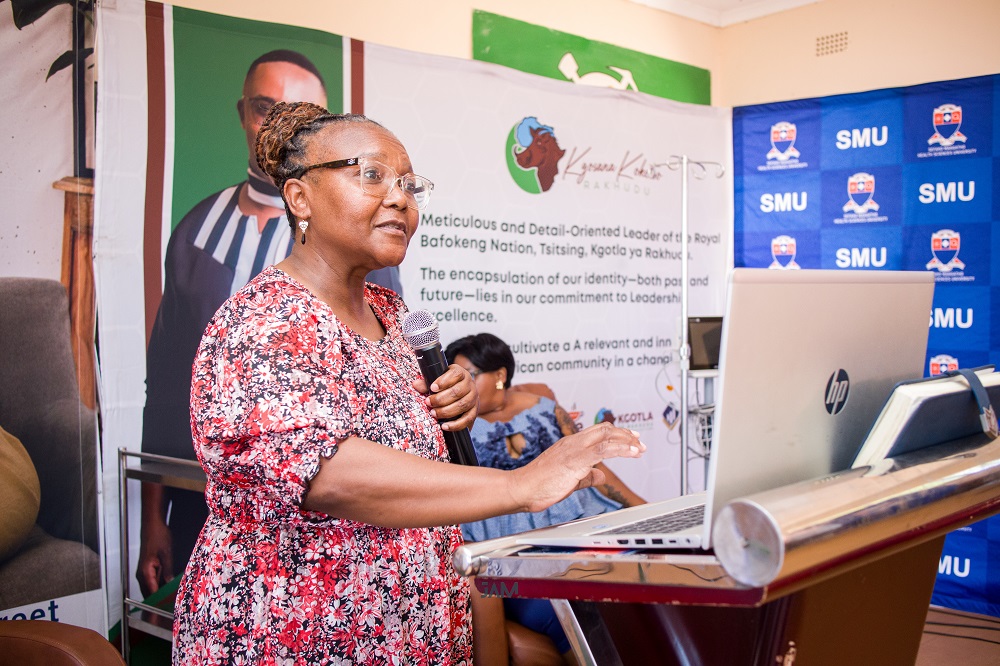 She further emphasised that the initiative would serve as a dynamic platform for community-based research, experiential student training and contextually relevant, evidence-based interventions. “Our responsibility transcends classroom instruction,” Prof. Mokgatle noted. “We must ensure that our research, training and service are intrinsically aligned with the lived realities of communities such as Tsitsing, thereby contributing directly to their health, dignity and overall wellbeing.”
A defining feature of the summit was the unveiling of the 3B’s conceptual framework — Botsogo, Bophelo le Boitekanelo — spearheaded by Evah Molapisi, Lecturer in Community Physiotherapy and Rehabilitation at SMU. Molapisi elucidated that the framework encapsulates an integrated vision of health, life and holistic wellness as interdependent pillars of community advancement. “Botsogo speaks to health, Bophelo to life, and Boitekanelo to comprehensive wellness,” she explained. “These principles remind us that health is not merely the absence of illness, but the presence of empowerment, opportunity and human dignity.”
The 3B’s vision aspires to cultivate sustainable community–academic partnerships, advance Sustainable Development Goal 3 on Good Health and Well-being, stimulate youth participation in health professions and establish a viable community-based platform for student training and service delivery. By embedding academic expertise within community contexts while drawing on the innovation and support of corporate stakeholders, the initiative seeks to bridge the divide between theory and practice, ensuring that scholarship translates into measurable social impact.
Complementing the health systems discourse, Moagisi Edwin Seleka, Senior Lecturer and Head of Department at SMU, contributed a reflective exploration of the therapeutic dimensions of arts and bibliotherapy. Dr Seleka illuminated the intricate interrelationship between mental and physical health, underscoring the physiological benefits of creative engagement. “The body and mind function synergistically,” he observed. “Music and humour stimulate the release of endorphins, thereby alleviating pain and mitigating stress.”
Expanding on the transformative potential of reading and artistic expression, he added, “To read is to journey beyond one’s immediate circumstances; it is to encounter new perspectives and possibilities. Creative expression enlarges the imagination, fosters emotional resilience and facilitates psychological restoration.” His insights reinforced the summit’s holistic orientation, recognising that sustainable health outcomes necessitate attention to both corporeal and psychosocial dimensions of wellbeing.
As proceedings concluded, the Health Sector Stakeholders Summit emerged as a seminal platform for structured, long-term collaboration. By harmonising academic rigour, traditional governance, corporate participation and community engagement, the initiative presents a replicable model for inclusive, sustainable health development. Through its active involvement and formal pledge, Sefako Makgatho Health Sciences University has once again demonstrated its unwavering commitment to advancing equitable health outcomes and fostering resilient communities across South Africa.
By Dimakatso Modise