Sefako Makgatho Health Sciences University (SMU) continues to strengthen its position as one of South Africa’s leading health sciences institutions as applications for the 2026 academic year surged to 89,384 prospective students competing for just 1,265 first-year undergraduate spaces.
 The overwhelming response reflects the growing demand for specialised health sciences education and underscores SMU’s reputation for academic excellence, innovative research, and a vibrant student experience. As a dedicated health sciences university, SMU remains committed to transforming health services through excellence and innovation while preparing the next generation of healthcare professionals to serve communities locally and nationally.
According to the university’s approved enrolment plan, SMU aims to accommodate 7,596 students in 2026, including 5,641 undergraduate students and 1,955 postgraduate students. Among the postgraduate cohort are 1,307 master’s candidates and 202 doctoral students, reinforcing the university’s expanding role in developing advanced health sciences expertise.
Student Recruitment Officer Ntsheu Collins Mangena said the unprecedented number of applications signals strong public confidence in the university’s programmes and its mission to transform healthcare through education.
“Receiving nearly 90,000 applications for the 2026 intake is both encouraging and humbling,” said Mangena. “It demonstrates the trust that learners, parents and educators place in SMU as a specialised institution dedicated to training future healthcare professionals. Our goal is to attract top achievers in Mathematics and Science while strengthening relationships with teachers and career guidance counsellors across the country.”
Several programmes remain highly competitive due to national shortages of skilled healthcare professionals.
- Bachelor of Nursing and Midwifery: 15,058 applications for 60 spaces
- Bachelor of Medicine and Bachelor of Surgery (MBChB): 12,758 applications for 155 spaces, plus 50 Extended Curriculum Programme places
- Bachelor of Pharmacy: 11,977 applications for 71 spaces
- Diagnostic Radiography: 8,297 applications for 30 spaces
 School of Health Sciences programmes have also recorded strong interest. Physiotherapy attracted 4,898 applications for 60 spaces, while Occupational Therapy received 3,358 applications for 40 places.
Meanwhile, the School of Science and Technology continues to contribute to the multidisciplinary health sciences ecosystem by offering programmes in Life Sciences, Mathematical Sciences, Environmental Biology, and Microbiology and Immunology. The school will enrol 476 students across its programmes, strengthening the scientific foundation that supports healthcare innovation.
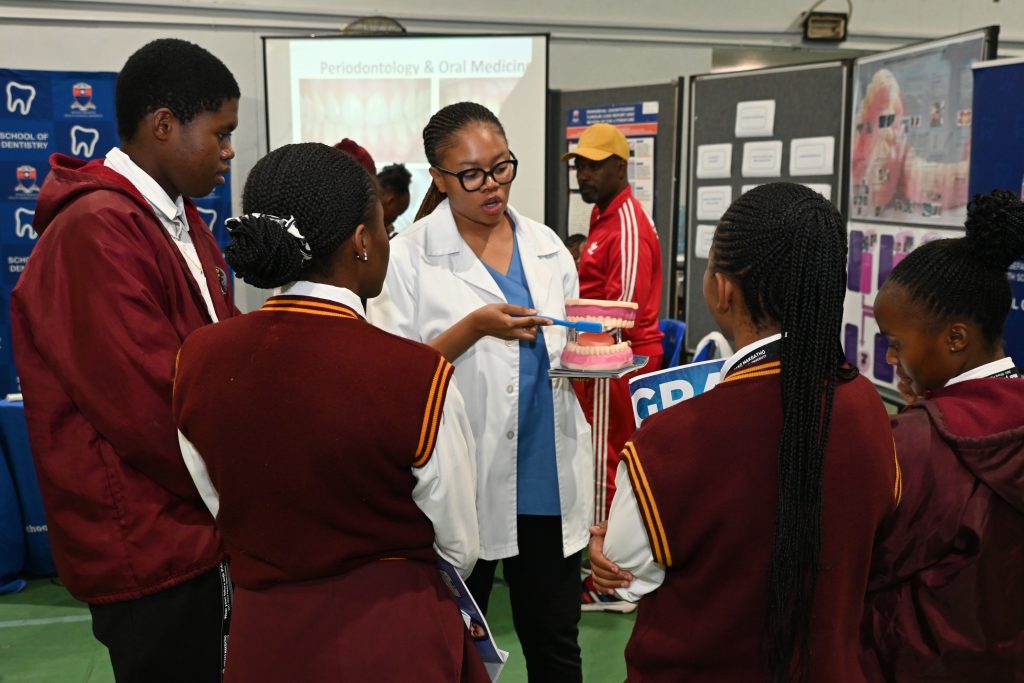
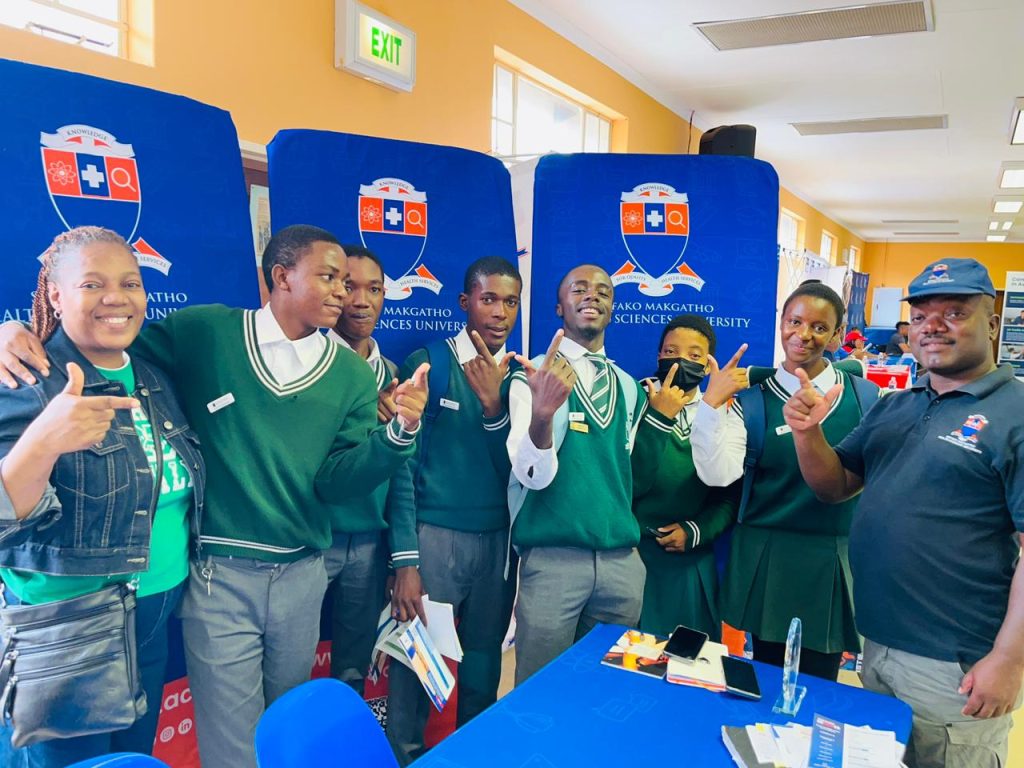
Mangena explained that SMU’s recruitment strategy has become increasingly proactive, combining school outreach, national exhibitions and regional partnerships to reach talented learners earlier in their academic journeys.
“Student recruitment is no longer passive. We actively engage learners, parents and educators through school visits, exhibitions, and information sessions so that talented students understand both the opportunities and the application process at SMU.”
The university’s 2026 Schools Liaison and Student Recruitment Plan focuses on expanding SMU’s visibility across South Africa while building a stronger regional pipeline of students. Key initiatives include monthly school visits in Gauteng, participation in major national career exhibitions, and targeted information sessions in provinces such as Mpumalanga, KwaZulu-Natal, the Free State and the Eastern Cape.
The recruitment strategy also extends beyond South Africa’s borders, with outreach planned in neighbouring countries such as Mozambique and Zambia to strengthen the university’s presence in the Southern African region.
Parents and educators are also central to the recruitment strategy. Through engagement with School Governing Bodies and education associations, the university aims to ensure that families understand programme offerings, admission requirements, and career opportunities within the health sciences.
These initiatives are supported by strategic partnerships with organisations such as the Moses Kotane Local Municipality, the Limpopo Institute of Mathematics and Science Academy, SAICA, and Future SA STEM, which help promote science, technology and healthcare careers among high-performing learners.
Guided by values that include excellence, integrity, accountability, respect, student-centred learning and Ubuntu, SMU continues to position itself as a transformative institution that responds directly to the country’s healthcare workforce needs.
As the university prepares to welcome the 2026 intake, its growing application numbers reflect more than popularity—they signal SMU’s expanding impact on health sciences education, research innovation, and community-focused healthcare across South Africa and the region.
By Tumelo Moila