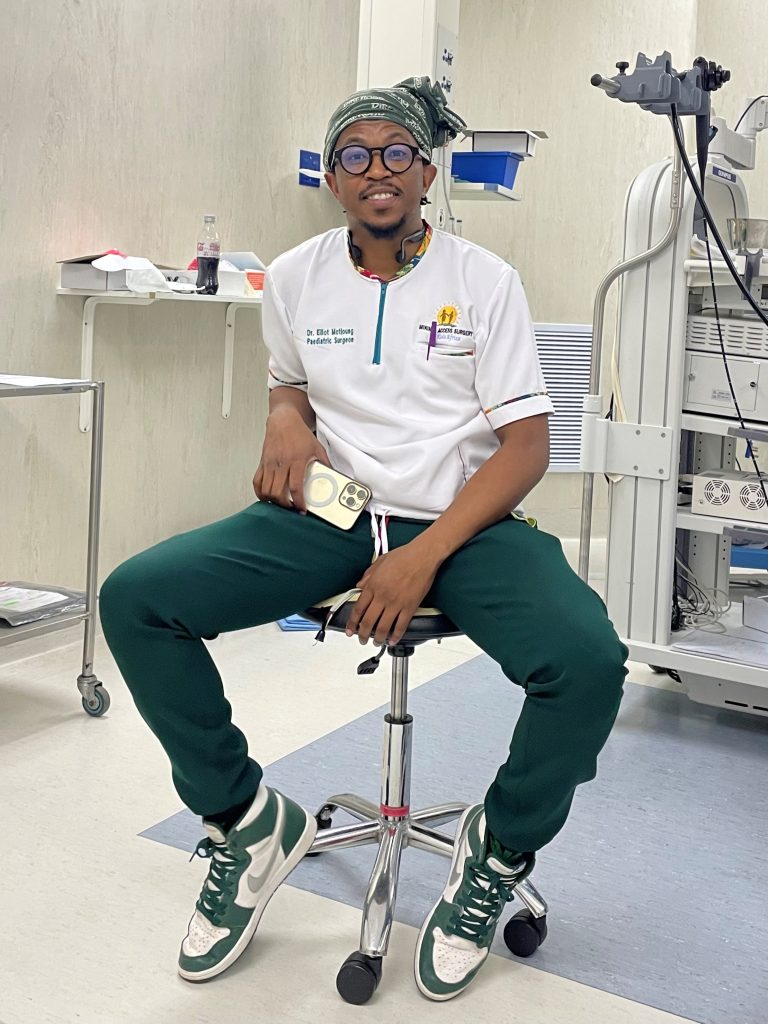
Sefako Makgatho Health Sciences University (SMU) continues to demonstrate its growing leadership in specialised healthcare after one of its senior clinicians, Dr Elliot Motloung, played a key role in the successful separation of conjoined twins at Mankweng Hospital in Limpopo.
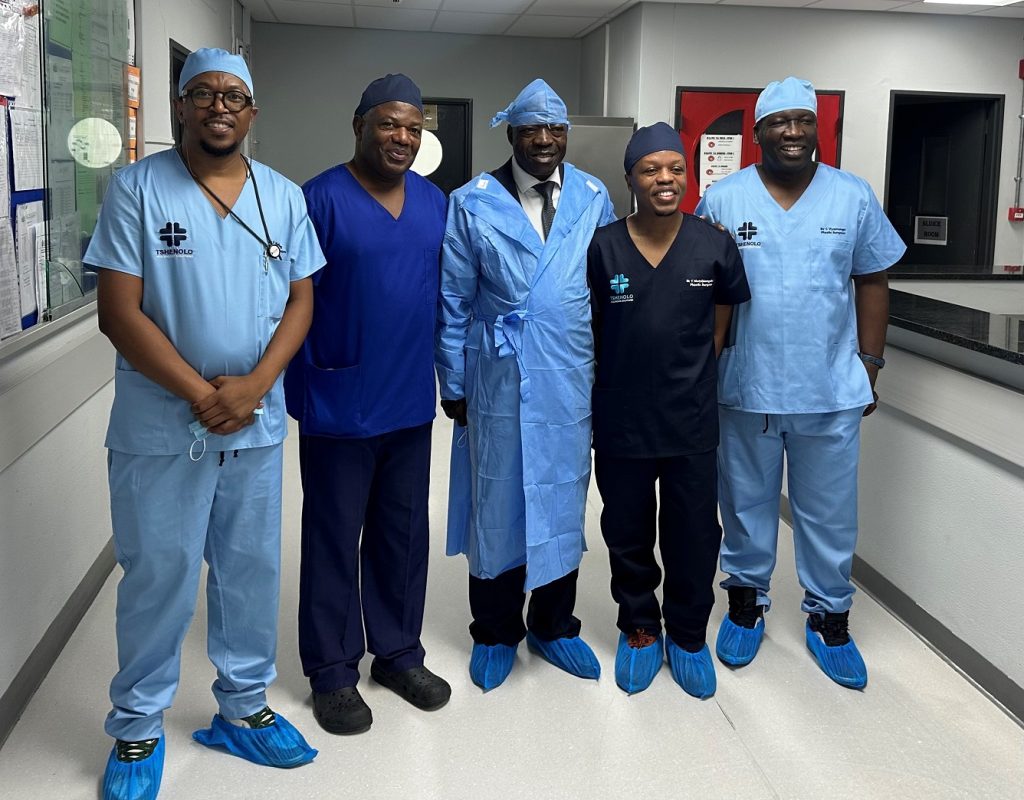 Dr Motloung, Head of the Department of Paediatric Surgery at SMU, was part of a multidisciplinary team that performed a highly complex procedure on conjoined twins earlier this month. The operation, led by his predecessor as Head of the Department of Paediatric Surgery at SMU, Professor Nyaweleni Tshifularo, lasted eight hours and required meticulous planning and coordination across multiple medical disciplines.
Explaining the complexity of the case, Dr Motloung said separation surgery involving conjoined twins is inherently high-risk due to the shared anatomy and delicate physiology of the patients. “The separation of twins surgery is always complex because the surgeon has to take into cognisance the physiological status of each child and the anatomical variations present,” he said. “In this particular case, there were vital gastrointestinal and solid organs that had to be separated, requiring a multidisciplinary team approach.”
The surgical team included paediatric surgeons, anaesthetists, radiologists, neonatologists, cardiologists, and plastic and reconstructive surgeons, supported by allied health professionals such as dieticians, psychologists and occupational therapists. According to Dr Motloung, this level of collaboration was essential to optimise the twins’ condition before surgery and ensure the best possible outcomes.
“I was privileged to be invited to be part of a team of local experts for what is truly a once-in-a-lifetime opportunity,” he said. “A series of multidisciplinary meetings was held to plan every aspect of the procedure, from imaging and diagnosis to surgical execution and post-operative care.”
 Among the most critical moments during the operation were securing the twins’ airways and establishing reliable vascular access. These steps were particularly challenging due to the babies’ size and positioning. “The anticipated difficult airway intubation and vascular access were crucial to making the surgery safe,” Dr Motloung explained. “We also had to manage shared blood vessels supplying vital organs, which required absolute precision to prevent excessive blood loss.”
He added that closing the surgical sites presented another significant challenge. “Ensuring that all vital organs were securely placed within the body cavities required great expertise, and our plastic and reconstructive surgeons did an exceptional job,” he said.
Following the operation, the twins are reported to be recovering well under close supervision at Mankweng Hospital. However, Dr Motloung cautioned that careful monitoring remains essential. “The main challenges now are preventing hospital-acquired infections and ensuring that the children gain sufficient weight so they can eventually be discharged as healthy babies,” he said.
The successful procedure builds on SMU’s track record in handling complex paediatric surgical cases, including a landmark conjoined twin separation performed at Dr George Mukhari Academic Hospital (DGMAH) in 2017. That operation, which involved twins sharing a liver, was the first of its kind at DGMAH and highlighted the university’s capacity for advanced surgical care.
Reflecting on the broader significance of the recent operation, Dr Motloung emphasised the importance of collaboration and knowledge-sharing within the healthcare sector. “This is not the first time SMU has been involved in the separation of conjoined twins, which is why we were invited to collaborate,” he said. “The more we participate in these procedures, the more we strengthen our expertise and position ourselves at the forefront of complex surgical care.”
He added that SMU remains committed to supporting other institutions and expanding access to specialised healthcare across the continent. “As a department, we will continue to share our expertise and collaborate with other institutions locally and across Africa to assist children who require complex, life-saving surgeries,” he said.
The successful separation not only marks a significant medical achievement for Limpopo but also reinforces SMU’s role as a leader in health sciences education, research and clinical excellence in South Africa.
By Tumelo Moila