Sefako Makgatho Health Sciences University (SMU) postgraduate researcher Mbali Moreki has earned international recognition for her innovative work in nanotechnology and environmental sustainability, securing first place in the oral presentation category at the 10th International Conference on Nanoscience and Nanotechnology in Africa (NanoAfrica 2026).
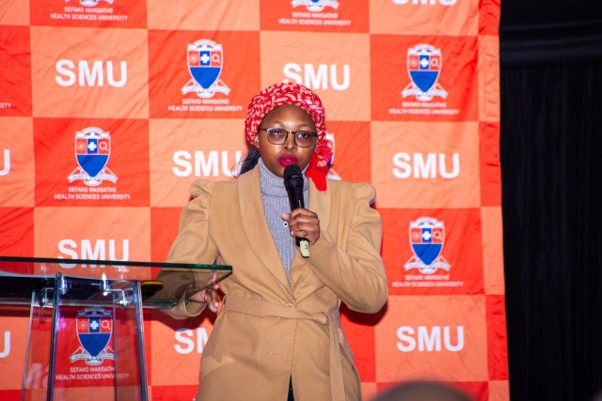 Held recently at the Boardwalk International Convention Centre in Gqeberha, Eastern Cape, the conference was themed Advancing Sustainable Nanotechnology for Societal Impact. Moreki’s achievement adds to a growing list of accolades recognising her contribution to scientific research, particularly in developing nanomaterials with potential applications for addressing water pollution.
A PhD candidate in SMU’s Department of Chemistry, Moreki’s research explores using Zinc Oxide-based nanomaterials to break down organic dye pollutants in wastewater through photocatalysis. Her doctoral project focuses on developing Zinc Oxide-Zinc Phthalocyanine (ZnO-ZnPc) nanocomposites, which will be tested for their ability to degrade pollutants under ultraviolet and visible-light irradiation.
Working under the supervision of Dr Nomasonto Rapulenyane and Dr Gold Gauta Matlou, Moreki aims to develop innovative materials that could contribute to more accessible and sustainable approaches to water treatment. “My research is driven by the need to explore innovative scientific solutions to environmental challenges, particularly water pollution and addressing Sustainable Development Goal 6. Nanotechnology offers opportunities to develop materials with improved photocatalytic properties that could contribute to more effective wastewater treatment,” she said.
She added that the research could have practical applications beyond conventional wastewater treatment facilities. “It could also benefit river systems in rural communities where infrastructure such as wastewater treatment plants is unlikely to be installed anytime soon. By harnessing the power of the sun, we could explore solutions that do not require expensive installation or operational costs,” Moreki said.
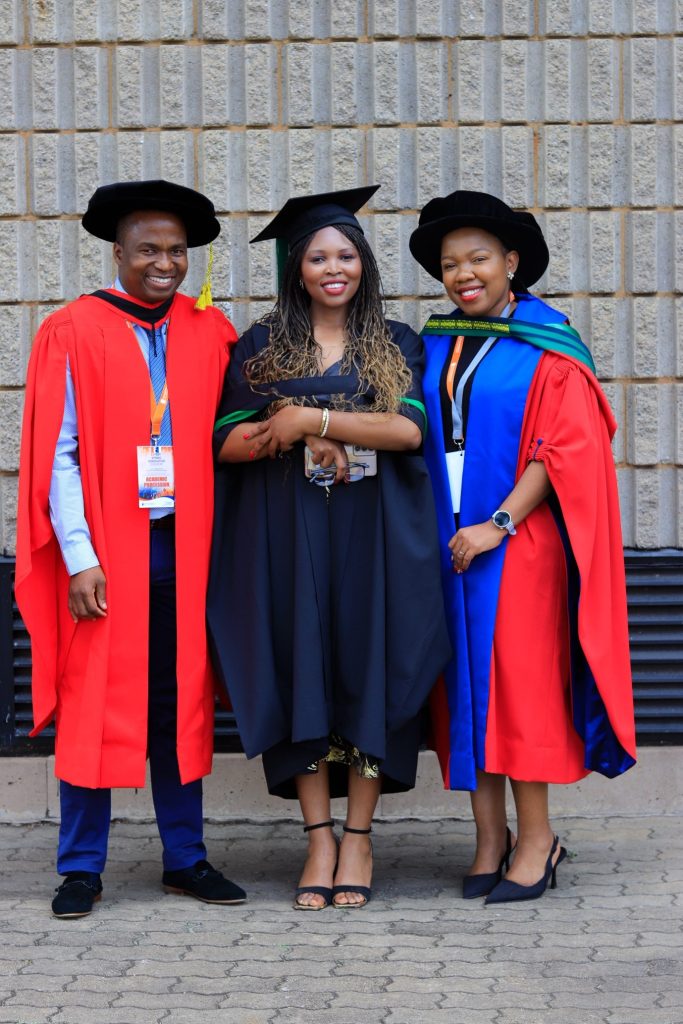 Her latest achievement follows another international milestone in June 2026, when she won first place in the Sustainable Development Goal 6 category at the Commonwealth Chemistry Posters Conference. The competition attracted 185 poster presentations from researchers representing 25 Commonwealth countries, with 25 winners recognised across the different SDG categories, including five other winners in her category, SDG 6.
Moreki has also received several awards at national scientific gatherings. These include first place in the Master of Science category at the 2024 Annual Young Scientists’ Conference, hosted by the Academy of Science of South Africa and the South African Young Academy of Science at Nelson Mandela University. In 2025, she secured another first-place award at the South African Chemical Institute’s North Section Young Chemists’ Symposium, hosted by Tshwane University of Technology.
She began her academic journey at SMU with a Bachelor of Science in Life Sciences, majoring in Chemistry and Biology, which she completed in 2021. She subsequently completed an Honours degree in Chemistry in 2022 and a Master of Science in Chemistry in 2026. Her master’s research examined the synthesis and characterisation of Zinc Oxide nanoparticles for the photocatalytic degradation of complex organic dyes, including Rhodamine 6G, under visible light, which is a huge feat for pure ZnO nanoparticles.
In 2025, she published research on the photocatalytic degradation of Rhodamine 6G in Results in Chemistry, co-authored with her supervisors. Beyond her research, Moreki serves as a part-time Laboratory Technical Officer at SMU, co-supervises two Honours research students and participates in the university’s Mobile Laboratory programme, helping Grade 10 to 12 learners from local schools develop practical science skills. She is also an IPECP facilitator for the first time in 2026.
Reflecting on the broader purpose of scientific research, she emphasised the importance of translating laboratory discoveries into solutions that address real societal needs. “Supervisors must work with the Technology Innovation Agency office to bring these innovative ideas and research to life, to help solve societal problems in reality and not just in a laboratory or publication,” she said.
Moreki’s achievements reflect SMU’s commitment to excellence in teaching, learning and innovative research. Through postgraduate development, scientific collaboration and community engagement, the university continues to nurture emerging scientists whose work contributes to sustainable development and addresses challenges affecting communities in South Africa and beyond.
By Tumelo Moila