The Sefako Makgatho Health Sciences University (SMU) is making waves in health sciences education through its state-of-the-art Skills Centre, which is redefining how future healthcare professionals are trained. Since its establishment in 2010, the facility has become a cornerstone of clinical teaching, offering a dynamic space for both undergraduate and postgraduate students to hone their skills in a realistic and controlled environment.
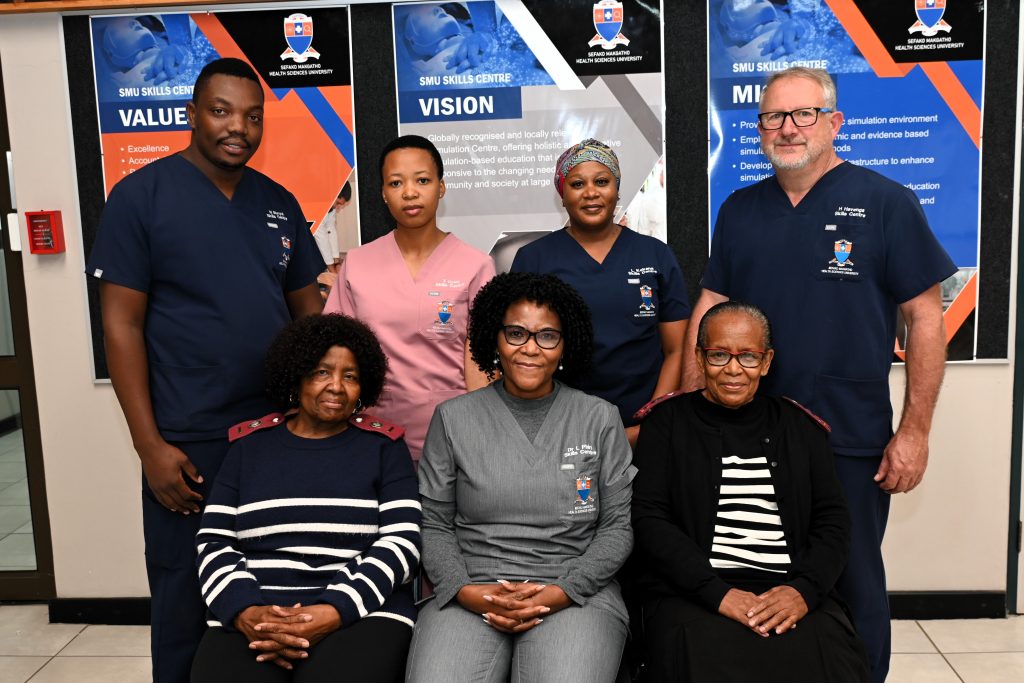 At the heart of the transformation is a simulation-based learning model that bridges the often-daunting gap between theory and clinical practice. From high-fidelity manikins and virtual reality systems to simulated patients, the Skills Centre equips students with the tools to learn, make mistakes, and improve—without compromising patient safety.
Dr Lesego Phiri, Director of the Skills Centre, emphasised the centre’s impact: “The Skills Centre is a game-changer for health sciences education at SMU. It provides our students with a unique opportunity to develop their clinical skills in a realistic and immersive environment, without the risk of harming real patients.”
The facility boasts four labs and four dedicated simulation spaces fitted with advanced health sciences equipment, including defibrillators, ventilators, and a variety of task trainers. It offers a suite of courses ranging from Basic Life Support and Primary Emergency Care to Advanced Cardiac Life Support, as well as competency assessments such as Objective Structured Clinical Examinations (OSCEs).
Phiri noted the continuous evolution of the facility. “The Skills Centre has improved greatly over the years, and it has ensured that graduates from SMU’s health sciences programmes are clinically competent, confident, and ready for real-world healthcare challenges.”
More than just a training ground, the centre promotes Interprofessional Education and Collaborative Practice (IPECP), bringing together students from various health disciplines to collaborate and develop teamwork and communication skills essential for quality patient care.
“We believe that IPECP is crucial for preparing our students for the complexities of modern healthcare,” said Phiri. “By working together, students can develop a deeper understanding of each other’s roles and responsibilities, leading to better patient outcomes.”
The Skills Centre has also reached beyond South African borders. Through partnerships with international institutions—most notably the Norwegian Agency for Exchange Cooperation (NOREC)—SMU has launched collaborative projects, including one with Haukeland University Hospital in Norway, focusing on trauma and emergency care.
“The NOREC project has provided a unique opportunity for healthcare professionals at Dr George Mukhari Academic Hospital (DGMAH), our clinical training partners, to learn. The Skills Centre, together with the Internationalisation Office, is now exploring ways to include our students, as this initiative was initially intended for professionals to learn from international experts and exchange best practices,” said Phiri. “This collaboration has enriched our training programmes and enhanced our research capacity.”
Innovation extends into technology. A smart camera system supports tele-simulation and remote learning, seamlessly integrated with platforms such as Blackboard, Zoom, and Microsoft Teams. These tools have proven vital for maintaining high-quality training, especially during the disruptions caused by the COVID-19 pandemic.
For students, the impact is tangible. “The Skills Centre is an essential resource for health sciences education at SMU,” said Kgaugelo Mahlwana, a final-year medical student. “It has helped me develop my clinical skills and confidence, and I feel well-prepared for my future role as a healthcare professional. Practising all the skills beforehand, rather than performing them directly on patients, really does boost our confidence. The facilitators are also excellent. Our Skills Centre has great facilities – including some impressive programmable simulated mannequins, which make the learning experience even more enriching.”
The Skills Centre’s reputation as a leader in healthcare education has attracted interest from universities and health institutions both locally and internationally. It is also an active research hub, with findings presented at global conferences and published in peer-reviewed journals.
“We are committed to providing our students with the best possible education and training,” Phiri added. “The Skills Centre is a key part of our strategy to produce clinically competent, confident, and compassionate healthcare professionals who can make a real difference in the lives of their patients.”
As the centre continues to expand its offerings and forge new collaborations, its influence on the future of healthcare training in South Africa—and beyond—is undeniable.
By Tumelo Moila