In a momentous achievement for Sefako Makgatho Health Sciences University (SMU), Professor Deliwe Rene Phetlhu, Head of the Department of Nursing Sciences, has been awarded the prestigious National Research Foundation (NRF)’s u’Good Grant to the value of R9.1 million. Her successful proposal, selected from over 200 global submissions, is one of only 22 awarded internationally and will fund a groundbreaking project titled “Youth Mental Health in the Era of Climate Change.”
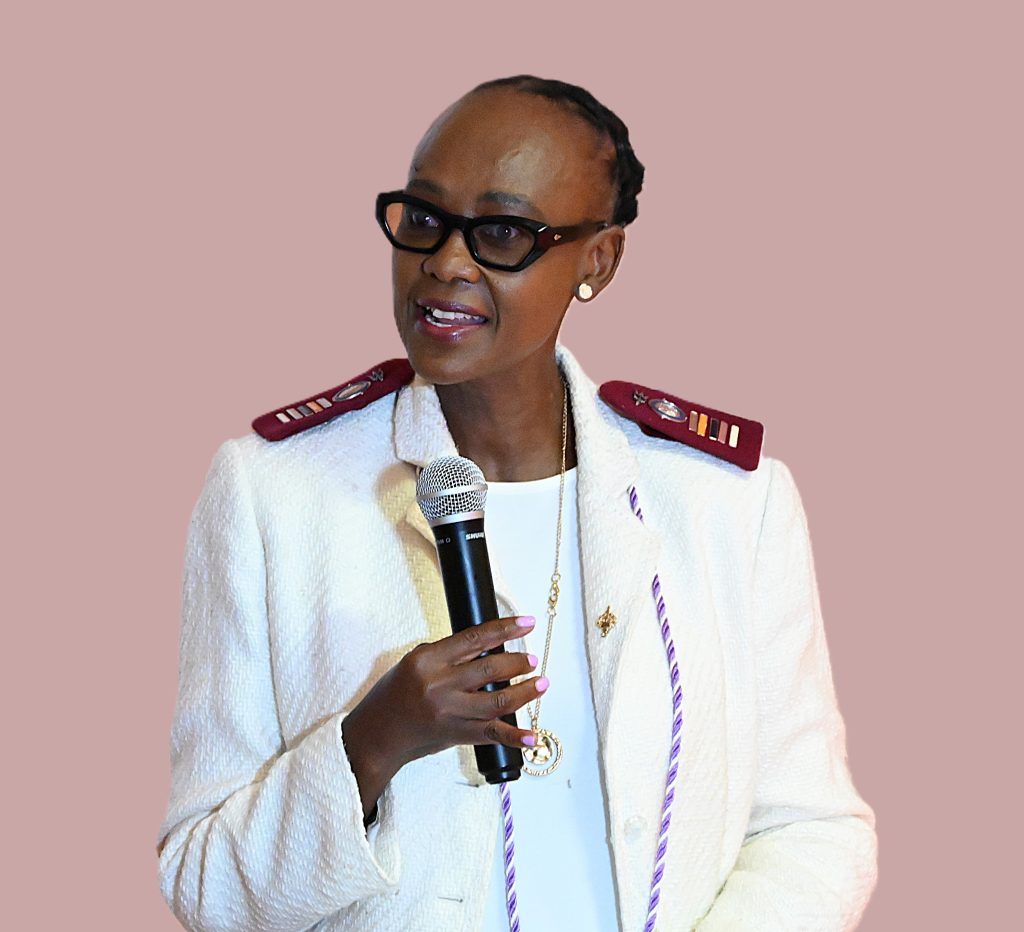 Speaking on the announcement, Professor Phetlhu expressed her elation. “I was overjoyed, particularly because I will be working with young academics, some of whom have never worked on major grants before. Being selected among the top 22 worldwide is a significant honour.”
The three-year project (2025–2027) aims to develop a culturally responsive intervention to enhance the psychological resilience and well-being of young people in South Africa, Ghana, and Tanzania. The research will be grounded in the relational well-being (RWB) theory and principles of Ubuntu, integrating culture, socio-economic contexts, and environmental stressors into its approach.
“Personally, this award affirms my commitment to impactful research,” said Phetlhu. “Professionally, it highlights the critical role nurses can play in emerging areas of health sciences. As the first line of defence in healthcare, nurses are uniquely positioned to lead research that transcends traditional boundaries.”
The project will begin by investigating youth awareness, cultural narratives, and environmental anxieties linked to climate change, before developing and piloting a targeted intervention. Innovative methodologies such as photovoice and vignettes will be employed to capture lived experiences, while technologies like RedCap will ensure secure data handling.
Funding allocation reflects the project’s community-driven ethos. Equipment such as laptops, cameras, and audio recorders will be acquired early on, but the bulk of resources are earmarked for operational costs, particularly youth engagement and travel. Administrative support across the three countries is also a key consideration.
Each project year has clear milestones:
- 2025: Understanding youth climate awareness and mental health practices across three African contexts.
- 2026: Development of an integrated, culturally grounded intervention framework.
- 2027: Implementation of a scalable model for African youth mental health resilience, potentially redefining wellbeing from a continental perspective.
“This research is urgent,” Phetlhu explains. “Globally, climate change is a daily conversation, but in Africa, the link to mental health—especially among youth—is often overlooked. From funeral queues to community gatherings, I’ve asked people their thoughts, and the lack of awareness is concerning.”
The project is proudly transdisciplinary, involving youth-centred NGOs, sociologists, environmentalists, and educational psychologists from South Africa, Ghana, and Tanzania. SMU will host the lead PhD student and two master’s candidates in later stages, while early-career researchers from the institution are included as co-investigators.
The long-term goal is to influence youth mental health policy and practice. “Mental health is becoming a global pandemic. The next generation will carry the heaviest burden of climate change, and they must be equipped with resilience and leadership skills,” Phetlhu said.
She has already initiated engagement with government and sector stakeholders. “I don’t want them to only hear about the project at the end. Their involvement from the start is essential for sustainability.”
Prof Phetlhu also extended gratitude to the SMU Grants Office. “Ms Winnie Motsatsi was phenomenal, supporting me through every step, arranging a reviewer, and accommodating my schedule. I couldn’t have done it without her.”
To fellow researchers at SMU, Phetlhu had a message of inspiration: “Take a risk. Even if it doesn’t work the first time, it’s worth trying. Surround yourself with people who share your work ethic. It might just happen.”
As the project is currently underway, Phetlhu hopes to ignite a continental dialogue on youth wellbeing and climate resilience. “Africa’s future depends on it. Let us prepare our youth to carry the baton with strength and purpose.”
By Tumelo Moila