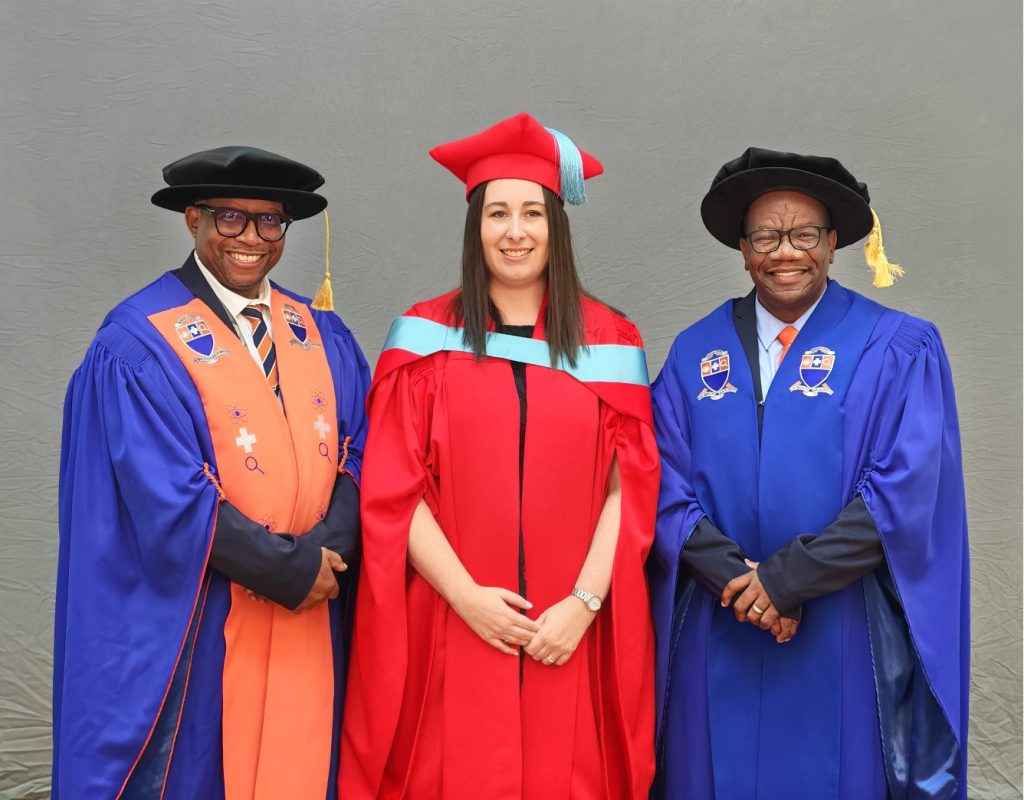
As cardiovascular disease continues to place an increasing burden on South Africa’s healthcare system, groundbreaking research from Sefako Makgatho Health Sciences University (SMU) is providing new insights into one of the country’s most complex and under-recognised heart conditions. Newly graduated Doctor of Philosophy (Physiology) graduate, Dr Marilet van Hoogland-van Heerden, has produced significant findings that could help improve the diagnosis, management and treatment of heart failure with preserved ejection fraction (HFpEF) among black South Africans.
 Dr van Hoogland-van Heerden’s doctoral study investigated the relationship between hypertension, diabetes mellitus, renal function and treatment in a young-to-middle-aged HFpEF population. The research examined 125 patients diagnosed with HFpEF and compared them with 510 participants without the condition, making it one of the most comprehensive community-based studies of HFpEF conducted in South Africa.
HFpEF is a growing form of heart failure closely associated with hypertension and other cardiometabolic disorders. Through detailed anthropometric, echocardiographic, haemodynamic and pulse wave velocity assessments, the study identified significant cardiovascular abnormalities among affected patients.
“The findings revealed that HFpEF in black South Africans is characterised by markedly increased arterial stiffness and concentric left ventricular hypertrophy, alongside a high burden of hypertension, diabetes mellitus and chronic kidney disease,” said Dr van Hoogland-van Heerden.
“These results highlight the urgent need for earlier intervention, improved risk-factor management and treatment strategies that are tailored to the realities of South African communities.”
 The study found that both HFpEF and non-HFpEF participants were predominantly middle-aged and obese. However, patients with HFpEF who also suffered from hypertension showed stronger associations with arterial stiffness and structural changes in the heart. Diabetic HFpEF patients demonstrated more severe cardiovascular disease and related complications, underscoring the compounded impact of multiple chronic conditions.
Importantly, the research revealed that current treatment approaches had limited effects on several key clinical markers, suggesting that more targeted interventions may be required to improve patient outcomes.
“The burden of cardiovascular risk factors identified in this population demonstrates the importance of prevention and early management,” Dr van Hoogland-van Heerden explained. “Addressing these risk factors before heart failure develops could significantly reduce disease progression and improve quality of life.”
The findings contribute valuable evidence to a field that remains under-researched in African populations. By providing detailed data on HFpEF within a South African context, the study offers important guidance for clinicians, researchers and policymakers seeking to improve healthcare outcomes.
Among its recommendations, the study advocates for greater emphasis on lifestyle interventions and consideration of newer therapies, including sodium-glucose co-transporter 2 (SGLT-2) inhibitors, glucagon-like peptide-1 (GLP-1) receptor agonists, thiazide diuretics and angiotensin II receptor blockers (ARBs) for high-risk patients.
Beyond the doctoral research itself, Dr van Hoogland-van Heerden has already published two peer-reviewed articles arising from the study and received several prestigious awards from the Physiological Society of Southern Africa and the South African Medical Research Council, including a Best Oral Presentation Award. She currently serves as a lecturer in SMU’s Department of Physiology, where she combines teaching, postgraduate supervision and research focused on heart failure, hypertension and cardiovascular risk factors in African populations.
Her achievement reflects SMU’s growing research footprint and its commitment to generating knowledge that addresses South Africa’s most pressing health challenges. Through innovative, community-focused scholarship, the university continues to advance scientific discovery that not only strengthens healthcare practice but also contributes to improving the health and well-being of communities across the country.
By Tumelo Moila