Sefako Makgatho Health Sciences University (SMU) researcher Dr Tshegofatso Mogase has earned a PhD in Health Sciences (Nutrition and Dietetics), advancing research into the early identification of refeeding syndrome, a potentially life-threatening complication affecting children receiving nutritional treatment for severe acute malnutrition.
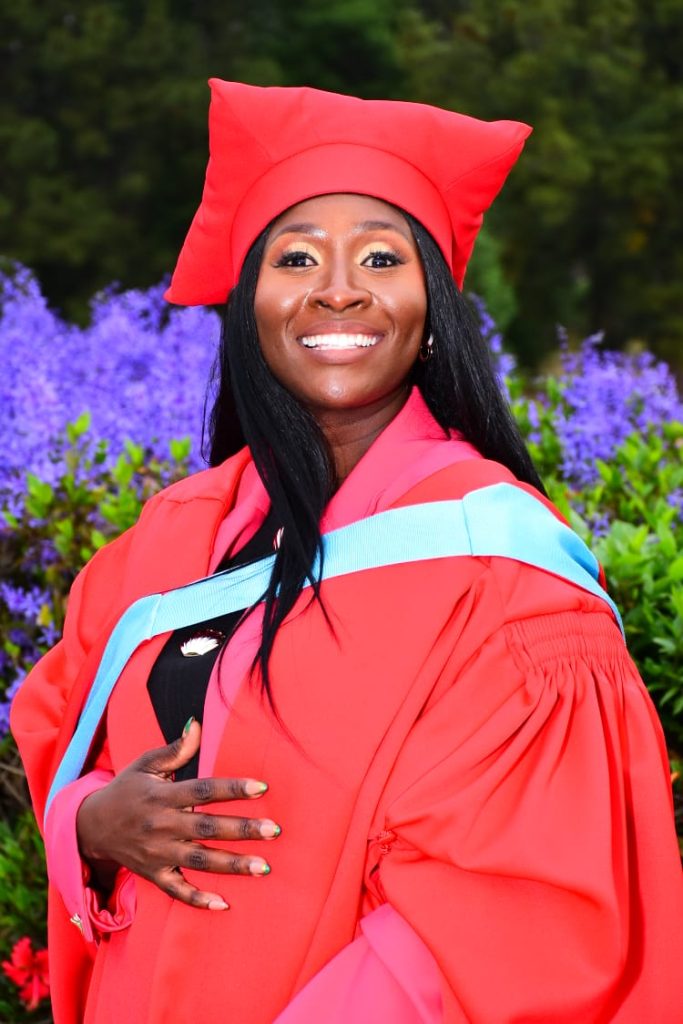 Dr Mogase earned her doctorate from SMU on 18 September 2026 through the UK–South Africa Department of Higher Education and Training (DHET) Doctoral Training Programme, a cotutelle initiative involving SMU and the University of Stirling in Scotland.
Her research explores how bioelectrical impedance vector analysis (BIVA), a bedside method used to assess body composition and hydration, could help healthcare practitioners identify children at risk of refeeding syndrome earlier.
“Early identification of children at risk of refeeding syndrome is essential for strengthening clinical monitoring and supporting safer nutritional rehabilitation. My research sought to explore whether BIVA could provide healthcare practitioners with additional information to support the early assessment of vulnerable children,” said Dr Mogase.
Refeeding syndrome can develop when children with severe acute malnutrition begin receiving nutritional treatment. Early identification and appropriate monitoring are therefore important in supporting safer clinical management. However, Dr Mogase’s research identified inconsistencies in how healthcare settings in sub-Saharan Africa define, recognise and manage the condition.
Her doctoral study adopted a three-phase mixed-methods approach, combining a systematic review of existing African research, five-day clinical monitoring of 64 children in Tshwane hospitals, and interviews with healthcare practitioners.
The findings highlighted gaps in bedside identification, clinical documentation, guidance, laboratory access and communication among healthcare teams.
“These findings point to the need for more consistent approaches to identifying and monitoring refeeding syndrome, particularly in settings where access to laboratory investigations and clear clinical guidance may be limited,” said Dr Mogase.
The clinical findings also indicated that children at risk of refeeding syndrome showed signs of greater fluid retention. Lower BIVA resistance was associated with increased risk, suggesting that the method could provide additional information to support routine clinical assessments. However, further evaluation is needed before its role in clinical practice can be established.
 The research proposes a locally relevant risk-assessment and monitoring framework for paediatric wards managing children with severe acute malnutrition. The proposed approach would combine clinical observation with electrolyte testing to strengthen screening and monitoring practices.
“The proposed framework is intended to support a more structured approach to risk assessment and monitoring. BIVA could potentially complement existing clinical assessments, but further research is needed to determine how best to integrate it into routine paediatric care,” she said.
Her doctoral training was supported by the South African Medical Research Council’s Research Capacity Development Initiative and SMU’s University Capacity Development Grant.
Dr Mogase’s work builds on her broader research interests in paediatric clinical nutrition, human physiology, child health and implementation research. As Principal Technical Officer and BSc Honours Postgraduate Coordinator in SMU’s Department of Human Physiology. she contributes not only to the undergraduate programmes but she and leads research training and scientific communication. She teaches and supervises Honours and postgraduate research students and is contributing to the programme’s ongoing curriculum redevelopment. Her cotutelle doctoral training has also informed her work to strengthen the Honours programme’s research component.
Her research has received recognition at regional and institutional research events. At the 13th Tshwane District Health Research Day in September 2026, she secured third place in the Maternal and Child Health category for an oral presentation on developing a risk-assessment and monitoring tool for children with severe acute malnutrition. She also received the Best Oral Presentation award at the South African Medical Research Council Research Capacity Development Regional Grant Holders Conference in October 2025.
Dr Mogase has published research on identifying and managing refeeding syndrome among hospitalised children aged six to 59 months in sub-Saharan Africa. Additional her manuscripts entitled “Barriers to the early identification of refeeding syndrome in hospitalised children with severe acute malnutrition: Perspectives of healthcare practitioners” has been accepted for publication at Frontiers in Paediatrics. .
Reflecting on the significance of her research, she said: “This work highlights the importance of generating evidence that responds to the realities of healthcare practice. Improving the identification and monitoring of refeeding syndrome could help inform clinical decision-making and strengthen nutritional care for children with severe acute malnutrition.”
Her PhD achievement reflects SMU’s commitment to innovative health sciences research that addresses practical healthcare challenges. By investigating approaches to improve the early identification of refeeding syndrome, Dr Mogase’s work contributes evidence that could inform clinical decision-making, strengthen paediatric nutrition care and support improved health outcomes for vulnerable children.
The University of Stirling is scheduled to confer her corresponding graduation on 20 November 2026.
By Tumelo Moila