Sefako Makgatho Health Sciences University (SMU), in collaboration with Dr George Mukhari Academic Hospital (DGMAH), has reached a major milestone in paediatric surgery and paediatric urology after a multidisciplinary team successfully performed the institution’s first laparoscopic Anderson-Hynes dismembered pyeloplasty, along with kidney cyst decortication and stone removal, in an eight-year-old boy.
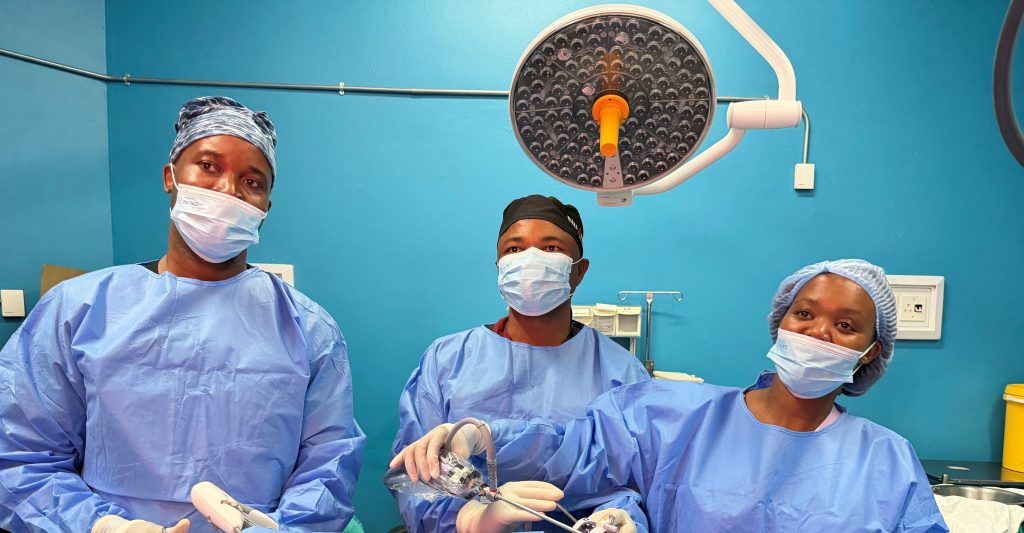 The pioneering procedure marks an important advancement in minimally invasive surgery at the institution, demonstrating how collaboration between the Departments of Paediatric Surgery and Urology can expand access to specialised treatment and improve patient outcomes.
The young patient had experienced persistent pain on the right side of his abdomen, extending towards his back. After several consultations without improvement, ultrasound and computed tomography (CT) scans revealed a ureteropelvic junction (UPJ) obstruction, a kidney stone and a renal cyst. The obstruction prevented normal urine drainage from the kidney, causing urine to accumulate and placing his long-term kidney function at risk.
Previously, correcting the condition at the institution required conventional open surgery, involving a larger incision and a longer recovery period. The laparoscopic approach offers a less invasive alternative, with the potential to reduce postoperative discomfort, hospital stays and recovery time.
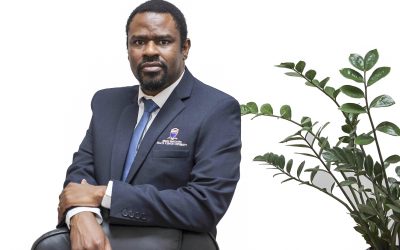
Led by Dr Mashoto Rabutla from the Department of Paediatric Surgery, the surgical team comprised Dr Safela Seeleko and Dr Kgaogelo Molatjane from the Department of Urology, and Dr Melody Mahlatjie from Paediatric Surgery.
“The procedure was performed in two stages, six weeks apart. The first involved laparoscopic pyeloplasty, renal cyst decortication and the insertion of a JJ stent to improve urine drainage. The patient’s kidney function subsequently improved, while scans showed that the cyst had healed and hydronephrosis had reduced. During the second operation, a specialised X-ray machine (C-arm) was used to locate a stone found in the psoas muscle, behind the ureter. The patient recovered well after both procedures, was able to walk and eat the following day, and experienced no wound-healing complications,” said Dr Rabutla.
The Anderson-Hynes procedure involved reconstructing the narrowed passage between the kidney and ureter to restore normal urine drainage. Using a small camera and specialised instruments inserted through incisions smaller than a centimetre, the surgeons removed the obstructed section and reconnected the healthy tissue. They also drained the renal cyst and removed part of its wall, while a specialised imaging device known as a C-arm helped locate the kidney stone before its removal.
UPJ obstruction is one of the common causes of kidney blockage in children. Although laparoscopic reconstruction is technically demanding and requires specialised expertise, it offers significant benefits. Patients undergoing this approach can often be discharged within one or two nights, with postoperative discomfort managed using basic pain medication.
Speaking to SMU News, Professor Shingai Mutambirwa, Head of the Department of Urology, congratulated the team and sent his best regards.
Dr Elliot Motloung, Head of the Department of Paediatric Surgery, said: “This is a great stride for the department of paediatric surgery and urology, who both treat children with urological conditions in our institution. A True demonstration of our philosophy at SMU in that there is strength in academic and clinical collaboration, if one wants to improve outcomes of patients. It’s also the right step in the adoption of laparoscopic surgery in addressing renal pelvis surgery and bladder surgery in children and a precursor to the future plans to offer robotic surgery at SMU”
Dr Rabutla described the achievement as the beginning of broader interdepartmental collaboration, extending beyond Urology to other surgical departments. He said the objective was to combine specialist expertise to ensure that patients receive the best possible care.
The Paediatric Urology Unit, led by Dr Mulalo Radzuma, further supports the institution’s capacity to provide specialised urological services to children.
The young patient has recovered and is pain-free, with his surgical incisions healing. This successful outcome lays the foundation for more complex minimally invasive procedures, including the potential introduction of robot-assisted surgery.
Through innovation, clinical expertise and multidisciplinary collaboration, SMU continues to advance specialised healthcare delivery, putting its vision into practice by transforming health services through excellence and innovation.
By Tumelo Moila