by Lorato | Feb 26, 2026 | Accolades and Achievements, All News, SMU Media, Student Media
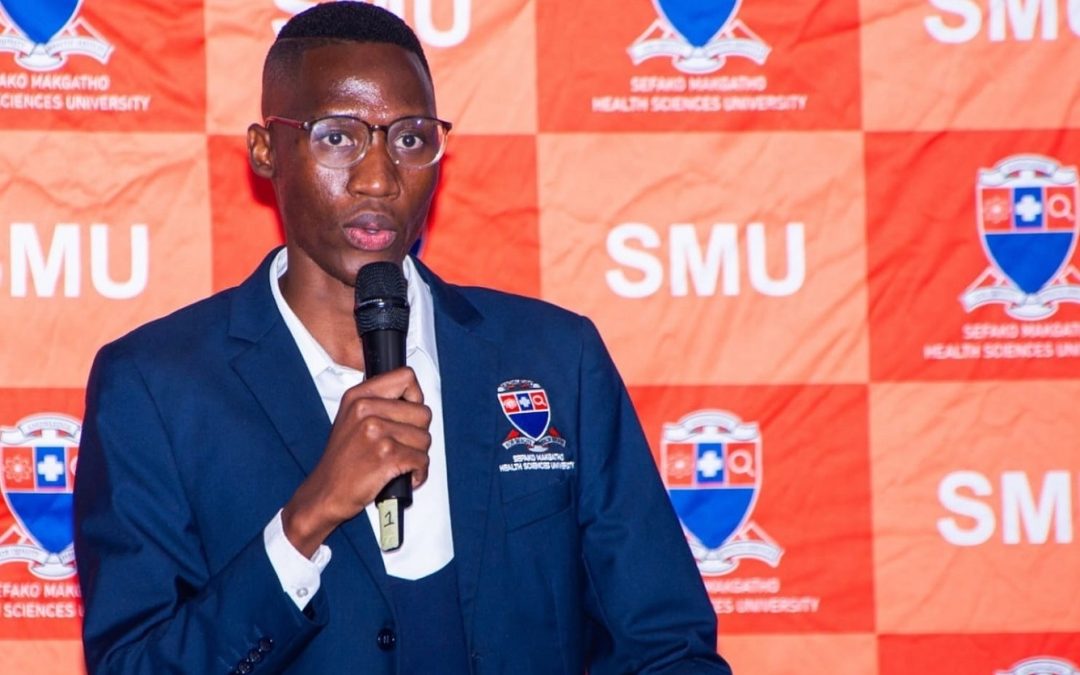
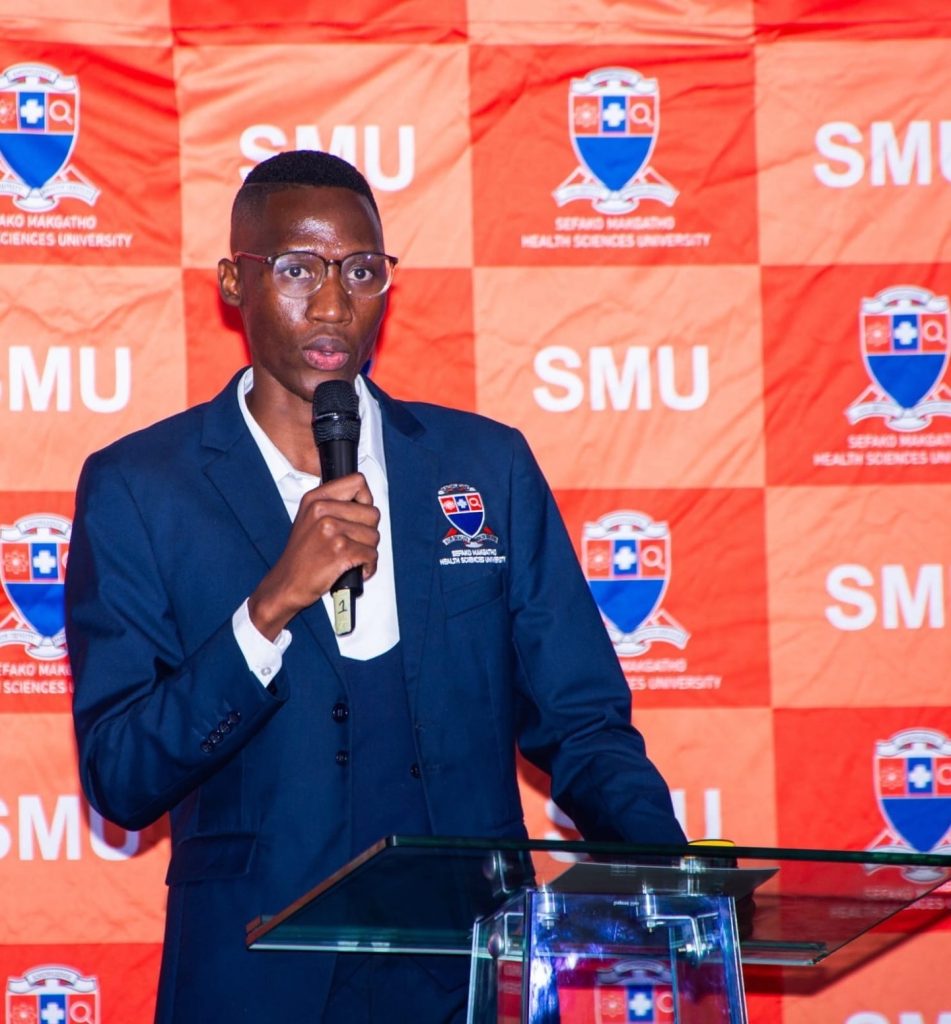
When opportunity knocked, he answered with purpose. Enos Motaka Malatji, a final-year Diagnostic Radiography student in the School of Medicine at Sefako Makgatho Health Sciences University (SMU), has been appointed to the National Council of the Society of Radiographers of South Africa (SORSA) as a National Student Representative. He is the first SMU student to join the organisation — and now among the youngest voices contributing to its national agenda.
 His appointment marks more than a personal milestone. It signals a meaningful step forward in strengthening student representation within one of South Africa’s most influential professional radiography bodies. “I am grateful for the opportunity,” Malatji said. “Serving SORSA began with curiosity, driven by my passion for student wellness. I never pursued a title — I pursued impact.”
That impact gained national momentum in late 2025 when he was invited to Cape Town to present on student participation at a National Council meeting — a defining moment in his advocacy journey. “That was when I understood the seriousness of this journey,” he reflected. “Standing before national leadership and representing students, I realised this responsibility is bigger than me.”
He credits SORSA Gauteng Representative and SMU Radiography lecturer Khomotso Motiang for encouraging him to accept the invitation. “Her support strengthened my advocacy. Sometimes leadership begins when someone sees potential in you before you see it yourself.”
Now, as National Student Representative, Malatji carries a clear mandate: to direct national student affairs within SORSA and ensure that student radiographers are heard where key decisions are made.
His responsibilities include representing student radiographers nationally; serving as the formal student voice at the National Council; contributing to policy discussions on education, clinical training and professional standards; promoting student participation in congresses, symposia and CPD initiatives; communicating Council decisions to students; strengthening student membership; establishing active student chapters across training institutions; and upholding professional and ethical standards.
“There is still significant work ahead to build a strong foundation,” he said. “But through collaboration with students across universities, Provincial Representatives and the National Council, I am confident that we can shape a stronger future together.”
 SORSA, a voluntary non-profit association, represents radiographers across Diagnostic, Nuclear Medicine, Radiotherapy and Ultrasound disciplines. Recognised nationally and affiliated with the International Society of Radiographers and Radiological Technologists, the Society advances professional standards, publishes The South African Radiographer, and provides continuing professional development opportunities.
For students, membership offers tangible benefits, including discounted access to national congresses and CPD events, Continuing Education Units through Directed Reading Programmes, eligibility for education awards, opportunities for conference funding support and complimentary registration to selected symposia.
However, Malatji believes the true value extends beyond these benefits. “To every radiography student who feels unheard: this platform belongs to you,” he said. “Your experiences in clinical training, your academic challenges and your professional aspirations deserve representation at the highest level.”
He speaks not as a student seeking recognition, but as an advocate committed to service. “Student advocacy is not optional,” he concluded. “If we want a stronger profession tomorrow, we must build it deliberately today.”
With his appointment, the message is clear: the next generation of radiographers is not waiting for a seat at the table — they are stepping forward to lead.
By Tumelo Moila

by Lorato | Feb 25, 2026 | Accolades and Achievements, All News, Alumni, SMU Media, Student Media
Excellence in healthcare leadership is not accidental — it is cultivated through vision, discipline and purpose. One such example is Dr Andile Molokomme (Dr Andie), a dynamic medical doctor, entrepreneur and philanthropist who has recently added a prestigious continental accolade to her growing list of achievements. A proud alumna of Sefako Makgatho Health Sciences University (SMU), her success reflects the calibre of globally competitive and socially responsive graduates produced by the institution.
 Dr Molokomme was honoured at the esteemed 40 Under 40 Africa Awards, where she emerged as the winner in the Philanthropy and Charity category. The ceremony, held on 14 February 2026 at the elegant Kempinski Hotel Gold Coast City in Accra, Ghana, brought together influential leaders, entrepreneurs and dignitaries from across the African continent. Among those in attendance were traditional Ghanaian leaders and ambassadors from South Africa and Zimbabwe, underscoring the significance of the occasion.
Launched in 2022, the 40 Under 40 Africa Awards celebrate young African leaders under the age of 40 who are demonstrating innovation, resilience and transformative leadership in their respective fields. The awards have since expanded into several African countries, including South Africa, and have, in recent years, positioned themselves on the global stage. The 2026 global edition is scheduled to take place in Dubai in April.
This year’s competition was fiercely contested. Out of 150 entries from 28 countries, 110 finalists were selected across 40 categories, with only 46 winners ultimately announced. Dr Molokomme stood out among six finalists in her category.
“There were 150 entries from 28 countries, 110 finalists and only 46 winners — and I was one of them under the Charity and Philanthropy category. My category had six contestants,” she said.
Describing the achievement as both personal and collective, she added: “This is a massive win for me and our organisation, as this is our first award. When I started Phenomenal Young Persons, it was never about the limelight but impact.”
The founder of the awards, Richard Abbey Jnr, explained the vision behind the initiative: “We named it the Forty Under Forty because 40 is the midpoint, and we also wanted to highlight and celebrate excellence, courage and ambition among Africa’s young entrepreneurs.”
 True to that vision, Dr Molokomme’s work extends far beyond clinical practice. Through her youth empowerment organisation, Phenomenal Young Persons, she has mentored and inspired young people across South Africa. Her initiatives have received endorsement from both the Department of Basic Education and the Department of Higher Education and Training, and she has established a meaningful presence in institutions such as Sefako Makgatho Health Sciences University, the University of Pretoria, Tshwane University of Technology and several Technical and Vocational Education and Training colleges.
Her journey reflects a multidimensional approach to leadership. An alumna of Sefako Makgatho Health Sciences University, Dr Molokomme embodies the institution’s commitment to producing graduates who are not only academically proficient but socially conscious and ethically grounded.
Her entrepreneurial spirit was ignited during her university years, leading to the establishment of AndiBeauty — a cosmetic brand rooted in empowerment rather than vanity. “I didn’t want just another beauty label,” she explained. “I wanted one that uplifted women.”
What began as a retail concept has since evolved into AndiBeauty Spa, offering medical-grade aesthetic treatments alongside brief wellness consultations and healthcare referrals. By integrating beauty, wellness and preventative healthcare, she has created an innovative model that reflects her medical background and passion for holistic wellbeing.
For Sefako Makgatho Health Sciences University, this continental recognition is a powerful affirmation of its mission to nurture leaders who make meaningful contributions beyond the lecture hall. Dr Andile Molokomme’s achievement demonstrates how education, when anchored in purpose and service, can translate into impact across borders.
As the awards prepare for their global showcase in Dubai, her story stands as an inspiring reminder that Africa’s future is being shaped by young leaders who are bold enough to dream, disciplined enough to work and committed enough to serve. Among them is an SMU alumna whose influence now reaches far beyond South Africa’s shores.
By Dimakatso Modise
by Lorato | Feb 23, 2026 | Accolades and Achievements, All News, SMU Media, Student Media
Sefako Makgatho Health Sciences University (SMU) has entered a bold and transformative chapter under the leadership of its Vice-Chancellor and Principal, Professor Tandi Matsha-Erasmus, whose vision for institutional renewal, academic expansion and sustainable growth continues to reshape the trajectory of the University.
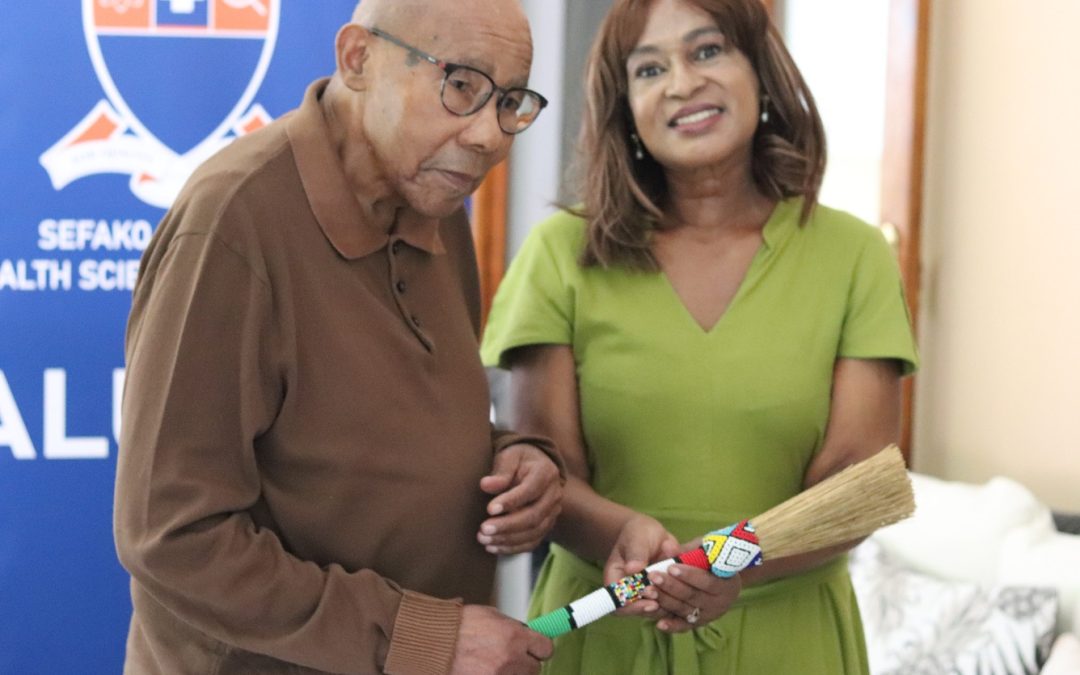
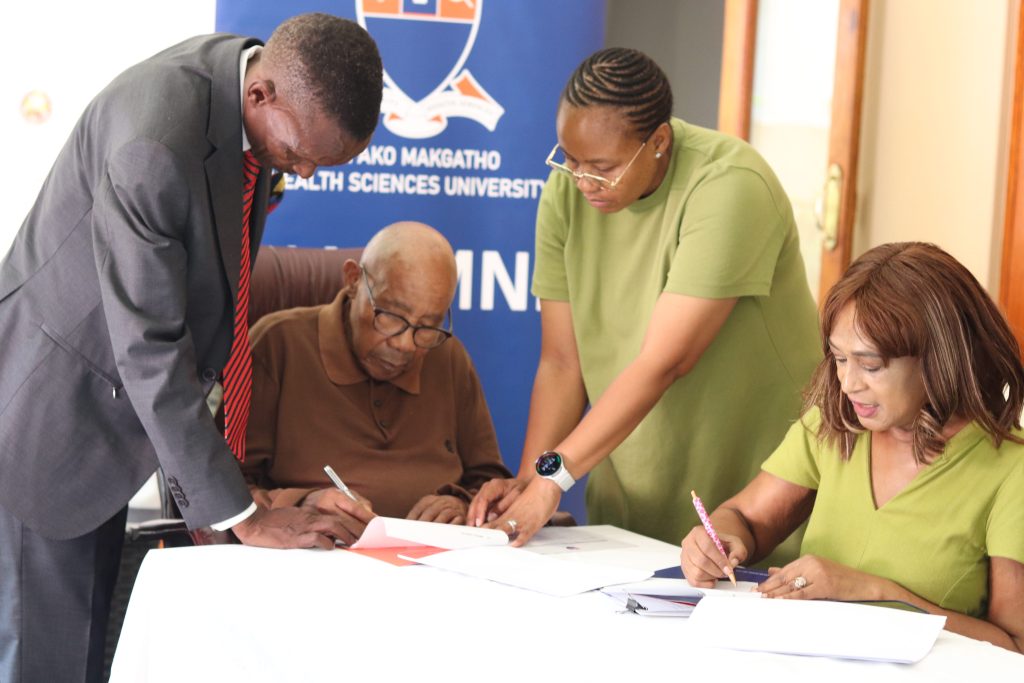
 In a landmark engagement, SMU formally visited the Professor Ephraim Thibedi Mokgokong Foundation, culminating in the signing of a strategic Memorandum of Understanding (MoU). The agreement signifies more than institutional collaboration — it represents a shared commitment to academic excellence, leadership development and meaningful community engagement in the Health Sciences.
The MoU seeks to formalise a strategic partnership that promotes joint initiatives, commemorative programmes and capacity-building efforts. It further lays the foundation for dynamic programmes to be developed through ongoing engagement with University stakeholders.
Under this agreement, the parties will collaborate to mobilise Alumni and Convocation to build a strong, engaged SMU Alumni community. They will also develop a joint framework to drive key projects, including working towards the establishment of a School of Agriculture and Veterinary Sciences, promoting research and the commercialisation of research for third-stream income, and re-establishing international partnerships to advance exchange programmes, joint research and the digitalisation of health education at SMU.
Speaking at the signing ceremony, Professor Erasmus expressed profound optimism about the future of the University. “This agreement marks a new chapter in the life of SMU. It is a declaration that we are ready to expand, innovate and lead. We are positioning SMU not only as a centre of health sciences excellence, but as a catalyst for socio-economic development,” she said. She emphasised that the partnership aligns directly with her strategic vision of strengthening institutional sustainability while broadening academic offerings.
“We are deliberate about building a university that responds to national priorities. The establishment of the School of Agriculture and Veterinary Sciences is not merely an academic ambition — it is a developmental imperative for our country.”
Professor Erasmus’s leadership has been characterised by decisive action, bold partnerships and a renewed institutional confidence. Her stewardship continues to galvanise stakeholders across sectors to rally behind SMU’s growth agenda.
 Dr Zacharia (Zakes) Kagiso Motene, Chief Executive Officer of the Foundation, affirmed the Foundation’s unwavering commitment to supporting SMU’s expansion, particularly the envisioned School of Agriculture and Veterinary Sciences.
“As a Foundation, we will work tirelessly to ensure that the establishment of the SMU School of Agriculture and Veterinary Sciences becomes a reality. We will mobilise both the private and public sectors to support this dream,” he stated.
He underscored the Foundation’s belief in collaborative development and its readiness to leverage networks and resources to strengthen the University’s capacity and infrastructure.
The proposed School of Agriculture and Veterinary Sciences has also garnered strong sectoral support. The President of the South African Veterinary Council (SAVC), Dr Nomfundo Nomsa Mnisi , highlighted the urgent need for transformation within the veterinary profession.
“The veterinary sector continues to face a significant shortage of black professionals and students. The establishment of this School will contribute meaningfully to broadening participation and ensuring that the profession reflects the demographics of our country,” she noted.
She further affirmed the Council’s commitment to the initiative: “We are excited about this development and will walk hand in hand with both the Foundation and SMU to realise this vision.” In a deeply affirming message, Professor Ephraim Thibedi Mokgokong expressed his confidence in Professor Erasmus’s leadership and her capacity to steer the University toward sustained excellence.
“I have full confidence in the Vice-Chancellor as the first black VC of this University. She has demonstrated commitment, courage and clarity of vision. I know she will get the job done,” he said.
He also encouraged the broader SMU community to unite behind the Vice-Chancellor’s leadership. “I urge staff and students to support the Vice-Chancellor as she leads this institution into its next phase of growth. Institutional success requires collective commitment.”
The signing of this MoU signals more than collaboration — it reflects momentum. Under Professor Erasmus’s leadership, SMU is reasserting its place as a forward-looking institution committed to academic excellence, research innovation and societal impact.
By strengthening alumni networks, advancing research commercialisation, rebuilding international partnerships and expanding into Agriculture and Veterinary Sciences, SMU is positioning itself as a comprehensive, transformative university rooted in African realities and global relevance.
This partnership stands as a testament to visionary leadership and shared purpose. As Professor Erasmus continues to work diligently to elevate SMU’s profile and performance, the University community is witnessing the tangible results of strategic, focused and courageous leadership. Indeed, a new era has begun at SMU — and it is being shaped with conviction, collaboration and confidence.
By Dimakatso Modise
by Lorato | Feb 17, 2026 | Accolades and Achievements, All News, SMU Media, Student Media
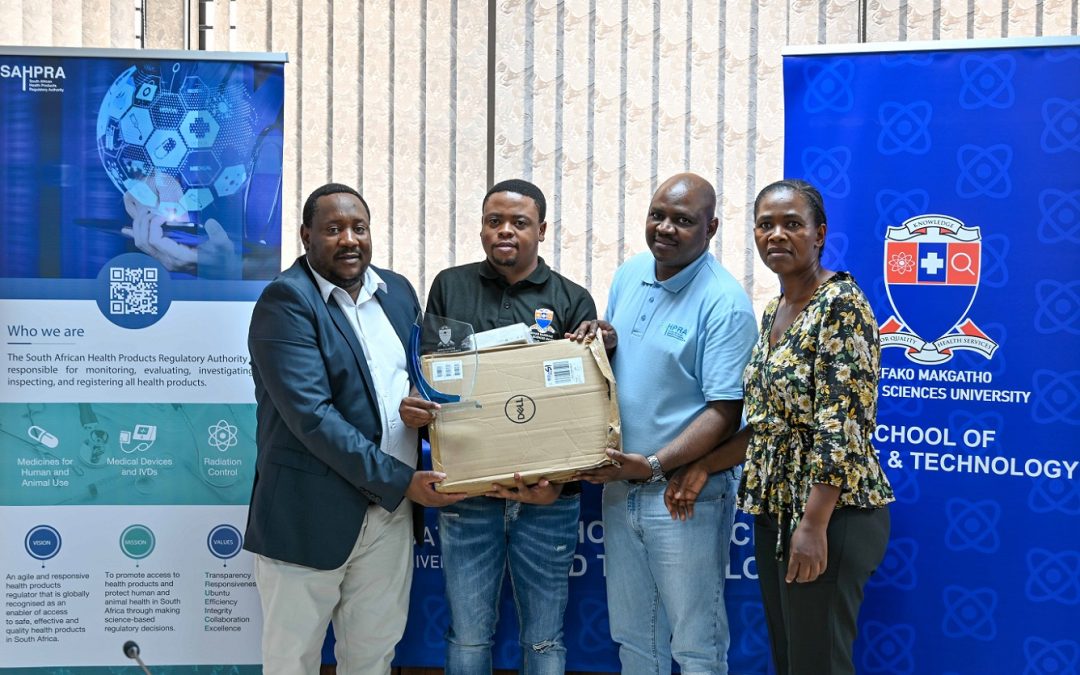
A spirit of celebration and scholarly distinction filled the air as academic excellence took centre stage at a prestigious handover ceremony hosted by the School of Science and Technology at Sefako Makgatho Health Sciences University (SMU). The occasion marked a significant milestone in the University’s enduring partnership with the South African Health Products Regulatory Authority (SAHPRA), underscoring a shared commitment to advancing student success, innovation, and capacity development within the health sciences sector.
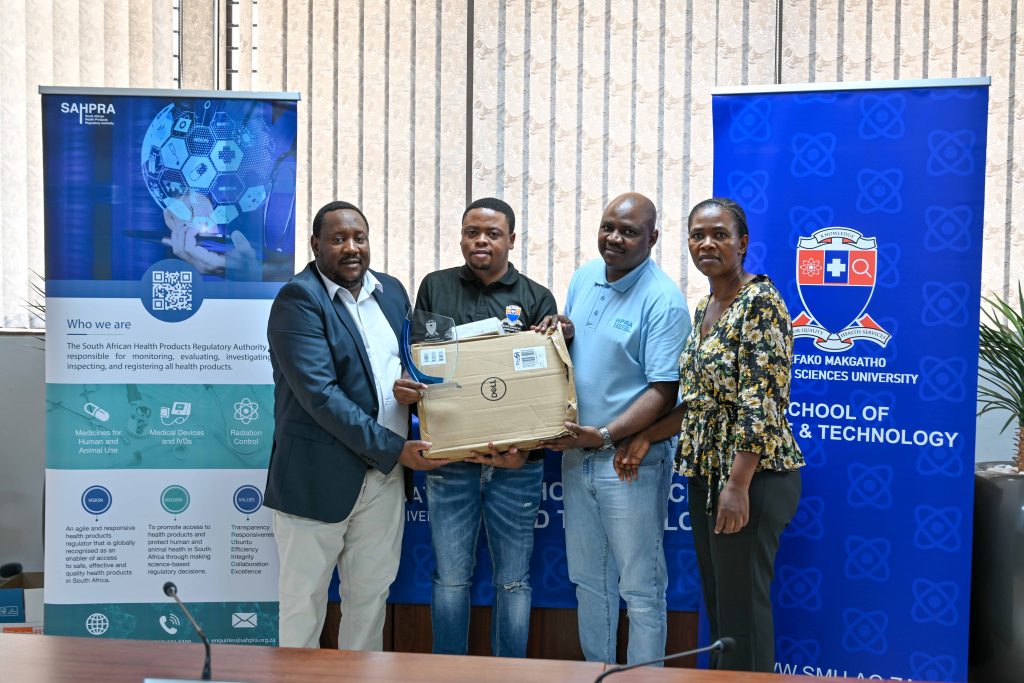 The ceremony formally acknowledged SAHPRA’s generous sponsorship towards the Dean’s Excellence Awards, through which high-performing students were awarded laptops to support their academic and research pursuits. The initiative reflects a strategic alignment between academia and regulatory institutions in cultivating a scientifically competent and ethically grounded workforce.
Professor Sechene Stanley Gololo, Deputy Dean of the School of Science and Technology, expressed profound gratitude for SAHPRA’s contribution and reaffirmed the value of collaborative partnerships. “Compliments of the new season. On behalf of the School of Science and Technology, please accept our sincere appreciation for SAHPRA’s generous sponsorship towards the Dean’s Excellence Awards. Your contribution is both commendable and impactful, as it meaningfully advances our shared commitment to student success, excellence, and capacity development,” he said.
Prof Gololo further highlighted the symbolic and practical importance of the handover ceremony. “To formally acknowledge this support, we deeply value the presence of SAHPRA representatives at the official handover of the laptops to the award recipients. Such engagements reinforce the strategic alignment between academia and regulatory bodies in shaping a responsive and competent scientific workforce,” he added.
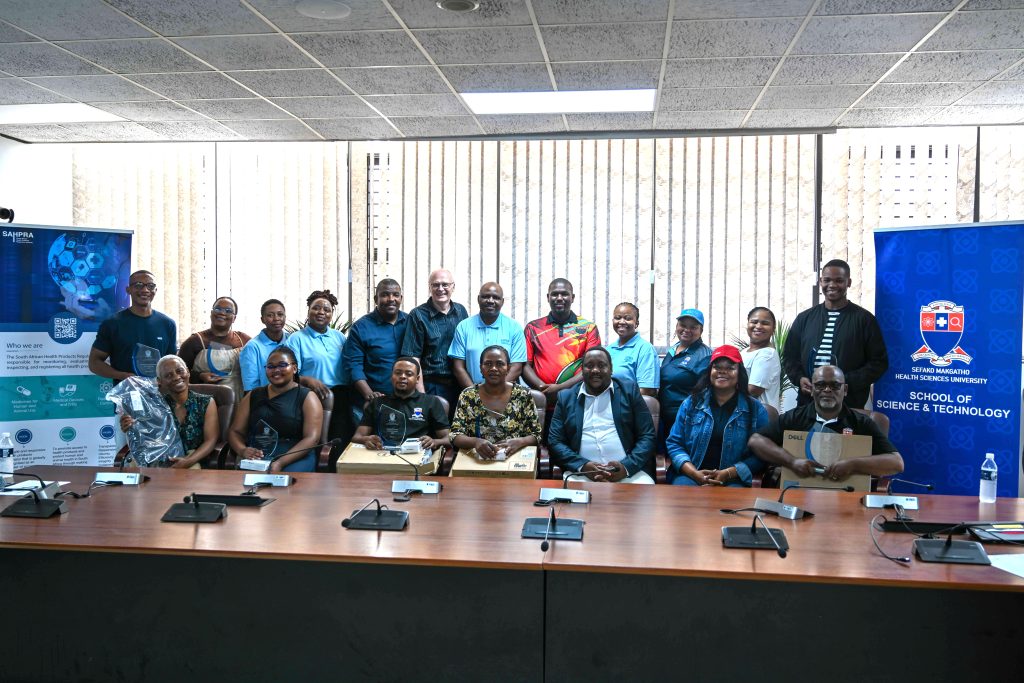 Four outstanding students were recognised during the ceremony for their exemplary academic achievements. Nkosi Lindokuhle, a Bachelor of Science (Extended Curriculum Programme) undergraduate student, was honoured for academic merit and perseverance. Pitse Thulaganyo was celebrated as the Bachelor of Science (Honours) Overall Achiever 2025, while Kekana Tumisho received recognition as Master of Science Overall Achiever 2025. In a remarkable demonstration of research innovation, Lekgoathi Thabo Lesiba was acknowledged as Patent Holder of the Year 2025.
In line with principles of transparency and responsible stewardship, the School confirmed that four laptops were distributed at the ceremony. The remaining laptop will be retained in the Dean’s Office and allocated to a subsequent approved student support initiative, of which SAHPRA will be duly notified.
Zingisa Nodada and Khanyisile Mabuza, SAHPRA Learning and Development Specialists, delivered compelling reflections on the partnership with the University, particularly the School of Science and Technology. They emphasised that their collaboration is anchored in strengthening regulatory science, promoting skills development, and ensuring that graduates are equipped to contribute meaningfully to national health priorities.
The SAHPRA representatives noted that investing in students extends beyond financial sponsorship; it is an investment in the intellectual capital that will sustain and transform the country’s health regulatory landscape. Their remarks reaffirmed SAHPRA’s commitment to long-term academic partnerships that bridge theory and practice while nurturing excellence.
Dr Baratwa Moema, Operations Manager of the School of Science and Technology, also extended heartfelt appreciation to SAHPRA for its sustained support over the years. She acknowledged that the partnership has evolved into a dynamic and mutually beneficial relationship grounded in trust and shared vision. Dr Moema expressed optimism that the collaboration will continue to flourish, opening new avenues for student empowerment and institutional growth.
The handover ceremony thus symbolised more than the presentation of technological tools; it represented a deliberate investment in academic distinction and future innovation. Through strategic collaboration, Sefako Makgatho Health Sciences University (SMU) and SAHPRA are collectively shaping a generation of scientists equipped with the knowledge, skills, and resources required to advance health sciences in South Africa and beyond.
By Dimakatso Modise
by Lorato | Feb 15, 2026 | Accolades and Achievements, All News, Alumni, SMU Media, Student Media
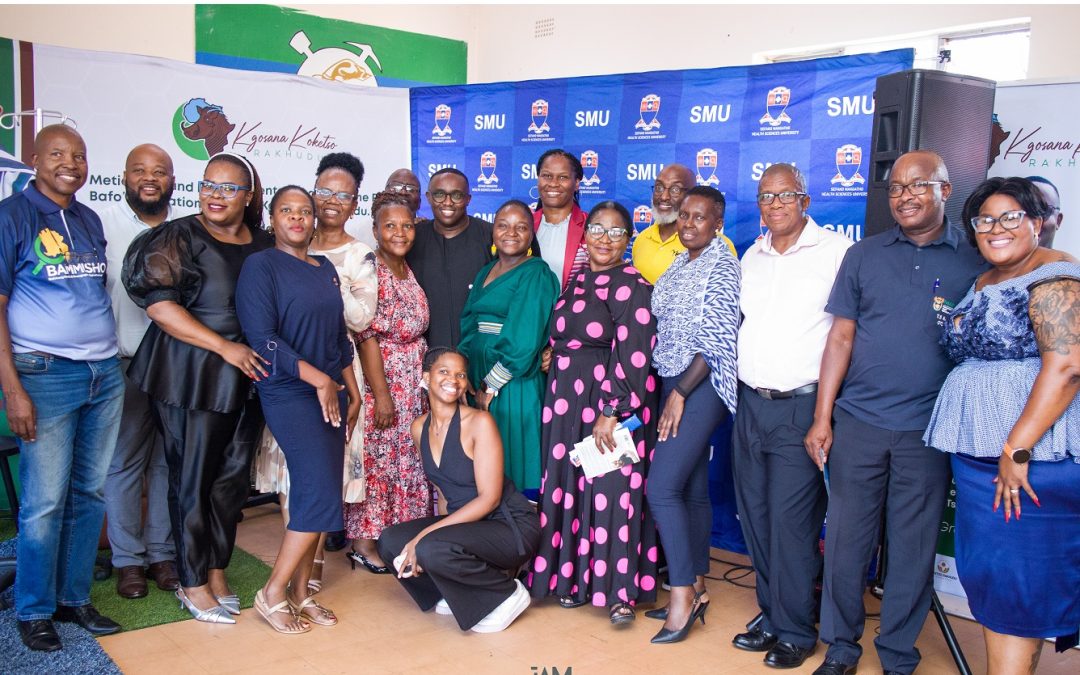
Sefako Makgatho Health Sciences University (SMU) reaffirmed its institutional leadership in community-centred health development during the Health Sector Stakeholders Summit held from 10 to 13 February 2026 under the theme “Strategic Collaboration for Sustainable Health Outcomes.” The four-day convergence brought together traditional authorities, government representatives, private sector companies, academics, health practitioners and community stakeholders in a unified effort to strengthen health systems, advance wellness and stimulate socio-economic progress in Tsitsing and neighbouring villages.
 The summit coincided with the official launch of the Botsogo, Bophelo le Boitekanelo Summit 2026 by Kgosana Koketso Rakhudu of the Kgotla Ya Rakhudu, marking the commencement of a transformative partnership between traditional leadership and the university. In his opening address, Kgosana Rakhudu described the gathering as a watershed moment in the community’s developmental trajectory. “This summit represents hope translated into action,” he asserted. “It unites leadership, academia, business and the community in a shared commitment to improving health outcomes and securing a sustainable future for our villages.”
Anchored in a collaborative framework that integrates traditional leadership structures, government departments, academic institutions, non-governmental organisations, corporate partners and community formations, the initiative seeks to position Tsitsing as a demonstrative site for community-based health innovation. The active involvement of several companies underscored the growing recognition that sustainable health development requires public–private partnerships capable of mobilising financial resources, technical expertise and innovation. Through coordinated planning, evidence-driven research, capacity development and sustainable interventions, stakeholders aim to fortify primary healthcare systems, enhance service delivery efficiencies and generate enduring socio-economic dividends.
During the Stakeholder Pledge and Closing Remarks session, SMU formalised its commitment to the partnership, underscoring its enduring mandate of socially responsive scholarship. Representing the institution was Professor Mathildah Mokgatle, Head of the Department of Public Health. Prof. Mokgatle articulated the university’s conviction that sustainable transformation emerges from authentic collaboration across sectors. “As a university dedicated to advancing public health, we recognise that meaningful change occurs when institutions, business and communities work in concert,” she said. “SMU commits to supporting this ongoing partnership to strengthen local health systems and improve sustainable health outcomes.”
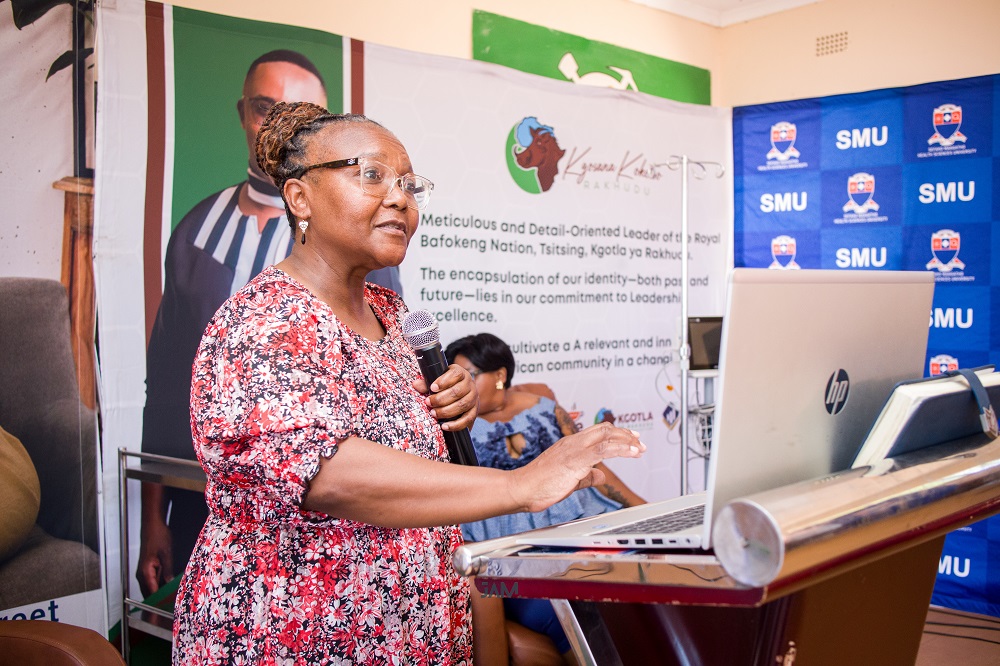 She further emphasised that the initiative would serve as a dynamic platform for community-based research, experiential student training and contextually relevant, evidence-based interventions. “Our responsibility transcends classroom instruction,” Prof. Mokgatle noted. “We must ensure that our research, training and service are intrinsically aligned with the lived realities of communities such as Tsitsing, thereby contributing directly to their health, dignity and overall wellbeing.”
A defining feature of the summit was the unveiling of the 3B’s conceptual framework — Botsogo, Bophelo le Boitekanelo — spearheaded by Evah Molapisi, Lecturer in Community Physiotherapy and Rehabilitation at SMU. Molapisi elucidated that the framework encapsulates an integrated vision of health, life and holistic wellness as interdependent pillars of community advancement. “Botsogo speaks to health, Bophelo to life, and Boitekanelo to comprehensive wellness,” she explained. “These principles remind us that health is not merely the absence of illness, but the presence of empowerment, opportunity and human dignity.”
The 3B’s vision aspires to cultivate sustainable community–academic partnerships, advance Sustainable Development Goal 3 on Good Health and Well-being, stimulate youth participation in health professions and establish a viable community-based platform for student training and service delivery. By embedding academic expertise within community contexts while drawing on the innovation and support of corporate stakeholders, the initiative seeks to bridge the divide between theory and practice, ensuring that scholarship translates into measurable social impact.
Complementing the health systems discourse, Moagisi Edwin Seleka, Senior Lecturer and Head of Department at SMU, contributed a reflective exploration of the therapeutic dimensions of arts and bibliotherapy. Dr Seleka illuminated the intricate interrelationship between mental and physical health, underscoring the physiological benefits of creative engagement. “The body and mind function synergistically,” he observed. “Music and humour stimulate the release of endorphins, thereby alleviating pain and mitigating stress.”
Expanding on the transformative potential of reading and artistic expression, he added, “To read is to journey beyond one’s immediate circumstances; it is to encounter new perspectives and possibilities. Creative expression enlarges the imagination, fosters emotional resilience and facilitates psychological restoration.” His insights reinforced the summit’s holistic orientation, recognising that sustainable health outcomes necessitate attention to both corporeal and psychosocial dimensions of wellbeing.
As proceedings concluded, the Health Sector Stakeholders Summit emerged as a seminal platform for structured, long-term collaboration. By harmonising academic rigour, traditional governance, corporate participation and community engagement, the initiative presents a replicable model for inclusive, sustainable health development. Through its active involvement and formal pledge, Sefako Makgatho Health Sciences University has once again demonstrated its unwavering commitment to advancing equitable health outcomes and fostering resilient communities across South Africa.
By Dimakatso Modise
by Lorato | Feb 5, 2026 | Accolades and Achievements, All News, Alumni, SMU Media, Student Media
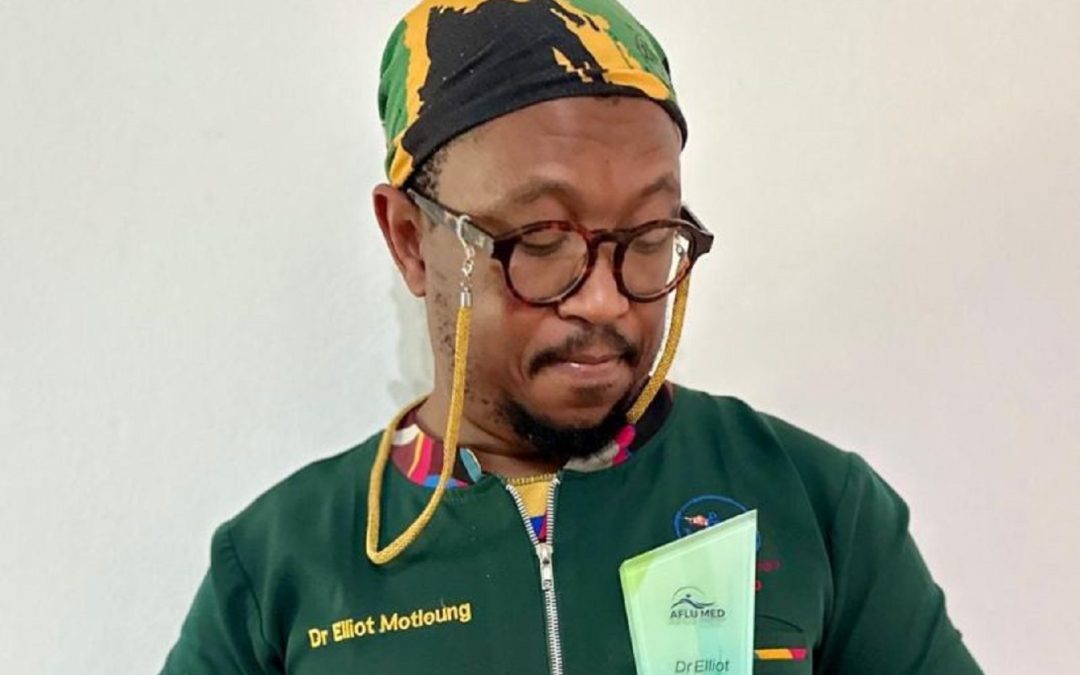
Aflu Med Healthcare has named Dr Elliot Motloung, Head of the Department of Paediatric Surgery at Sefako Makgatho Health Sciences University (SMU), as its 2025 Digital Healthcare Champion, recognising a clinician whose work is changing how paediatric surgery is taught, delivered and accessed across South Africa.
 The award celebrates leadership that converts innovation into real-world impact. Dr Motloung’s career does exactly that. Known for decisive action in high-stakes clinical environments, he has built a body of work guided by a clear conviction: healthcare must be excellent, equitable and built for the future.
Aflu Med Healthcare is a South African health-technology company delivering integrated digital and mobile solutions to improve healthcare delivery and access. Its HealthSpace Ecosystem provides a centralised electronic health record and practice management platform that supports telehealth, clinical workflows, patient engagement, and data-driven decision-making. The company also offers business development support to healthcare providers and deploys mobile clinics that extend primary healthcare and outreach services into underserved communities.
At the centre of Dr Motloung’s impact is surgical education. He pioneered South Africa’s first Neonatal Surgical Skills Course, developed in partnership with the University of Oxford. Using simulation-based training, the programme equips surgeons with critical neonatal skills before they enter the operating theatre.
“In neonatal surgery, preparation is everything,” Dr Motloung said. “Simulation allows surgeons to build confidence and competence without placing patients at risk. That shift saves lives.”
The course has set a new national benchmark, enhancing patient safety in a discipline where the margin for error is razor-thin.
Access to care is another defining pillar of his work. Determined that geography should not dictate survival, Dr Motloung played a key role in establishing public paediatric surgical units in underserved provinces, including Limpopo and Mpumalanga. These facilities have reduced the burden on families who previously travelled long distances for specialist treatment.
“No child should suffer because care is too far away,” he said. “Bringing services closer to communities changes outcomes—and dignity.”
Clinically, Dr Motloung is widely respected for his expertise in minimally invasive thoraco-abdominal surgery, paediatric trauma and advanced laparoscopic techniques. These approaches reduce pain, shorten hospital stays and speed up recovery—critical benefits for children and overstretched health systems alike.
What truly distinguishes Dr Motloung, however, is his purpose. Shaped by first-hand exposure to healthcare inequity, his mission is rooted in service to rural and marginalised communities. He has translated that commitment into a clear, scalable blueprint for paediatric surgical care that reaches beyond urban centres.
Alongside his clinical leadership, he is an influential academic mentor. Through structured training programmes and hands-on supervision, he is developing the next generation of paediatric surgeons, strengthening surgical capacity nationally and regionally.
“Training people is how impact multiplies,” Dr Motloung said. “If we invest in skills today, patients benefit for decades.”
In naming Dr Motloung as the 2025 Digital Healthcare Champion, Aflu Med Healthcare recognises a leader who does not merely respond to change—he drives it. His work continues to raise standards, inspire clinicians and reshape health systems, proving that true progress in healthcare is measured not by innovation alone, but by lives improved and futures secured.
By Tumelo Moila