by Lorato | Oct 15, 2026 | All News, Alumni, SMU Media, Student Media
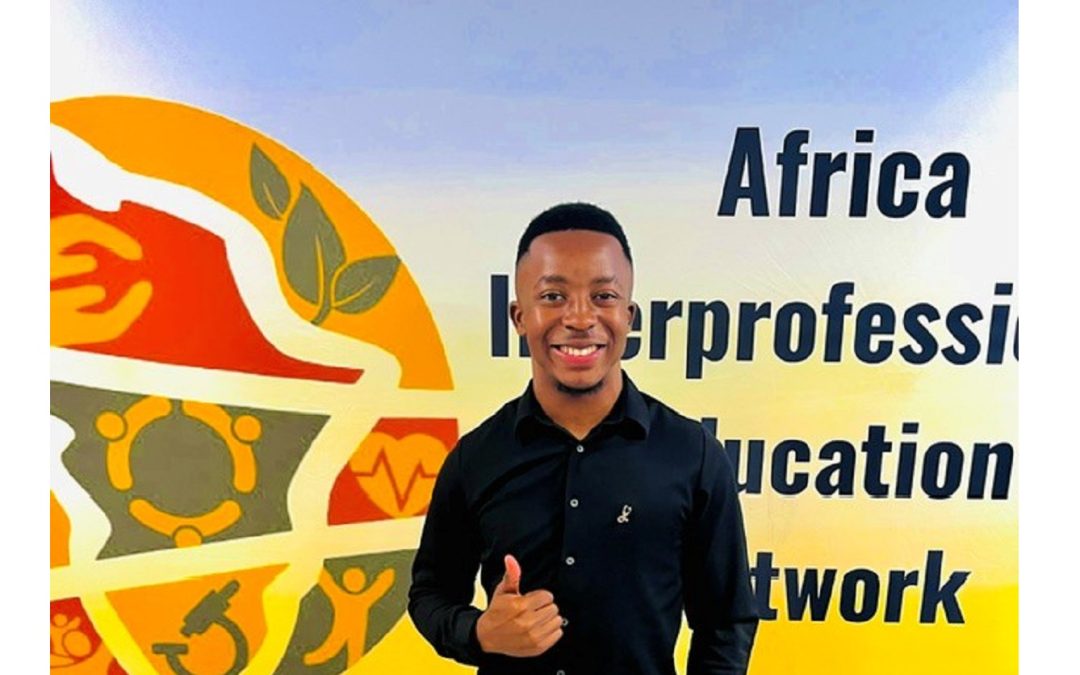
Sefako Makgatho Health Sciences University (SMU) medical student Thabiso Trinity Seerane has represented the university at the 5th African Interprofessional Education Network (AfrIPEN) Conference 2026, contributing to international discussions on interprofessional education and collaborative healthcare through research presentations, student leadership and workshop facilitation.
 Held recently at the University of the Western Cape’s Faculty of Community and Health Sciences in Bellville, the conference brought together students, academics, researchers and health professions educators under the theme, “African Wisdom, Global Relevance: Reclaiming Interprofessional Futures”.
A third-year Bachelor of Medicine and Bachelor of Surgery (MBChB) student, Seerane attended as Deputy Chairperson of SMU Faces of Interprofessional Education and Collaborative Practice (IPECP) and Project Director of AfrIPENsils, the student wing of the AfrIPEN.
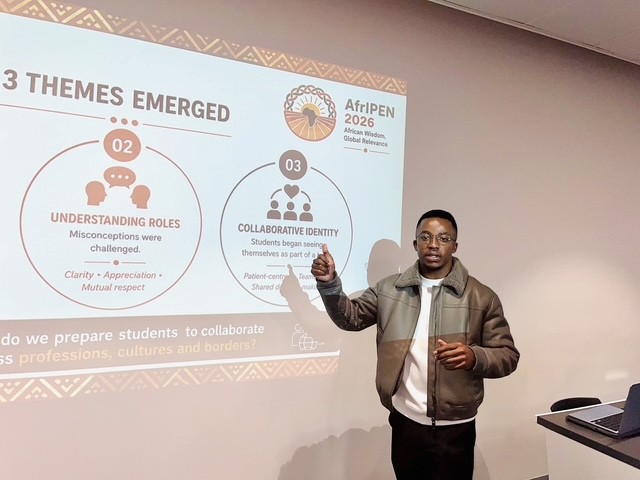
One highlight was his first conference presentation, delivered alongside fellow student Phološo Nyalungu. Titled “Beyond Borders and Professions: An African-Led Global Interprofessional Education for Collaborative Practice”, the presentation reflected on the IPE Global Event hosted by AfrIPENsils in 2025 and explored opportunities for healthcare students to advance meaningful interprofessional learning across professional, national and educational boundaries.
As the only undergraduate student presenter at the conference, Seerane shared his work with experienced academics, researchers and health professions educators, demonstrating the value of including student perspectives in shaping the future of healthcare education. “Although I still have much to learn, my experiences and ideas also have a place in these conversations,” said Seerane, reflecting on the significance of presenting at an international academic forum.
His contribution extended beyond research presentations to the student-led workshop, “Bridging Borders Through Hybrid IPE”, which brought together participants through online and in-person collaboration. As a facilitator, Seerane guided discussions exploring how understanding different healthcare professions, cultures and national contexts could strengthen teamwork and improve patient care.
The discussions reinforced the importance of listening, mutual respect and recognising the distinct contributions of different healthcare professionals. They also highlighted that effective collaboration requires more than an understanding of professional roles; it demands an appreciation of the experiences and perspectives that inform clinical practice.
For Seerane, the conference was also a significant personal milestone. Coming from a rural background in Limpopo, he described representing SMU in an international academic space as a reminder of the opportunities created when students are encouraged to participate, lead and share their ideas. Engagements with established leaders in IPECP further broadened his understanding of the evolving field and the importance of meaningful student involvement in healthcare education. “I walked into that conference as an undergraduate medical student. I left reminded that I may still have a lot to learn, but I also have something to contribute,” he said.
The experience strengthened his conviction that leadership is rooted in service and collaboration, principles he intends to carry into his future medical practice. He emphasised that healthcare quality depends not only on individual expertise but also on effective communication and professionals’ ability to work together to improve patient outcomes.
Seerane expressed gratitude to SMU, its IPECP Unit, the AfrIPEN Executive Committee, the AfrIPENsils team and the conference organisers for supporting student participation in interprofessional education.
 Beyond his involvement in interprofessional education, Seerane contributes to medical education, research, academic development and student leadership through a range of roles. He serves as Surgical Anatomy Officer of the SMU Student Surgical Society (SMUSSS), Events Officer of The Diagnostic Society (TDS), and SMU Research and Writing Lead for Collaboration for Research ADvancement and National Evidence-based medicine (CRANE). He also tutors at the Centre for University Teaching and Learning (CUTL), co-founded and serves as Vice-President of the Interprofessional Pharmaceutical Alliance (IPA), and works as an Academic Consultant with BridgeOne by Gradesmatch. Additionally, as Secretary-General of Residence 5B, he advances student representation and academic development, reflecting a commitment to leadership and service that extends beyond healthcare education.
His contribution reflects SMU’s commitment to excellence in health sciences education, innovative learning and student-centred development. By creating opportunities for students to engage in research, leadership and international academic collaboration, the university continues to support emerging healthcare professionals equipped to contribute to a more collaborative, responsive and patient-centred healthcare system.
By Tumelo Moila
by Lorato | Oct 15, 2026 | All News, Alumni, SMU Media, Student Media
Sefako Makgatho Health Sciences University (SMU) medical student Alizwa Boco has taken the University’s commitment to student success onto the international stage, presenting research on the transition from high school to university at an international conference in Kuala Lumpur, Malaysia. The presentation highlighted the need for universities to look beyond academic performance and provide holistic support that helps students adjust, belong and succeed.
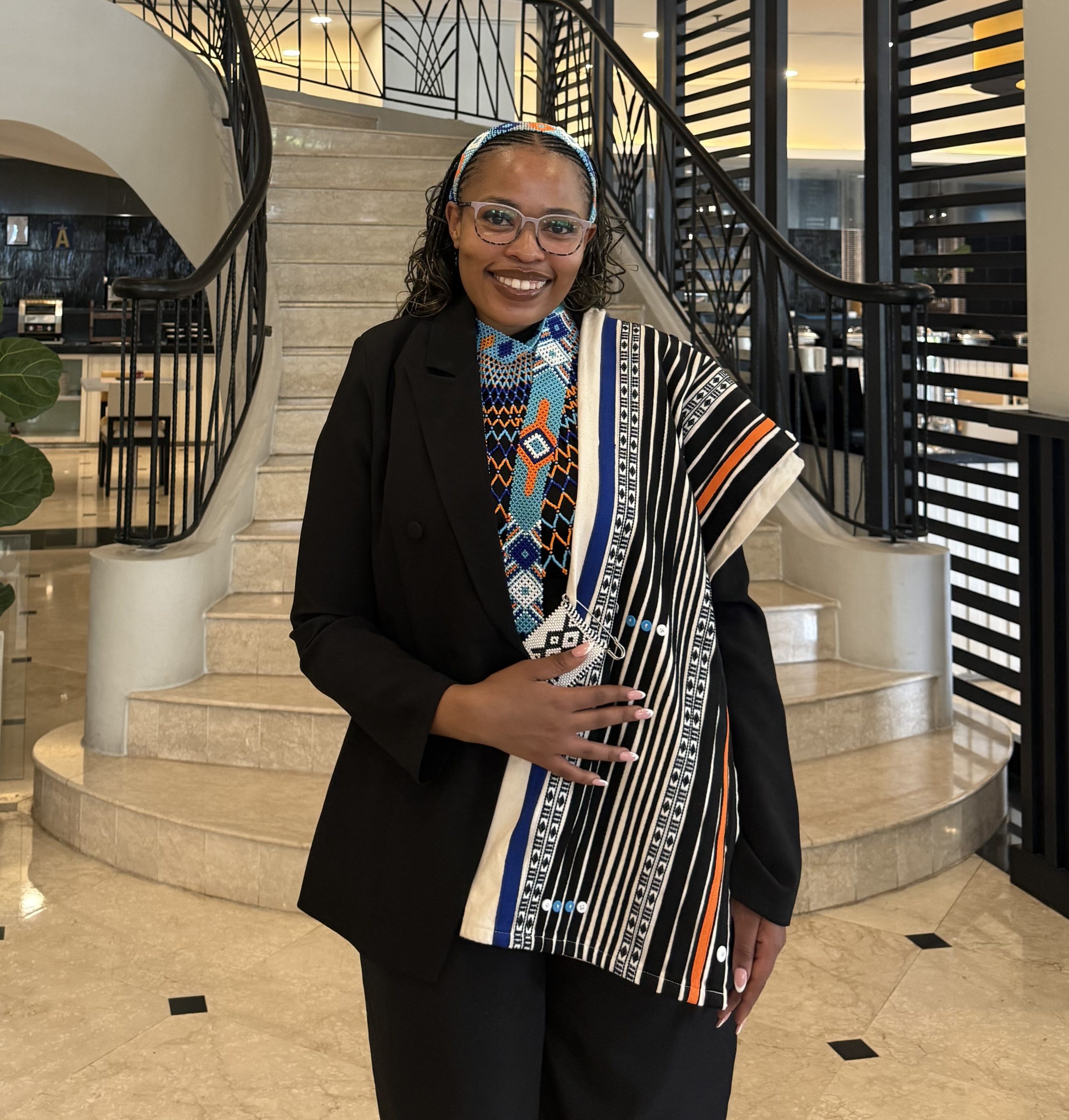 Boco, a 22-year-old fourth-year Bachelor of Medicine and Bachelor of Surgery (MBChB) student from Sakhela in Mthatha, Eastern Cape, represented SMU at the International Conference on Student Engagement and Success in Higher Education, hosted by World Academics. The conference brought together students, academics and higher education leaders to discuss emerging challenges, including artificial intelligence in education and research, climate change and equitable access to quality education.
Boco presented an abstract titled “From the Gate to Graduation: A Biopsychosocial Approach for Conscious Transition from High School into University Life”. The research aligns with Sustainable Development Goal 4, which promotes inclusive and equitable quality education and lifelong learning opportunities. The abstract was subsequently published in the World Academics Journal on Sustainability, Ethical Innovation, Education and Governance for Societal Progress, marking a significant milestone in Boco’s academic journey.
Drawing on personal experience, the research examines how the transition into university involves more than adapting to academic expectations. It also requires emotional, psychological and social adjustment, supported by an environment that recognises students’ diverse needs. Through a biopsychosocial approach, Boco advocates for a more comprehensive understanding of the first-year experience, considering the relationship between academic demands, personal well-being, social connections and institutional support.
The research also reflects the work of SMU’s Department of Student Affairs through its First-Year Experience (FYE) Programme, which supports First-Time Entering Students (FTENs) as they navigate the demands of higher education. Boco’s approach calls for orientation programmes to go beyond introducing students to university facilities, regulations, and academic requirements, instead creating a welcoming environment that fosters belonging, resilience, and personal development.
The study further emphasises the importance of collaboration among university stakeholders in supporting students throughout their academic journeys. By recognising the challenges students face during their first year, higher education institutions can strengthen engagement, improve adjustment and create conditions that enable more students to progress towards graduation.
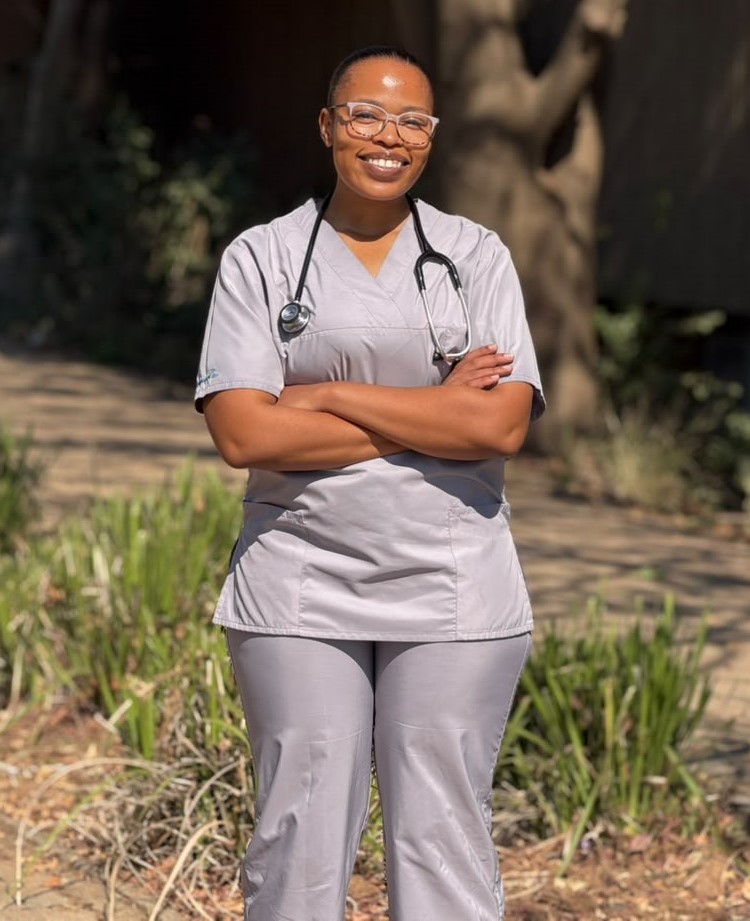 Reflecting on the achievement, Boco expressed gratitude to SMU’s Department of Student Affairs, the Internationalisation function and the Office of the Vice-Chancellor, led by Acting Vice-Chancellor Professor Dini Mawela, for supporting student participation in addressing challenges affecting the university community. This support has enabled students to contribute to institutional discussions, develop solutions and participate in peer capacity-building initiatives, helping connect research with practical student support.
Boco’s participation in the Malaysian conference demonstrates the value of empowering students to contribute to international academic discourse and shape conversations about the future of higher education. The research also reinforces the importance of connecting student experience with institutional practice to develop more inclusive and responsive learning environments.
For SMU, the achievement reflects its commitment to excellence in education, student-centred development and research that responds to real-world challenges. Boco hopes the work will encourage universities to adopt more compassionate, collaborative and inclusive approaches to student support, ensuring that success is built on a meaningful welcome and sustained throughout the academic journey.
From the gate to graduation, the goal is clear: every student deserves the support and opportunity to succeed.
By Dimakatso Modise
by Lorato | Oct 15, 2026 | All News, Alumni, SMU Media, Student Media
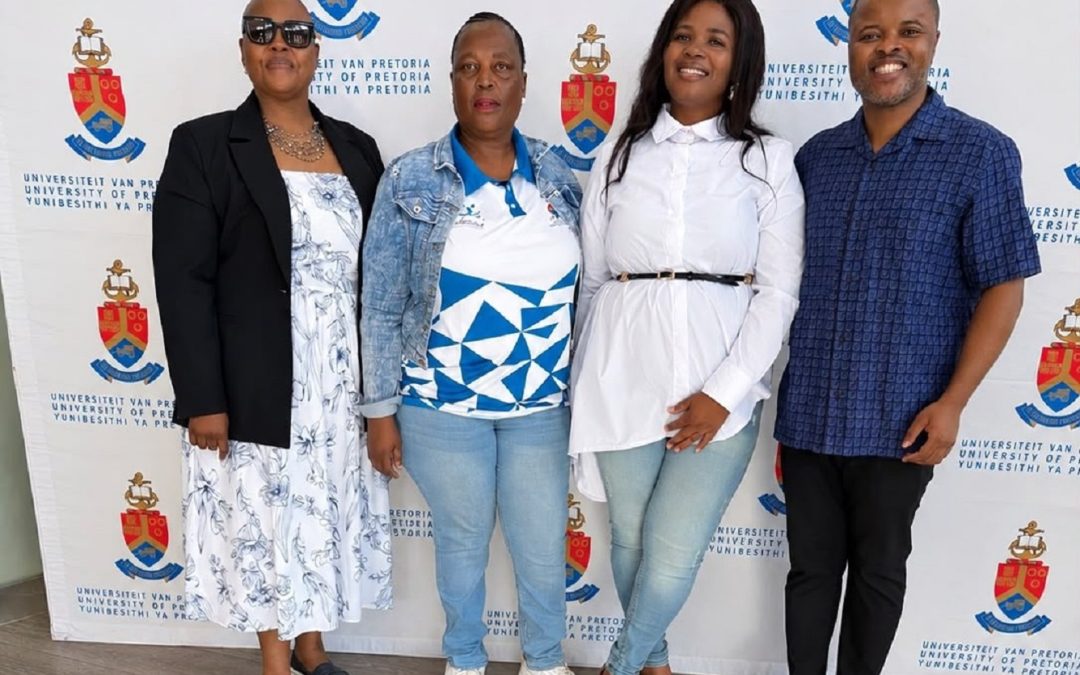
Sefako Makgatho Health Sciences University (SMU) is strengthening its commitment to a cleaner, safer, and healthier campus environment by continuously improving cleaning and hygiene services, with representatives from its cleaning management team recently attending the University of Pretoria’s Innovation and Technology Event.
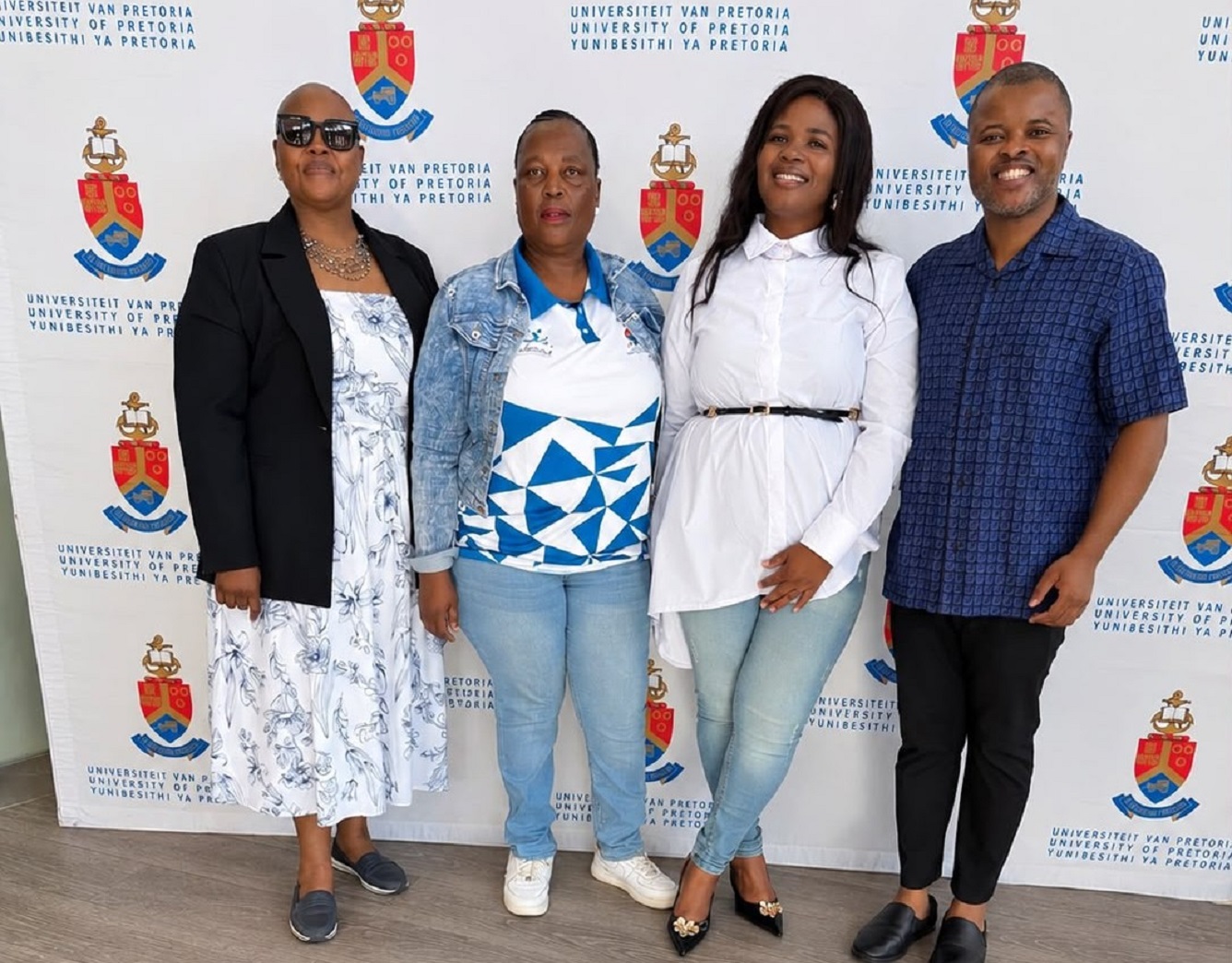 The event, hosted by the University of Pretoria’s Facilities Management Department in collaboration with its Industrial Hygiene Subdivision, provided an opportunity to engage with emerging technologies, innovative practices and approaches to modern facilities management. The participation forms part of the team’s broader efforts to enhance service delivery at SMU, where a hygienic environment is essential to teaching, learning, research and professional training.
Since taking over the university’s cleaning services in March 2026, the team has focused on understanding SMU’s operational requirements and identifying opportunities to improve cleanliness and hygiene standards across its facilities. “For a health sciences university, cleanliness goes beyond appearance. It is fundamental to creating an environment that reflects the values of health, safety, professionalism and care that underpin healthcare education,” said Tulani Nkuntse, Acting Executive Director: Student Affairs.
The team’s participation reflects its recognition that cleaning services are integral to the university’s operational environment. Well-maintained facilities contribute to the daily experiences of students and staff while supporting the institution’s responsibility to provide suitable spaces for academic and professional engagement.
The cleaning industry continues to evolve, with technology, improved equipment, data-driven monitoring systems and more efficient resource management creating opportunities to enhance service delivery. For SMU, understanding these developments is an important step towards identifying practical solutions that can be applied to its campus environment.
However, innovation extends beyond technology. Effective cleaning and hygiene management also depend on skilled personnel, clear processes, accountability, adequate resources and a commitment to continuous improvement. “Improving hygiene standards requires the right combination of people, processes, resources and technology. Our cleaning personnel play a critical role in maintaining the university’s facilities and supporting them with appropriate guidance and management is essential to achieving sustainable standards,” Nkuntse said.
Maintaining these standards also requires collaboration among cleaning personnel, facilities management, university leadership, staff, students and other stakeholders. A shared commitment to cleanliness helps create an environment that respects the dignity and well-being of everyone who uses the campus.
Since assuming responsibility for cleaning services in March, the team has recognised that maintaining high standards requires consistency, communication, monitoring and teamwork. Participation in professional engagements such as the Innovation and Technology Event provides an opportunity to learn from other institutions and explore approaches that could strengthen cleaning operations at SMU.
The initiative aligns with the university’s broader vision of transforming health services through excellence and innovation. As an institution dedicated to health sciences education, professional training and innovative research, SMU has a responsibility to ensure that its campus environment supports these objectives.
The cleaning management team remains committed to identifying relevant innovations and applying lessons that can improve hygiene services for the university community.
Ultimately, a clean campus is more than a reflection of well-maintained facilities; it demonstrates care, responsibility and respect for the people who study, work and conduct research there. Through continuous improvement and collaboration, SMU aims to strengthen its campus environment and reinforce the importance of hygiene in advancing health sciences education.
By Tumelo Moila

by Lorato | Oct 15, 2026 | All News, Alumni, SMU Media, Student Media
Sefako Makgatho Health Sciences University (SMU) continues to celebrate the diverse talents and achievements of its staff, with Senior Committee Officer in the Office of the Registrar, Jabulani Michael Zikhali, publishing a book that explores karate through an African perspective.
 Titled The Basics of Karate: An African Perspective, the book was published by Reach Publishers in Westville in 2026 and is available on Amazon. Drawing on Zikhali’s lifelong involvement in martial arts, the publication examines karate’s techniques, philosophy and potential to promote discipline, resilience, self-confidence and personal development.
A third-degree black belt, Zikhali began his karate journey in 1993. He said the decision to write the book came from personal reflection, his martial arts experience, and his thoughts on parenting and raising children with positive values. “I thought it would be a noble idea to document a lifelong journey in this fascinating sporting code, share how karate helped me to regain my capabilities and confidence, and teach discipline, humility, resilience, development and focus,” he said.
Zikhali also identified a gap in South African karate literature, particularly publications written by African authors. He noted that karate knowledge has traditionally been transmitted through practical instruction in dojos, while the costs of publishing specialised books and the relatively small local market have presented additional challenges.
Through an African lens, the book challenges the perception that martial arts are exclusively rooted in Asian traditions. While acknowledging karate’s origins in Okinawa, Japan, Zikhali highlights indigenous African combat practices, including Zulu stick-fighting, known as umgangela, South African musangwe boxing, West African dambe and Angolan engolo.
These practices demonstrate that African societies have long maintained their own traditions of physical discipline, combat and self-defence. By placing karate alongside these traditions, the publication encourages readers to recognise African contributions to martial arts heritage without disregarding karate’s historical origins.
Beyond physical fitness and self-defence, Zikhali views karate as a tool for youth development, particularly in communities confronting challenges such as bullying, substance abuse and gang activity. He believes structured training can provide young people with a sense of belonging while cultivating self-control, confidence and perseverance. “By teaching core principles of respect, effort and self-control, karate helps youth cultivate life skills that extend far beyond karate classes,” he said.
The book introduces readers to karate’s three fundamental components: kihon (basic techniques), kata (structured forms) and kumite (sparring). Zikhali emphasises that technical proficiency must be accompanied by humility, discipline, hard work and consistency. He also stresses that karate should not be used to intimidate or harm others, but to develop responsible practitioners who can protect themselves and vulnerable people.
Looking ahead, Zikhali hopes the publication will support karate students and instructors, from beginners to advanced practitioners, while contributing to the development of martial arts across Africa. He also emphasised the importance of African scholars and practitioners documenting their knowledge and experiences. “It is important to decolonise knowledge and become the custodians of our own legacy,” he said.
Zikhali’s achievement reflects the value of lifelong learning, personal development and knowledge sharing. In line with SMU’s commitment to excellence, innovation and effective leadership, his publication demonstrates how staff members can contribute to knowledge production beyond their professional responsibilities. His message to prospective readers is simple: “Karate is a way of life, and it is never too late to start.”
By Tumelo Moila

by Lorato | Oct 8, 2026 | Accolades and Achievements, All News, Alumni, SMU Media
Dr Rose Maluleka has made history at Sefako Makgatho Health Sciences University (SMU) by becoming the first female PhD graduate in the Department of Mathematics and Applied Mathematics, marking a significant milestone for the university and an important achievement for women in the mathematical sciences.
 Born and raised in Hammanskraal, Maluleka’s academic journey reflects perseverance, discipline and a sustained commitment to learning. She began her education at Motshegofadiwa Primary School, then attended Tsebe-Ntlha, and completed her basic education at Makgetse Secondary School. Her journey eventually brought her to SMU, where her academic excellence earned her recognition as Best Honours Student in 2016.
A decade later, Maluleka reached another historic milestone by completing her PhD, becoming the first female doctoral graduate in her department. Her achievement reflects years of study and research and sets an important precedent for women pursuing advanced qualifications in the mathematical sciences.
Her doctoral research, titled “Inertial approximation methods for solving some variational and fixed-point problems in linear spaces”, examines mathematical methods for addressing complex problems involving variational inequalities and fixed-point theory. The research demonstrates the advanced mathematical analysis required at the doctoral level and contributes to scholarship in mathematical sciences.
Dr Godwin Chidi Ugwunnadi, a Research Associate at SMU, and Professor Maggie Aphane, Associate Professor and Head of the Department of Mathematics and Applied Mathematics, supported Maluleka’s research journey. Their academic relationship extended beyond supervision, and the researchers collaborated on scholarly work in variational inequalities, fixed-point theory, and mathematical analysis.
For Maluleka, however, the path to a doctorate was not without challenges. She reflects candidly on her learning process and the persistence required to complete her studies. “I consider myself one of the slowest learners I know,” she says.
Rather than allowing this perception to define her academic journey, Maluleka turned it into a testament to perseverance. Her experience shows that academic achievement depends not only on how quickly one learns, but also on the ability to stay disciplined, consistent, and committed to a goal.
Her supervisors’ support played a central role in helping her navigate the demands of doctoral research. Their academic guidance, combined with their own expertise and scholarship, contributed to her development as a researcher. Her family also remained an important source of encouragement and strength throughout the demanding periods of her studies.
For Maluleka, mathematics extends beyond equations and theoretical concepts. She sees the discipline as closely connected to everyday life. “Mathematics is not just numbers — it is also our everyday language,” she says.
This perspective informs her desire to make mathematics accessible, meaningful and relevant. It also adds significance to her achievement as the first female PhD graduate in her department, particularly in a discipline that requires advanced analytical thinking, abstract reasoning, and sustained intellectual engagement.
From Hammanskraal to making history at SMU, Maluleka’s journey reflects resilience and academic excellence. Her story demonstrates the transformative power of persistence and challenges the notion that progress must be measured by speed.
Her doctoral achievement leaves more than a qualification. It establishes a legacy of possibility for aspiring researchers, particularly women seeking to advance in the mathematical sciences. Through milestones such as Maluleka’s, SMU continues to demonstrate the value of excellence in teaching, learning and innovative research, while contributing to the development of future scholars and knowledge in the broader academic community.
By Dimakatso Modise
by Lorato | Oct 8, 2026 | Accolades and Achievements, All News, Alumni, SMU Media, Student Media
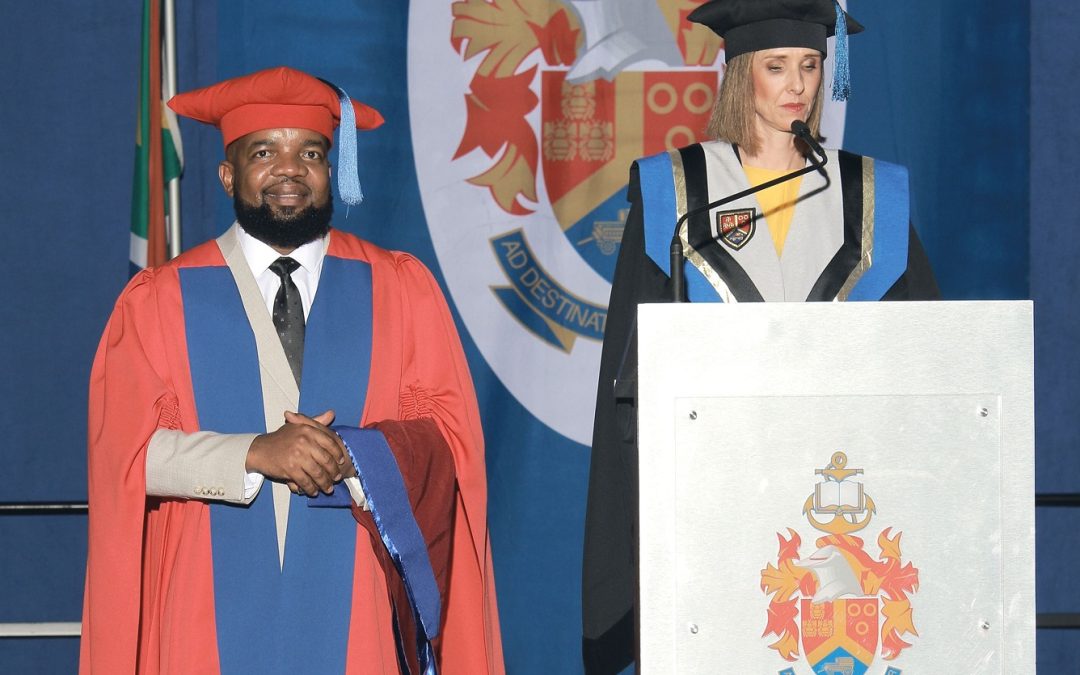
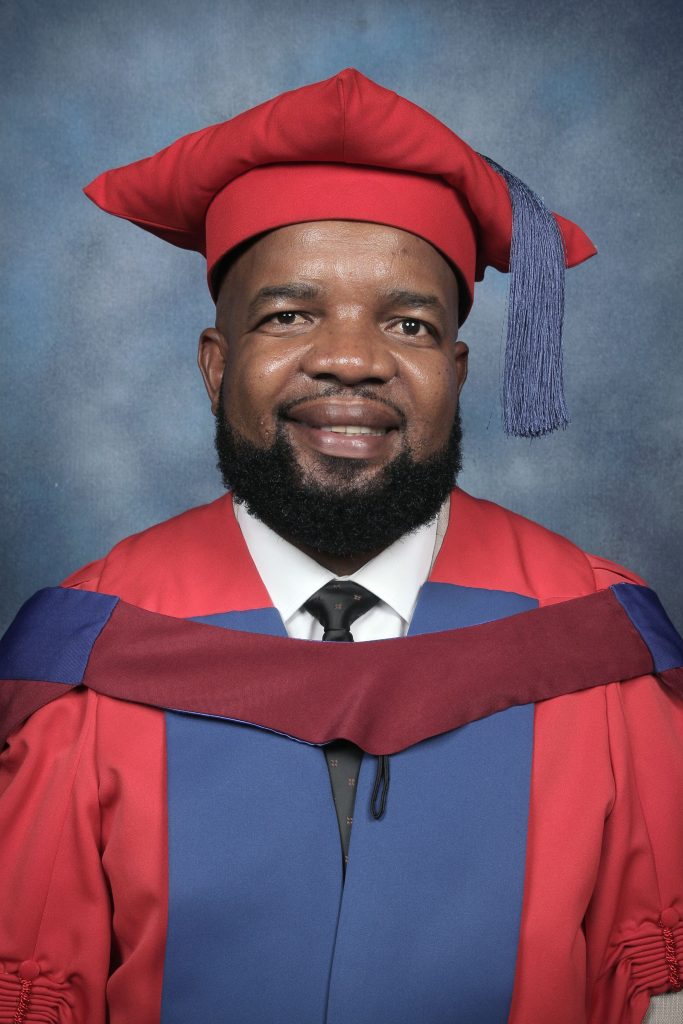
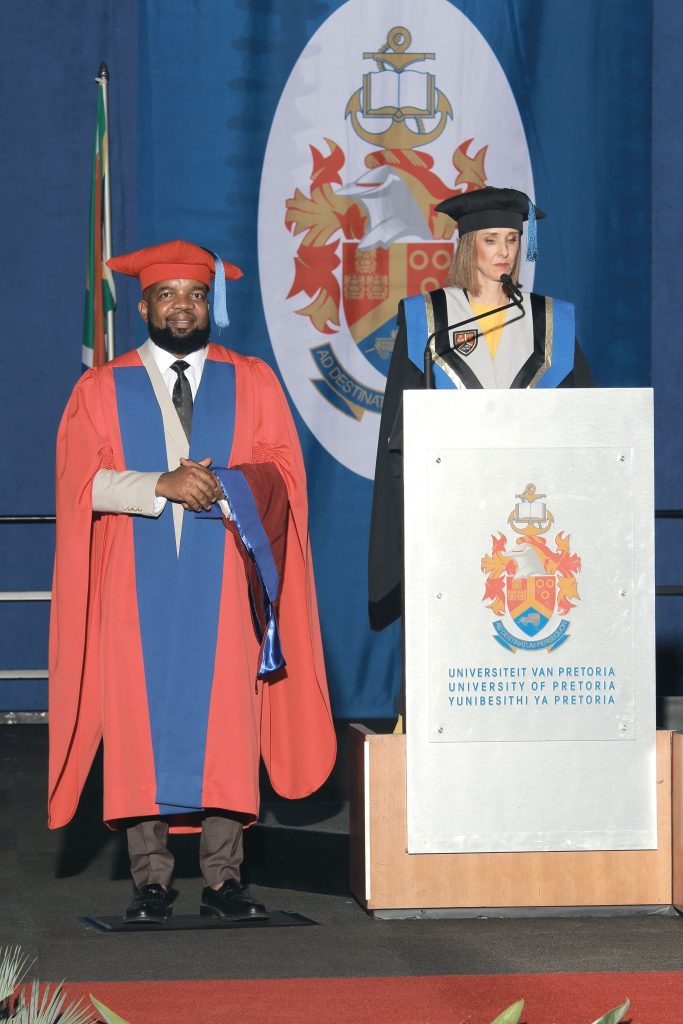
Sefako Makgatho Health Sciences University (SMU) is celebrating the academic achievement of Dr Benjamin Tlhale Ntshabele, an Institutional Researcher in the Institutional Planning and Quality Assurance (IPQA) Department, who recently obtained a Doctor of Philosophy (PhD) in Entrepreneurship from the University of Pretoria.
 Dr Ntshabele’s doctoral research examined the factors that influence entrepreneurial inclination and venture growth across different professional contexts, with particular attention to differences between established entrepreneurs and healthcare professionals. The study addressed a need for greater insight into how individual personality and psychological traits influence entrepreneurial outcomes in traditional business and regulated healthcare environments.
The quantitative study included 635 participants: 325 established entrepreneurs and 310 healthcare professionals. Using exploratory factor analysis, multiple regression and Multivariate Analysis of Variance (MANOVA), the research investigated the predictive influence of personality and psychological traits on entrepreneurial inclination and venture growth.
The findings indicate that the importance of different traits varies according to professional context. Among established entrepreneurs, extraversion, conscientiousness, agreeableness and openness to experience significantly predicted entrepreneurial inclination, while neuroticism had a negative predictive relationship. Venture growth was most strongly associated with self-efficacy and extraversion, while openness to experience and risk-taking propensity also showed positive effects.
Among healthcare professionals, openness to experience emerged as the primary personality predictor of entrepreneurial inclination, alongside the psychological traits of self-efficacy, need for achievement and tolerance of ambiguity. Self-efficacy, openness to experience and tolerance of ambiguity significantly influenced venture growth. The study also found a significant negative relationship between innovativeness and venture growth among healthcare professionals, which may reflect regulatory and ethical constraints in the healthcare environment.
A key finding across both groups was the importance of self-efficacy. The research identified confidence in one’s capabilities as a consistent and strong predictor of both entrepreneurial inclination and venture growth. It further highlighted that risk-taking and innovativeness played a more prominent role among established entrepreneurs, while adaptability and tolerance for ambiguity were particularly relevant among healthcare professionals.
 The findings have practical implications for entrepreneurship development, higher education and the healthcare sector. They suggest that entrepreneurship support should not follow a one-size-fits-all approach but should be tailored to the professional context in which individuals operate. For established entrepreneurs, interventions could strengthen attributes associated with opportunity recognition, calculated risk-taking, innovation and business growth. In healthcare, entrepreneurship development could place greater emphasis on self-efficacy, adaptability, and navigating uncertainty while recognising the sector’s regulatory and ethical requirements. These insights can inform the design of entrepreneurship education, professional development programmes and sector-specific support initiatives aimed at translating entrepreneurial potential into sustainable ventures.
Dr Ntshabele brings more than 15 years of experience in quantitative data analysis and over 12 years of experience in institutional research within higher education. His professional expertise includes institutional planning, strategic management, enrolment planning, performance monitoring, institutional effectiveness, monitoring and evaluation, statutory reporting and business intelligence.
At SMU, his work includes predictive modelling, institutional dashboards, environmental scanning, strategic reporting, institutional research projects and global university rankings. He also supports executive decision-making by translating complex institutional and higher education sector information into actionable intelligence.
His doctoral achievement builds on an academic journey that includes an MPhil in Entrepreneurship from the University of Pretoria, honours degrees in Economics and Statistics, and a BCom in Statistics.
Dr Ntshabele’s research deepens understanding of entrepreneurship in South African professional contexts and provides evidence to inform more context-sensitive approaches to entrepreneurship development. By identifying the different attributes associated with entrepreneurial inclination and venture growth across established entrepreneurs and healthcare professionals, the study contributes insights that can support entrepreneurship education, industry practice and the development of targeted interventions across professional sectors. His achievement also reflects SMU’s commitment to advancing research, innovation and evidence-based knowledge that contributes to the broader health sciences landscape.
By Tumelo Moila